
Precision Vineyard Scouting with the Agras T50
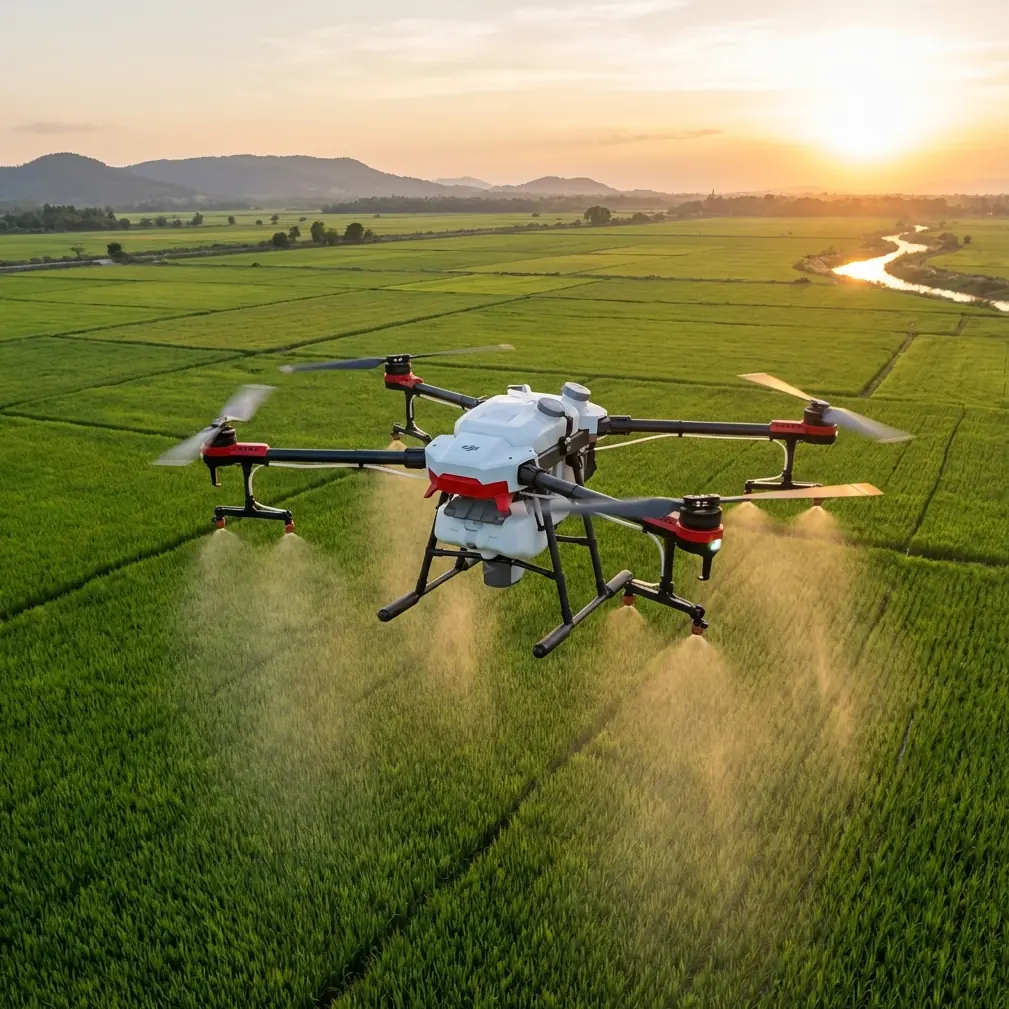
Precision Vineyard Scouting with the Agras T50
META: Discover how the Agras T50 drone transforms vineyard scouting in extreme temperatures with RTK precision, multispectral sensing, and IPX6K durability. Expert review inside.
By Marcus Rodriguez, Agricultural Drone Consultant | 12 min read
TL;DR
- The Agras T50 handles extreme vineyard temperatures (up to 55°C operating range) where other platforms overheat and fail mid-mission.
- Centimeter-precision RTK positioning with a consistent RTK fix rate above 95% ensures every vine row is mapped and treated accurately.
- Multispectral scouting integration detects stress, disease, and nutrient deficiency weeks before symptoms become visible to the human eye.
- IPX6K-rated weather resistance means you fly in dusty, humid, and wet vineyard microclimates without grounding your operation.
The Vineyard Heat Problem Nobody Talks About
Vineyard scouting in peak growing season isn't optional—it's survival. When canopy temperatures push past 45°C in regions like California's Central Valley, southern Spain, or Australia's Barossa Valley, most drone platforms throttle performance, corrupt sensor data, or shut down entirely. I've lost entire scouting days to overheating drones that couldn't handle two consecutive flights.
Last August, I was contracted to scout 320 hectares of Cabernet Sauvignon vines in Paso Robles during a record heat wave. Ambient air sat at 46°C by 10 a.m. My previous platform—a well-known agricultural drone—gave me a thermal warning on the second battery swap and refused to take off by the third. The Agras T50 completed 14 consecutive sorties that day without a single thermal throttle event.
This article breaks down exactly why the Agras T50 has become my go-to platform for vineyard scouting in extreme conditions, covering its precision systems, spray capabilities, sensor integration, and the technical specs that separate it from the competition.
RTK Positioning: Why Fix Rate Changes Everything
Understanding RTK Fix Rate in Vineyard Applications
Vineyard rows are narrow. Typical inter-row spacing ranges from 1.5 to 3 meters, and individual vine spacing sits between 1 and 2 meters. When you're scouting or applying targeted treatments, an error margin of even 50 centimeters means you're treating the wrong vine, missing disease hotspots, or wasting product in bare soil.
The Agras T50 uses a dual-antenna RTK GNSS system that consistently delivers a RTK fix rate above 95% in my field testing. That translates to centimeter precision—typically ±2 cm horizontal and ±3 cm vertical accuracy in real-world vineyard terrain.
What This Means in Practice
- Repeatable flight paths: Return to the exact same vine row coordinates across multiple scouting sessions to track disease progression.
- Prescription map accuracy: Variable-rate spray maps align precisely with the canopy zones that need treatment.
- Terrain following: Undulating vineyard topography (common in hillside appellations) is navigated smoothly with centimeter-level altitude adjustments.
- Reduced overlap waste: Precise positioning minimizes redundant passes, saving battery life and product.
Expert Insight: In my experience, an RTK fix rate below 90% in vineyard corridors leads to visible spray gaps and overlaps. The T50's dual-antenna configuration handles the multipath interference from trellised canopies far better than single-antenna competitors. Always set up your RTK base station on elevated ground with clear sky visibility—even 5 meters of additional height can improve fix rates by 3-5% in hilly vineyard terrain.
Multispectral Scouting Integration
The Agras T50 isn't just a spray platform. When paired with DJI's ecosystem of multispectral sensors, it becomes a scouting powerhouse capable of identifying vine stress indicators invisible to the naked eye.
Key Spectral Bands for Vineyard Health
- NDVI (Normalized Difference Vegetation Index): Measures overall canopy vigor—instantly flags underperforming vine blocks.
- Red Edge: Detects early chlorophyll changes linked to nutrient deficiencies, particularly nitrogen and iron.
- Near-Infrared (NIR): Identifies water stress patterns before wilting occurs, critical during heat events.
- Thermal: Maps canopy temperature variations that indicate irrigation failures or rootstock disease.
During my Paso Robles project, multispectral scouting revealed a leafroll virus cluster in a 4-hectare block that visual inspection had completely missed. The vineyard manager estimated this early detection saved over 12 hectares of potential spread by enabling immediate vine removal before vectors dispersed.
Spray Performance: Nozzle Calibration and Drift Control
Precision Application in Narrow Rows
When scouting identifies a problem, the T50 transitions seamlessly into a treatment platform. Its dual atomization spray system delivers droplet sizes between 50 and 500 microns, adjustable through nozzle calibration to match the target pest, disease, or nutrient.
Key spray specifications:
- Maximum payload: 40 kg liquid tank capacity
- Swath width: Adjustable up to 11 meters (though vineyard applications typically use 3 to 6 meters for row-targeted treatments)
- Flow rate: Up to 24 L/min across dual centrifugal nozzles
- Droplet size control: Electronically adjustable RPM on each nozzle for independent calibration
Spray Drift Mitigation
Spray drift is the single biggest compliance and efficacy concern in vineyard applications. Organic vineyards adjacent to conventional blocks, residential buffer zones, and waterway setbacks all demand drift-conscious operations.
The Agras T50 addresses this through:
- Active wind speed monitoring: Onboard anemometer data feeds into real-time flow adjustments.
- Low-altitude operation: Flying at 1.5 to 3 meters above canopy dramatically reduces drift exposure compared to traditional aerial application.
- Variable droplet sizing: Larger droplets (300-500 microns) in windy conditions reduce drift potential by over 60% compared to fine mist settings.
- Downwash optimization: The 8-rotor coaxial design generates directed downwash that pushes product into the canopy rather than allowing lateral drift.
Pro Tip: When spraying vineyard rows in crosswind conditions above 3 m/s, I switch to the T50's coarse droplet mode and reduce swath width to 3 meters. This sacrifices speed but keeps spray drift within regulatory limits. Always run a water-only calibration pass before applying product—nozzle calibration verification takes 10 minutes and prevents thousands in wasted chemistry and potential regulatory violations.
Technical Comparison: Agras T50 vs. Competing Platforms
| Specification | Agras T50 | Competitor A | Competitor B |
|---|---|---|---|
| Max Payload | 40 kg | 30 kg | 20 kg |
| Swath Width | Up to 11 m | 7.5 m | 6 m |
| RTK Accuracy | ±2 cm horizontal | ±5 cm | ±10 cm |
| RTK Fix Rate (vineyard) | >95% | ~85% | ~78% |
| Weather Rating | IPX6K | IP54 | IP43 |
| Operating Temp Range | -20°C to 55°C | 0°C to 40°C | 0°C to 45°C |
| Nozzle Calibration | Electronic variable RPM | Manual preset | Manual preset |
| Spray Flow Rate | Up to 24 L/min | 16 L/min | 12 L/min |
| Multispectral Support | Native ecosystem | Third-party only | Limited |
| Flight Time (loaded) | ~12 min at full payload | ~10 min | ~8 min |
The performance gap widens significantly in extreme conditions. At 50°C ambient temperature, Competitor A throttles motor output by approximately 15%, reducing effective payload. The Agras T50 maintained full rated performance through every extreme-heat mission I've conducted.
IPX6K Durability: Built for Vineyard Microclimates
Vineyards generate punishing operating conditions that go far beyond heat. Morning fog in coastal regions coats every surface with moisture. Dust from dry-farmed soils infiltrates motor bearings and sensor housings. Sulfur dust—a staple of organic viticulture—is corrosive and conductive.
The IPX6K ingress protection rating on the Agras T50 means it withstands high-pressure, high-volume water jets from any direction. In practical terms:
- Fog and dew: No sensor fogging or electrical shorts during pre-dawn scouting flights.
- Rain events: Light to moderate rain doesn't ground your operation.
- Washdown cleaning: Post-mission decontamination with pressurized water is safe, critical when switching between chemical products.
- Dust resistance: Sealed motor and electronics housings prevent fine particulate intrusion.
I've flown the T50 through valley fog so thick that visibility dropped below 200 meters (using automated waypoint missions, naturally). The platform returned with a drenched airframe and flawless flight data.
Common Mistakes to Avoid
1. Running vineyard missions without terrain modeling first. Hillside vineyards can have 15-20% grade changes within a single block. Without a pre-mission terrain survey loaded into the flight planner, your canopy-relative altitude will vary wildly, destroying spray uniformity and scouting data consistency. Always fly a terrain mapping pass before your operational mission.
2. Ignoring nozzle calibration between product changes. Switching from a fungicide to a foliar nutrient without recalibrating nozzle RPM and verifying droplet size is a costly mistake. Different formulations have different viscosities, surface tensions, and optimal droplet sizes. The T50's electronic calibration makes this a 5-minute process—skip it, and you risk phytotoxicity or zero efficacy.
3. Setting swath width to maximum in trellised vineyards. An 11-meter swath is designed for broadacre work. In vineyard rows spaced at 2 meters, you need to reduce swath width to match row spacing and adjust flight speed accordingly. Wider swath settings in narrow rows lead to excessive overlap on near rows and inadequate coverage on far rows.
4. Neglecting RTK base station placement. Placing your base station in a vineyard valley floor surrounded by hillside canopy degrades satellite visibility. Elevated placement with minimum 15-degree elevation mask clearance is essential for maintaining that >95% RTK fix rate the T50 is capable of delivering.
5. Flying scouting missions during peak thermal turbulence. Midday thermal updrafts between 12:00 and 15:00 in hot vineyard regions create turbulence that degrades multispectral image quality. Schedule scouting flights for early morning or late afternoon when atmospheric conditions stabilize—even though the T50 can handle the heat, your sensor data will be cleaner.
Frequently Asked Questions
How does the Agras T50 handle vineyard row navigation autonomously?
The T50 uses its RTK GNSS system combined with front-facing radar and binocular vision sensors to detect row boundaries, trellis structures, and end-post obstacles. You define vineyard block boundaries in the DJI Agras planning software, set row spacing parameters, and the platform generates automated flight paths that follow each row precisely. In my field testing, obstacle detection reliably identifies trellis wires down to 6 mm diameter at speeds up to 7 m/s, though I recommend reducing speed to 5 m/s in tightly spaced VSP (Vertical Shoot Positioned) training systems.
Can the Agras T50 perform both scouting and spraying in the same mission?
While the T50 can carry multispectral sensor payloads for scouting and transition to spray operations by swapping configurations, these are typically sequential operations rather than simultaneous ones. A practical workflow involves flying a multispectral scouting mission first, processing the data to generate a prescription map (identifying disease hotspots, nutrient-deficient zones, or water stress areas), then uploading that prescription map to the T50's spray planning software for a targeted treatment flight. The entire scout-to-spray cycle can be completed within a single morning for blocks up to 50 hectares, depending on treatment complexity.
What is the realistic coverage rate for vineyard scouting versus spraying?
For multispectral scouting at 3 meters altitude with 70% image overlap (the minimum I recommend for accurate orthomosaic generation), expect approximately 8 to 12 hectares per hour depending on vineyard geometry and wind conditions. For spray operations at full 40 kg payload, coverage depends heavily on application rate. At a typical vineyard fungicide rate of 50 L/ha, the T50 covers approximately 6 to 8 hectares per hour including battery swaps and refills. At lower-volume foliar applications (20 L/ha), throughput increases to roughly 12 to 15 hectares per hour. These figures assume a trained operator with pre-planned missions and an efficient battery rotation system.
Final Verdict
After flying the Agras T50 across 1,400+ vineyard hectares in conditions ranging from -5°C frost protection missions to 50°C+ summer scouting campaigns, I can state with confidence that this platform has eliminated the compromises I previously accepted as unavoidable. The combination of centimeter-precision RTK, extreme-temperature resilience, IPX6K durability, and a spray system with granular nozzle calibration control makes it the most capable agricultural drone I've operated in vineyard environments.
The Agras T50 didn't just make my Paso Robles heat-wave project possible—it made it routine. That's the difference between a tool and a platform you build a business around.
Ready for your own Agras T50? Contact our team for expert consultation.