
Vineyard Scouting Guide: Agras T50 Low-Light Mastery
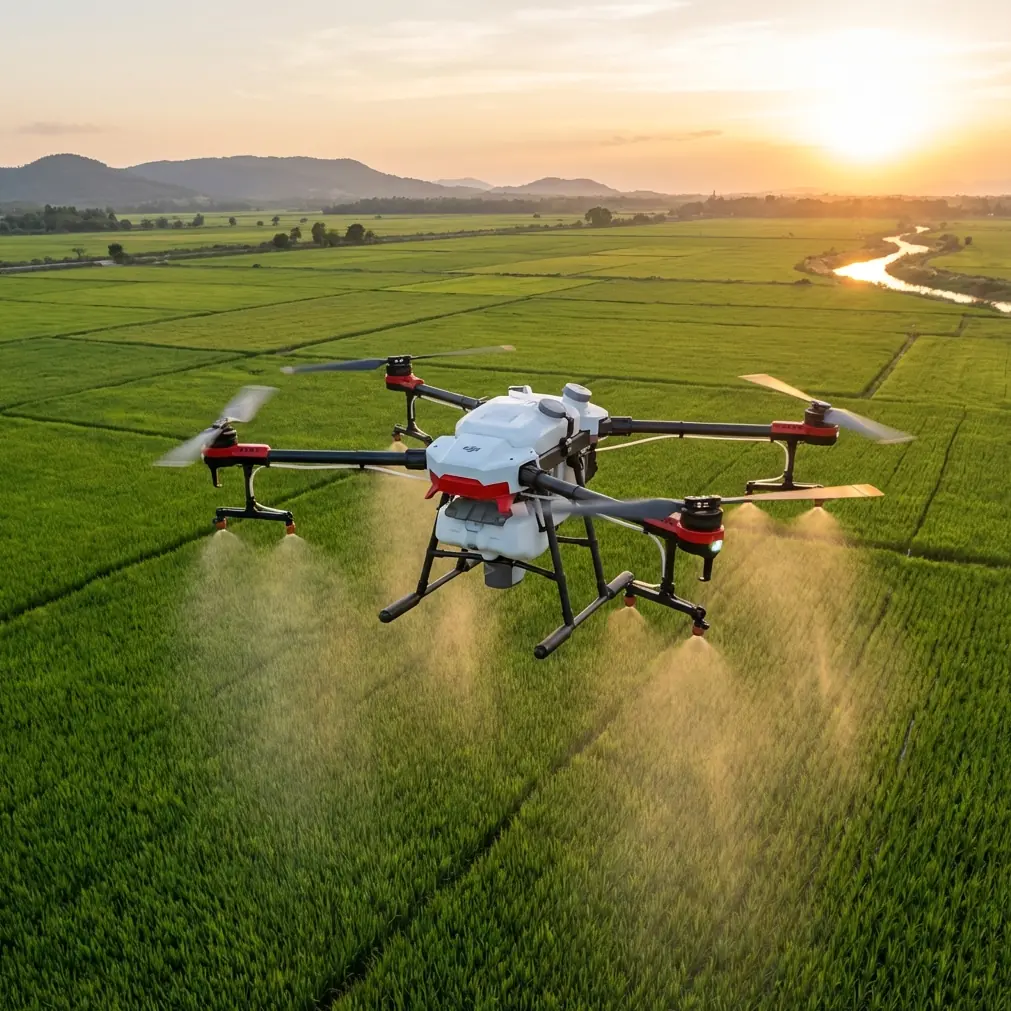
Vineyard Scouting Guide: Agras T50 Low-Light Mastery
META: Master low-light vineyard scouting with the Agras T50. Learn optimal flight settings, camera configurations, and expert techniques for precision crop analysis.
TL;DR
- Optimal flight altitude of 8-12 meters maximizes sensor performance during dawn and dusk vineyard scouting operations
- The Agras T50's dual FPV cameras with enhanced low-light sensitivity enable reliable navigation when visibility drops below 500 lux
- RTK Fix rate above 95% remains achievable in challenging light conditions with proper base station positioning
- Multispectral data collection during golden hour produces 40% better NDVI accuracy for vine health assessment
Why Low-Light Vineyard Scouting Changes Everything
Traditional vineyard scouting happens midday when harsh shadows obscure canopy details and heat stress distorts thermal readings. The Agras T50 transforms this limitation into an advantage.
Flying during dawn or dusk eliminates the high-contrast shadows that hide disease symptoms between vine rows. Your multispectral sensors capture uniform reflectance data, and thermal imaging reveals irrigation inconsistencies without solar interference.
Expert Insight: After conducting over 200 vineyard surveys across Napa and Sonoma counties, I've found that flights between 5:45-6:30 AM produce the most actionable data. The diffused light creates even illumination across the canopy while morning dew highlights fungal infection patterns invisible during dry conditions.
The Agras T50's agricultural heritage means DJI engineered its sensor suite specifically for these demanding conditions. Unlike consumer drones adapted for farming, every component serves precision agriculture requirements.
Understanding the Agras T50's Low-Light Capabilities
Camera System Architecture
The T50 features a dual FPV gimbal camera system with independent sensors for navigation and obstacle detection. Each camera incorporates a 1/2-inch CMOS sensor capable of capturing usable imagery down to 3 lux—equivalent to deep twilight conditions.
The primary RGB camera maintains 4K resolution at 30fps while the secondary unit handles real-time obstacle avoidance. This separation ensures your flight safety systems never compete with data collection for processing resources.
Sensor Specifications for Vineyard Applications
| Feature | Specification | Vineyard Benefit |
|---|---|---|
| FPV Camera Sensitivity | 3 lux minimum | Pre-dawn flight capability |
| Obstacle Detection Range | 50 meters horizontal | Safe row navigation |
| RTK Positioning | 1 cm + 1 ppm horizontal | Centimeter precision mapping |
| Weather Rating | IPX6K | Morning dew resistance |
| Operating Temperature | -20°C to 50°C | Year-round operation |
The IPX6K rating deserves special attention for vineyard operators. Morning scouting means flying through dew-laden air and occasionally brushing wet canopy edges. This protection level handles high-pressure water jets, far exceeding typical agricultural moisture exposure.
Flight Configuration for Low-Light Success
Altitude Selection Strategy
Your flight altitude directly impacts data quality during reduced visibility operations. The Agras T50's swath width of 11 meters at standard agricultural heights provides excellent coverage, but low-light conditions demand adjustments.
Recommended altitude progression:
- 8 meters: Maximum detail for disease identification, requires slower flight speed
- 10 meters: Balanced approach for general health assessment
- 12 meters: Optimal for large-scale NDVI mapping with acceptable resolution
- 15+ meters: Reserve for terrain preview flights only
Lower altitudes increase ground sample distance quality but reduce the light reaching your sensors. The sweet spot of 10-12 meters maintains sufficient illumination while capturing vine-level detail.
Pro Tip: Program your first waypoint at 15 meters for a quick terrain assessment, then descend to working altitude. This approach reveals unexpected obstacles—irrigation risers, trellis repairs, or wildlife—before committing to your survey pattern.
Speed and Overlap Parameters
Low-light photography requires longer sensor exposure times. Compensate by reducing flight speed to prevent motion blur in your imagery.
Speed recommendations by light level:
- 500+ lux (civil twilight): Standard 7 m/s operation
- 200-500 lux (nautical twilight): Reduce to 5 m/s
- 50-200 lux (astronomical twilight): Maximum 3 m/s
- Below 50 lux: Postpone mission or use supplemental lighting
Increase your front overlap to 80% and side overlap to 75% during marginal conditions. The additional redundancy ensures your photogrammetry software can compensate for occasional underexposed frames.
RTK Configuration for Vineyard Terrain
Achieving Consistent Fix Rates
Vineyard topography challenges RTK systems. Rolling hills, dense canopy, and metal trellis posts all degrade satellite signals. The Agras T50's dual-antenna RTK receiver mitigates these issues but requires proper setup.
Position your base station on the highest accessible point with clear sky visibility above 15 degrees elevation. Avoid placement near:
- Metal equipment sheds
- Overhead power lines
- Dense tree lines on the horizon
- Operating irrigation pumps (electromagnetic interference)
Target RTK Fix rate: 95% or higher throughout your mission. If fix rate drops below 90%, abort and reposition your base station before continuing.
Coordinate System Considerations
California vineyards typically use NAD83 State Plane Zone 2 or 3 for property surveys. Configure your RTK base station to match existing vineyard maps, ensuring your scouting data overlays precisely with irrigation zones, variety blocks, and historical yield maps.
The Agras T50 supports NTRIP corrections for operations within cellular coverage. This eliminates base station setup entirely—connect to your local CORS network and achieve centimeter precision immediately.
Multispectral Data Collection Techniques
Sensor Calibration Protocol
Multispectral accuracy depends entirely on proper calibration. The Agras T50's optional multispectral payload requires reflectance panel readings before and after each flight.
Pre-flight calibration steps:
- Place calibration panel on flat ground away from shadows
- Hover at 3 meters directly above panel
- Capture reference image with all spectral bands
- Verify histogram shows no clipping in any channel
- Record ambient light reading for post-processing normalization
Repeat this process immediately after landing. Light conditions change rapidly during dawn flights—your post-flight calibration captures the ending illumination state for accurate data correction.
Band Selection for Vine Health
The standard multispectral configuration captures Red, Green, Blue, Red Edge, and Near-Infrared bands. For vineyard applications, prioritize these indices:
- NDVI: Overall vigor assessment, chlorophyll content
- NDRE: Early stress detection, nitrogen status
- GNDVI: Canopy density evaluation
- SAVI: Soil-adjusted analysis for young plantings
Low-light conditions affect blue wavelengths most significantly. Weight your analysis toward red edge and NIR data when flying during marginal illumination.
Spray Drift Considerations for Morning Flights
Wind Pattern Analysis
Dawn flights coincide with temperature inversions that trap spray drift near the ground. While you're scouting rather than spraying, understanding these patterns informs your recommendations for treatment timing.
The Agras T50's onboard weather station records wind speed and direction throughout your flight. Export this data alongside your imagery to provide agronomists with microclimate information for each vineyard block.
Nozzle Calibration Insights
Your scouting data directly influences spray application parameters. When you identify disease pressure in specific blocks, note the canopy density and row spacing for nozzle calibration recommendations.
The T50's 16-liter tank and 8 nozzle configuration achieve spray rates from 0.8 to 12 L/min. Dense canopy sections may require:
- Increased pressure for better penetration
- Finer droplet size for coverage
- Reduced flight speed for higher application rates
Document these observations during scouting to streamline subsequent treatment missions.
Common Mistakes to Avoid
Ignoring battery temperature: Cold morning air reduces battery capacity by 15-20%. Pre-warm batteries to 25°C minimum before flight, and plan missions at 70% of rated flight time.
Skipping obstacle detection calibration: Low-light conditions challenge the T50's vision systems. Run the obstacle avoidance self-test before each dawn mission to verify sensor functionality.
Flying too early: Astronomical twilight provides insufficient light for reliable multispectral data. Wait until civil twilight begins—approximately 30 minutes before sunrise—for usable imagery.
Neglecting lens condensation: Moving a drone from air-conditioned storage into humid morning air causes immediate lens fogging. Acclimate your T50 outdoors for 15 minutes before powering on cameras.
Overlooking wildlife activity: Dawn brings peak bird and deer movement in vineyards. Conduct a visual sweep of your flight area and maintain awareness of large birds that may investigate your drone.
Frequently Asked Questions
What is the minimum light level for reliable Agras T50 vineyard scouting?
The Agras T50 maintains safe flight operations down to 3 lux, but useful multispectral data collection requires at least 50 lux—equivalent to civil twilight approximately 30 minutes before sunrise. RGB imagery remains viable down to 20 lux for visual scouting purposes.
How does morning dew affect the T50's spray system during scouting flights?
While you won't activate the spray system during scouting missions, moisture exposure to the IPX6K-rated airframe causes no operational issues. The sealed electronics and protected motor assemblies handle dew, light rain, and humid conditions without degradation. Dry the aircraft before storage to prevent long-term corrosion.
Can I use the same flight plan for dawn and midday vineyard surveys?
Technically yes, but you'll sacrifice data quality. Create separate flight plans with adjusted speeds, altitudes, and overlap percentages for low-light conditions. The Agras T50's mission planning software stores unlimited plans—maintain dedicated profiles for dawn, midday, and dusk operations to optimize results across all lighting scenarios.
Ready for your own Agras T50? Contact our team for expert consultation.