
Agras T50 for High-Altitude Scouting: What Actually Matters
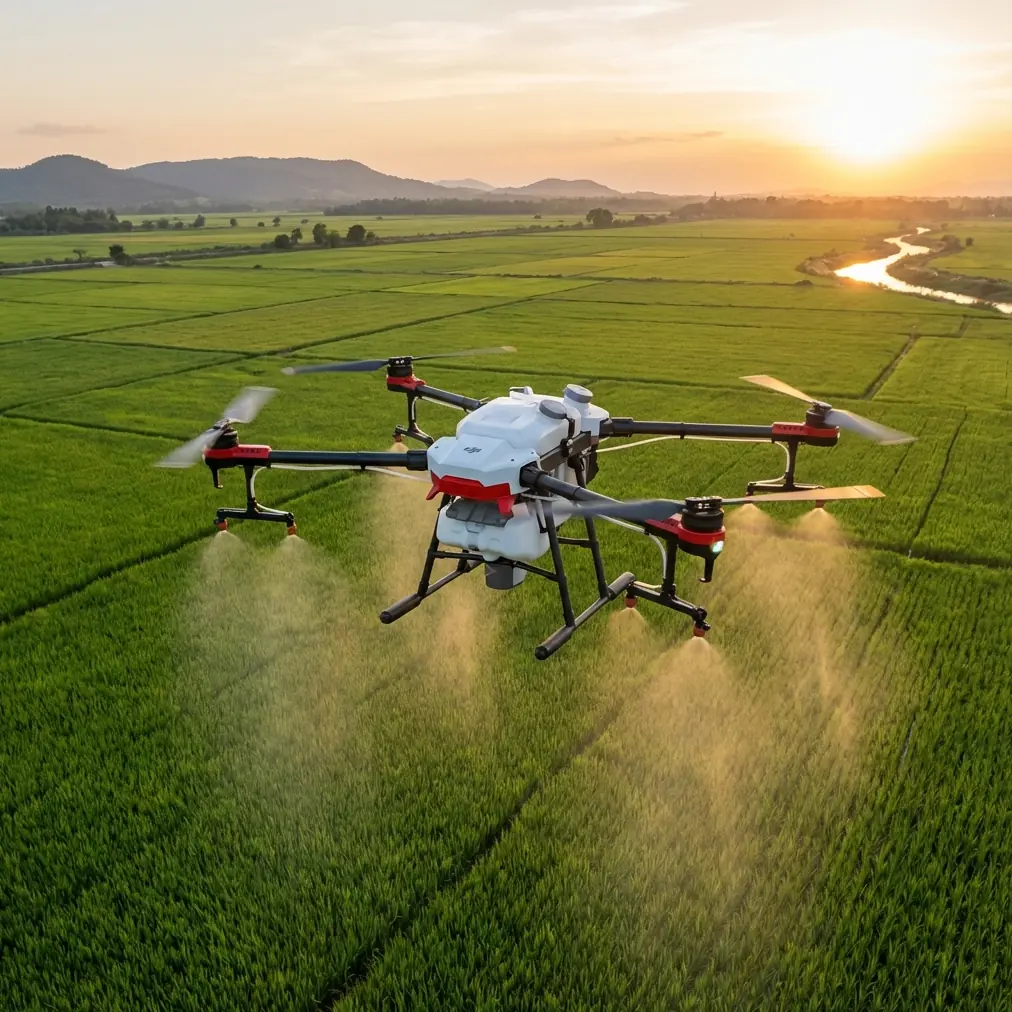
Agras T50 for High-Altitude Scouting: What Actually Matters Before the First Flight
META: A technical review of Agras T50 high-altitude scouting priorities, connecting airframe adaptability, training logic, pre-flight cleaning, RTK discipline, spray drift control, and operational precision.
High-altitude scouting exposes weaknesses fast. Thin air, shifting winds, colder starts, uneven terrain, and narrow weather windows all punish sloppy preparation. That is exactly why the Agras T50 deserves to be examined less as a headline machine and more as an operating system: airframe, sensors, workflow, pilot behavior, and maintenance discipline working together.
From an academic and field-operations perspective, the most useful way to think about the T50 is not “how much can it carry?” but “how reliably can it adapt?” That question becomes sharper when the mission is venue scouting in elevated terrain, where every flight has to earn its place.
A revealing reference point comes from biomimetic drone research. One source frames bionic UAV development around imitating the form and structural logic of birds, bats, and flying insects, with the explicit goal of improving flight performance and environmental adaptability. That matters here because high-altitude scouting is, above all, an adaptability problem. A drone does not need to literally flap like a bird to benefit from that design philosophy. The operational lesson is broader: when conditions become less forgiving, success depends on how well the aircraft’s external form, internal structure, and control behavior absorb environmental variability.
That lens is useful for evaluating the Agras T50 in real agricultural reconnaissance work. When a team scouts orchards, terrace farms, mountain-edge plots, or fragmented fields at altitude, the drone must maintain stable path execution while dealing with gust corridors, density altitude effects, and obstacles that do not present themselves cleanly from one approach angle. The significance of a robust platform is not abstract. It shows up in swath consistency, nozzle calibration confidence, spray drift management, and the pilot’s ability to hold a dependable RTK fix rate when geography starts working against signal geometry.
Why high-altitude scouting is not just “normal scouting, but higher”
Many operators underestimate how quickly small setup errors compound in the mountains or on elevated plateaus. A nozzle that was “close enough” at lower elevation can produce uneven deposition when environmental stress increases. A route that looked generous on the map can become tight once terrain-induced wind shear starts nudging the aircraft laterally. A damp residue on key surfaces after transport or washdown can interfere with sensors or visibility markers just when the crew needs maximum clarity.
This is where one unglamorous detail deserves attention: pre-flight cleaning.
The narrative spark here is not cosmetic care. It is safety logic. Before any high-altitude scouting or spray planning session, cleaning the aircraft’s critical surfaces should be treated as part of the flight system itself. On an aircraft expected to work in agricultural conditions, especially one associated with rugged protection standards such as IPX6K-level wash resistance in the broader conversation around professional ag drones, operators can become careless and assume survivability equals readiness. It does not. Protection ratings help the machine endure harsh environments; they do not replace a disciplined inspection routine.
A proper pre-flight cleaning step matters because residue hides problems. Dust can obscure visual indicators. Chemical film can build around nozzles and compromise calibration checks. Moisture trapped near connectors or sensor windows can distort confidence in the aircraft’s reported status. In high-altitude scouting, where margins tighten, that uncertainty is expensive. Clean aircraft surfaces support accurate visual inspection, and clean spray components support trustworthy application planning. If the mission later escalates from scouting into treatment, that earlier discipline pays off immediately.
The training lesson hidden in an educational drone manual
One of the stranger but surprisingly relevant reference materials comes from a DJI TT educational drone programming manual. The extract is rough, but one operational idea stands out clearly: a multi-drone sequence where all aircraft take off, wait 5 seconds, then drone number 1 lands, followed 1 second later by number 2, then 1 second later by number 3. Another passage notes that the user can control one drone by its assigned number or command all connected drones in “all” mode.
At first glance, that seems far removed from an Agras T50 article. It is not.
The significance is procedural thinking. High-altitude operations reward crews that can break complex tasks into numbered, manageable, repeatable steps. The educational example uses three drones and a 5-second pause simply to teach sequence control. In professional field scouting, the same logic becomes a safety multiplier. You do not try to perfect everything at once. You define aircraft roles, flight order, fallback states, and post-flight actions in a way the team can execute without hesitation.
For example, a scouting day with the T50 might include:
- pre-clean and dry inspection
- nozzle calibration verification
- RTK lock confirmation
- terrain and wind corridor review
- low-risk initial pass
- data validation
- only then full mission execution
That structure mirrors the educational principle behind numbered control and staged actions. It is not about coding blocks. It is about reducing ambiguity. High-altitude sites often tempt pilots to improvise because local conditions change by the minute. Improvisation has a place, but only after the crew has made key behaviors automatic.
The training lesson hidden in aerobatic instruction
A second reference, from a technical text on radio-control aerobatic flight training, is even more directly useful. It argues that training should separate the elements essential for successfully completing a maneuver from the refinements that can be added later. It also emphasizes that the more skills become procedural and automatic early on, the more cognitive capacity remains for higher-level adjustments.
That is excellent advice for Agras T50 teams scouting at altitude.
Too many operations try to jump immediately to “advanced” performance: maximum area coverage, perfect route elegance, idealized efficiency metrics, or aggressive work rates in variable terrain. The better method is staged competence. First secure the essentials. Can the crew consistently achieve safe setup? Can they verify centimeter precision where required? Can they monitor swath width realistically rather than relying on theoretical assumptions? Can they recognize when spray drift risk has crossed the line from manageable to irresponsible?
Once those basics become automatic, the operator has mental bandwidth left for the hard problems that actually define high-altitude success: microclimate interpretation, route reshaping around terrain, and real-time judgment calls about whether a field should be treated at all.
That aerobatic training source also discusses how aircraft configuration can remove a known handling obstacle, allowing students to learn more effectively. In its context, the issue was adverse yaw and the value of linked control behavior. In ours, the broader lesson is that the machine should help the operator avoid fighting unnecessary instability. For Agras T50 work, that means configuring the aircraft, mission parameters, and support systems so the pilot is not wasting attention on avoidable disturbances. Reliable positioning, sensible route segmentation, and stable flow calibration are not luxuries. They are cognitive relief.
What this means for Agras T50 scouting specifically
When the mission is scouting venues in high altitude, the T50 should be judged by how cleanly it supports decision-making before any product is dispensed. That includes route realism, obstacle awareness, and confidence in environmental fit.
A few areas deserve particular scrutiny.
1. RTK discipline matters more than brochure-level precision claims
Centimeter precision sounds impressive, but in elevated terrain the more practical question is whether the aircraft can maintain a strong RTK fix rate through the mission area. Ridges, vegetation, topographic masking, and setup shortcuts can all reduce confidence in the solution. If your fix quality is inconsistent, your maps, route edges, and treatment assumptions degrade with it.
Operational significance: a marginal RTK state can distort repeatability between scouting and later spray operations. That affects not only efficiency but overlap, misses, and edge behavior near terrain breaks.
2. Swath width should be treated as conditional, not fixed
In benign conditions, operators often rely on habitual swath expectations. At altitude, that habit becomes dangerous. Wind profile changes and reduced environmental stability can alter effective deposition behavior. Even if the aircraft flies the route accurately, the agronomic result may diverge from the planned one.
Operational significance: scouting flights should be used to validate whether the intended swath width remains realistic in that terrain and weather pattern. This is where spray drift risk becomes a planning issue, not just a compliance issue.
3. Nozzle calibration is not a static maintenance item
Calibration is often discussed as a workshop task. In reality, for elevated venues it is part of mission validation. If the aircraft has been transported over rough roads, cleaned hastily, or exposed to residue accumulation, the crew should not assume yesterday’s calibration still represents today’s behavior.
Operational significance: stable output is necessary for meaningful field interpretation. If scouting transitions into treatment planning, poor calibration contaminates the entire chain of decisions.
4. Weather adaptability is a design philosophy, not a checkbox
This returns us to the biomimetic reference. The source argues that optimizing external form and internal structure to improve environmental adaptability is a major direction in UAV development. That statement is especially meaningful in agriculture because farms are not controlled airspaces. They are dynamic ecosystems. High-altitude farms multiply that unpredictability.
Operational significance: teams using the Agras T50 should value not just raw capability, but how gracefully the platform and crew respond to environmental change. Adaptability is the real performance metric.
A practical pre-flight cleaning protocol for high-altitude scouting days
Here is the step many crews rush through and later regret.
Before battery insertion and before route upload, perform a dry-first visual inspection followed by targeted cleaning:
- Inspect spray nozzles and nearby surfaces for dried residue or blockage.
- Wipe sensor windows and visual markers with appropriate non-abrasive materials.
- Check landing gear, arm joints, and exposed surfaces for mud or plant material from the prior job.
- Confirm that connectors and access points are dry after any washdown.
- Re-check display indicators, status lights, and any visible identification points.
Why mention such basic housekeeping in a technical review? Because it directly affects mission trust. If you cannot verify the condition of the aircraft quickly and clearly, you are already operating with diluted information. A rugged drone still needs a clean state to reveal faults.
For teams building high-altitude workflows around the T50, this should be written into the checklist, not left to individual preference. If you want a second set of eyes on checklist design for mountain or plateau work, this field support channel can be useful: message a UAV operations specialist.
The overlooked value of procedural simplicity
One thing the training references agree on, despite coming from very different contexts, is that progress accelerates when complexity is staged properly. The educational drone example reduces group flight into sequence logic. The aerobatic text separates essential performance from later refinement. Both ideas apply cleanly to Agras T50 high-altitude scouting.
Do not start by chasing a perfect mission.
Start by building an operation where the crew can repeatedly do the following without friction:
- clean and inspect the aircraft thoroughly
- validate nozzle condition
- verify RTK quality before launch
- assess terrain-linked drift exposure
- test route feasibility with conservative assumptions
- document what changed between the scouting plan and the real site
That is how sophistication is built in practice. The operation becomes more capable not because the team adds complexity, but because it removes avoidable uncertainty.
Final assessment
The Agras T50 is most compelling in high-altitude scouting when viewed through the lens of adaptability and procedural maturity. The most valuable insight from the reference material is not a single specification. It is a pattern.
First, bionic UAV research highlights environmental adaptability as a central design goal, achieved through the relationship between form, structure, and flight performance. Second, both the educational programming example and the aerobatic training text show that hard tasks become manageable when they are broken into sequence, essentials are separated from refinements, and basic actions are made automatic.
For T50 operators, that translates into a very practical standard: if your pre-flight cleaning, RTK verification, nozzle calibration, and drift assessment are not routine, then your high-altitude scouting operation is not really ready, no matter how advanced the aircraft is.
The machine matters. The workflow matters more.
Ready for your own Agras T50? Contact our team for expert consultation.