
Scouting High-Altitude Venues With the Agras T50
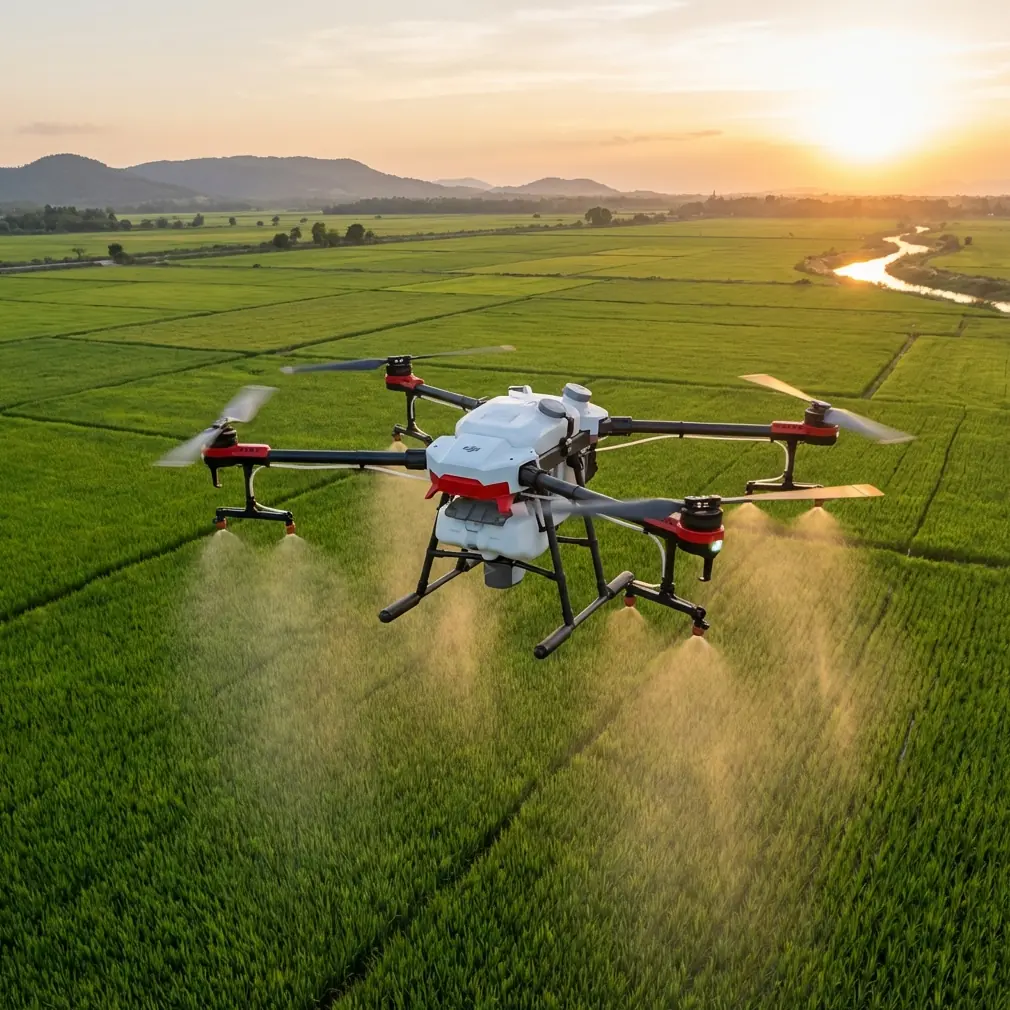
Scouting High-Altitude Venues With the Agras T50: What Two Aviation News Signals Reveal for Field Planning
META: Practical tutorial for scouting high-altitude venues with the DJI Agras T50, using recent drone cleaning and short-hop aviation news to improve access planning, spray workflow, and operational reliability.
High-altitude venue scouting is usually framed as a flight-planning problem. In practice, it is an access problem first.
That is why two recent aviation stories matter more to Agras T50 operators than they might appear at first glance. One came from the building-services side: Apellix appointed Drone Clean UK as the exclusive distributor for its autonomous cleaning drones in the United Kingdom, expanding availability of tethered, AI-enabled systems used for spray painting, power washing, and soft washing in commercial and industrial environments. The other came from low-altitude passenger transport in the Yangtze River Delta, where a helicopter operator is running daily scheduled flights with an 18-minute one-way trip time using a “high-frequency, small-unit” model and shared-seat service.
Neither story mentions the Agras T50. Both are highly relevant if you are scouting venues in high altitude.
Why? Because together they point to a change in how aerial work is being organized: tighter mission windows, smaller operational units, more repeatable route structures, and a stronger expectation that aircraft can deliver useful work in places where traditional access is awkward, slow, or risky. That is exactly the environment where the T50 earns its keep—especially when you are evaluating mountain resorts, upland orchards, terraced plots, elevated event grounds, or steep-sided agricultural blocks that punish bad logistics.
I work with operators who often focus too early on payload tables and too late on the boring questions that decide whether a mission runs cleanly: how fast can a team stage at elevation, how stable is the RTK fix rate near terrain breaks, how much spray drift risk changes between ridgelines, and whether a third-party accessory solves a real field constraint instead of adding clutter. The T50 is strong, but it is only as effective as the venue-scouting process behind it.
Here is how I would approach high-altitude venue scouting with the Agras T50 right now, using those two news developments as practical signals rather than unrelated headlines.
Why these news items matter to T50 operators
The Apellix distribution deal is operationally significant because it validates a broader market appetite for specialized aerial spray work outside conventional agriculture. Apellix’s systems are tethered and AI-enabled, and they are being positioned for spray painting, power washing, and soft washing across commercial and industrial sites. That means end users are getting more comfortable with aerial platforms doing precision surface treatment in difficult access zones.
For an Agras T50 operator, that matters in two ways.
First, clients scouting elevated venues are increasingly familiar with the idea that drones are not just for imaging. They can perform treatment, application, and maintenance tasks. If you are evaluating a high-altitude site that blends agriculture with infrastructure—vineyard plus retaining walls, orchard plus roofline water management, terraced farm plus access road washdown—the conversation is no longer limited to crop spraying. The venue itself may support adjacent drone workflows.
Second, the Apellix model highlights something T50 teams should take seriously: controlled application quality. Spray work at height is unforgiving. Wind funnels through cuts, eddies form around structures, and droplet behavior changes fast near exposed surfaces. A scouting plan that ignores nozzle calibration, swath width discipline, and drift corridors is unfinished.
The helicopter route story matters for a different reason. An 18-minute one-way flight, run daily in a high-frequency, small-unit format, tells us the industry is leaning toward compact, repeatable transport patterns instead of infrequent bulk movement. That is a useful mental model for T50 mission design in elevated terrain. Instead of planning one oversized sortie sequence that tries to do everything from a single staging point, the smarter approach is often to break the venue into smaller, repeatable cells with fast repositioning and clear turnaround logic.
In other words, think less like a tractor route. Think more like a shuttle network.
Step 1: Scout access before you scout airspace
When a venue sits at altitude, the first real bottleneck is not usually battery performance. It is ground handling.
I start by mapping three access layers:
- Primary vehicle approach
- Secondary manual carry route
- Emergency extraction path
The helicopter article’s “small-unit” operating concept is useful here. If the site naturally forces smaller movements, embrace that early. Do not design your field plan around a single oversized base station if a venue is better served by two or three lightweight forward staging spots.
This is especially relevant with the Agras T50 because productivity depends on keeping the application cycle flowing. If your refill, battery swap, and tank handling are all tied to one lowland access road while your treatment block sits well above it, the aircraft’s capability is not your limiting factor. The venue geometry is.
A good high-altitude scouting pass should answer:
- Can support gear be moved in compact loads?
- Are there flat, stable battery-change points near the treatment area?
- Is there safe separation between crew positions and rotor wash near slopes?
- Can the route be split into short operational cells if weather shifts quickly?
That last point matters more than many teams admit. Mountain weather does not merely “change.” It fragments. One ridge stays calm while the next turns unusable. A modular site plan gives the T50 a better chance of staying productive.
Step 2: Measure wind behavior, not just wind speed
High-altitude scouting often fails because teams rely on a single handheld wind reading from the launch point. That tells you almost nothing about spray drift once the aircraft moves across uneven terrain.
The Apellix story is a reminder that aerial application quality is the product, not just flight. Whether the drone is soft washing a façade or treating a crop edge, control over where droplets go is the entire job.
With the T50, I recommend scouting for drift in three distinct zones:
- Launch zone wind
- Mid-slope crossflow
- Ridge or structure-induced turbulence
At altitude, the same venue can produce three different drift profiles within a very short distance. That directly affects nozzle calibration and swath width settings. A wide swath that looks efficient on paper may become a liability if lateral flow pushes droplets off target. In those cases, tighter passes with more conservative overlap often outperform aggressive coverage plans.
This is where a third-party accessory can genuinely improve the mission. One upgrade I have seen work well is a portable ultrasonic weather meter mounted on a lightweight pole system at treatment height rather than at operator chest height. It sounds simple, but it changes decisions. Instead of guessing what wind is doing above a terrace edge or orchard row break, you get better localized data before committing the aircraft. For venue scouting in exposed, elevated sites, that accessory often pays for itself in avoided rework alone.
Step 3: Validate RTK behavior around terrain breaks
The LSI term most operators throw around too casually is centimeter precision. Precision is not a slogan. It is a condition, and at high altitude that condition can become unstable near cliff bands, abrupt elevation transitions, tree walls, or reflective structures.
When scouting a venue for the Agras T50, I care less about whether RTK is available in theory and more about the RTK fix rate in the specific working corridors the aircraft will actually fly. A route can look perfect in a desktop map and still become inconsistent where terrain blocks part of the sky view.
So the scouting checklist should include:
- Open-sky sections versus masked-sky sections
- Signal behavior near retaining walls or metal roofs
- Transition points where the aircraft climbs or descends sharply
- Any repeated fix loss in the same corridor
That last item is operational gold. Repeated instability in one strip usually means you need to redesign the route, not just “watch it carefully.”
If the venue includes mixed-use infrastructure, the comparison to Apellix becomes even sharper. Their tethered systems reduce some navigation uncertainty by physically constraining the platform for industrial tasks. The T50 is not tethered, so your answer is better site intelligence. High-altitude precision depends on reducing the number of surprises before spray ever starts.
Step 4: Check surfaces, runoff, and collateral exposure
Many elevated venues are not pure agricultural spaces. They are hybrids. You may be scouting around mountain lodges, water tanks, retaining structures, greenhouses, service roads, or viewing platforms. That changes the risk picture.
The cleaning-drone distribution deal is a strong cue here. Aerial treatment is expanding into commercial and industrial settings because those sites are difficult to access and expensive to service conventionally. High-altitude venues often share those same access constraints. If a T50 operation is planned near such surfaces, the scout needs to assess not just target vegetation but non-target materials, runoff paths, and splashback areas.
This is where IPX6K-class durability matters from a planning perspective. Harsh moisture exposure, dust, residue, and rough weather transitions are normal in elevated work. A robust platform helps, but resilience does not excuse sloppy staging. I still want washdown planning, clean refill handling, and separate zones for chemical prep and battery handling.
At minimum, note:
- Hard surfaces that can amplify bounce or runoff
- Drainage lines below treatment blocks
- Public or worker pathways near the operation
- Surface contamination risks if drift shifts downslope
If the site owner has mixed priorities, say so early. Some venues need crop treatment one day and structure maintenance awareness the next. That overlap is exactly why adjacent drone categories are worth watching.
Step 5: Build the mission around shorter loops
The helicopter story offers the clearest tactical lesson in the whole dataset: high-frequency, small-unit transport works because it reduces friction. The same principle applies beautifully to T50 venue scouting and route design.
Instead of asking, “How do I cover the whole venue in one big plan?” ask, “What is the shortest reliable loop I can repeat without compounding risk?”
For high-altitude T50 operations, short loops help with:
- Battery rotation discipline
- More consistent droplet performance
- Easier correction after wind changes
- Reduced crew fatigue on uneven ground
- Cleaner documentation for compliance and post-mission review
This is also the best way to protect quality when scouting unfamiliar sites. A venue that looks manageable from satellite imagery often reveals hidden complications only after the first few cycles. Smaller operational cells let you adjust without breaking the whole day.
If you need a second opinion on route segmentation or accessory setup for an elevated site, send your terrain notes through this field planning channel: https://wa.me/example
Step 6: Use multispectral inputs selectively, not reflexively
Not every high-altitude venue needs a multispectral layer before treatment planning. But some absolutely do.
In terraced or slope-heavy blocks, visible imagery can hide stress patterns caused by drainage asymmetry, exposure differences, or uneven soil retention. A multispectral pass can help determine whether the T50’s application zone should follow neat geometric lines or biological reality.
The key is restraint. Multispectral data is useful when it changes the application map. If it does not alter route design, priority blocks, or spray timing, it may just be adding processing time. High-altitude venues are often time-sensitive because weather windows are narrow. Gather the data that changes decisions.
Where multispectral does help most is in identifying whether a broad swath width makes sense across the whole venue. Frequently, it does not. Distinct health zones at elevation may justify narrower, targeted passes that preserve coverage accuracy and reduce unnecessary exposure.
Step 7: Decide whether the venue deserves the T50 at all
This may sound odd in an article about the Agras T50, but good scouting sometimes ends with a no.
A site may be too fragmented, too exposed to turbulent drift, too awkward to support safe battery logistics, or too mixed-use to manage collateral risk cleanly. Professional judgment is not proving the aircraft can fly there. It is deciding whether the operation can be performed to a high standard.
That is another reason the Apellix news is useful. The broader aerial work market is specializing. Tethered cleaning drones are finding their lane in difficult industrial environments. Helicopter services are finding theirs in short-hop, repeatable mobility. The Agras T50 also has a lane, and the best operators protect it.
When a high-altitude venue fits, the T50 can be an outstanding tool. But it performs best when the mission is engineered around terrain reality: drift mapping, RTK verification, compact ground logistics, calibrated nozzles, and route cells that can survive changing conditions.
The practical takeaway
These two news items are small on the surface, but they point in the same direction. Aerial work is becoming more specialized, more modular, and more sensitive to operational design. That is good news for serious Agras T50 operators.
If you are scouting venues in high altitude, stop treating the job as a simple question of aircraft capability. Treat it as a choreography problem. Who moves where, in what size unit, with what precision margin, under what drift conditions, and with what fallback if one corridor deteriorates?
Get that right and the T50 becomes far more than a powerful sprayer. It becomes a disciplined platform for difficult terrain—one that can deliver repeatable results where conventional access starts losing time, consistency, and safety.
Ready for your own Agras T50? Contact our team for expert consultation.