
Expert Scouting With Agras T50 in Dusty Highway Corridors
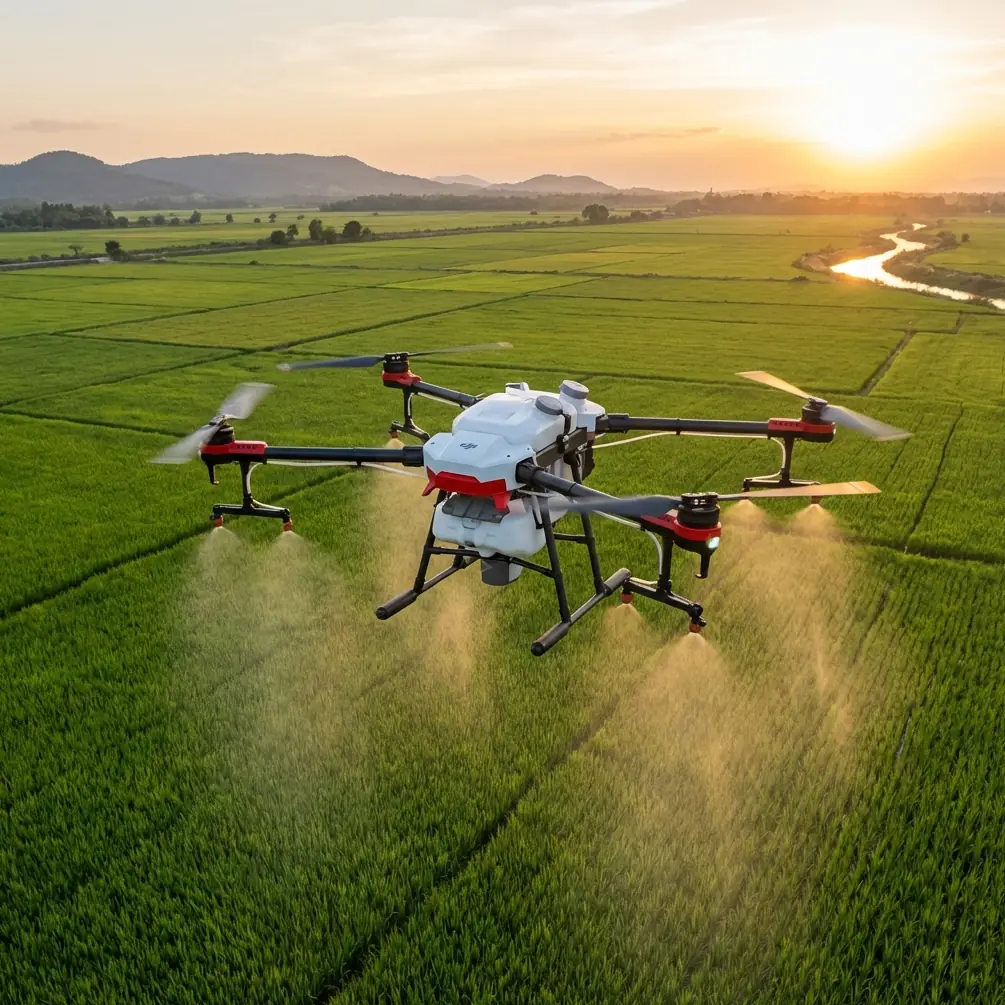
Expert Scouting With Agras T50 in Dusty Highway Corridors
META: A technical review of how Agras T50 fits dusty highway-side agricultural scouting, with practical insight on GIS alignment, RTK-era workflows, antenna placement, coverage planning, and field team structure.
Dust changes everything.
It softens contrast on leaves, coats sensors, obscures field edges, and turns a routine roadside scouting mission into a precision problem. If you are evaluating whether the DJI Agras T50 belongs in this kind of environment, the useful question is not whether it is “advanced.” It is whether it can fit into a field workflow that still works when base maps drift, access roads are narrow, and the target area does not behave like a neat square on a screen.
That is where the real story begins.
The most valuable insight from the reference material is not tied to a glossy product promise. It is tied to field discipline. One source describes a workflow where a nominal 200 m × 200 m sample plot was not enough, so the actual flight collection area had to be expanded to 400 m × 400 m to ensure all parcels were covered in the orthomosaic. That single detail matters far more than marketing language because it captures a truth every serious operator learns: planned boundaries rarely match agricultural reality, especially along highways where irregular access strips, drainage cuts, embankments, and fragmented plots distort the geometry.
For an Agras T50 operator scouting dusty highway-adjacent farmland, this has operational significance on day one. Coverage planning cannot rely on the paper boundary alone. If your crop edge is interrupted by service roads, utility corridors, or construction spoil, you need margin built into the mission design. Otherwise your scouting dataset looks complete on the tablet and incomplete back at the desk. A platform like the T50 only delivers value if the operator assumes the map is a hypothesis, not a fact.
Why the Agras T50 matters in a scouting workflow, not just a spraying workflow
The Agras line is usually discussed through application efficiency, swath width, throughput, and treatment execution. That is fair, but incomplete. In dusty roadside agriculture, the T50 should be viewed as part of a larger operational system: reconnaissance, verification, treatment planning, and repeatability.
The reference documents point to a broader transition in agricultural UAV work. One describes how the industry moved from hobby-derived flight control toward organized aerial plant-protection service, and how RTK technology, autonomous route planning, and app-based multi-aircraft coordination became defining capabilities. Even though that document references an earlier competitor platform and an earlier DJI generation, the implication for the T50 is clear: modern agricultural UAV value is no longer just airframe performance. It is precision plus workflow orchestration.
That is especially relevant when scouting near highways in dusty conditions. Precision is not only about where the aircraft flies. It affects how confidently you can compare one pass to another, one field visit to the next, and one stress signature against an actual plot boundary. A stronger RTK fix rate means less ambiguity when a crop stress patch appears to straddle a headland, roadside shoulder, or irrigation line. When dust and low-angle light already reduce visual confidence, centimeter-level positional stability becomes more than a specification. It becomes the difference between useful agronomy and expensive guesswork.
The hidden problem: base maps lie more often than pilots admit
One of the sharpest field details in the source material is the use of onsite map registration because online basemaps and actual sample plot coordinates often do not line up. The workflow described includes enabling a dynamic correction option in the flight map app to fix the mismatch in the field.
This is not a trivial software trick. It is one of the most practical lessons for anyone using an Agras T50 in roadside scouting.
Highway-edge operations are notorious for spatial mismatch. You may be dealing with recent grading, widened shoulders, new drainage cuts, temporary staging yards, or crop rows pushed inward by construction disturbance. If your imported layers are offset, your mission can still fly perfectly and collect the wrong area perfectly. Operators who have only flown neat demonstration fields underestimate this risk.
The reference also notes that high-resolution imagery, SHP, and DWG files can be imported from ArcGIS into the flight mapping environment. That capability has major significance in a T50 workflow because highway scouting often depends on mixed-source spatial data: parcel boundaries from GIS, utility setbacks from CAD, access tracks from previous surveys, and custom crop blocks from agronomy teams. When all of that can be brought into one field-ready environment, the aircraft stops being a standalone machine and starts functioning as a node in a geographic decision system.
For a consultant, this is where the T50 becomes compelling. It fits best in teams that already respect geospatial prep.
Team size is smaller than many expect, but the skill standard is higher
Another highly practical reference point is the recommendation that a small UAV team can be built with just 2 to 3 people: typically 1 to 2 field pilots and 1 office-based data specialist. At first glance that sounds modest. In reality, it sets a high bar.
Dusty highway-side scouting is not solved by adding more people. It is solved by assigning the right roles. The field side needs pilots who can handle takeoff and low-altitude manual positioning when site conditions are messy. The source specifically mentions manual takeoff, manual flight control, and low-altitude image capture for crop sample interpretation. That is directly relevant to T50 work because even highly automated agricultural missions still require judgment around launch points, signal obstructions, and low-level inspection.
The office side is equally important. The same source stresses that the data role should understand orthomosaic production and have working knowledge of ArcGIS or similar GIS software. That is exactly right. A T50 in a scouting program creates value when someone can convert flights into decisions: identify edge misses, reconcile field notes with imagery, refine prescription zones, and prep the next sortie using corrected spatial layers.
In other words, the best T50 scouting operation is lean, but not casual.
Dust, range, and antenna placement: the field advice that actually saves missions
Let’s address the practical piece many operators skip until they have a bad day: antenna positioning.
In dusty highway corridors, range problems are often blamed on interference, but line-of-sight geometry is just as often the culprit. Road embankments, trucks, signage, sparse tree lines, and low structures can intermittently mask the link. My advice is simple: keep the controller antennas broadside to the aircraft rather than pointed like arrows at it, maintain chest-to-shoulder controller height, and whenever possible stand on the cleaner, slightly elevated side of the access lane instead of down in the ditch or beside parked vehicles. Even a few meters of elevation or a small change in body orientation can noticeably improve link stability.
Dust adds another wrinkle. Operators tend to hunch over the display to see through glare and particulate haze, which unintentionally tilts antenna geometry away from the aircraft. Don’t do that. Shade the screen if needed, but preserve the antenna face relationship. Maximum range is rarely about one dramatic fix. It usually comes from removing three or four small mistakes at once.
If you need to compare mission setup ideas for roadside blocks or discuss antenna orientation for your operating environment, this direct field support line is a practical place to start the conversation.
Launch-site selection matters more than aircraft size
One overlooked detail from the source material describes a real field survey in hilly terrain with scattered power lines, several three-story houses, signal blockage, roadside vegetation, and only one concrete road for access. The team selected a takeoff point roughly 100 meters from the sample plot edge, in a more open patch with fewer obstructions.
That detail transfers almost perfectly to the Agras T50 use case.
Scouting along highways often tempts crews to launch from the nearest pull-off. That is not always the best move. The nearest point may sit below grade, beside utility lines, or behind roadside vegetation that blocks control and situational awareness. A better launch point is often a short walk farther away if it opens the sky, improves controller visibility, and keeps the aircraft clear of immediate obstacle clutter during ascent.
With the T50, this matters twice: once for the quality of mission execution, and again for treatment continuity if scouting transitions into application planning. A poor launch site can create uneven starts, awkward first turns, and avoidable deviations that later complicate spatial comparison between flights.
What RTK-era agriculture changed, and why the T50 benefits
The second source captures a major industry shift: agricultural UAV work moved toward RTK-backed precision and autonomous route planning, while service organizations began replacing isolated individual operators. That prediction has proven directionally sound across commercial agriculture.
For the T50, the lesson is not simply that RTK is desirable. It is that precision agriculture now depends on organizational maturity. Dusty highway-side farms often have fragmented ownership, time pressure from roadside works, and narrow windows for entry. A professional service team can absorb those variables better than a solo operator because it can pair aircraft operations with data prep, field verification, and repeat visits.
This also connects to spray drift and nozzle calibration, even in a scouting-led article. Why mention them? Because scouting is not valuable in isolation. If the T50 identifies a treatment zone beside a transport corridor, the next step must account for drift management and calibrated output under variable roadside airflow. A precise map without a precise follow-on application plan is only half a service. The reference document’s emphasis on integrated plant-protection service teams points straight at this reality. The future belongs to operators who can carry a field from detection to documented execution.
GIS integration is the difference between flying and operating
The ArcGIS-based workflow in the source material deserves more attention because it reflects how serious operations reduce repeat errors. Importing raster and vector layers, aligning them onsite, and generating usable flight maps turns scattered information into a controlled mission environment.
For an Agras T50 operation, this has three immediate payoffs:
Cleaner block definition
Roadside fields often have awkward exclusions: culverts, utility easements, access ramps, and non-crop margins. GIS-led planning reduces accidental over-coverage and data contamination.Repeatable revisit logic
If scouting must be repeated after dust events, pest pressure, or follow-up treatments, geospatial consistency matters more than visual memory. RTK plus corrected map layers improves that repeatability.Better cross-team communication
Agronomists, pilots, and managers can all work from the same spatial language instead of annotated screenshots and improvised field descriptions.
This is why the T50 should not be judged solely by aircraft capability. The stronger question is whether your workflow can exploit aircraft capability.
A realistic view of the Agras T50 in dusty highway scouting
The T50 makes sense when the mission is bigger than a single flight. It fits operations that need precision, repeatability, and a bridge between field action and mapped evidence. The reference material supports that view from two directions: one source focuses on practical GIS-to-field execution, while the other describes the industry’s move toward organized, technology-driven agricultural service models.
Put those together and a clear operating picture emerges.
Use imported GIS data rather than generic maps. Expect spatial offsets and correct them onsite. Expand mission boundaries beyond nominal plots when field conditions demand it; the documented jump from 200 × 200 meters to 400 × 400 meters is exactly the kind of adjustment that prevents missed edges. Build a compact team, but insist on role clarity between field execution and data handling. Choose launch points for signal quality and obstacle relief, not convenience. Protect link performance with disciplined antenna positioning. And if the scouting mission is meant to feed treatment decisions, think ahead to drift control, nozzle calibration, and consistency of follow-up work.
That is the version of the Agras T50 story worth paying attention to. Not the aircraft in isolation, but the aircraft embedded in a professional operating method.
Ready for your own Agras T50? Contact our team for expert consultation.