
Agras T50 Field Report: Why Near-Peer Training Matters When
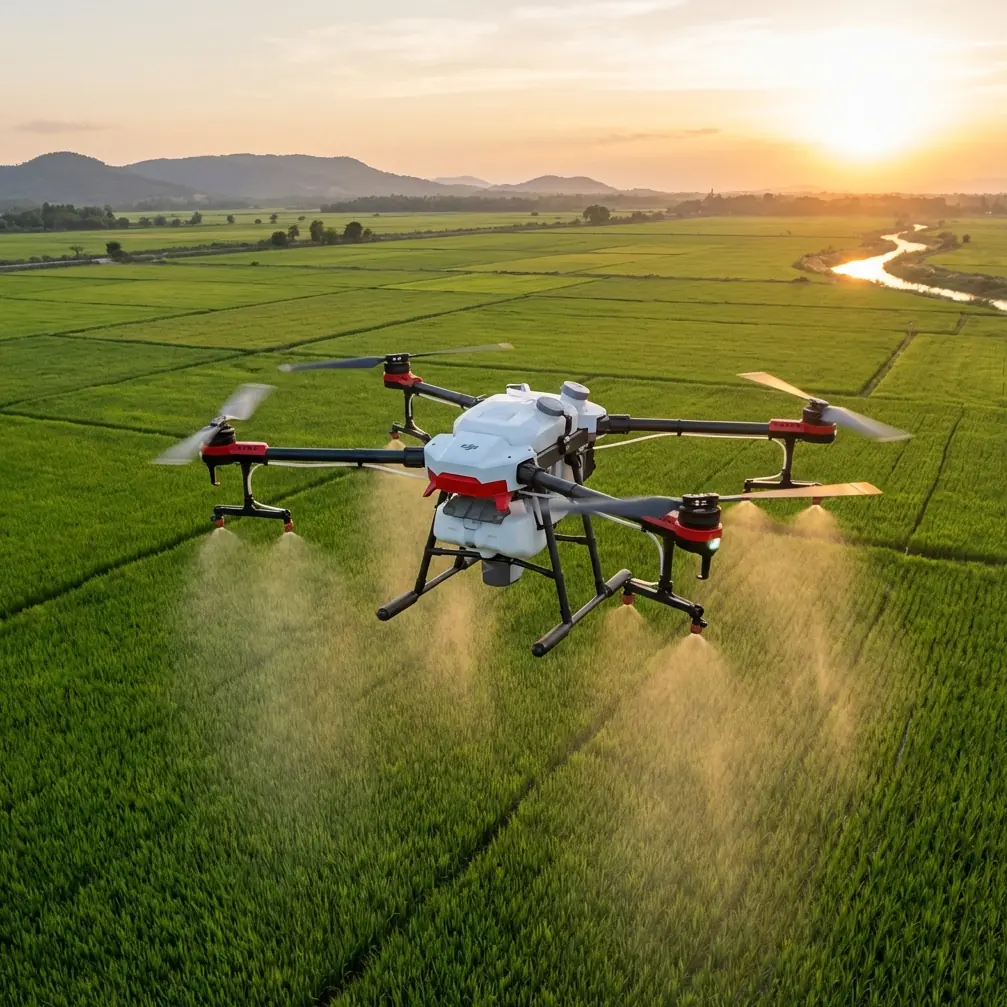
Agras T50 Field Report: Why Near-Peer Training Matters When Scouting Highways in Complex Terrain
META: A field report on Agras T50 operations for highway scouting in difficult terrain, explaining why near-peer instruction often beats expert-heavy theory for safer, more usable field performance.
I have spent enough time around UAV training programs to see the same failure mode repeat itself. New operators are handed polished theory, dense specs, and advanced workflows that look impressive on paper. Then they step into the field, face cross-slope terrain, broken sightlines, variable wind, and time pressure, and suddenly none of that “master-level” knowledge seems to help much.
That is the right lens for thinking about the Agras T50 in a highway scouting context.
Not because the aircraft lacks sophistication. It does not. The T50 belongs to a class of professional unmanned systems where details like RTK fix rate, swath width discipline, nozzle calibration logic, drift control, and weather sealing actually shape results. But when the mission is scouting highways in complex terrain, the biggest operational gap is rarely the machine itself. It is the teaching model wrapped around it.
A recent Chinese commentary on photography education made an argument that translates unusually well to drone operations: complete beginners often do not learn best from famous masters. They learn best from “second-year” practitioners, people who are still close enough to the beginner stage to explain what is actually usable. The article’s central point was simple. New learners may study aperture, shutter speed, ISO, and composition, yet still fail to make good photographs in real use. The reason is not laziness. It is mismatch. Experts teach art and abstraction. Beginners need methods they can apply immediately.
That is exactly what I see with Agras T50 onboarding for corridor work.
The T50 Problem Is Rarely Hardware
On a spec sheet, the T50 can invite the wrong kind of training. People fixate on capability and skip translation. They talk about centimeter precision, advanced route stability, spray system behavior, ruggedized construction, and automated workflows as if naming the feature is enough. It is not.
A highway scouting team operating in complex terrain does not need a lecture that sounds like an engineering defense. They need to know things like:
- how to maintain path confidence when terrain repeatedly interrupts visual geometry,
- what RTK stability means when the aircraft edges along embankments and cut slopes,
- when a broad swath width helps throughput and when it quietly increases exposure to spray drift near roadside vegetation or structures,
- and why something as unglamorous as nozzle calibration affects whether a test run tells the truth about field conditions.
This is where near-peer instruction has an edge.
The photography article described “second-year” learners as people who have already mastered the basics but are not yet trapped by overly complex theory. That description fits the best T50 field trainers I know. They are not guessing. They have enough repetition to recognize failure patterns quickly. At the same time, they still remember the confusion of the first month: the overloaded interface, the temptation to trust automation too early, the tendency to chase nominal precision without checking whether the operating environment supports it.
That memory makes them better teachers.
Why This Matters Specifically for Highway Scouting
Highway scouting is not textbook agriculture, even when it borrows agricultural UAV methods.
In open farmland, a pilot may work with relatively consistent geometry and cleaner line planning. A highway corridor in complex terrain introduces irregular edges, elevation shifts, drainage cuts, retaining structures, signposts, utility interference, and turbulent air behavior. Even before discussing payload use, the scouting task is defined by interruption. Every interruption punishes operators who learned systems in a purely abstract way.
Take RTK as one concrete example. In promotional language, “centimeter precision” sounds like a solved problem. In corridor operations, it is only valuable if the operator understands when the RTK fix is robust, when it is degraded, and how that affects route confidence along narrow, irregular boundaries. A strong RTK fix rate is operationally significant because it reduces ambiguity in repeat passes, edge tracing, and georeferenced observations. But the new pilot does not benefit from hearing only that the system is precise. They need practical instruction: what to watch, when to pause, how to verify, how not to over-trust a number on a display.
The same applies to IPX6K-grade protection. On paper, that detail reads like a durability badge. In the field, for highway scouting teams, it means the aircraft is better suited to dirty, wet, washdown-heavy environments where dust, mud, and sudden weather exposure are not unusual. That is not a cosmetic feature. Rugged sealing influences maintenance rhythm, reliability between sites, and whether the aircraft stays operational after repeated deployment in roadside conditions. Competitor platforms that look strong in controlled demonstrations often lose their shine once grime, moisture, and repetitive transport become part of the job. The T50’s toughness matters because highway teams do not work in lab conditions.
The Overlooked Link Between Scouting and Spray-System Discipline
Some readers may wonder why terms like spray drift, nozzle calibration, or swath width belong in a highway scouting discussion. They belong because serious corridor teams often evaluate more than just imagery or visual line-of-sight conditions. They assess whether the platform can perform adjacent operational roles in vegetation management, slope-side treatment planning, or corridor maintenance support. A scouting mission is often the first pass in a larger workflow.
Here the T50 stands out, but only if the operator is taught to interpret the aircraft as a system rather than a flying checklist.
Swath width, for instance, is not just a productivity metric. In complex roadside terrain, wider coverage can save time, but it also changes how drift risk behaves around embankments, guardrails, tree lines, and passing air currents along cut sections. New users often hear “more coverage” and assume “better.” A near-peer trainer is more likely to say the more useful thing: wider is better only when the terrain and airflow let you keep placement disciplined.
Nozzle calibration is another example. It sounds technical enough that some beginners tune out. They should not. If calibration is off, the aircraft may still appear to complete a clean mission while delivering misleading output. For scouting teams validating future roadside vegetation treatment or documenting operational feasibility, that is a serious problem. Bad calibration hides inside apparently successful flights. Experienced but still relatable instructors tend to teach this well because they remember the first time they realized numbers alone were not proof.
This is where the T50 can outperform weaker alternatives in practical terms. Some competing systems promise similar outcomes, but the Agras ecosystem is generally strongest when the crew treats calibration, route logic, and terrain interpretation as one workflow. The hardware is capable. The difference comes from whether the team is trained to use that capability in a grounded way.
The Photography Lesson That Drone Teams Should Steal
The original article on photography offered a useful contrast: masters often teach what is artistically elevated, while beginners need what is usable. Replace “art” with “high abstraction” and you have the training dilemma in UAV operations.
A top expert may explain sensor fusion, positioning architecture, and route optimization beautifully. Yet the beginner leaves without knowing how to set up a safe first corridor pass on uneven roadside terrain. A second-year operator, by contrast, might explain the same mission in plainer but far more effective terms:
First, confirm the aircraft is reading the environment consistently.
Then verify RTK behavior instead of assuming it.
Then plan around terrain interruptions, not despite them.
Then decide whether your intended swath width fits the corridor’s airflow and edge conditions.
Then check calibration before treating any output as trustworthy.
That sequence is not flashy. It is useful. And useful is what keeps projects on schedule.
If your team is building a training path around the T50, the smartest move is often to combine senior oversight with near-peer instruction. Let the experts design doctrine. Let the close-to-the-ground operators teach the first practical layers. The photography article’s point about “second-year” learners deserves to be taken seriously because the same cognitive friction exists in drone work. Beginners do not fail because they cannot understand advanced concepts. They fail because advanced concepts are introduced before practical control habits have formed.
Where Multispectral Thinking Fits, Even When the Mission Is Narrow
The context around the T50 often pulls in adjacent tools and concepts such as multispectral assessment, even if the specific flight is not a full remote sensing mission. That is worth mentioning because highway scouting is increasingly multidisciplinary. A corridor may be evaluated not only for geometry and access but also for vegetation vigor, moisture-related stress, treatment zones, and maintenance priority.
The T50 is most effective in these ecosystems when the operator does not treat data collection, application planning, and route execution as separate worlds. A good field crew knows that precise route fidelity, controlled application logic, and clean environmental interpretation all depend on the same habits: stable positioning, disciplined calibration, awareness of drift, and realistic route planning around terrain.
Again, this is why near-peer instruction beats over-theorized onboarding. The newer operator does not need a seminar on every remote sensing possibility. They need to understand how one flight decision affects the next layer of corridor work.
What I Would Tell a New T50 Highway Team
If I were briefing a new team tomorrow, I would keep it direct.
Do not confuse sophistication with readiness. The Agras T50 is a capable platform, but capability only converts to usable field performance when your training mirrors real terrain. Build your first lessons around the corridor itself: slope changes, interrupted sightlines, roadside airflow, wet and dirty deployment conditions, and repeatable route control.
Treat RTK as a live operational variable, not as a decorative acronym. If you are relying on centimeter precision, verify that you are actually getting it in the terrain you are flying.
Respect IPX6K-grade ruggedness, but do not misread durability as permission to get sloppy. Good sealing helps because roadside work is messy. It does not replace disciplined maintenance.
Do not chase maximum swath width by default. In complex terrain, width without control can turn into drift, uneven coverage, or bad assumptions about mission efficiency.
And never relegate nozzle calibration to the bottom of the checklist. If your scouting feeds treatment planning, calibration errors can poison the whole decision chain.
That is the kind of advice a second-year practitioner often delivers better than a distant authority figure, because it is still connected to recent field frustration. It remembers what was confusing.
A Better Standard for Agras T50 Adoption
The market tends to reward spectacle. Long-range claims, automation narratives, and polished capability summaries attract attention. Yet highway scouting in complex terrain is won by crews who can translate the T50’s strengths into stable field behavior.
That translation is a human factor issue before it is a technology issue.
The best operators I have watched do not worship expertise for its own sake. They build ladders. The first rung is always practical. What does this aircraft do for me on uneven roadside terrain, under imperfect conditions, with limited margin for confusion? Once that answer is secure, the higher-order theory starts to matter.
So yes, the Agras T50 deserves attention for its precision potential, rugged build, and operational flexibility. But the deeper story is not just what the aircraft can do. It is how teams should learn it. The photography piece got that part right: a learner who is one stage ahead can sometimes teach more effectively than the master, because they know the exact distance between confusion and competence.
For T50 highway scouting, that distance is where projects succeed or fail.
If your operation is comparing deployment methods, route setup habits, or field-training approaches for corridor work, I would strongly suggest discussing real scenarios rather than generic specs. For practical T50 workflow questions, field teams often prefer a direct exchange through this project chat line rather than sitting through another abstract presentation.
Ready for your own Agras T50? Contact our team for expert consultation.