
Agras T50 Highway Scouting at High Altitude
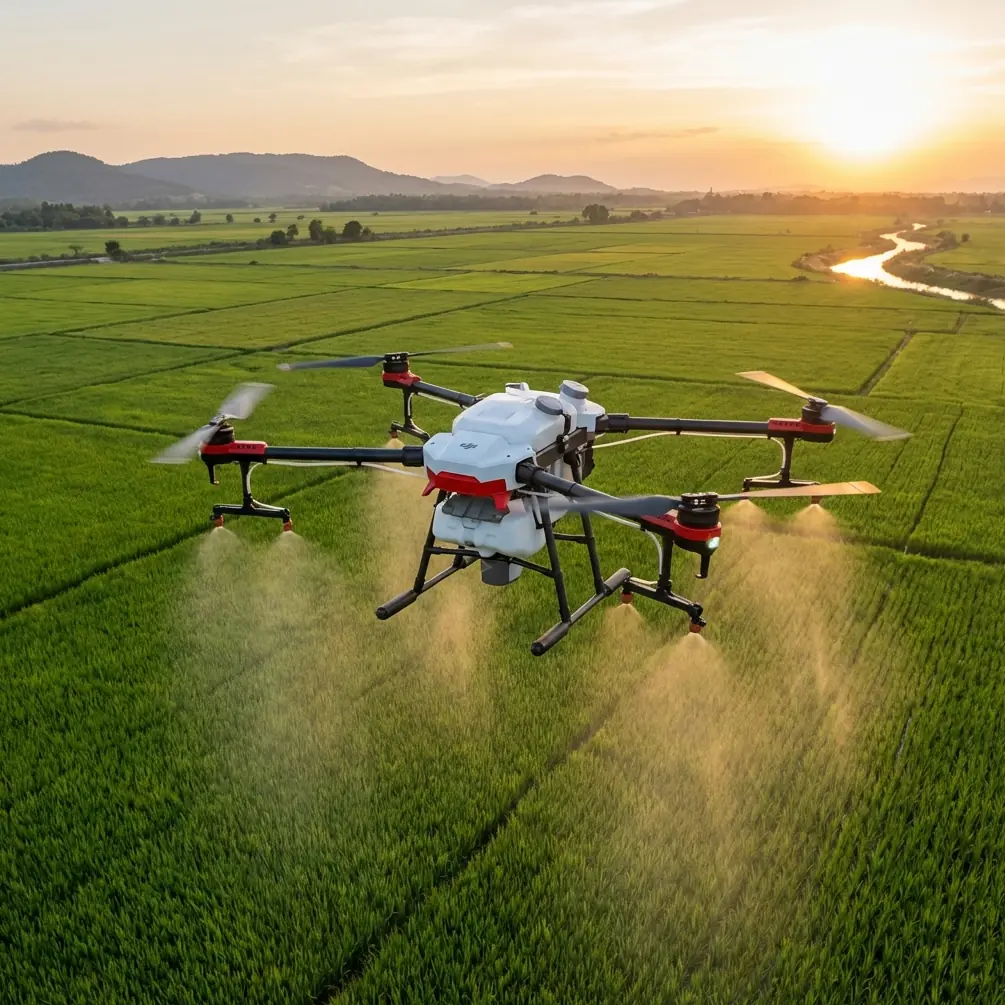
Agras T50 Highway Scouting at High Altitude: A Practical Field Method That Actually Holds Up
META: Learn how to use the DJI Agras T50 for high-altitude highway scouting with better RTK stability, spray drift control, nozzle calibration discipline, and weather-aware mission planning.
High-altitude highway work exposes every weakness in a drone operation. Thin air changes lift behavior. Crosswinds arrive fast along cut slopes and ridgelines. GNSS performance can look solid one minute and marginal the next as terrain masks satellites near embankments, bridges, and mountain walls. If you are evaluating the Agras T50 for this kind of mission profile, the real question is not whether it can fly. The question is whether it can deliver repeatable, defensible data and controlled liquid application when the corridor is narrow, elevated, and operationally unforgiving.
That is where the Agras T50 deserves a closer look.
Most discussion around the T50 stays trapped in broad agriculture talking points. That misses its practical value for infrastructure-adjacent work, especially highway scouting in high-altitude regions where vegetation encroachment, drainage issues, slope instability, and spot-treatment requirements all intersect. Used correctly, the platform’s high-throughput airframe, centimeter-precision positioning stack, and weather-hardened build make it more than a field sprayer. It becomes a disciplined corridor tool.
Why the Agras T50 fits high-altitude highway scouting better than many competing platforms
A lot of conventional mapping drones can collect visual data over a road corridor. Fewer can combine corridor inspection, targeted liquid application, and stable operation in rough, wet, dusty environments without forcing the operator into multiple separate workflows.
That is where the Agras T50 stands out against lighter inspection-oriented aircraft. Its airframe is built for harsher field use, and the IPX6K-rated protection matters more than spec-sheet readers sometimes admit. On a highway shoulder at elevation, you are dealing with atomized moisture, mud splash, dust from passing traffic, and cold starts in unstable weather. IPX6K does not make a drone invincible, but it raises the threshold for real-world abuse in a way many camera-first competitors simply do not match.
The second differentiator is positioning discipline. For corridor work, raw GNSS is not enough. What you need is a reliable RTK fix rate that holds near guardrails, cut faces, utility crossings, and terrain breaks. The T50’s centimeter precision is not just a nice phrase for marketing copy. It changes the quality of repeat missions. When the same drainage ditch, shoulder seam, or vegetation patch needs to be revisited after rain, construction, or a maintenance interval, centimeter-level consistency helps crews compare conditions rather than guess at them.
That matters operationally in two ways.
First, it improves confidence in route reproduction. A scouting mission flown today can be flown again on nearly the same line, which is critical when your objective is to spot progression: fresh washout, expanding brush line, or new weed pressure around culverts and median barriers.
Second, it reduces over-application during treatment runs. On a mountain highway, a few feet of lateral error can push droplets off the intended strip and into a ditch, shoulder, or sensitive vegetation zone. Better RTK behavior and route precision directly support cleaner application boundaries.
Start with the mission objective, not the aircraft
Operators often make a category mistake with the T50. They begin by thinking, “This is a spray drone. How do I use it for scouting?” The better question is, “What highway problem am I trying to solve, and which T50 capabilities reduce field time without lowering decision quality?”
For high-altitude highway scouting, the mission usually falls into one of four categories:
- Vegetation encroachment along shoulders, barriers, and drainage channels
- Erosion or slope instability indicators on embankments and cut sections
- Drainage obstruction or moisture-pattern anomalies after weather events
- Follow-on spot treatment once scouting confirms the target area
The T50 is strongest when those tasks are linked into one operational chain rather than treated as isolated flights. A crew can scout, mark priority zones with centimeter precision, and then return for tightly bounded application. That continuity is where the platform outperforms drones that require separate ecosystems for observation and action.
Build a corridor workflow that respects altitude and wind
High-altitude operations punish lazy planning. The thinner air can lengthen takeoff response, alter braking feel, and change how the aircraft behaves when transitioning over abrupt topography. Add channelized wind along a roadway and the margin gets narrow quickly.
A reliable T50 workflow begins before power-on:
- Define the corridor in short segments rather than one long continuous route.
- Separate lee-side and windward passes where terrain funnels air differently.
- Mark bridges, signs, power lines, and retaining walls as hazard zones, not footnotes.
- Schedule scouting for the most stable atmospheric window, usually after local winds settle and before convective turbulence builds.
The reason for short segments is simple. In mountainous or elevated road environments, one section of highway may have stable satellite geometry and moderate wind while the next section, just a few hundred meters away, behaves completely differently. Smaller mission blocks make it easier to maintain RTK integrity, monitor battery performance, and preserve a safe return corridor.
This is also where the T50’s payload-oriented design works in your favor. Compared with smaller drones that get pushed around once ridge winds begin to pulse, the T50 generally carries itself with more authority. That does not mean you should fly aggressively. It means the platform is less likely to feel fragile when the environment gets messy.
RTK fix rate is not a checkbox. It is the backbone of repeatability.
Many crews mention RTK as if the job is done once a fix appears on screen. For highway scouting, that is not enough. You need to monitor the quality and persistence of that fix along the entire corridor.
If the T50 maintains a strong RTK fix rate through route turns, elevation shifts, and partial sky obstruction, your georeferencing confidence stays intact. If the fix degrades repeatedly, the mission can still look acceptable from the pilot’s perspective while introducing positional inconsistency that undermines comparison work later.
A practical field method is to treat RTK status changes as mission events worth logging. If you lose or degrade fix near a bridge deck, canyon-like cut, or dense roadside structure, note the segment and revisit that zone with a modified path or timing window. The point is not perfection. It is traceable precision.
This becomes even more useful when paired with multispectral workflows in a broader program. The T50 is not typically the first platform people associate with multispectral analysis, but in a mixed-fleet operation its precise corridor repeatability makes it a strong companion asset. A multispectral pass from another system may identify stressed vegetation bands along a highway shoulder. The T50 can then return to those exact zones for closer scouting or tightly constrained treatment. That handoff only works when the route geometry is trustworthy.
Spray drift control matters even during scouting-oriented missions
Some readers may be focused only on observation and not application, but highway scouting often leads directly to treatment decisions. Once you are operating near roads, ditches, culbs, guardrails, slopes, and runoff channels, spray drift becomes a central planning issue rather than a technical afterthought.
At altitude, drift risk rises for three reasons:
- Lower air density can change droplet behavior
- Wind shear over road cuts and embankments is harder to read from ground level
- Long, narrow treatment zones tempt operators to fly faster than conditions justify
The T50 helps here because it supports precise route control and consistent application geometry, but the aircraft alone does not solve drift. The crew does.
Nozzle calibration should be treated as a pre-mission discipline, not a maintenance chore for another day. If your nozzle output is uneven, a narrow shoulder treatment can become patchy in one area and excessive in another. Along highways, that inconsistency has practical consequences: regrowth where you expected suppression, runoff risk where output was too high, and avoidable repeat flights.
A sound calibration routine for the T50 in this use case includes confirming matched output across nozzles, checking for wear that alters droplet spectrum, and validating flow behavior under the actual mission liquid, not a substitute with different viscosity. This sounds basic because it is basic. It is also where many corridor operations quietly lose quality.
Swath width deserves the same seriousness. Operators tend to think a wider swath is always more efficient. In open agricultural blocks, maybe. Along mountain highways, a swath that is too aggressive can overlap barriers, drift into drainage cuts, or miss narrow target strips because crosswind pushes the pattern sideways. Reducing swath width for control often produces a cleaner result and fewer correction passes. The T50 gives you the platform stability to make that conservative choice without feeling operationally crippled.
Use the T50 as a decision tool, not just an application tool
The smartest use of the Agras T50 in highway work is to turn it into a decision platform. That means capturing what crews actually need to act on:
- Where vegetation is beginning to affect sightlines
- Which shoulder sections show moisture retention that may indicate drainage failure
- Where cut-slope vegetation differs enough to suggest instability or runoff changes
- Which areas can be treated safely without increasing drift or off-target exposure
When teams skip this decision layer, they often overfly and overapply. The result is more battery cycles, more time on the roadside, and more exposure to weather variability and traffic-adjacent risk.
One practical tactic is to build a simple corridor grading system before launch. Rank each segment by scouting priority, treatment sensitivity, and drift exposure. The T50 then flies with a purpose. You are not collecting “useful footage.” You are answering whether segment B3 needs immediate brush suppression, whether culvert C1 is partially blocked, or whether shoulder strip D2 is too exposed to crosswind for treatment that day.
That level of discipline is what separates a professional operation from a gadget demonstration.
Weather hardening is not glamorous, but it saves missions
Field crews working at altitude know that weather forecasts are often late to the party. Conditions shift quickly, and a corridor that looked manageable at briefing may turn damp, dusty, or gusty by midday. The T50’s IPX6K protection gives operators more confidence when surface conditions are ugly, especially around wet vegetation, road splash, and post-rain inspections.
This does not mean you ignore weather limits. It means the aircraft is better suited to genuine utility work than many platforms designed around idealized inspection days. If your comparison set includes lighter, camera-centric drones that require more delicate handling in wet or contaminated environments, the T50 has a clear advantage. It is built for work sites, not just image capture.
That difference becomes obvious over time. Fewer weather-related cancellations. Fewer concerns about contamination after roadside operations. Less hesitation when a mission window opens under imperfect field conditions.
A practical deployment sequence for high-altitude highway teams
If I were setting up a T50 deployment protocol for a mountain highway authority or contractor, the sequence would be straightforward:
Begin with a short corridor block and verify RTK behavior before committing to a longer route. If the fix rate is inconsistent, adjust the segment layout or timing first rather than pretending post-processing will solve a field planning problem.
Next, scout with a narrow operational question. Do not try to inspect every possible defect in one pass. Focus on vegetation intrusion, drainage anomalies, or slope condition. Specific missions create better notes and cleaner decisions.
Then evaluate drift exposure before any treatment flight. Wind at the takeoff point is not the whole story. Watch how airflow behaves over barriers, cuts, and open bridge approaches. If the pattern is unstable, postpone application and keep the scouting data.
Finally, calibrate nozzles and set swath width for control rather than theoretical maximum coverage. Highway treatment is about staying inside a narrow envelope with confidence.
Teams that want to compare their own corridor setup against a proven field workflow can share their scenario through this quick operations channel: message our UAV specialists.
Where the Agras T50 truly excels
The Agras T50 is not the only drone that can scout a road at altitude. That is not the point. Its advantage is that it combines ruggedization, centimeter precision, corridor repeatability, and targeted application capability in one field-ready system.
That combination matters because highway scouting is rarely a single-task exercise. One day starts with shoulder inspection and ends with a controlled spray run on invasive growth near drainage infrastructure. Another starts with storm follow-up and turns into route documentation for a maintenance contractor. In those settings, a platform that can move from observation to action without changing the whole operational stack has real value.
The T50 excels when the work is narrow, repetitive, weather-exposed, and consequence-driven. High-altitude highways check every one of those boxes.
Used casually, it is just a large and capable UAV. Used with disciplined route design, nozzle calibration, RTK monitoring, and swath control, it becomes something more useful: a reliable corridor operations platform for teams that need to scout precisely and act carefully.
Ready for your own Agras T50? Contact our team for expert consultation.