
Agras T50 Scouting Tips for Urban Forest Work: Range
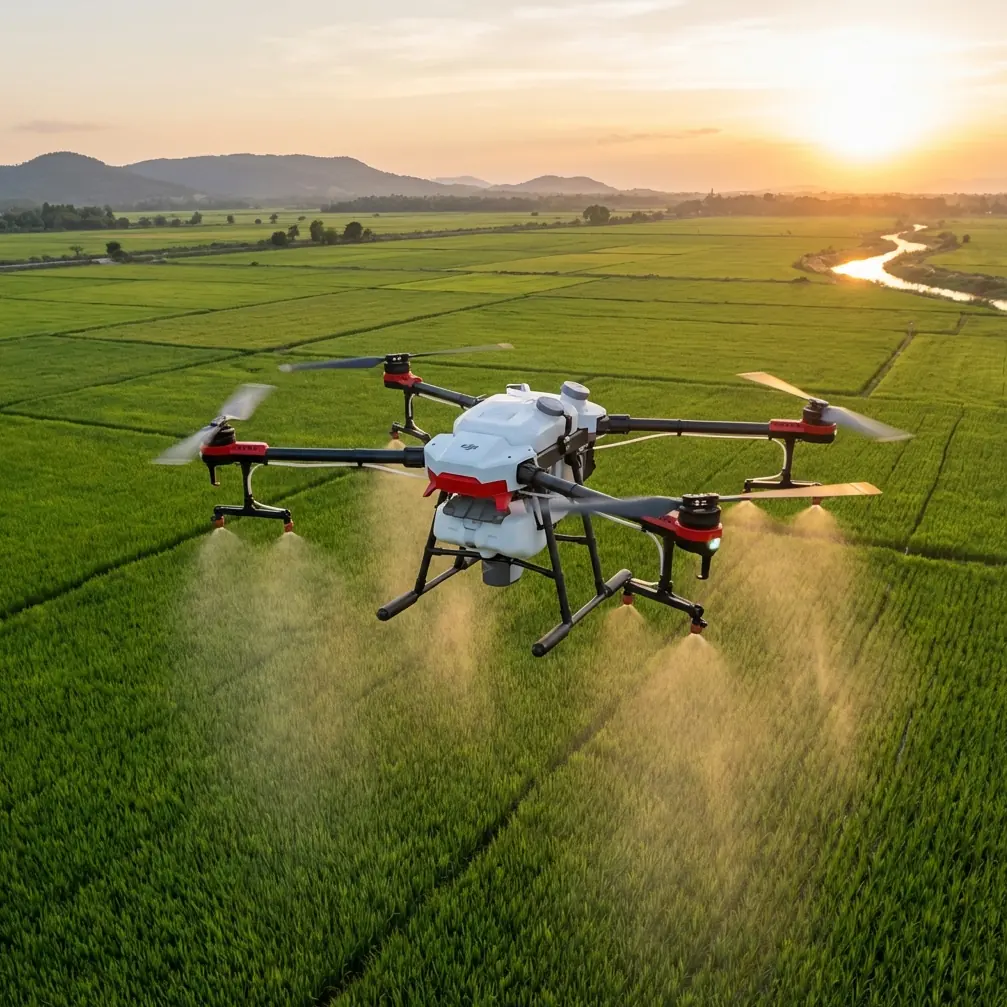
Agras T50 Scouting Tips for Urban Forest Work: Range, Positioning, and What Actually Matters in the Field
META: Practical Agras T50 scouting tips for urban forest operations, including antenna positioning, RTK reliability, route planning, spray drift awareness, and workflow lessons drawn from real-world drone data practices.
Urban forest scouting with an Agras T50 is not the same as flying broad-acre farmland.
Trees break line of sight. Buildings create signal reflections. Narrow access roads limit takeoff options. Moisture, canopy density, and mixed terrain all push the aircraft and the operator into tighter margins. If you are using the T50 to assess tree health, identify treatment zones, plan targeted spraying, or document problem corridors along roads, parks, walls, and greenbelts, the quality of your setup matters as much as the aircraft itself.
This is where many crews lose efficiency. They focus on payload or flight specs first, but urban forest work usually succeeds or fails on three smaller details: where you stand, where your antennas point, and how cleanly your data moves into the next stage of analysis.
The Agras T50 is powerful. But in a semi-obstructed environment, power alone does not solve bad positioning.
Start with the site, not the drone
Before powering on, study the environment the way a survey team would.
That mindset matters because urban forest scouting is really a data-quality job disguised as a flight job. One useful lesson comes from LiDAR workflow practice: professional platforms are built around automatic processing, automatic checking, and customized procedures for different standards and scales, from 1:500 to 1:100000. That detail may sound far removed from a T50 mission, but it points to something important: good operations are repeatable because they are standardized before takeoff, not improvised after it.
For T50 forest scouting, that means defining your mission scale in advance.
If you are checking a narrow belt of roadside trees, your flight geometry, swath expectations, and overlap assumptions should look very different from a park perimeter assessment or a dense riverside stand. In urban work, a “one route fits all” habit creates blind zones under canopy edges and wasted time on refly passes.
Walk the launch area first and answer four questions:
- Where do trees or walls block controller-to-aircraft line of sight?
- Where will multipath interference from concrete, metal fencing, parked vehicles, or nearby structures be strongest?
- Which direction gives you the cleanest outbound route for signal stability?
- If you need centimeter-level positioning, where will the RTK solution hold most consistently?
Only after that should you place the aircraft.
Antenna positioning advice for maximum range
This is the field habit that operators skip because it seems too basic.
It isn’t.
In urban forest scouting, range is often limited less by raw transmission capability and more by bad controller orientation. If the aircraft disappears behind tree crowns or moves laterally along a wall line, weak antenna discipline can cut your usable link long before the drone reaches the edge of the mission block.
Here is the practical rule:
Keep the broad face of the antennas oriented toward the aircraft’s expected flight path, not the antenna tips pointed at the drone.
That sounds simple, but many pilots still “aim” antennas like flashlights. That is not how you get the strongest practical signal. You want the effective transmission face presented to the aircraft, while also maintaining a clear body position that does not shield the controller.
For maximum range and steadier link quality in urban forest work:
- Stand slightly elevated if possible, even by a small grade change.
- Avoid placing yourself directly beside a vehicle, utility cabinet, concrete wall, or metal railing.
- Keep the controller at chest level rather than low at the waist.
- Rotate your torso as the aircraft tracks laterally so the antenna face remains aligned.
- Do not let your own body block the path during turns or return legs.
- If the route runs behind a tree line, reposition early rather than trying to “push through” fading signal.
A good launch point is often not the closest point to the trees. It is the point with the cleanest visibility corridor through the mission area.
That distinction can save a full sortie.
RTK fix rate matters more in trees than many operators expect
The T50 is often discussed in terms of productivity, application rate, and coverage. For urban forest scouting, another metric deserves equal attention: RTK fix rate.
When your route threads between canopy edges, footpaths, landscaped boundaries, or roadside planting strips, precision affects everything downstream. If your aircraft cannot maintain a stable high-accuracy position, your treatment planning, repeatability, and edge control all degrade. In practical terms, weak positioning creates uncertainty around where you observed stress, where a spray corridor begins, and whether a follow-up pass matches the original route.
Urban environments are rough on satellite visibility. Trees attenuate signal. Buildings mask the sky. Mixed surfaces create interference. That means RTK should never be treated as a passive feature that “just works.” It needs management.
To improve RTK performance:
- Set up with the widest available sky view.
- Avoid launching too close to tall facades or dense overhead canopy.
- Wait for a proper fix before mission start instead of rushing into the first leg.
- Monitor for consistency, not just initial lock.
- If the fix degrades in a corridor, pause and reassess whether the route geometry or your own position is the problem.
This is where urban forestry overlaps with the discipline used in professional mapping and point cloud operations. In those workflows, automated checking exists because data errors compound fast. The same principle applies here: a weak fix at the start of the chain becomes a much larger problem when you are making operational decisions from the results.
Why scouting workflow should borrow from survey and LiDAR teams
A lot of drone operators still separate agricultural flight from spatial data management. That split is a mistake, especially with the T50 in urban green infrastructure work.
One of the most revealing details from the reference material is that specialized software stacks have already matured around system control, data fusion, and point-cloud post-processing, and that they are used across real projects in multiple regions. Another detail is the ability to support seamless conversion between DWG and MDB formats, which matters because urban tree work rarely ends with a pilot handing over screenshots. It usually feeds into municipal maintenance records, GIS layers, engineering drawings, or contractor work orders.
Operational significance? Simple: if your T50 scouting output cannot flow into the client’s data environment, the flight was only half done.
That is why professionals should think beyond image capture or spot observation.
Build a workflow that can answer:
- What was seen?
- Where exactly was it seen?
- How is it categorized?
- Who needs the result, and in what format?
If your customer is a city contractor, parks department, campus estate team, or utility vegetation manager, they may not care how elegant your flight looked. They care whether your findings can be attached to an existing map, maintenance database, or treatment plan without rework.
The lesson from established geospatial platforms is clear: custom templates and automatic checks improve efficiency because they reduce interpretation errors. For T50 urban forest scouting, that means standardizing your labels, route naming, treatment categories, and export structure before the season gets busy.
Swath width is useful, but edge behavior matters more in trees
In open farmland, swath width often dominates planning. In urban forest work, the edge of the swath is where risk lives.
Trees do not present a uniform crop surface. You are dealing with crowns, voids, trunks, understory, fences, benches, walkways, and often public-facing spaces that require tighter drift awareness. If the mission will later support targeted application, then scouting should be done with spray drift in mind from the beginning.
This is where nozzle calibration and route design start to overlap with scouting logic.
Even if the current mission is observational, note:
- wind channels between buildings,
- downwash behavior near walls,
- canopy density variation,
- open gaps where droplets could move beyond the intended zone,
- and awkward edge shapes that will force turns or partial passes.
Spray drift is not just an application issue. It is a planning issue.
The better your scouting notes, the easier it becomes to define safe treatment windows and route segmentation later. Urban forestry is less forgiving than field spraying because unintended deposition can affect ornamentals, pedestrian areas, or adjacent properties. A T50 crew that scouts with future nozzle calibration in mind is usually a much more efficient crew overall.
Use repeatable route logic, not improvised flying
The educational drone reference, although built around Tello rather than Agras, highlights something worth carrying over: synchronized movement commands with specific offsets, speed control, and timed waiting periods. The underlying principle is highly relevant even though the platforms are very different.
Structured flight beats ad hoc flight.
That matters operationally because urban forest scouting often involves repeated corridor-style segments: one row of trees along a road, then a perpendicular block near a wall, then a return leg around a corner. If each segment is flown differently, your observations become harder to compare and your revisit accuracy drops.
Borrow the logic, not the exact commands:
- define repeatable entry altitude,
- use consistent lateral spacing,
- standardize observation speed,
- pause at known check points,
- and log segment transitions clearly.
The Tello material includes movements tied to challenge-card positioning at heights such as 120 cm and synchronized wait timing. For the T50 operator, the direct takeaway is not the number itself. It is the discipline of controlled positional logic. When the route is systematic, your team can compare one tree line against another without wondering whether changes came from the site or from pilot inconsistency.
Weatherproofing helps, but IP rating does not replace judgment
The T50 platform is built for hard field use, and durability matters. Features associated with rugged operation, including weather-resistant design such as IPX6K, are genuinely useful in agriculture and green maintenance environments.
Still, urban forest scouting creates a different kind of exposure profile.
Water resistance helps with wet vegetation, damp mornings, and debris-prone work zones. It does not solve poor visibility, unstable wind eddies between structures, or lens contamination from mist and leaf moisture. Crews sometimes overestimate what ruggedness means and under-manage the smaller causes of poor mission output.
A few practical habits make more difference than operators expect:
- wipe optical surfaces often in humid tree work,
- inspect arm joints and exposed surfaces after operating near sticky pollen or dust,
- check for water retention after flights through wet foliage environments,
- and reassess takeoff surfaces in parks or roadside soil where splatter can affect sensors.
Rugged hardware extends the window of operation. It does not make the site simple.
Multispectral thinking, even when your immediate mission is visual
Many urban forestry clients are moving toward condition-based maintenance rather than blanket treatment. That shift makes multispectral thinking useful even if your immediate T50 mission is not running a dedicated multispectral payload.
Why mention this in a T50 scouting article? Because the value of scouting increases when it is framed around detectable plant stress patterns rather than “looks healthy” versus “looks unhealthy.” If your operation also uses other mapping tools, the T50 can become the action-oriented field platform within a broader diagnostic workflow.
That is where data fusion concepts from geospatial software become operationally significant again. Multi-source interpretation is stronger than single-source guessing. If a mapping layer suggests stress along one irrigation edge or one compacted walkway corridor, the T50 mission can validate, inspect, and support treatment planning at the exact locations that matter.
This approach reduces unnecessary application and sharpens labor allocation.
A practical field sequence for urban forest T50 scouting
If I were briefing a crew for a city-edge woodland strip, heritage wall corridor, or landscaped park perimeter, I would keep the sequence tight:
1. Walk the site first.
Find the cleanest signal corridor, not just the nearest takeoff patch.
2. Choose controller position for visibility and antenna geometry.
Antennas broadside to the aircraft path. Body clear of the signal path.
3. Confirm RTK stability before launch.
Do not assume the fix will hold once you move near canopy or built edges.
4. Break the mission into segments.
Roadside trees, interior line, wall edge, and open gap should each be treated differently.
5. Fly at a consistent observation logic.
Stable speed. Predictable altitude. Clear pause points.
6. Record drift-sensitive zones.
Mark wind channels, pedestrian interfaces, ornamental borders, and awkward canopy margins.
7. Export findings in a format the client can use.
Map, drawing layer, database field, or GIS-ready notes. The handoff matters.
If you are building or refining that workflow and want to compare setup choices for your specific site conditions, you can message our technical team directly on WhatsApp.
The real advantage of doing this well
The Agras T50 is often judged by what it can carry or cover. In urban forest scouting, the better question is what it can clarify.
Can it help you isolate treatment zones instead of over-applying?
Can it improve route repeatability near assets and public spaces?
Can it preserve centimeter precision where tree work intersects hardscape, walls, and managed landscapes?
Can the resulting information move cleanly into the client’s mapping or maintenance system?
Those are the questions that separate a competent flight from a professional operation.
And they are also why lessons from outside pure agriculture matter here. A 1400-meter illuminated corridor, like the one recently staged along the Chaozhou ancient city wall for festival displays, is a useful mental model for urban drone crews: long, linear, visually complex, bordered by fixed structures, and full of changing light and space constraints. Whether your subject is decorative infrastructure or tree inventory, corridor length and environmental complexity change how you plan positioning, visibility, and data capture. The site geometry drives the mission.
That is the heart of successful T50 urban forest scouting. Not brute force. Not generic route templates. Careful positioning, precision discipline, and a workflow that respects what happens after the aircraft lands.
Ready for your own Agras T50? Contact our team for expert consultation.