
Agras T50 for Mountain Forest Scouting: A Practical Field
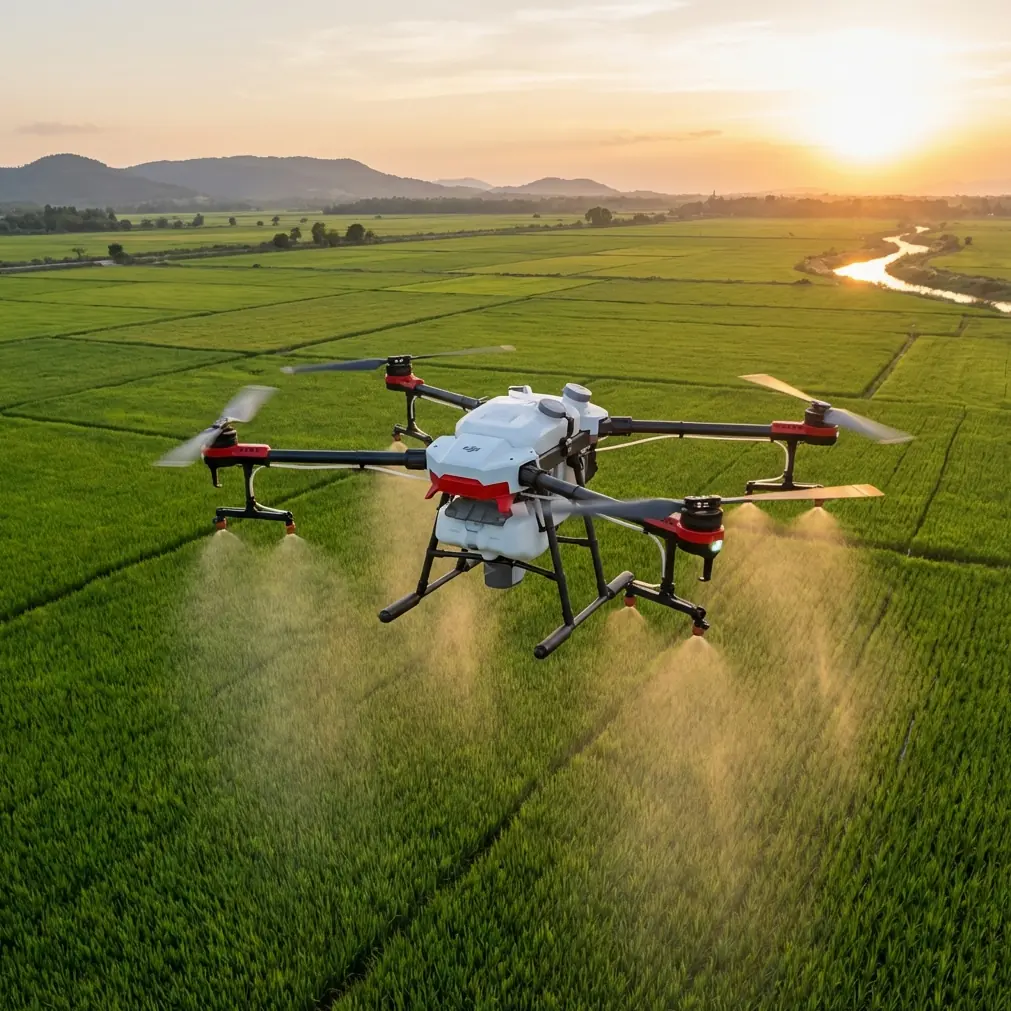
Agras T50 for Mountain Forest Scouting: A Practical Field Method That Goes Beyond Spraying
META: A field-focused Agras T50 guide for mountain forest scouting, covering workflow, crew roles, hyperspectral context, safety checks, battery management, spray drift awareness, and precision flight habits.
Most people look at the Agras T50 and think in one direction only: crop protection. That’s too narrow.
In mountain forestry work, especially when the goal is scouting rather than blanket spraying, the real value of a platform like the T50 is operational discipline. Stable flight behavior, repeatable route execution, predictable payload handling, and strong field logistics matter just as much as raw tank size or headline specs. In rough forest terrain, those qualities can determine whether your sortie produces usable insight or just a nice-looking flight log.
If you are evaluating the Agras T50 for scouting forests in mountainous areas, the right question is not “Can it fly here?” The better question is: “Can I build a repeatable, safe, data-aware workflow around it?”
That is where this article focuses.
Why mountain forest scouting is different
A mountain forest is not an open rice block or a rectangular orchard. You are dealing with slope changes, variable canopy height, patchy access roads, shifting light, and irregular edges. Even when the aircraft holds position well and maintains a solid RTK fix rate, the scouting challenge is rarely just navigation. The challenge is interpretation.
Conventional aerial imaging often struggles in forests because different tree species can look nearly identical in broad-band imagery. The reference material on hyperspectral remote sensing describes this problem directly: some species show extremely similar spectral behavior, making them hard to distinguish with wide-band data. In practical terms, that means a normal visual pass may tell you “vegetation is present,” but not necessarily which stand is under stress, which species dominates a slope, or where management attention should go first.
That same source points to why advanced spectral methods matter. Researchers using AVIRIS-based hyperspectral relationships were able to distinguish 11 forest types, not just “conifer” versus “broadleaf.” That number matters operationally. It shows the gap between rough visual categorization and real forestry intelligence. For an Agras T50 operator, this changes how scouting flights should be planned: not as one-off observation runs, but as part of a layered workflow where the drone supports identification, verification, and targeted follow-up.
The T50 is not a dedicated hyperspectral science platform by default, but the lesson still applies. If your mountain forest scouting program depends on better classification, the aircraft must be flown in a way that preserves route consistency, coverage logic, and revisitation accuracy so its output can support or complement more advanced sensing workflows later.
Start with mission design, not flight time
In forest terrain, many teams waste battery cycles trying to “see everything” in one mission. That usually leads to rushed route edits, inconsistent altitude over canopy, and weak comparison data from one day to the next.
A better method is to divide the mountain into decision zones:
- access corridors
- slope faces
- canopy transition bands
- drainage lines
- suspected stress pockets
- treatment verification blocks
This is where swath width becomes a planning variable rather than a brochure number. A wider pass pattern may seem efficient, but in forests it can reduce the usefulness of visual review near steep edges and mixed-height canopy. Tighter passes take longer, yet they often produce more dependable scouting data because overlap and viewing angles are more consistent.
If your downstream decision involves spraying, fertilizer placement, or disease response, that consistency matters. Poor scouting leads to poor treatment. And poor treatment increases the risk of spray drift, wasted chemical, and unnecessary return visits.
The hidden lesson from spray-operation standards
One of the most useful references here is not about scouting at all. It is the operating standard for aerial application crews. On paper, it covers spraying. In reality, it outlines a field management model that forest scouting teams should adopt too.
The document breaks work into distinct responsibilities across roles such as the pilot, safety observer, assistant, and support worker. It specifically assigns tasks like:
- aircraft operation
- surrounding safety confirmation
- spray status confirmation
- dosage adjustment
- field indication
- battery remaining checks
- vehicle movement coordination
Even if you are not applying product, this matters. In mountain forestry, the biggest operational failures usually happen on the ground: hurried battery changes, poor hazard checks, distracted observers, and unclear handoffs between vehicle crew and flight crew.
One detail from the standard stands out: when the aircraft lands for chemical or battery replenishment, the pilot, safety officer, and assistant must confirm that no people or vehicles have entered the danger area. That is not a minor procedural line. It is a model for every T50 mountain operation.
Forest staging areas are messy. Pickup trucks arrive late. Workers walk through landing zones. Curious land managers step in for a closer look. If your team treats battery swaps as “downtime,” you create your highest-risk moment. If you treat them as controlled transitions, you preserve safety and tempo.
How I would structure an Agras T50 mountain scouting crew
For forest scouting, I recommend borrowing the same role clarity:
1. Pilot
The pilot owns aircraft status, route execution, return decisions, and payload behavior. On a T50, this also means checking that the aircraft is not being pushed into unnecessary climb-and-descend cycles that waste energy over uneven canopy.
2. Safety observer
This person watches terrain margins, hikers, forestry vehicles, overhead obstacles, and landing zone integrity. In mountains, this role is not optional. Trees and slopes can hide movement until the last second.
3. Assistant
The assistant handles batteries, landing pad readiness, payload changeovers, and visual inspection between sorties. When the terrain is remote, this role also protects against rushed restarts after a hard uphill recovery or relocation.
4. Ground coordinator
This person manages vehicle movement, confirms target blocks, and tracks what has already been scouted. In fragmented forest parcels, that recordkeeping prevents duplicate flights and missed sections.
The reference standard also emphasizes checking remaining battery levels. Again, that sounds obvious, but in mountain work it should be elevated from a glance at percentage to a full decision rule.
A battery management tip that matters in the field
Here is one habit I’ve seen save both time and aircraft wear: never plan your last useful pass based on battery percentage alone. Plan it based on the climb you still owe the mountain.
On a flat field, a battery reading may feel straightforward. In a forested slope environment, your return path may require more vertical recovery, more braking, and more wind correction than the outbound leg. If you let the T50 finish “one more line” when the aircraft is already below your conservative return threshold, you force the battery to do its hardest work at the end of the sortie.
My rule in mountain scouting is simple: decide the return point while the aircraft still has enough reserve for a clean climb out, a deliberate approach, and a go-around if the landing zone is compromised. Not just enough for a straight trip home.
That approach aligns well with the replenishment caution in the operations standard. Landing should be controlled, not squeezed.
Precision matters even when the mission is only scouting
There is a tendency to treat scouting flights as informal because they are not “productive application missions.” That is a mistake.
If the T50 is being used to inspect pre-treatment conditions, identify canopy anomalies, or verify post-operation results, then centimeter precision and route repeatability have real value. A stable RTK fix rate helps you revisit the same edge, corridor, or affected stand with less ambiguity. That becomes especially useful if you are comparing visual outputs across dates or aligning field notes with known problem areas.
This is also where nozzle calibration enters the discussion, even in an article about scouting. Why? Because scouting and application are connected. If your reconnaissance identifies a treatment zone but the aircraft’s spray setup is poorly calibrated later, the value of your scouting declines immediately.
The aerial operations reference stresses confirming spray device adjustment, including per-minute output and issues such as uneven discharge or detachment. That detail has strong operational significance. In mountain forestry or nearby agricultural margins, uneven output can distort treatment efficacy and increase drift risk along slope edges and tree lines. Scouting should therefore feed directly into a calibrated execution plan, not exist in isolation.
What advanced sensing teaches T50 users
The hyperspectral reference provides another useful reminder. Researchers using multiple remote sensing sources such as Hyperion, ALI, and ETM achieved forest-type classification accuracy in the 90% range, with one cited result showing 92. That figure is not just academic. It points to an operational truth: better sensing changes management decisions.
For Agras T50 users, the implication is practical. If your scouting workflow currently relies on standard visual interpretation alone, there will be limits to what you can confidently separate in mixed forests. Species with subtle differences, stress that is not yet visible to the eye, and canopy variation masked by lighting can all escape a simple flight review.
That does not make the T50 unsuitable. It means the T50 should be positioned correctly:
- as a robust field platform for structured scouting
- as a route-repeatable aircraft for follow-up verification
- as part of a broader data pipeline that may eventually include multispectral or hyperspectral tools
In other words, the aircraft can be the operational backbone even when the sensing problem is more complex than RGB imagery alone.
Practical workflow for scouting forests with the Agras T50
Here is the method I would use in mountainous forest conditions.
Pre-field planning
Define the scouting objective before touching the aircraft. Are you looking for disease spread, storm damage, survival rate, access planning, or pre-treatment mapping? Each one changes altitude, overlap, and revisit needs.
Terrain segmentation
Break the forest into manageable units by elevation band, road access, and canopy structure. Avoid giant all-day route files that mix everything together.
Crew briefing
Use explicit task assignments modeled on the flight-operations standard. Confirm who owns safety checks, who watches the landing area, and who monitors battery turnover.
Aircraft and system checks
Inspect the airframe, propulsion, payload connections, and weather exposure points. In wet forest conditions, ruggedization features such as IPX6K-style protection are helpful, but they should never become an excuse for weak inspection discipline.
Route execution
Fly clean, repeatable lines that make later interpretation easier. In mixed canopy, shorter segments often beat oversized blocks.
Landing transition control
Treat every battery change as a live safety event. Reconfirm that no people or vehicles have entered the hazard zone before restart, echoing the operations reference.
Review and annotate immediately
Do not wait until the end of the day to identify anomalies. Mark suspect stands, shadow-heavy areas, and locations requiring a second look while the context is fresh.
Link scouting to action
If the mission supports later spraying, translate findings into application boundaries, drift-sensitive edges, and calibration priorities.
When to ask for a more specialized data workflow
If your forestry objective involves actual species discrimination across complex stands, especially where similar trees are being confused visually, standard scouting may reach its limit quickly. That is where the hyperspectral lesson becomes decisive. The source explains that high spectral resolution can suppress interfering factors and detect subtle differences between land-cover types that broad-band systems miss.
For mountain forest managers, that can mean the difference between identifying a stressed stand early and lumping it into a generic “vegetation” bucket. If you are weighing that kind of workflow around the Agras T50, a technical discussion is worth having. You can start that conversation here: message our field team directly.
The real role of the Agras T50 in forest scouting
The T50 should not be judged only by whether it can carry product or cover hectares. In mountain forestry, its usefulness comes from how well it fits into a disciplined operating system.
The references behind this discussion point to two realities. First, advanced remote sensing can distinguish far more than simple vegetation classes; one cited study separated 11 forest types, which shows how demanding real forest interpretation can be. Second, field success depends on role clarity and safety behavior, down to confirming clear danger zones during battery or supply landings.
Put those together and the picture becomes clear. The best Agras T50 forest scouting program is not the one with the most aggressive route. It is the one that combines precision flying, clean crew coordination, careful battery decision-making, and realistic expectations about what the sensor workflow can and cannot reveal.
That is how you turn a capable aircraft into a dependable mountain forestry tool.
Ready for your own Agras T50? Contact our team for expert consultation.