
Agras T50 in Extreme Temperatures: A Field
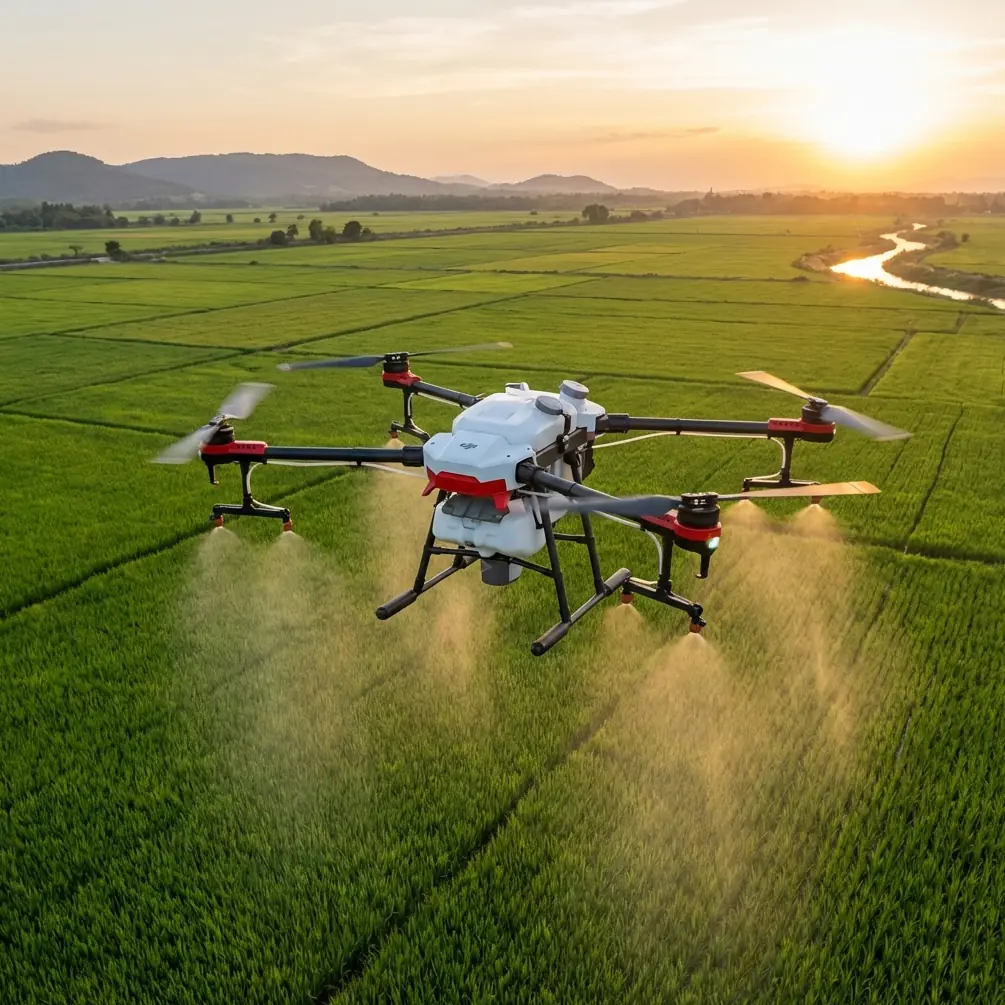
Agras T50 in Extreme Temperatures: A Field-First Guide to Scouting Smarter, Flying Safer, and Keeping Precision Intact
META: Practical expert guide to using the Agras T50 for field scouting in extreme temperatures, with operational tips on precision flight, drift control, sensor logic, and battery management.
Scouting fields in extreme heat or cold exposes the difference between a drone that merely flies and an operation that stays dependable when conditions get punishing. That is where the Agras T50 deserves a more serious look.
Most conversations around the T50 stay stuck on headline specs. That misses the real question growers, agronomists, and service providers ask in the field: can this aircraft keep precision, maintain safe behavior, and support decision-making when temperature stress starts affecting batteries, sensors, drift, and pilot workload? That is the useful discussion.
I approach the T50 less as a brochure item and more as a working platform. If your reader scenario is scouting fields in extreme temperatures, the machine matters, but so do the discipline around flight planning, the logic behind sensor interpretation, and the habits that prevent small technical deviations from turning into bad agronomic calls.
Why extreme-temperature scouting is harder than it looks
A field can appear calm while the aircraft is dealing with three separate layers of instability.
First, the air mass changes. Heat shimmer, thermal lift, and uneven convection can alter how steadily the aircraft tracks its intended line. In colder conditions, denser air can help lift performance, but it also changes how quickly the aircraft responds and how batteries sag under load. Either way, your planned swath width, your spray drift assumptions, and your confidence in repeatable positioning can start to drift apart.
Second, sensing gets trickier. Even simple visual interpretation becomes less reliable when crop canopies reflect differently under stress, or when surface temperatures distort what the operator thinks they are seeing. This is where centimeter precision and RTK fix rate stop being abstract buzzwords. If your platform cannot repeatedly place itself where you think it is, the value of comparing one scouting pass to the next drops fast.
Third, the human factor degrades. A pilot working in wind, glare, dust, and temperature extremes tends to make more rushed decisions. That is exactly when a stable, predictable aircraft earns its keep.
The T50 is not just for application work
The Agras T50 is often viewed through the lens of spraying and spreading. That is understandable, but too narrow. In temperature-stressed field scouting, its value begins earlier in the cycle: identifying uneven emergence, water stress patterns, crop lodging, edge effects, blocked irrigation, and terrain-related variability before treatment decisions are finalized.
This is why operational precision matters. If you are scouting to decide whether a section needs application, nozzle calibration, a second pass, or no intervention at all, the aircraft must give you repeatable field awareness, not just coverage.
The useful mindset is this: the T50 can support action, but in harsh conditions it should first support judgment.
A lesson from certification culture that matters in the field
One of the more interesting recent aviation developments came from outside agriculture: China’s Honghu Mark1, described as the country’s first full-tiltrotor eVTOL, has moved into an accelerated phase of type certification after a familiarization meeting held by the CAAC Northwest Regional Administration in Xi’an on December 26. That aircraft reportedly completed hundreds of full-tilt flight tests, and one of the technical details highlighted was its triple-redundant fly-by-wire control system.
At first glance, that sounds unrelated to the Agras T50. It is not.
The agricultural drone sector benefits when broader aviation culture reinforces two habits: test thoroughly, and trust systems only after they prove repeatable behavior under changing conditions. Hundreds of test flights are not a marketing flourish. They are what separates theoretical performance from practical confidence. In field scouting under extreme temperatures, the same principle applies at a smaller scale. You should not assume that a route, altitude, or response profile that worked at dawn will behave identically by mid-afternoon when ground heat rises sharply.
The second detail matters even more. Triple-redundant control architecture in certified aviation reflects a core truth: stability and fault tolerance are operational assets, not luxuries. While the T50 sits in a very different category, growers and operators should still think in those terms. Reliable control response, predictable hovering, and stable positioning are what allow you to evaluate a patch of stressed crop without wondering whether the aircraft itself is introducing uncertainty.
That is the hidden operational significance. Precision agronomy depends on aviation discipline.
How to scout with the T50 when temperatures are extreme
1. Start with a shorter mission than you think you need
In mild conditions, operators often stretch flights to maximize productivity. In extreme temperatures, that habit becomes expensive. Break a field into smaller scouting segments, especially when you are checking specific problem zones rather than trying to produce one long continuous overview.
This does two things. It preserves battery margin, and it gives you a better chance to compare observations while conditions remain reasonably consistent. Heat can change wind behavior and canopy appearance quickly. A shorter mission window reduces that variability.
For large farms, I prefer a “decision grid” approach. Fly the highest-priority blocks first: low spots, edge rows, irrigation boundaries, and sections with known emergence or disease pressure. If temperatures worsen, you still come away with the most decision-relevant data.
2. Treat RTK fix rate as a crop intelligence issue, not a pilot issue
People often talk about centimeter precision as if it only matters for automated route execution. That is incomplete. In scouting, a strong RTK fix rate is what lets you revisit the same row section or canopy anomaly and know you are assessing the same place.
That matters when extreme temperatures are involved because field stress rarely appears evenly. One hot strip near a compacted lane may present very differently from an adjacent healthy section. If your revisit accuracy slips, your diagnosis can drift with it.
For the T50, this is especially relevant when using structured scouting passes ahead of targeted application work. If the aircraft’s positioning is stable, the transition from observation to treatment planning becomes cleaner. If not, you may calibrate a response to the wrong patch.
3. Keep altitude logic conservative
In difficult conditions, pilots sometimes climb slightly higher to “play it safe.” That can help obstacle margin, but it can also weaken the quality of close observation and make drift interpretation harder. Lower altitude improves detail, yet it increases your exposure to localized turbulence and canopy-induced airflow.
The right answer is not a fixed number. It is a controlled compromise. Maintain enough height for stable maneuvering and safe obstacle clearance, but avoid using unnecessary altitude as a crutch. Your goal is to preserve visual confidence and route consistency.
This is where thinking about relative height matters. In one educational drone exercise, the aircraft first hovers at 150 centimeters, then tracks a card while maintaining a constant 80-centimeter height relative to the moving target below. That training example may sound simple, but it teaches a powerful field lesson: fixed altitude is less useful than stable relative positioning.
Operationally, that translates to the T50 like this: when scouting variable terrain or canopy height, what matters is not just your absolute height above the launch point. It is how consistently the aircraft maintains an effective observation geometry over the crop. That consistency improves interpretation.
Sensor logic is not just for classrooms
Another detail from drone training literature deserves more attention in professional operations. In one exercise, a drone identifies numbered challenge cards, displays the detected number, and uses the recognized code to trigger motion commands such as moving up or down by 30 centimeters. In another, the drone keeps following the card until it detects a different number, then lands automatically.
Why does that matter to an Agras T50 operator in a field?
Because it illustrates the basic architecture of responsive drone behavior: detect, classify, decide, execute. For agricultural scouting, the same chain governs how operators build workflows around crop zones, route triggers, safety responses, and terrain-aware movement. When temperatures are extreme, you want the platform and the operator to work from clear thresholds rather than vague impressions.
That can be as simple as setting a strict rule:
- if crosswind increases beyond your drift comfort level, stop low-altitude scouting
- if the RTK fix becomes unstable, do not continue a comparison pass
- if battery temperature rises faster than normal after landing, shorten the next segment
- if visual confidence drops due to haze or shimmer, switch from broad interpretation to targeted verification
The classroom example is basic. The field application is not. The principle is the same: define conditions that trigger a change in behavior before you are under pressure.
Spray drift still belongs in a scouting conversation
Some operators separate scouting from application too rigidly. In reality, good scouting should prepare better treatment decisions, and that includes anticipating spray drift risk before application day.
Extreme temperatures often go hand in hand with unstable air. Hot afternoons can produce exactly the kind of environment where a treatment decision made from a casual scouting pass leads to poor timing later. So while flying the T50 for field assessment, pay attention to:
- field edge exposure
- direction of prevailing movement in dust or canopy flutter
- sensitive neighboring crops
- thermal hotspots over bare or sparsely covered soil
- sections where reduced canopy density may change droplet interception
This is also the right time to think ahead about nozzle calibration and swath width. If the crop condition you discover will likely require treatment, you want your scouting notes to support that setup. A T50 mission should not end with “something looks wrong over there.” It should produce a practical next-step picture.
My preferred battery management habit in real field work
Here is the battery management tip I wish more operators learned early: in extreme temperatures, do not judge battery readiness by charge level alone. Judge it by recovery behavior between flights.
A battery can show a reassuring state of charge and still behave poorly if it has been sitting in direct sun, cooling too fast in cold wind, or repeatedly pushed through back-to-back high-load cycles without enough stabilization time. After landing, I watch how quickly the pack settles, how consistent the next takeoff voltage behavior looks, and whether flight time falls off sharply compared with the previous segment.
If I see a pack that “looks full” but is recovering erratically, I pull it from the critical scouting sequence. That discipline has saved more missions than any theoretical optimization trick.
In hot conditions, keep batteries shaded and never leave them baking on a vehicle surface. In cold conditions, avoid launching a pack that has not reached a healthy operating temperature. The practical objective is simple: remove surprises from the first minute of flight, because that is when many small battery issues reveal themselves.
If you need a second opinion on field setup logic or mission planning habits, I often recommend using a direct operator support channel like this Agras field workflow contact to talk through route structure and environmental constraints before a difficult deployment.
Don’t ignore the calibration mindset
A small parameter sheet for a quadplane or fixed-wing system can look boring until you notice what it really contains: magnetometer scaling, board rotation offsets, differential pressure sensor offset values such as 80.850, and sensor enable or disable states for rangefinders. Dry numbers, but they point to a larger truth. Aircraft performance depends on calibration discipline.
For T50 operators, the operational meaning is straightforward. If you want dependable scouting in extreme temperatures, do not treat preflight checks as ritual. Treat them as data integrity protection.
Board alignment, sensor health, heading behavior, and environmental compensation all affect whether the aircraft flies the route you intended and whether the observations from that route deserve your trust. You do not need to obsess over every parameter page. You do need to respect that drones are measurement systems as much as they are flying machines.
A practical scouting workflow for the T50
Here is a field-tested sequence I would use:
Pre-stage batteries away from temperature extremes
Keep packs stable before the first flight.Confirm positioning quality before entering the crop block
If RTK fix rate is unstable, wait or reposition.Fly short verification passes first
Check aircraft behavior in the actual air mass above the field.Scout decision-critical zones before general coverage
Prioritize areas likely to affect treatment, irrigation, or re-entry decisions.Log drift cues and canopy variation as you fly
Scouting should feed application planning.Review battery recovery after every segment
Extreme conditions reveal themselves in patterns, not just alarms.Revisit one reference area before ending the operation
This helps confirm consistency in your interpretation.
That last step is underrated. A revisit tells you whether the aircraft, the air, and your own visual judgment remained stable enough to trust the rest of the mission.
What makes the T50 valuable here
The Agras T50 becomes most valuable in extreme-temperature scouting when it is treated as a precision field tool, not just a payload carrier. The combination of stable route execution, practical repeatability, and strong integration into agronomic decision-making is what separates a useful mission from a noisy one.
And that is the larger point. High-value scouting is not about collecting more images or flying longer. It is about reducing uncertainty before you act. The best operators understand that every element, from RTK discipline to nozzle calibration planning to battery handling, contributes to that goal.
The T50 is fully capable of supporting that standard. But the aircraft alone does not create it. The workflow does.
Ready for your own Agras T50? Contact our team for expert consultation.