
Agras T50 in Mountain Fields: What Changes When Every Pass
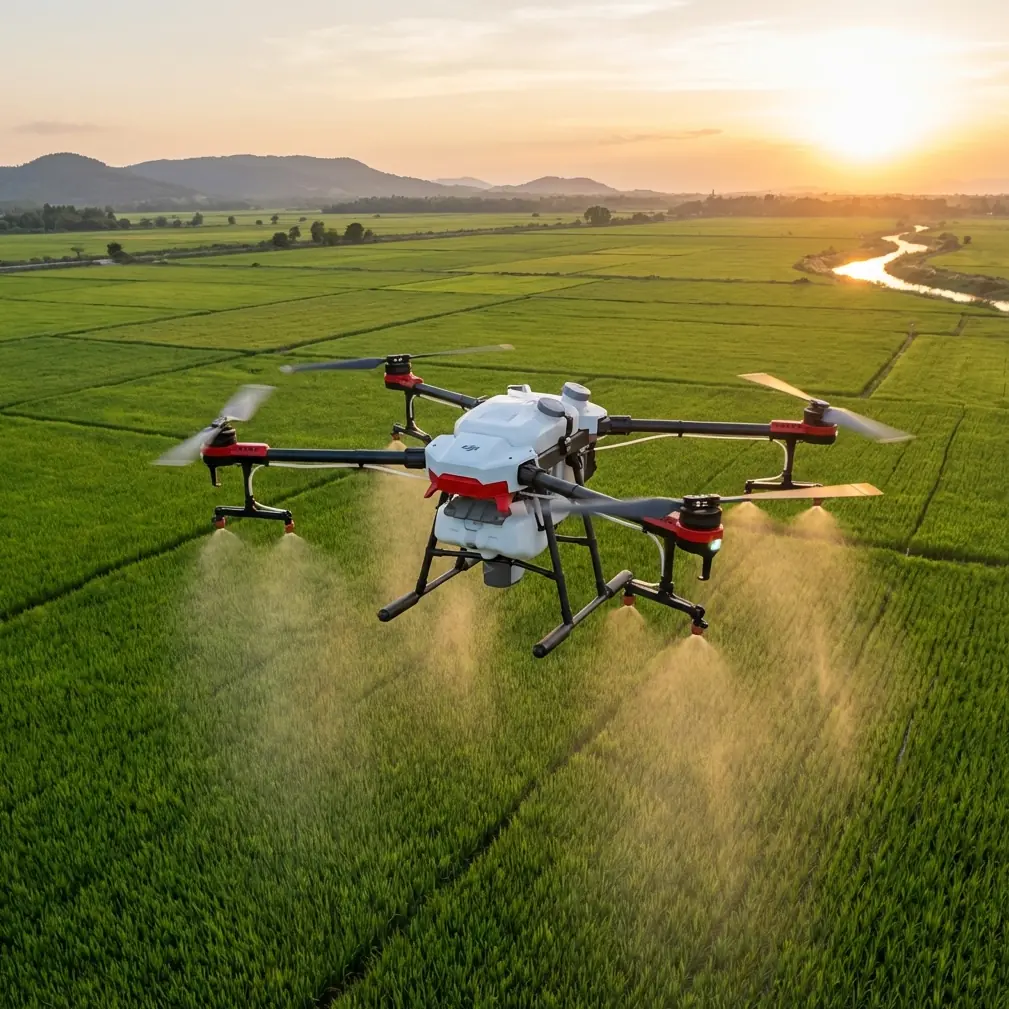
Agras T50 in Mountain Fields: What Changes When Every Pass Climbs, Drops, and Turns
META: A field-based look at how the Agras T50 fits mountain farm scouting and treatment planning, with practical notes on drift, RTK consistency, nozzle setup, battery handling, and terrain-driven workflow.
Mountain farming exposes weak equipment fast. A flat, open field lets almost any workflow look polished. Terraced blocks, broken elevations, tree-lined edges, and unstable wind patterns do the opposite. They force the operator to confront the real limits of aircraft stability, route planning, battery discipline, and application accuracy. That is where the Agras T50 becomes interesting—not as a generic flagship talking point, but as a working platform for mountain scouting and treatment decisions where every meter of altitude change has consequences.
I spend a lot of time with growers who are trying to solve a simple but stubborn problem: how do you inspect and cover difficult ground without turning each scouting cycle into an all-day logistics exercise? In mountain terrain, you are not just looking for crop stress. You are trying to understand where the aircraft can maintain a reliable RTK fix rate, where down-slope wind starts to push spray drift off target, and where battery reserve disappears faster than expected because the route profile is more vertical than it first appears.
That matters because mountain scouting is rarely just scouting. A useful mission often becomes a decision chain. You identify weak vigor on a slope shoulder, compare that area with drainage patterns, decide whether the issue is nutrition, disease pressure, or irrigation inconsistency, then plan a follow-up application with tight swath width control and careful nozzle calibration. If the aircraft cannot hold line accurately or if the operator treats the mountain like a flat field, the data and the application plan both degrade.
Why the Agras T50 makes sense in this terrain
The Agras T50 earns its place in mountain work because these sites demand more than raw tank capacity or simple route automation. In steep blocks, centimeter precision is not a luxury term. It is the difference between a clean pass along a terrace edge and a correction that wastes time, overlaps coverage, and increases the chance of off-target deposition. When growers mention “missing strips” or “heavy patches,” the root cause is often not the chemistry. It is a geometry problem aggravated by terrain and wind.
RTK performance is central here. A high RTK fix rate lets the aircraft hold predictable spacing, which directly affects swath width consistency and treatment uniformity. On mountain farms, the signal environment can change abruptly. Ridgelines, scattered structures, tree cover, and narrow valleys all interfere with continuity. When RTK is stable, the T50 becomes a precision tool. When it is unstable, the operator has to tighten mission planning, slow the pace, and be more conservative around edges and elevation transitions.
This is also where scouting with multispectral data enters the conversation. In mountain blocks, visual inspection alone often misses early variability because light angle, shade, and crop row orientation can hide the pattern. A multispectral workflow can reveal stress developing along a contour or in a drainage pocket before it becomes obvious from the access road. The point is not to treat multispectral as a buzzword. Its real value is operational: it helps you avoid blanket decisions on fields that are already fragmented by terrain. The better the scouting intelligence, the more disciplined the follow-up spray plan can be.
A mountain case: scouting before treatment
A recent mountain orchard project is a good example of how the T50 fits the job. The site had narrow access roads, irregular row spacing in older sections, and elevation changes sharp enough to change airflow over short distances. The grower’s concern was uneven canopy response after a previous treatment cycle. He suspected nozzle performance. I suspected the terrain was amplifying small setup errors.
We started with scouting, not spraying. That choice saved time later. On the first pass, the key task was not simply identifying weak zones. It was determining whether the variability aligned with topography, water movement, or route execution. On the windward side of the upper terrace, canopy stress appeared in a pattern that looked random from ground level. Once mapped and compared with the terrain profile, it became clear that the affected sections sat where cross-slope airflow was strongest. That changed the next step entirely. Instead of assuming a plant health problem alone, we reworked the application plan around drift control and pass direction.
This is why mountain operators should stop thinking of scouting as a separate phase. On difficult terrain, scouting is the diagnostic layer that tells you whether your next T50 mission should prioritize coverage density, lower drift risk, or route simplification. A strong aircraft helps, but the value really appears when the operator uses the platform to reduce uncertainty before product leaves the tank.
Spray drift behaves differently on slopes
Spray drift is one of the most misunderstood variables in mountain agriculture. Operators often focus on general wind speed and ignore how terrain reshapes air movement. On a slope, the air can lift, tumble, or channel laterally in ways that turn a technically acceptable day into a poor application window. The T50 gives you a capable aerial platform, but it does not cancel physics.
In practical terms, the worst drift errors in mountain work tend to come from three situations: crossing an exposed ridge at the same height and speed used in sheltered sections, carrying a swath width that is too aggressive for changing airflow, and failing to recalibrate nozzles after switching product characteristics or mission goals. Those mistakes do not always create obvious visible drift. Sometimes they show up later as inconsistent efficacy, edge damage, or unexplained variation between terraces.
That is why nozzle calibration is not a preflight checkbox to rush through. In mountain fields, it is one of the few adjustments you control directly before the environment starts making decisions for you. If droplet profile and flow behavior are not aligned with the actual crop target and wind profile, even a well-flown route becomes less forgiving. Good operators understand that the T50’s capability is only as useful as the setup discipline behind it.
Swath width is where efficiency and accuracy fight each other
Flatland habits can be expensive in mountain work. One of the biggest examples is swath width. Many teams want to stretch it because every additional meter promises faster completion. The temptation is understandable, especially when access is difficult and battery changes take effort. But mountain fields punish optimistic settings.
A wider swath width can look efficient on a mission planner and still produce weaker real-world uniformity once slope angle, canopy variability, and air movement start interacting. Shortening the width slightly often improves more than coverage. It makes the route easier to hold, reduces edge uncertainty, and lowers the correction burden on the operator. In other words, you may lose theoretical speed and gain actual field performance.
This is where centimeter precision becomes operationally significant rather than promotional. When the aircraft holds its line consistently, reduced swath width is not a retreat. It becomes a deliberate way to protect efficacy and limit waste in terrain where rework costs more than disciplined first-pass execution.
The battery management tip I give every mountain crew
The most valuable field lesson I repeat about the Agras T50 is simple: in mountain missions, manage batteries by climb profile, not by acreage expectation.
Too many operators estimate battery use based on how many hectares they covered on gentler land last week. Then they arrive at a mountain site with the same mental model and discover halfway through the block that elevation changes, hover corrections, and repeated turns are draining the pack faster than planned. That is when people start forcing “one more section” onto a battery that should already be heading back.
My rule in mountain scouting and treatment planning is to reserve the strongest batteries for the upper, more exposed sections early in the cycle, while conditions are usually more stable and the team is sharper. Do not send a mid-tier pack into the most demanding segment just because it happens to be next in rotation. Label batteries by observed field behavior, not just age. Some packs handle repeated climb-and-turn work better than others even when their basic health metrics look similar.
A second habit matters just as much: after a demanding uphill block, let the battery cooling and turnaround routine stay disciplined even if the mission pressure is building. Heat and mountain repetition are a poor combination. Operators who rush battery reuse often blame the aircraft later for performance inconsistency that actually began in their field charging rhythm.
This sounds small until you have watched a crew lose an hour because they planned the field by map shape instead of energy profile. On mountain farms, battery management is route management.
Weather sealing matters more than the brochure suggests
Mountain environments are rough on aircraft even when the weather looks manageable. Fine dust on dry terraces, splash exposure around mixed irrigation systems, residue buildup, and sudden moisture changes all take a toll over time. That is why IPX6K-level protection is not just a spec-sheet ornament for a machine like the T50. It has operational significance in the real world.
A sealed system does not mean careless handling. It means the aircraft is better suited to the stop-start messiness of agricultural work where landing zones are imperfect and conditions change fast. In mountain settings, where transport and setup are already more demanding, durability reduces downtime risk and maintenance frustration. When a crew is several terraces above the nearest practical vehicle position, reliability is not abstract.
What the best mountain operators do differently
The strongest T50 operators in mountain agriculture are rarely the ones talking most about maximum output. They are the ones who build a repeatable process around terrain.
They scout first when variability is unclear. They watch RTK consistency before trusting automated assumptions. They trim swath width when the mountain asks for it. They calibrate nozzles with intent instead of habit. They treat spray drift as a terrain issue, not just a weather number. And they assign batteries based on route difficulty, not convenience.
That combination is what turns the aircraft into a profitable working tool. The airframe matters, but the discipline matters more.
For teams trying to refine that workflow, it helps to compare notes with people who have already dealt with terrace edges, unstable uplink zones, and mountain battery rotation problems in the field. If that is useful, you can reach someone directly through this practical Agras setup line: https://wa.me/85255379740
The real value of the T50 in mountain scouting
What makes the Agras T50 worth serious attention for mountain farms is not one isolated feature. It is the way several capabilities become more meaningful when the terrain gets harder. RTK-dependent accuracy supports clean line holding. Careful swath width decisions improve consistency. Nozzle calibration becomes a direct lever for drift control. Multispectral-informed scouting sharpens where and how to intervene. IPX6K durability helps the aircraft tolerate the reality of agricultural field conditions. Even basic battery handling becomes strategic when elevation changes eat into runtime.
That is the difference between owning an advanced drone and actually using one well in mountain agriculture.
If you are scouting fields in steep country, the T50 should not be approached as a flat-field machine with bigger ambitions. It should be treated as a platform that rewards discipline. When the operator respects the mountain, the aircraft can turn difficult blocks into manageable, data-informed, repeatable work.
Ready for your own Agras T50? Contact our team for expert consultation.