
Agras T50 for Extreme-Temperature Field Scouting
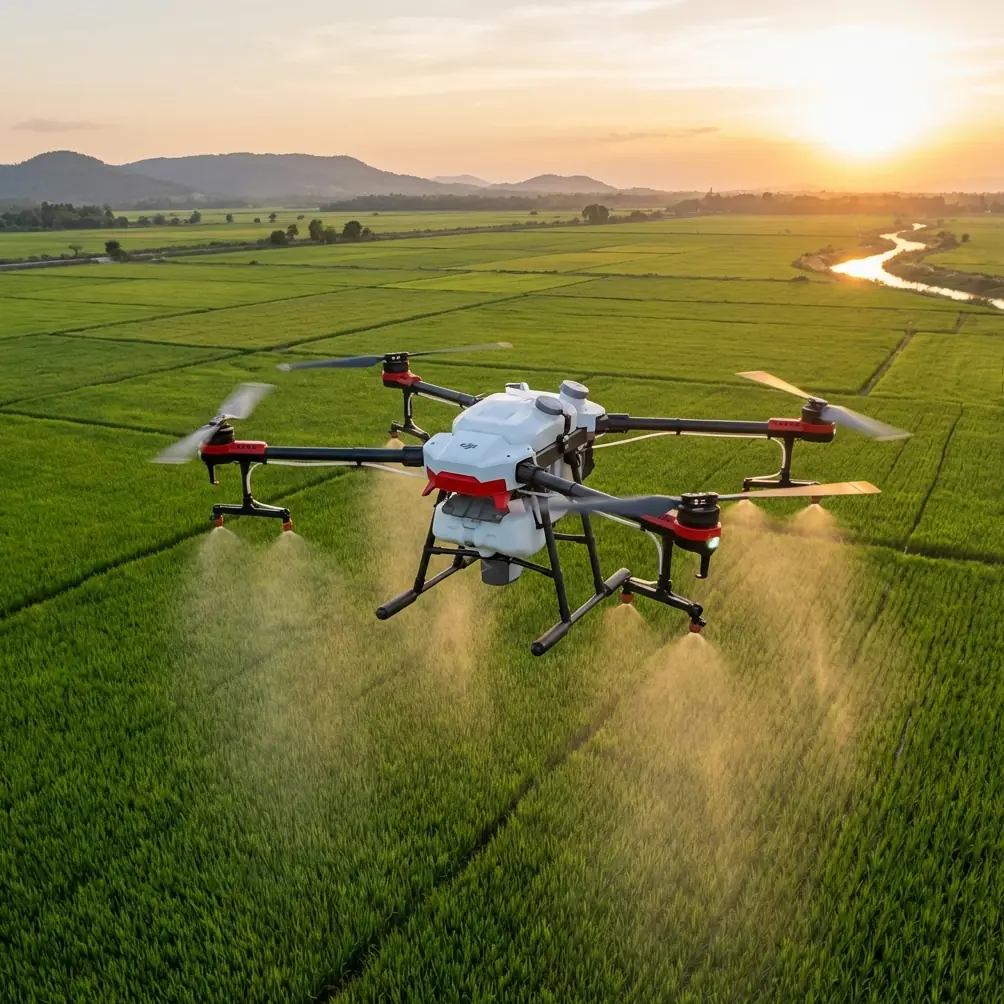
Agras T50 for Extreme-Temperature Field Scouting: What Actually Matters Before You Fly
META: A technical review of the Agras T50 for scouting fields in extreme heat and cold, with practical guidance on RTK fix stability, spray drift control, nozzle calibration, swath width, and pre-flight cleaning.
When growers talk about the DJI Agras T50, the conversation usually drifts toward payload, coverage, and treatment efficiency. That makes sense. It is built for work. But when the assignment is field scouting in extreme temperatures, the better question is not simply what the aircraft can carry. It is how reliably it can gather useful information, hold a stable path, and stay safe when heat, dust, moisture, residue, and thermal stress start stacking on top of each other.
That distinction matters. A drone that performs well on a mild morning can behave very differently during a punishing midday heat load or in near-freezing dawn conditions. The Agras T50 is not marketed as a classic scouting platform first, yet in real farm operations it often becomes part of a broader decision loop: inspect pressure zones, verify stand variability, check lodged sections, map treatment follow-up, and confirm whether an application plan is solving the problem or just moving it around. In those moments, raw capability matters less than consistency.
From a technical review standpoint, the Agras T50 deserves attention because it sits at the intersection of heavy-duty agricultural design and precision flight expectations. The machine is engineered for harsh farm environments, and one detail that deserves more respect than it usually gets is its IPX6K protection rating. For scouting crews working in extreme temperatures, that rating has operational significance beyond simple durability. In hot, dusty conditions, residue buildup around spray hardware, sensors, landing gear, and body seams can quietly degrade performance and obscure safety systems. In cold, damp conditions, field moisture mixed with chemical residue can cling to external surfaces and create a different kind of hazard. A platform designed to tolerate aggressive washdown is not just easier to maintain; it is easier to return to a known-safe condition between sorties.
That is where the unglamorous pre-flight cleaning step comes in. Before any scouting mission, especially after prior spray work, clean the arms, landing structure, nozzle area, radar or sensing surfaces, camera windows, and the underside where grime tends to accumulate. This should not be treated as cosmetic housekeeping. Residue can interfere with obstacle sensing, distort visual checks for cracks or wear, and in extreme temperatures it becomes more troublesome. In heat, dried deposits can harden and narrow spray openings or trap dust. In cold weather, wet contamination can stiffen, freeze, or alter airflow around sensitive surfaces. A deliberate cleaning pass before flight reduces uncertainty. Safety features only help if they can see and measure the world accurately.
For scouting specifically, the next issue is positional integrity. The Agras T50’s value rises sharply when its RTK solution is stable. A strong RTK fix rate supports repeatable paths, cleaner overlap, and far better confidence when comparing one pass to the next. That is not a theoretical benefit. If you are checking the edge of a stress pattern during extreme temperatures, centimeter-level repeatability helps separate actual crop change from flight inconsistency. Small positioning errors can make one swath look healthier or more stressed simply because the drone did not fly the same line twice. Centimeter precision matters when you are trying to revisit a narrow zone near irrigation boundaries, tree lines, drainage cuts, or previous treatment strips.
Heat can work against that precision in indirect ways. Thermal shimmer over bare ground can reduce visual clarity for the operator. Battery behavior changes. Wind gradients become less predictable. Electronics are still functioning, but the whole mission environment gets noisier. In cold conditions, the challenge is different. Startup behavior can be less forgiving, and crews often rush the first launch to save time. The discipline required here is simple: confirm RTK lock before takeoff, verify the aircraft is holding a clean solution, and avoid treating the drone as “close enough” just because the field is familiar. In precision agriculture, familiar fields still produce expensive mistakes.
Scouting in extreme temperatures also changes how you should think about swath width. On paper, a wider swath looks efficient. In the field, wide coverage can hide subtle variability if altitude and speed are not matched to the information goal. The Agras T50 is capable of covering ground efficiently, but scouting requires a different mindset than broad application. If the objective is to identify stressed patches, wheel-track compaction, or uneven canopy response, reduce the temptation to maximize swath width just because the aircraft can. Tighter, more controlled passes produce cleaner visual interpretation and more useful comparison sets. Efficiency is not the same as clarity.
This becomes even more important when scouting is paired with treatment verification. Many operators use the same platform family and workflow to move from reconnaissance to action. That creates a practical advantage, but it also introduces a blind spot: people sometimes assume that a successful spray pattern automatically means a successful diagnostic pattern. It does not. Spray drift, for example, is often discussed only as an application concern. In reality, the conditions that increase drift risk also complicate scouting quality. Hot, dry, unstable air can distort the very environmental picture you are trying to interpret. If the crop edge looks irregular, is it a stress signature, a wind effect, or the aftermath of non-uniform deposition? You cannot answer that cleanly unless you are already controlling for drift conditions and documenting them.
Nozzle calibration plays into this more than many scouting discussions admit. Even if the mission is primarily observational, calibration history matters when the same aircraft has recently been used for application. Uneven nozzle output from a prior operation can create misleading field patterns that later appear in scouting data. A band of lighter coverage may be read as recovery failure when it is really a delivery inconsistency. That is why nozzle checks belong in a technical scouting workflow, not just a spraying workflow. If the T50 has been switching roles, confirm nozzle condition, verify there is no clogging or residue distortion, and make sure the system is not carrying forward a preventable source of error.
The same logic applies to multispectral workflows. The Agras T50 is not typically framed as a dedicated multispectral mapping aircraft, yet many farm teams now work in mixed fleets where scouting decisions are cross-checked with multispectral imagery from another platform. That means the T50 often becomes the fast-response aircraft used to validate what those layers suggest. If multispectral data flags a zone with temperature-driven stress, the T50’s job is to inspect it quickly, safely, and with enough precision to guide the next decision. In that context, the aircraft does not need to replace multispectral capture. It needs to arrive at the right spot, hold a dependable path, and give the operator confidence that the observed symptoms match the mapped anomaly.
That operational handoff is where extreme temperature scouting becomes genuinely valuable. Consider a midday heat event. A multispectral layer or earlier prescription map may suggest a moisture deficit trend, but by the time the field team reacts, conditions have changed. Leaves may have rolled. Wind may have shifted. The stress signature may have sharpened along a drainage transition. A robust field aircraft with stable positioning and resilient environmental sealing can be sent up quickly to inspect the exact area of concern. If the RTK fix is solid and the operator keeps altitude and pass geometry disciplined, the drone can confirm whether the stress is localized, linear, expanding, or associated with infrastructure such as blocked emitters or compacted access routes. That is actionable scouting.
Cold-weather scouting has its own version of the same story. Frost pockets, delayed emergence, and uneven warming patterns often appear in narrow bands and low areas that reward centimeter-level revisit accuracy. Here again, the value of the T50 is not that it turns into a different category of aircraft. It is that its rugged agricultural design lets crews work in conditions that punish lightly built systems. A machine built for hard field use can withstand the messy reality of wet soil, residue, splashing, and frequent cleaning cycles. That reliability shortens the gap between problem detection and field verification.
There is also a human-factor benefit. When crews trust the aircraft’s environmental resilience, they are more likely to follow proper maintenance instead of avoiding it. The pre-flight wash-and-inspect routine becomes normal rather than optional. That habit has compounding effects: cleaner sensors, fewer missed defects, more consistent nozzle performance, and better readiness when weather windows are narrow. In farm aviation, small maintenance habits often create bigger operational wins than spec-sheet arguments.
If I were setting up an Agras T50 for repeated extreme-temperature scouting, I would focus on five habits. First, clean before every mission, with special attention to sensing surfaces and spray components. Second, verify RTK status and do not launch until the fix is stable. Third, set swath width based on diagnostic clarity, not maximum acreage. Fourth, treat nozzle calibration as part of data integrity, not merely spray performance. Fifth, log weather conditions with enough discipline to interpret drift risk and heat effects later. Those habits sound basic because they are. The point is that under temperature stress, basic steps stop being optional.
For teams building a more formal scouting protocol around the aircraft, it also helps to standardize a field checklist and operator communication flow. A simple briefing can include thermal conditions, expected wind behavior, target zones, previous application history, and whether multispectral anomalies are being ground-truthed. If you want help designing that workflow, this field support chat is a practical place to start. The key is to make every flight answer a specific agronomic question rather than collecting footage that only looks informative.
The Agras T50 is at its best when it is treated as a precision farm tool, not a blunt-force coverage machine. In extreme temperatures, that difference becomes obvious fast. Rugged washdown-ready construction such as IPX6K protection helps keep the aircraft safe and recoverable between dirty field cycles. A strong RTK fix rate enables centimeter precision where revisit accuracy matters. Controlled swath width improves the quality of observation. Attention to spray drift and nozzle calibration protects the integrity of what you think you are seeing. None of those elements is flashy on its own. Together, they determine whether a scouting flight produces evidence or just impressions.
That is the standard serious operators should demand from an aircraft working the edge of environmental stress. Not hype. Not generic capability claims. Reliable, repeatable information gathered by a platform that can handle the field conditions it was sent into.
Ready for your own Agras T50? Contact our team for expert consultation.