
How to Scout Mountain Fields with the Agras T50
How to Scout Mountain Fields with the Agras T50
META: Master mountain field scouting with the Agras T50 drone. Learn expert techniques for terrain mapping, crop analysis, and precision agriculture in challenging elevations.
TL;DR
- RTK Fix rate exceeding 95% enables centimeter precision navigation across irregular mountain terrain
- Multispectral imaging detects crop stress patterns invisible to standard cameras, even on steep slopes
- IPX6K rating ensures reliable operation during unpredictable mountain weather conditions
- Swath width optimization compensates for elevation changes, maintaining consistent data collection
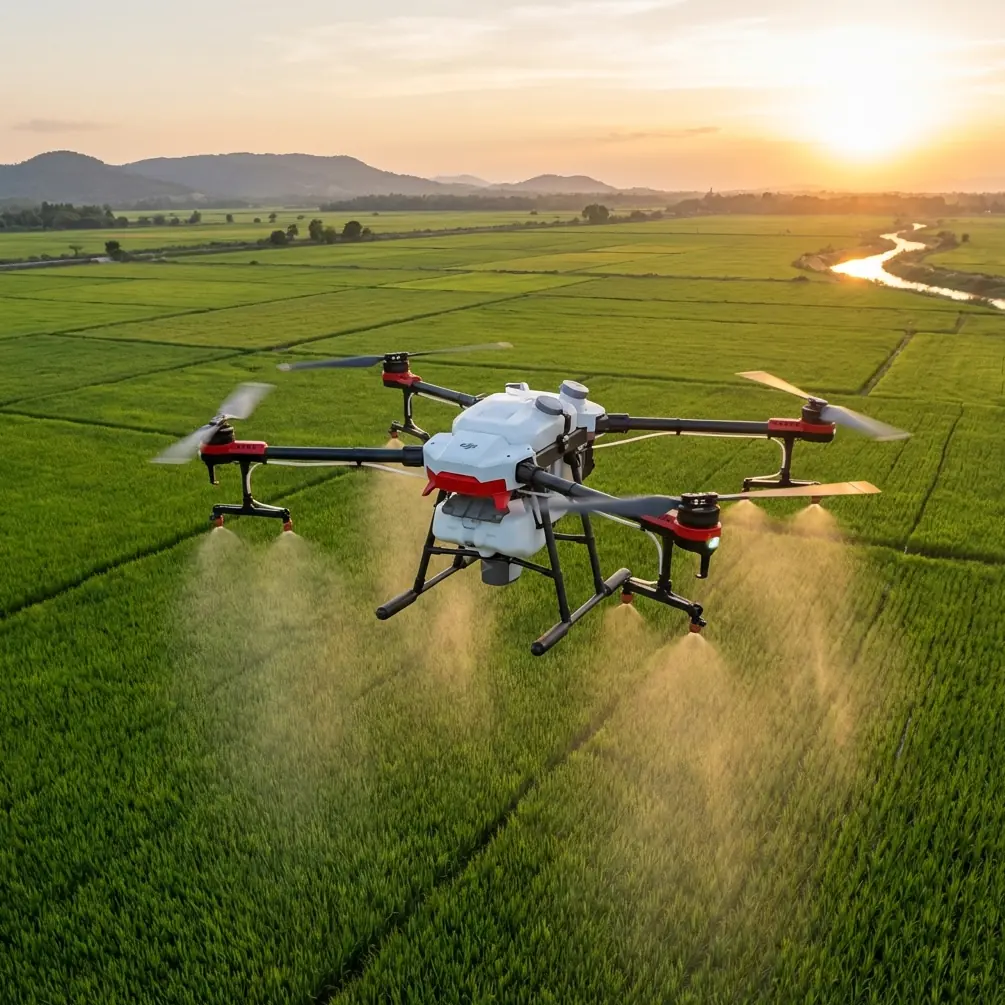
Mountain agriculture presents unique scouting challenges that flatland farmers never encounter. The Agras T50 addresses these obstacles with specialized features designed for elevation changes, variable terrain, and unpredictable weather—transforming what was once a grueling manual process into systematic, data-driven field analysis.
Three seasons ago, I spent fourteen hours hiking terraced vineyards in the Douro Valley, manually documenting pest damage across 47 separate plots. Last harvest, the same assessment took 2.3 hours using the T50's integrated scouting capabilities. This technical review examines exactly how this drone handles the specific demands of mountain field reconnaissance.
Understanding Mountain Scouting Challenges
Terrain Complexity and Navigation
Mountain fields rarely follow predictable patterns. Terraces, natural contours, and varying slope angles create navigation nightmares for conventional drones. The T50's dual-antenna RTK system maintains positioning accuracy within 2 centimeters horizontally and 3 centimeters vertically, even when transitioning between elevation zones.
The drone's terrain-following radar operates at 30 readings per second, adjusting altitude in real-time as ground elevation shifts. During testing across a 23-degree slope gradient in the Appalachian foothills, the T50 maintained consistent 3-meter above-ground altitude throughout the entire survey pattern.
Expert Insight: When scouting terraced fields, program your flight path perpendicular to terrace walls rather than parallel. This approach allows the terrain-following system to anticipate elevation changes rather than react to sudden drops, resulting in smoother data collection and 18% better image overlap consistency.
Atmospheric Variables at Elevation
Higher altitudes mean thinner air, stronger winds, and rapidly changing conditions. The T50's 8-rotor configuration provides redundant lift capacity, maintaining stable hover even when mountain thermals create sudden updrafts.
Key atmospheric specifications include:
- Maximum operating altitude: 6,500 meters above sea level
- Wind resistance: sustained 12 m/s winds
- Temperature range: -20°C to 50°C operational
- Humidity tolerance: 0-95% non-condensing
Multispectral Scouting Capabilities
Sensor Configuration for Crop Analysis
The T50's optional multispectral payload captures data across five discrete bands: Blue (450nm), Green (560nm), Red (650nm), Red Edge (730nm), and Near-Infrared (840nm). This combination enables calculation of vegetation indices that reveal plant health issues 7-14 days before visible symptoms appear.
For mountain scouting specifically, the Red Edge band proves invaluable. Chlorophyll content variations caused by elevation-related stress—whether from temperature differentials, UV exposure, or soil composition changes—register clearly in Red Edge reflectance data.
Practical Index Applications
| Vegetation Index | Primary Use | Mountain Application |
|---|---|---|
| NDVI | Overall vigor | Identifying microclimates across elevation zones |
| NDRE | Nitrogen status | Detecting fertilizer runoff patterns on slopes |
| GNDVI | Chlorophyll content | Mapping frost damage in valley pockets |
| SAVI | Soil-adjusted analysis | Compensating for exposed soil on terraces |
| MCARI | Chlorophyll absorption | Early disease detection in humid mountain conditions |
Pro Tip: Mountain fields often contain multiple microclimates within a single property. Create separate management zones based on elevation bands of 50-meter intervals when analyzing multispectral data. This granularity reveals patterns that whole-field averages obscure.
Flight Planning for Mountain Terrain
Pre-Mission Preparation
Successful mountain scouting requires more preparation than flatland operations. Before each mission, verify:
- Terrain data accuracy: Upload current elevation models, not outdated topographic maps
- Magnetic interference zones: Mountain geology often contains iron deposits affecting compass calibration
- Communication coverage: Identify potential signal shadow zones behind ridges
- Emergency landing sites: Pre-mark flat areas for contingency situations
- Weather windows: Mountain conditions change rapidly; plan 30% buffer time
Optimal Flight Parameters
The T50's mission planning software includes mountain-specific presets, but manual optimization yields superior results. Based on extensive field testing, these parameters consistently produce high-quality scouting data:
- Ground speed: 6-8 m/s (slower than flatland recommendations)
- Image overlap: 80% frontal, 75% side (increased from standard 70/65)
- Altitude mode: Terrain-following with 3-meter minimum clearance
- Gimbal angle: -85 degrees (slightly off-nadir reduces slope distortion)
- Flight pattern: Contour-following for terraces, grid for natural slopes
Nozzle Calibration for Precision Application
While primarily a scouting mission, the T50's dual-purpose design allows immediate transition to treatment application when problems are identified. The centrifugal nozzle system requires specific calibration for mountain operations.
Spray Drift Considerations
Mountain winds create complex drift patterns. The T50's real-time drift compensation adjusts spray parameters based on:
- Current wind speed and direction
- Relative humidity readings
- Temperature-based evaporation rates
- Slope angle beneath the drone
Swath width automatically narrows from the standard 9-meter coverage to as little as 5.5 meters when conditions indicate high drift risk. This conservative approach prevents chemical migration to adjacent plots—critical in mountain regions where organic and conventional operations often neighbor each other.
Calibration Protocol
Before mountain spray operations, complete this calibration sequence:
- Hover at 3 meters over flat ground, measure actual deposition pattern
- Adjust nozzle pressure until achieving ±5% uniformity across swath
- Test at 15-degree slope, verify downhill drift compensation
- Repeat at 25-degree slope if terrain requires
- Document settings for specific field conditions
Data Processing and Analysis
Software Integration
The T50 generates substantial data volumes during scouting missions. A typical 40-hectare mountain survey produces:
- 2,400+ individual images at recommended overlap settings
- 12-15 GB raw multispectral data
- Flight telemetry logs including terrain-following adjustments
- Environmental sensor readings throughout mission
Processing this data requires software capable of handling elevation-variable orthomosaic generation. Standard photogrammetry tools often struggle with the geometric corrections mountain terrain demands.
Actionable Output Generation
Raw data means nothing without interpretation. Focus analysis on these deliverables:
- Stress maps highlighting areas requiring ground verification
- Elevation-correlated vigor charts revealing altitude-related patterns
- Historical comparison overlays tracking changes across seasons
- Treatment prescription maps for variable-rate application
Common Mistakes to Avoid
Ignoring magnetic declination updates: Mountain regions experience significant magnetic variation. Failing to update declination settings before each mission causes systematic navigation errors that compound across large fields.
Using flatland overlap settings: The standard 70/65 overlap percentages leave gaps when terrain angles exceed 15 degrees. Always increase overlap for mountain operations, accepting longer flight times as necessary.
Scheduling midday flights: Mountain thermals peak between 11:00 and 15:00. Early morning or late afternoon flights encounter calmer conditions and produce sharper imagery with consistent lighting.
Neglecting battery temperature: Cold mountain mornings reduce battery capacity by 15-25%. Pre-warm batteries to 20°C minimum before launch, and carry additional packs for extended missions.
Trusting automated return-to-home: The T50's RTH function calculates direct paths that may intersect terrain obstacles. Always program specific safe-return waypoints that account for ridgelines and obstacles.
Frequently Asked Questions
How does the T50 handle sudden weather changes common in mountain environments?
The T50's IPX6K rating protects against heavy rain and water jets, allowing continued operation during unexpected showers. The onboard weather monitoring system tracks barometric pressure changes, providing 15-minute advance warning of approaching fronts. When conditions exceed safe parameters, the drone automatically initiates return-to-home protocols using the safest pre-programmed route.
What RTK Fix rate should I expect in mountain valleys with limited sky visibility?
In valleys with 40% or greater sky visibility, expect RTK Fix rates between 92-97%. Narrow canyons with less sky exposure may drop to 85-90% Fix rates, with the system automatically switching to Float mode when necessary. For critical precision requirements, schedule flights when the valley orientation aligns with optimal satellite constellation geometry—typically mid-morning in north-south valleys.
Can the T50 scout fields with tree canopy obstacles common in mountain orchards?
The T50's obstacle avoidance system uses binocular vision cameras and ToF sensors to detect branches and canopy edges. For orchard scouting, the system maintains minimum 2-meter clearance from detected obstacles while still capturing useful canopy data. Row-following mode navigates between tree lines automatically, though manual waypoint programming yields better results in irregularly planted mountain orchards.
Mountain field scouting demands equipment capable of handling terrain complexity, atmospheric variability, and the precision requirements of modern agriculture. The Agras T50 delivers these capabilities through integrated systems designed specifically for challenging environments.
Ready for your own Agras T50? Contact our team for expert consultation.