
Agras T50 in Urban Site Scouting: A Field Report on Speed
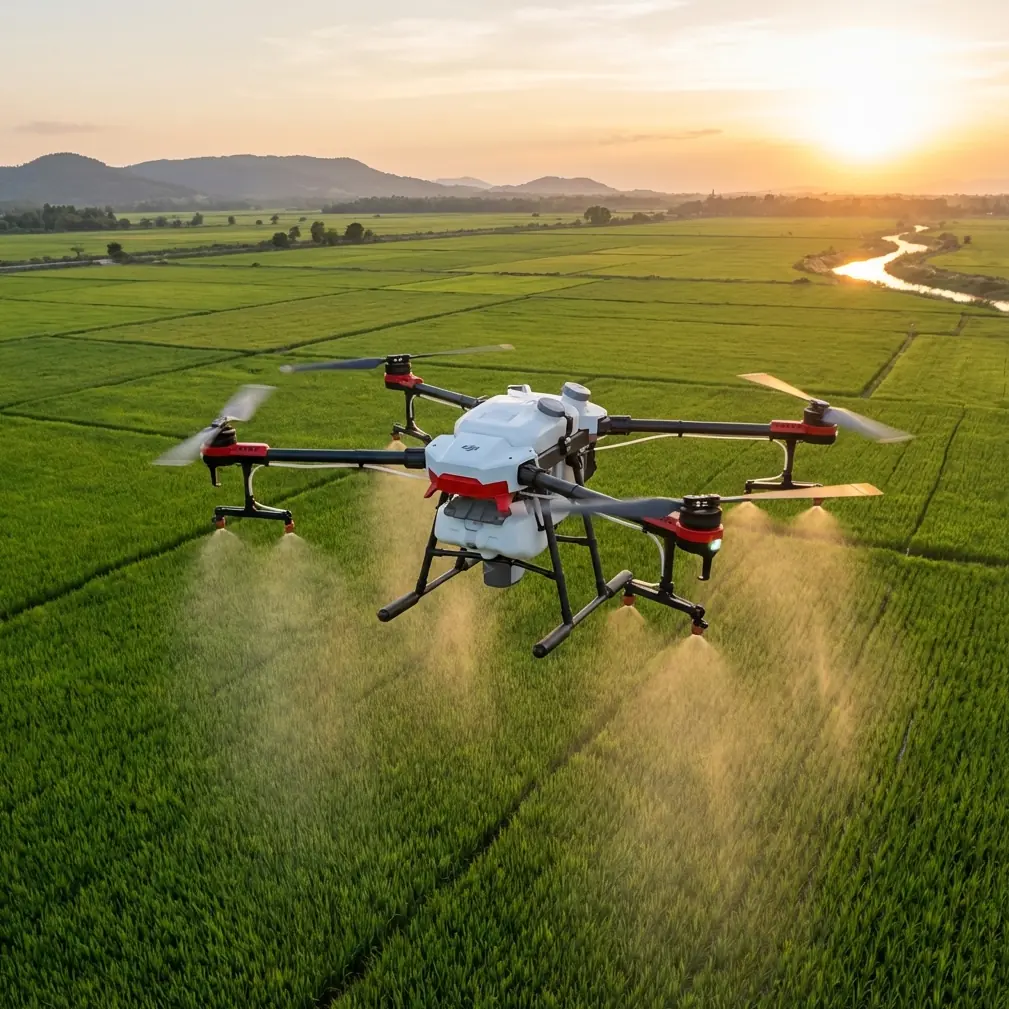
Agras T50 in Urban Site Scouting: A Field Report on Speed, Signal Discipline, and Why “Three Minutes” Matters
META: A field report on using the DJI Agras T50 mindset for urban construction scouting, drawing lessons from AI traffic response, flight-control training, and compass calibration discipline.
Urban scouting with an Agras T50 is rarely limited by flight time alone. The harder constraint is decision time: how quickly the aircraft, the crew, and the data pipeline can detect a problem, confirm it, and turn that finding into action on the ground.
That is why a recent report out of Yancheng caught my attention. Local traffic authorities, working with a regional big-data group through a scenario innovation lab, validated the core AI algorithms behind an “airborne traffic police” platform. The system is described as operating around the clock and automatically identifying illegal parking, lane-blocking vehicles, slow-moving traffic, congestion, and other abnormal events. Most strikingly, the report says minor traffic accidents can be handled in 3 minutes.
At first glance, that sounds like a traffic-management story, not an Agras T50 story. But for teams scouting urban construction sites, road-adjacent infrastructure work, and staging areas, it points to something more useful than product marketing: a benchmark for operational tempo. Three minutes is not just a headline. It is a reminder that airborne value in dense urban environments comes from compressed response cycles.
For an Agras T50 operator supporting construction intelligence, pre-worksite checks, access-route monitoring, or site logistics visibility, the question is simple: can your workflow move from detection to decision fast enough to matter?
What the Yancheng case gets right about urban drone operations
The Yancheng platform’s real achievement is not simply that it can see from above. Plenty of drones can do that. The meaningful part is the combination of persistent observation and automated recognition. A system that can identify stopped vehicles, low-speed anomalies, and congestion all day and all night changes the rhythm of intervention. Instead of waiting for a human observer to notice a problem, the process starts at the machine level.
That matters on urban construction projects because many site failures begin as small access failures. A blocked gate. A delivery queue spilling into a public road. Temporary fencing creating a choke point. Improper vehicle staging near a crane zone. These are not dramatic events, but they are expensive ones. They slow crews, interrupt material flow, and expose the project to safety and compliance issues.
The operational significance of the Yancheng example is the all-weather, automatic identification of anomalies. For an Agras T50 scouting workflow, that suggests a useful standard: don’t fly just to collect imagery. Fly to define exception conditions in advance. What counts as a blockage? What counts as abnormal queueing? What traffic pattern around the site signals a delivery bottleneck or a public-interface risk? Once those definitions exist, the aircraft becomes a node in a decision system rather than a camera in the sky.
The second significant detail is that the core AI algorithm was validated by a joint lab created by traffic police and a local big-data group. That kind of cross-functional validation is easy to overlook, but it is exactly how serious urban drone operations mature. Construction teams often focus heavily on pilot skill and aircraft capability while underinvesting in backend interpretation. In city environments, reliable scouting requires both. The aircraft can gather the perspective, but the decision value depends on how consistently the data is interpreted.
Why this matters specifically to an Agras T50 reader
The Agras T50 is usually discussed in agricultural terms, and fairly so. But readers evaluating it for urban scouting are often less interested in crop throughput than in platform robustness, controllability, payload discipline, and repeatable route execution in demanding conditions. In that context, some of the most useful lessons do not come from agriculture at all. They come from adjacent drone domains where precision, timing, and operator discipline are non-negotiable.
Urban construction scouting is one of those domains.
An Agras T50 working near dense built environments needs more than raw lift or endurance. It needs clean control behavior, stable heading reference, and a crew that understands how to structure repeatable flight logic. Two of the reference documents point directly at those foundations, even though they come from training and technical calibration rather than from the T50 itself.
Flight logic is not a beginner topic
The educational document on DJI TT drone programming includes a deceptively simple exercise: design flight paths in geometric shapes such as triangles, rectangles, and pentagons, with the trajectory plane either parallel to the ground or vertical to it. It also introduces two ways to control motion via keyboard programming and notes that one approach supports multithreaded control, meaning multiple instructions can run at the same time.
That sounds classroom-oriented. In practice, it speaks directly to disciplined urban scouting.
Why? Because construction-site reconnaissance is often repetitive by design. You are not improvising cinematic moves. You are comparing stockpile growth, checking perimeter changes, tracking staging shifts, or inspecting route encroachment from one day to the next. Polygonal and repeatable route logic matters because it reduces variation between flights. If you want to know whether access congestion has worsened at a gate or whether a temporary structure is encroaching into a haul path, a controlled, consistent flight pattern gives you cleaner comparisons than ad hoc piloting.
The operational significance of those geometry exercises is straightforward: they train the habit of planning the aircraft’s path as a measurement tool, not merely as a vehicle. A rectangular pass parallel to the ground may suit material yard checks. A vertical-plane pattern can be useful for facade-adjacent visual review or crane-clearance context. A multistep control routine that combines movement with visual signaling echoes a broader truth in real jobs: airborne platforms often need to do more than fly; they must synchronize movement, observation, and communication.
The same training pages also explain that larger control-stick deflection produces faster motion across roll, pitch, throttle, and yaw. Again, obvious at first glance. Yet in urban scouting, it has direct consequences. Aggressive inputs near structures or traffic corridors can degrade image consistency, reduce observer confidence, and create unnecessary battery spikes. Smoothness is not about elegance. It is about preserving usable data and keeping the aircraft’s power curve predictable.
A field lesson on batteries: avoid the “last-task temptation”
Since this article is framed as a field report, let me add one habit I insist on with crews operating larger platforms in stop-start urban schedules.
Do not use a partially depleted pack for “just one quick extra look” after a productive sortie.
That is the battery mistake I see most often, especially when the final task seems minor: a gate check, a rooftop glance, a quick look at a blocked delivery lane. In urban operations, the short mission is often the mission that expands. A traffic irregularity turns into a wider perimeter review. A material delivery issue leads to a second pass from a different angle. Radio coordination takes longer than expected. Wind around buildings is less cooperative on the return leg than on departure.
My rule in practice is simple: if the next task may become decision-critical, start it on a fresh pack rather than an optimistic one. Battery management is not just about remaining percentage. It is about protecting your ability to hold position, reframe, and return without compressing the pilot’s mental margin. That is especially true when your scouting objective is tied to logistics or traffic conditions, where delays are dynamic rather than fixed.
This is one reason the “three minutes” figure from Yancheng is so revealing. Fast incident handling is not only an AI problem. It is also an energy-readiness problem. If the aircraft is airborne at the right moment with enough reserve to verify and follow through, the workflow stays decisive.
Calibration discipline is where urban reliability starts
The most grounded technical lesson in the reference material comes from the compass calibration document. It specifies a process in which, after hearing the ESC unlock tone, the operator slowly raises throttle to 50% to 75% over 5 to 10 seconds, then quickly returns throttle to zero and completes calibration. It also gives interference thresholds: below 30% is acceptable, 31% to 60% is a gray zone, and above 60% means the system should be moved away from interference sources or upgraded with an external compass/GPS solution.
For urban site scouting, that is not trivia. It is a warning label for the entire environment.
Construction zones are full of magnetic and electrical noise sources: reinforced concrete, temporary power setups, metal fencing, parked equipment, containers, and vehicles. If your heading reference is contaminated, every elegant plan for route repeatability starts to wobble. Return behavior, hover quality, and automated movement all become less trustworthy. The calibration thresholds matter because they translate invisible interference into actionable go/no-go judgment.
I would go further: on urban jobs, crews should treat compass interference checks as a site-characterization tool, not merely a preflight checkbox. If the interference reading drifts into the gray zone or worse, that is telling you something important about where you are standing, what infrastructure is nearby, and how much confidence you should place in heading-dependent tasks.
This also connects back to the Yancheng traffic story. Automated recognition systems are only as useful as the stability of the platform gathering the data. If the aircraft’s positional and directional references are compromised, your anomaly detection may still trigger, but the operational response becomes slower, less certain, and harder to defend.
Where the Agras T50 fits in an urban scouting stack
An Agras T50 entering urban construction scouting should be thought of less as a generic drone and more as a disciplined aerial work platform. The headline capabilities people often chase in spec sheets matter less than three practical qualities:
- Repeatable movement
- Reliable orientation in interference-heavy environments
- A workflow built around exception detection
That framework is what ties these references together. The Yancheng example demonstrates the value of automatic anomaly recognition under continuous observation. The educational flight material reinforces structured path design and controlled multi-input behavior. The compass document shows how quickly reliability can collapse if magnetic interference is ignored.
If you are using the Agras T50 to monitor urban construction perimeters, adjacent traffic effects, access roads, laydown zones, or rooftop logistics staging, the platform’s real value emerges when those three qualities are integrated. Not separately. Together.
For teams building that workflow, one practical way to compare notes with operators who have already adapted large-format UAV routines to mixed urban environments is to message a field specialist directly. The useful conversations are rarely about brochure features; they are about where interference appears on real sites, how route templates are standardized, and when batteries should be cycled out before the “small” follow-up mission.
The hidden link between site scouting and traffic response
There is a deeper operational parallel here. Yancheng’s airborne traffic response model is designed to preserve public mobility during a high-demand holiday period. Urban construction scouting, when done well, serves a similar function on a smaller stage. It protects flow.
Not crop flow. Not data flow in the abstract. Physical flow: trucks, workers, materials, and neighboring road users. A drone sortie that reveals lane encroachment before deliveries stack up, or identifies a staging conflict before a queue forms, has already paid for itself in operational clarity.
That is why the most useful takeaway from the “3-minute” traffic report is not speed for its own sake. It is the value of shortening the interval between seeing, understanding, and acting. An Agras T50 can contribute to that interval, but only if the operation around it is designed with equal rigor.
Urban environments punish vague workflows. They reward crews that calibrate carefully, fly repeatable patterns, manage batteries conservatively, and define anomalies before takeoff. Those are not glamorous disciplines. They are the reason an aircraft becomes operationally trusted.
And once trust is established, the drone stops being an occasional observer and starts becoming a reliable part of site control.
Ready for your own Agras T50? Contact our team for expert consultation.