
Agras T50 Best Practices for Dusty Coastal Scouting
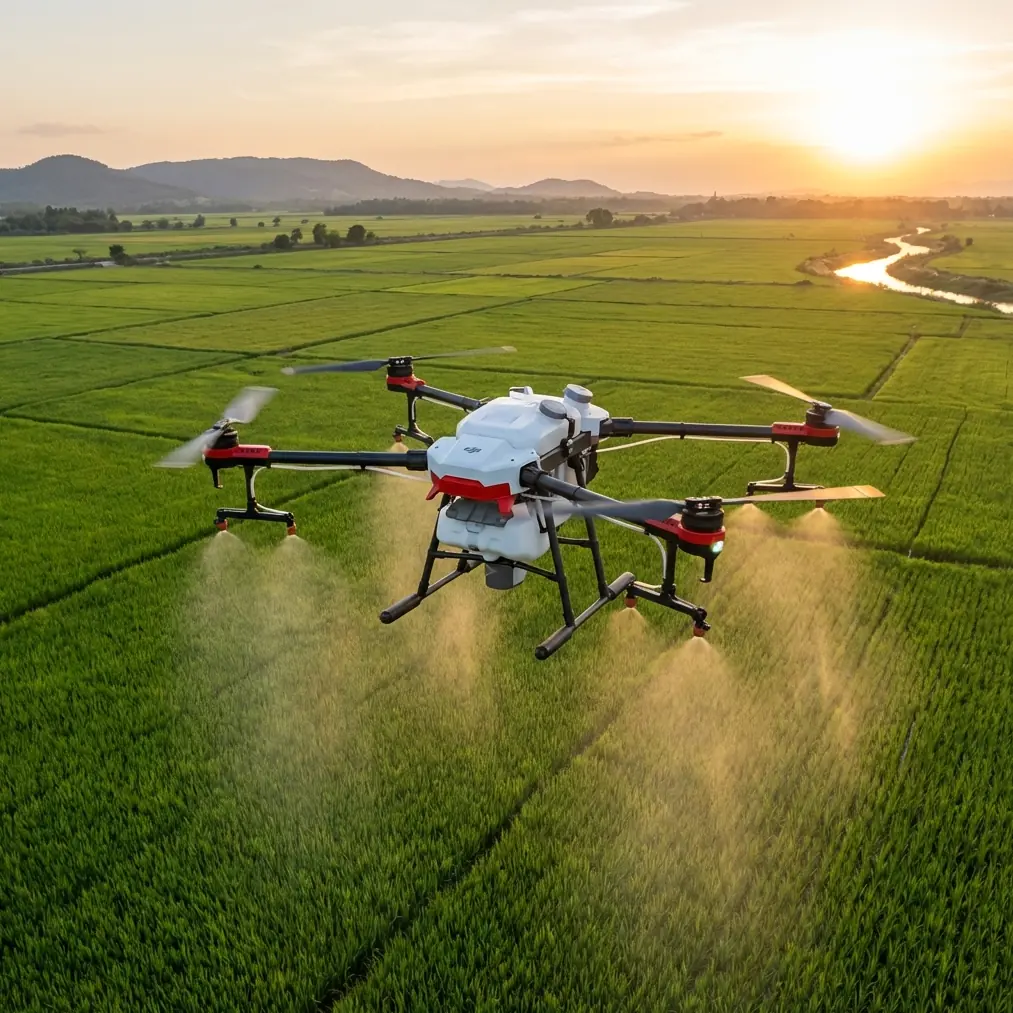
Agras T50 Best Practices for Dusty Coastal Scouting: What Actually Matters in the Field
META: A field-driven how-to for using Agras T50 in dusty coastal environments, with practical insights on return paths, altitude logic, precision workflow, and data handling.
The hardest part of coastal drone work is rarely the distance. It’s the mess.
Salt in the air. Dust kicked sideways by wind. Landing zones that look usable until the rotor wash turns them into a cloud. Add the need for repeatable coverage and clean positional confidence, and a routine scouting run can become a reliability test.
That is why the Agras T50 deserves to be discussed less as a headline platform and more as a working system. If you are scouting coastlines in dusty conditions, the real question is not whether the aircraft can fly the route. It is whether your workflow can stay stable when visibility, surface conditions, and return timing all start to work against you.
I learned that lesson on a coastal survey support job where the aircraft itself was not the weak link. The weak link was the return logic. We had enough lift, enough battery margin, and a decent target area. What we did not have was a disciplined procedure for climbing to a safe transit height before crossing back over an uneven, dusty launch point. That mistake created rotor wash turbulence at the worst possible moment and made landing far less clean than it should have been.
That kind of problem sounds simple after the fact. In the field, it usually shows up as “almost fine.”
Why dusty coastline work punishes sloppy habits
Coastal scouting blends two irritating variables: airborne particles and inconsistent reference surfaces. Dusty launch areas can interfere with visual confidence during takeoff and landing, while shoreline terrain often invites pilots to improvise route geometry. Improvisation is where repeatability starts to slip.
For an Agras T50 operator, this is where best practices matter more than raw platform capability. A large agricultural aircraft can cover ground efficiently, but efficient coverage means little if every mission ends with a vague return path, uncertain alignment over the landing area, or inconsistent altitude behavior near obstacles.
The cleaner approach is to think in layers:
- Mission task altitude
- Safe transit altitude
- Final overhead alignment
- Controlled descent into the landing zone
That sequence may sound obvious, but it mirrors a training logic that shows up clearly in the reference material. One training document describes a drone taking off from a marked challenge card, assigning random X and Y offsets between -35 and 35, and a random Z value between 80 and 120 centimeters, then returning not directly to land, but first climbing to a safe height of 120 centimeters, moving back to a point directly above the card at that height, and only then descending to land.
That is a small-scale educational exercise, but the operational significance is bigger than the numbers suggest. The pattern is what matters: complete the task, rise to a safe known altitude, translate back over the reference point, then descend. In coastal scouting, that same logic reduces rushed low-altitude lateral movement over uneven, dusty, or visually confusing terrain.
The safe-height habit is not optional
If I had to choose one operational discipline for Agras T50 work near dusty coastlines, it would be this: never make your return path a low-level improvisation.
The training reference adds another useful trigger. In that example, the aircraft exits the task and heads home when the battery drops by 30% or when flight time exceeds 30 seconds. Those thresholds come from a small educational scenario, not a T50 mission profile, but the principle translates perfectly: establish objective exit conditions before you launch.
On a real T50 operation, your thresholds will be different. The aircraft, payload state, wind, and job size all change the math. Still, the operational lesson stands. Predetermine what causes the aircraft to stop scouting and begin a structured recovery. In dusty coastal work, waiting until the aircraft “should still be fine” is how crews drift into rushed endings.
A disciplined return profile gives you three advantages:
- It reduces the chance of lateral low-altitude movement through dust plumes.
- It improves repeatability over a known landing reference.
- It gives the pilot and visual observers a more predictable final phase to monitor.
That last point matters more than people admit. Predictability lowers workload.
Apply educational flight logic to a professional T50 workflow
It might seem odd to pull insight from an educational drone programming document when discussing an Agras T50. It should not.
The strongest field procedures often come from simple training patterns that scale well. In this case, the document’s sequence of randomized coordinates, controlled altitude selection, return-to-reference logic, and safe-height transition is exactly the kind of disciplined framework that keeps bigger aircraft operations tidy.
For T50 scouting in dusty coastal environments, adapt that logic like this:
1. Define a clear reference point before takeoff
The training material revolves around a recognized visual marker, a challenge card labeled “8.” In professional operations, your equivalent may be a prepared landing mat, a marked takeoff zone, or a surveyed home point. The point is not the marker itself. The point is to make the aircraft’s return geometry unambiguous.
If the launch area can visually disappear under rotor wash and dust, a clear overhead reference becomes even more valuable.
2. Separate work altitude from recovery altitude
The source document repeatedly uses 120 centimeters as a safe intermediate height before lateral return and descent. For T50 operations, the exact altitude will be much higher and site-specific, but the method is the same. Task altitude is where the work happens. Recovery altitude is where the aircraft transitions safely back to home.
This is especially useful when scouting coastlines with scrub, fencing, irregular dunes, or man-made clutter near the edge of the work area.
3. Use predetermined abort triggers
The educational example uses battery and time thresholds as hard triggers. That is not just a training convenience. It is a reminder to eliminate subjective “one more pass” decision-making.
For Agras T50 fieldwork, define your own trigger logic around battery reserve, wind shift, dust intensity, and RTK stability before launch.
4. Finish overhead, not diagonally
The reference sequence places the drone directly above the landing marker before descent. That is a strong habit for any larger platform. Coming in diagonally at low height over a dusty coastal pad invites visual confusion and surface disturbance exactly when you want precision.
Precision is not only about mapping-grade positioning
People often use phrases like centimeter precision and RTK fix rate as if they are useful on their own. They are not. They only matter if you connect them to an actual flight decision.
In dusty coastal scouting, precision matters because it allows the aircraft to return to the same overhead alignment every time, not because “centimeter precision” sounds impressive in a spec sheet. A reliable RTK fix rate supports repeatability in route execution and final positioning. That helps you maintain stable swath placement, cleaner overlap, and more consistent interpretation of the area you are scouting.
This is where many operations get lazy. They assume the aircraft’s navigation stack will compensate for weak mission design. It won’t. Good positioning makes a good workflow better. It does not rescue a sloppy one.
If your route plan is inconsistent, your landing logic is vague, or your site layout forces unnecessary low-altitude transitions, even excellent positioning performance will only make a flawed process more precisely flawed.
Dust changes how you think about takeoff and descent
The educational source also references the common “H” landing platform used for vertical takeoff and landing aircraft on rooftops, vessels, and in training environments. That detail matters because it reminds us that marked landing infrastructure exists for a reason: it standardizes the most sensitive part of the flight.
For coastline scouting, the practical takeaway is simple. Build or designate a landing area that remains visually and operationally distinct even when dust starts moving. You do not need to copy a training marker literally, but you do need a landing reference that can survive the environmental noise of the site.
With an Agras T50, that translates into a few practical habits:
- Keep the landing zone surface as stable as possible.
- Avoid placing the pad where crosswind will push dust back into the aircraft’s final descent path.
- Brief the recovery geometry before every sortie, even if the route itself changes.
- Treat the final overhead hover and descent as a separate phase, not just the last few seconds of the mission.
That last distinction is one of the biggest differences between casual flying and professional operations.
Data discipline matters as much as flight discipline
There is another lesson hidden in the reference material, this time from a lidar software presentation rather than a drone document. It describes a workflow environment with three self-developed software tools for system control, data fusion, and point-cloud post-processing, along with automated checking, automated processing, and support for custom templates tied to scales from 1:500 to 1:100000. It also mentions seamless conversion between DWG and MDB formats.
At first glance, that has nothing to do with an Agras T50 scouting flight. In practice, it has everything to do with whether your mission becomes usable operational intelligence.
Dusty coastal scouting is often done to support a downstream decision: crop protection planning near coastal farmland, drainage assessment, vegetation stress review, site access planning, erosion observation, or broader field operations. If your flight data cannot flow cleanly into the formats and review structures the client or operations team already uses, then your airborne efficiency stalls on the desktop.
That is the significance of those software details. Automated checking reduces bottlenecks. Custom templates let teams standardize outputs to local requirements. DWG-to-MDB conversion matters because format friction is one of the quietest ways to waste time after a flight.
The flight is not finished when the aircraft lands. It is finished when the scouting result can be checked, interpreted, and handed off without manual chaos.
Where T50 operators should tighten their process
If you are using an Agras T50 in a dusty coastal environment, these are the areas worth tightening first:
Return-path structure
Borrow the training logic directly: complete the work, climb to a predefined safe height, move to a point directly above home, descend only after alignment is confirmed.
Trigger-based mission exits
Use objective thresholds. The educational example’s 30% battery drop and 30-second time cap are small-scale values, but the concept is exactly right.
Reference-point clarity
A visible and consistent landing reference is not cosmetic. It is operational infrastructure.
Data output planning
Know where the scouting data is going before you launch. If your team needs specific scale templates, GIS compatibility, or structured exports, plan for that upstream.
Precision with purpose
RTK fix rate, nozzle calibration, spray drift awareness, swath width, and multispectral workflow all matter only if they are tied to a specific mission outcome. For coastal scouting, that usually means repeatable route control and dependable interpretation, not buzzwords.
The bigger lesson
The Agras T50 makes difficult fieldwork easier, but only when the operator respects sequence.
Takeoff is one sequence. Task execution is another. Recovery is its own discipline. Data handling is a fourth. When those sequences are clearly defined, dusty coastal operations become much calmer. The aircraft stops feeling like a machine you are constantly correcting and starts behaving like part of a reliable system.
That shift is what changed things for me after those earlier messy recoveries near the shoreline. We did not solve the problem by hoping for better conditions. We solved it by structuring altitude transitions, home-point alignment, and post-flight handling more carefully.
If you are refining your own T50 coastal workflow and want to compare mission logic, recovery setup, or data handoff options, you can message Marcus directly here.
The best T50 operations are not dramatic. They are repeatable, clean, and boring in exactly the right ways.
Ready for your own Agras T50? Contact our team for expert consultation.