
Scouting Coastlines in Mountain Terrain with the Agras T50
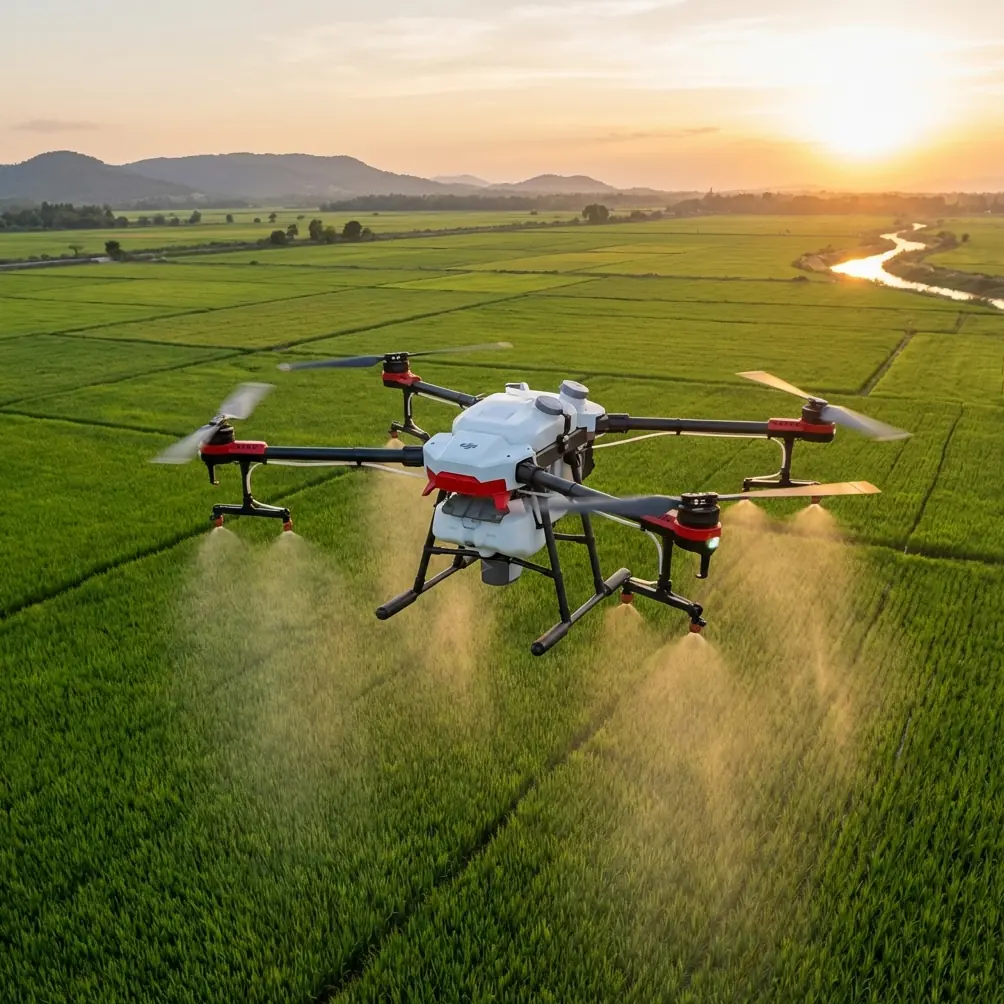
Scouting Coastlines in Mountain Terrain with the Agras T50: Practical Tips for Signal Stability, Precision, and Safer Low-Altitude Work
META: Field-tested guidance for using the Agras T50 in steep coastal mountain terrain, with practical tips on electromagnetic interference, antenna adjustment, RTK behavior, spray control, and disciplined flight preparation.
Steep coastal terrain exposes every weakness in a drone operation.
You are dealing with cliffs, broken sightlines, salt-heavy air, irregular wind, reflective water, and abrupt elevation changes that can distort both pilot judgment and signal behavior. If the mission involves scouting coastline edges in mountain regions with an Agras T50, the challenge is not simply getting airborne. The real work is maintaining precision when the environment keeps trying to pull the aircraft out of rhythm.
That is where disciplined setup matters more than raw confidence.
The most useful lesson here does not actually come from an agricultural platform brochure. It comes from flight training logic and drone system design. One training reference puts the idea bluntly: during flight, the aircraft is constantly “telling” the operator what it needs. Another section warns that 99% of current-stage errors usually come from two habits: focusing too much on the maneuver itself and forgetting to ensure the wings are level during preparation, or mixing steps together too quickly. Even though that source is about aerobatic model aircraft, the operational lesson transfers well to the Agras T50 in mountain-coast scouting. Most field mistakes are not mysterious. They come from skipping preparation, compressing steps, and reacting late.
With the T50, that usually shows up in three places: antenna alignment under electromagnetic interference, RTK stability along uneven terrain, and low-altitude path discipline near ridges and shoreline bends.
Why mountain coastlines are harder than they look
An open coastline appears forgiving from a distance. In reality, a mountain shoreline is full of traps for a precision aircraft.
Water can create visual ambiguity. Rock faces can block or reflect signals. Elevated utility lines or communications infrastructure may introduce localized electromagnetic noise. Wind wraps around headlands and spills down slopes in ways that are difficult to predict from ground level. If you are scouting for vegetation, erosion, access routes, or treatment planning, the mission often requires repeatable passes close to terrain. That means every small error in heading, altitude hold, or signal management gets amplified.
The Agras T50 is built for demanding field work, but its performance depends on how you configure and fly it in that environment. Readers often focus first on payload or coverage metrics. In mountain-coast operations, those are secondary. Before swath width, before nozzle calibration, before even the quality of a multispectral handoff workflow, you need a stable aircraft-control relationship.
That starts with understanding the system as a system.
A useful systems mindset for the T50
One of the reference documents breaks a training drone into two major sides: the airborne platform and the ground control end. The airborne side includes the power system, flight-control system, navigation system, airframe, onboard devices, and image transmission system. It explicitly lists components such as propellers, battery, camera, sensors, and even a display module. The ground side can include a controller, phone, tablet, or laptop.
That split is worth remembering when flying a T50 along a mountain coastline.
When signal quality drops or the aircraft begins behaving inconsistently, pilots often blame “the drone” as if it were one thing. In reality, the problem may sit in the relationship between the air unit and the ground unit. It may be an antenna angle issue. It may be a blocked controller position. It may be an RTK correction interruption. It may be interference near a ridge-mounted telecom site. It may be a rushed flight path that gives you no time to read what the aircraft is already signaling.
Treating the T50 as a linked air-ground system improves troubleshooting speed. It also reduces the temptation to overcorrect in flight.
Start with a slower pre-mission rhythm
The second reference includes a surprisingly sharp coaching point: if you cannot immediately see how to handle what the aircraft is doing, increase the spacing between actions so you have more time to reflect. For mountain coastline scouting, that means resisting the urge to launch and improvise.
A better sequence looks like this:
- Walk the ground control position first.
- Identify likely electromagnetic sources.
- Choose a line of sight that remains clean during the first segment of flight.
- Confirm RTK behavior before moving toward the most obstructed part of the route.
- Fly a short verification leg instead of committing immediately to a full terrain-following run.
This matters because mountain coastlines punish stacked errors. If antenna orientation is poor and your controller position is shaded by rock, and you start the mission with aggressive terrain transitions, you can lose confidence in the aircraft before you have separated the actual cause.
The training source’s “don’t mix the steps” warning applies directly here. Separate signal verification, navigation verification, and route execution into distinct phases.
Handling electromagnetic interference with antenna adjustment
This is the part many operators underplay.
In mountain coastal zones, electromagnetic interference is rarely uniform. It tends to appear in pockets. One headland may be clean, while the next pass near a repeater site or power corridor causes unstable telemetry, video breakup, delayed command response, or RTK inconsistency. The T50 may still be flyable, but your safety margins shrink.
Antenna adjustment is not a cosmetic tweak. It is often the fastest way to restore control quality.
A practical method:
1. Position the operator before adjusting the antenna
Do not tune the antenna while standing in a poor spot. Move first. Gain a clearer line toward the aircraft’s working sector. Avoid standing behind vehicles, metal fencing, or terrain shoulders that partially mask the controller.
2. Aim for broadside effectiveness, not random pointing
Many pilots instinctively point antennas directly at the aircraft. Depending on the antenna type and controller design, that can be less effective than keeping the antenna surfaces properly oriented so the strongest radiation pattern faces the aircraft path. The key is consistency, not frantic repositioning.
3. Re-adjust as the aircraft transitions around terrain
A coastline route that bends around cliffs changes the signal geometry. What worked on the outbound leg may not hold on the return or on a lateral traverse below the operator’s position.
4. Watch for repeatable degradation zones
If telemetry weakens at the same location on successive passes, note whether the issue improves when you alter the antenna angle and shift the pilot position by a few meters. Repeatable weak zones often reveal interference or masking rather than a platform fault.
5. Protect RTK from the same complacency
A poor link and a poor correction feed can combine into what operators misread as a navigation problem. If your RTK fix rate becomes inconsistent near a ridge line, inspect the control-link posture too. The two issues often arrive together in obstructed terrain.
If you want to compare controller positioning options for this kind of environment, a quick field discussion can save time; I usually suggest sending the route sketch and terrain notes first through this WhatsApp field support line.
RTK discipline matters more than brute-force flying
In coastal mountain scouting, centimeter precision is only meaningful when it is stable.
The T50 can hold highly accurate positioning, but terrain and interference can make operators trust the concept of RTK more than the actual live condition. That is a mistake. A strong RTK fix rate is not a box to tick before takeoff and forget. It is a live operational parameter.
Why does this matter along coastlines?
Because route overlap, edge tracking, spray boundary control, and repeat-pass consistency all depend on it. If you are scouting to prepare a treatment plan, document erosion lines, or assess vegetation strips along steep access roads, even small lateral deviations can distort the value of the mission. On slopes, those errors can look worse than they are because the terrain itself hides the true geometry.
A few habits help:
- Confirm stable correction status in the exact launch zone, not just in a nearby open patch.
- Avoid assuming a ridge-top lock guarantees stable lower-slope performance.
- Recheck precision after major elevation transitions.
- If fix quality degrades, widen your margins and reduce task complexity rather than forcing a full-precision workflow on compromised data.
This is where the training document’s core idea applies again: the aircraft is telling you what it needs. If the system starts asking for simpler geometry, cleaner line of sight, or more time between actions, listen early.
Low-altitude path control: don’t rush the terrain
The same flight-training source notes that pilots often get into trouble by becoming too focused on the action itself and forgetting basic setup. In aerobatics, that meant not ensuring the wings were level. With the T50 in mountain coastline work, the equivalent is entering a contour segment without first stabilizing heading, altitude logic, and speed.
That sounds elementary. It is not.
A rushed turn into a cliffside run can create several problems at once:
- inconsistent swath width
- poor image overlap if you are collecting visual reference data
- unnecessary spray drift exposure if the route includes treatment testing
- delayed terrain response near rising ground
- extra workload exactly when signal quality may already be changing
The cure is procedural, not heroic. Before each committed segment, give the aircraft a brief stabilization window. Let heading settle. Let altitude behavior become predictable. Let your screen data make sense again. The old training advice to pause briefly between steps has real value here.
Nozzle calibration and spray drift near the shoreline
If the scouting mission transitions into test application planning or boundary validation, two T50 topics become central: nozzle calibration and spray drift.
Coastal mountain air is rarely neutral. Wind can shear across a face, curl upward from heated rock, or reverse close to the waterline. That makes nominal application settings less trustworthy than they would be over flat inland blocks.
Nozzle calibration matters because irregular terrain already complicates effective coverage. If your output profile is off before you even account for wind distortion, your application map can become misleading fast. A clean calibration routine gives you one less variable to guess at.
Spray drift deserves even more respect near cliffs and shoreline edges. In these zones, lateral airflow can carry droplets farther than ground observation suggests. That has operational significance well beyond efficiency. Drift can contaminate non-target vegetation, reduce treatment quality, and make post-mission analysis unreliable.
For T50 operators scouting first and applying later, the best approach is to collect environmental clues during the scouting phase itself:
- where the wind accelerates around bends
- where updrafts appear near heated slopes
- where downdrafts settle into narrow cuts
- where sea-facing sections create unstable lateral movement
That turns the scouting mission into more than route familiarization. It becomes a drift-risk map.
Why protective design still matters in field training and close work
One of the drone education references highlights a simple but often overlooked design detail: detachable propeller guards help protect the propellers from contact that could otherwise cause a crash. The same document also notes that a training platform’s landing contact may rely on simplified ground-touch elements such as rubber pads under the motors.
This is not a direct T50 specification point, but it reinforces an operational principle that absolutely carries over: physical protection and contact management matter most when working close to obstacles, uneven ground, and repetitive launch-recovery cycles.
In mountain shoreline operations, that means thinking carefully about:
- takeoff surface quality
- loose grit and salt exposure
- landing angle on uneven pads
- obstacle clearance during handoff from hover to route
- prop wash interaction near brush, nets, or fencing
The operators who stay consistent are usually the ones who respect these “small” details before the dramatic ones ever appear.
A practical field sequence for the Agras T50 on mountain coast routes
If I were briefing a team for this exact scenario, the sequence would be simple:
Pre-launch
Check weather locally, not regionally. Coastal mountain wind is hyperlocal. Verify controller position, line of sight, and interference sources. Confirm RTK status and battery readiness. Review the first route segment only.
Initial verification leg
Fly a short, conservative line. Watch control responsiveness, telemetry stability, and positioning quality. Adjust antenna orientation deliberately, not reactively.
Route expansion
Once the air-ground link proves stable, extend into more complex terrain. Keep turns wide enough that the aircraft stabilizes before entering narrow contour segments.
Environmental reading
Use the aircraft’s behavior to map problem areas. If a zone repeatedly shows degraded link or unstable path behavior, mark it. Don’t normalize it.
Application planning
If the mission supports future spraying, note drift corridors, slope-induced airflow, and any section where swath width is likely to become uneven without compensation.
Recovery
Choose a landing area that minimizes uneven touchdown and contamination from loose shoreline debris.
The real edge is not speed
The world drone race may attract top pilots and a high-energy atmosphere, as one news item notes. Skill matters. Precision under pressure matters too. But mountain coastline scouting with an Agras T50 is not a race, and pilots who treat it like one usually create their own problems.
The stronger operator is the one who reads the aircraft well, separates the steps, and makes clean adjustments before small issues multiply.
That is the quiet discipline behind reliable T50 work in hard terrain. Not drama. Not overcontrol. Just a methodical air-ground workflow, careful antenna management in interference-prone zones, and the patience to let precision stay precise.
Ready for your own Agras T50? Contact our team for expert consultation.