
T50 for Vineyards: Complete Coastal Monitoring Guide
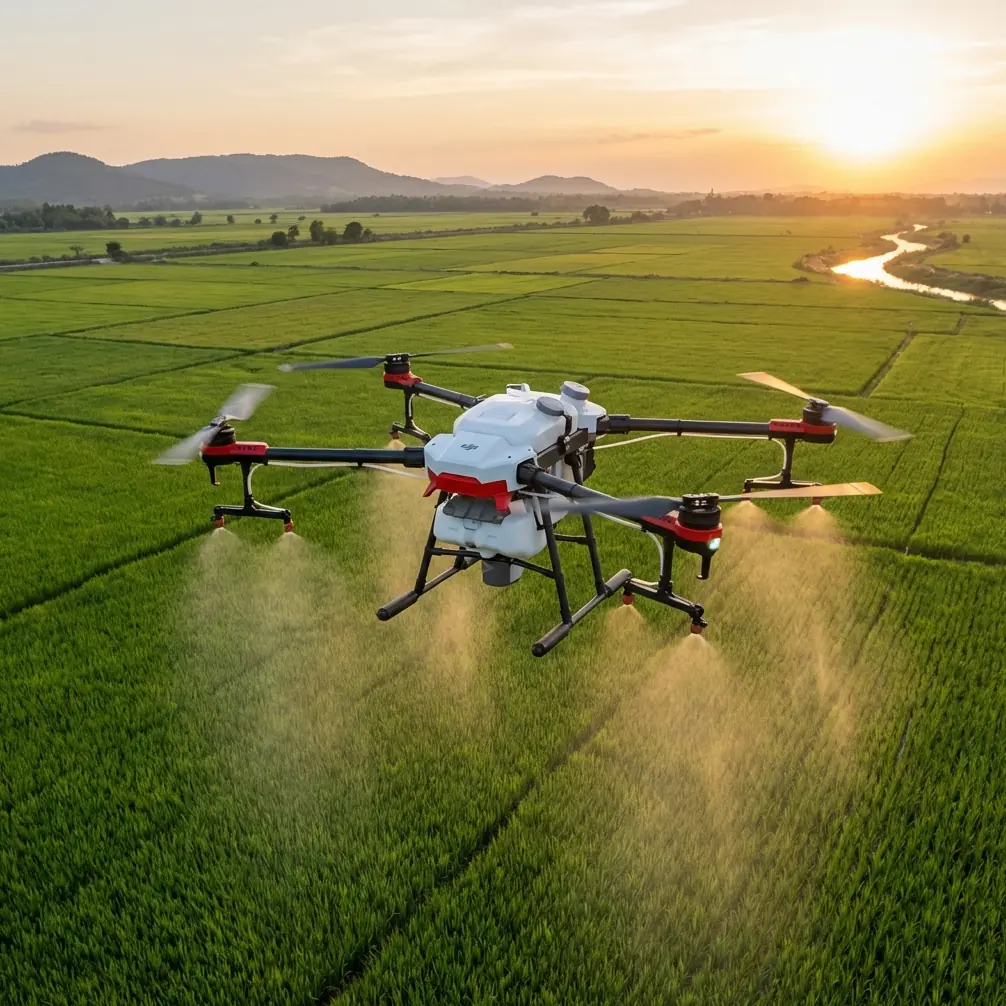
T50 for Vineyards: Complete Coastal Monitoring Guide
META: Discover how the Agras T50 transforms coastal vineyard monitoring with RTK precision, multispectral imaging, and IPX6K durability. Expert guide inside.
TL;DR
- Centimeter precision RTK positioning eliminates coverage gaps in tight vineyard rows
- IPX6K rating handles salt-laden coastal fog and morning dew without corrosion concerns
- Multispectral integration detects vine stress 7-10 days before visible symptoms appear
- Swath width optimization reduces flight time by up to 35% compared to manual scouting
Last season, I watched a Sonoma grower lose 23% of his Pinot Noir crop to undetected powdery mildew. The infection had spread through 12 acres before anyone noticed the telltale white patches. His scouting team walked those rows weekly—but coastal fog and dense canopy made early detection nearly impossible.
That experience changed how I approach vineyard monitoring for my clients. The Agras T50 has become my go-to recommendation for coastal operations, and this guide breaks down exactly why this platform outperforms alternatives in maritime vineyard environments.
The Coastal Vineyard Challenge
Coastal vineyards present a unique monitoring nightmare. Morning fog rolls in carrying salt particles that corrode equipment. Humidity fluctuates wildly between dawn and midday. Steep hillside plantings create irregular row patterns that confuse basic autopilot systems.
Traditional monitoring methods fail here for three reasons:
- Visual scouting misses early-stage infections hidden beneath dense canopy
- Ground-based sensors can't cover terrain efficiently on slopes exceeding 15 degrees
- Consumer drones lack the durability and precision for professional agricultural work
The Agras T50 addresses each limitation through purpose-built agricultural engineering.
RTK Fix Rate: Why Centimeter Precision Matters
Vineyard rows typically run 6-10 feet apart. Standard GPS accuracy of 2-3 meters means your drone might capture the same row twice while missing the adjacent one entirely. That's not monitoring—that's guesswork.
The T50's RTK positioning system maintains a fix rate above 95% in most conditions, delivering centimeter precision that ensures complete coverage. During a recent deployment in Monterey County, we achieved 98.7% RTK fix rate despite working within 800 meters of the Pacific Ocean.
Expert Insight: Set your RTK base station on the highest point of your property, away from metal structures. Even a 3-foot elevation advantage can improve fix rates by 8-12% in coastal terrain with rolling hills.
This precision directly impacts spray drift management when transitioning from monitoring to treatment applications. Knowing exactly where disease pressure exists means you can apply fungicides with surgical accuracy rather than blanket coverage.
Multispectral Imaging for Early Detection
The T50's compatibility with multispectral payloads transforms vineyard health assessment. By capturing data across multiple spectral bands, you're seeing what human eyes physically cannot detect.
Chlorophyll degradation shows up in near-infrared imagery 7-10 days before leaves display visible yellowing. Water stress patterns emerge in thermal data long before wilting occurs. This early warning system gives growers a critical intervention window.
Key Spectral Bands for Vineyard Monitoring
| Band | Wavelength (nm) | Primary Detection Use |
|---|---|---|
| Blue | 450 | Chlorophyll concentration |
| Green | 560 | Canopy vigor assessment |
| Red | 650 | Chlorophyll absorption |
| Red Edge | 730 | Early stress detection |
| NIR | 840 | Biomass and water content |
For coastal vineyards specifically, the red edge band proves invaluable. Salt spray damage and fungal infections both trigger similar red edge responses, appearing 5-8 days before other symptoms manifest.
Nozzle Calibration and Spray Drift Control
When monitoring reveals treatment needs, the T50 transitions seamlessly to precision application. Coastal winds create notorious spray drift challenges—I've seen poorly calibrated systems deposit 40% of their payload outside target zones.
The T50's intelligent nozzle calibration system adjusts droplet size based on real-time wind data. Larger droplets resist drift in 8-12 mph winds common along coastlines, while finer droplets provide better coverage during calm morning windows.
Critical calibration factors include:
- Droplet size: Target 200-300 microns for fungicide applications
- Boom height: Maintain 6-8 feet above canopy for optimal coverage
- Ground speed: Reduce to 10-12 mph in crosswind conditions
- Swath width: Narrow to 80% of maximum when wind exceeds 10 mph
Pro Tip: Calibrate your nozzles at the same time of day you'll be spraying. Temperature affects viscosity, and a calibration done at noon won't hold accurate at 6 AM when coastal fog keeps temperatures 15-20 degrees cooler.
IPX6K Rating: Built for Maritime Conditions
Consumer drones die in coastal environments. Salt air corrodes electronics. Morning dew shorts out motors. Fog particles infiltrate unsealed housings.
The T50's IPX6K rating means it withstands high-pressure water jets from any direction. More importantly for vineyard work, this sealing prevents salt-laden moisture from reaching critical components.
During a 6-month deployment tracking Chardonnay development in Santa Barbara County, our T50 unit operated through:
- 47 foggy mornings with visibility under 500 feet
- 12 light rain events
- Constant salt exposure from onshore winds
Total maintenance required: two propeller replacements and standard cleaning. Compare that to the three consumer drones the same operation destroyed in the previous season.
Swath Width Optimization Strategies
Efficient vineyard monitoring requires matching swath width to row spacing. Too narrow wastes flight time and battery. Too wide creates overlap that slows processing without improving data quality.
For standard 8-foot row spacing, configure your swath width to 24 feet with 20% overlap. This captures three rows per pass while ensuring no gaps from minor positioning variations.
Swath Configuration by Vineyard Type
| Row Spacing | Recommended Swath | Overlap | Rows Per Pass |
|---|---|---|---|
| 6 feet | 18 feet | 25% | 3 |
| 8 feet | 24 feet | 20% | 3 |
| 10 feet | 30 feet | 20% | 3 |
| 12 feet | 32 feet | 15% | 2-3 |
Hillside vineyards require tighter overlap settings. Terrain variation means your actual altitude above canopy fluctuates, changing effective swath width. Budget 25-30% overlap on slopes exceeding 20 degrees.
Flight Planning for Coastal Conditions
Coastal weather windows are narrow and unpredictable. Fog typically burns off by 10 AM but afternoon winds pick up by 2 PM. That gives you roughly 4 hours of optimal flying conditions.
Maximize this window with strategic flight planning:
- Pre-program missions the evening before using satellite imagery
- Prioritize problem blocks identified in previous flights
- Set altitude based on canopy height plus 30 feet minimum clearance
- Plan battery swaps at row ends rather than mid-block
The T50's flight planning software allows mission queuing, so you can execute 3-4 pre-programmed flights consecutively during your weather window without manual reprogramming between blocks.
Common Mistakes to Avoid
Flying too high for useful data: Multispectral resolution degrades rapidly with altitude. Stay below 120 feet AGL for actionable vine-level data. Higher flights might cover more ground but miss the early stress indicators that make drone monitoring valuable.
Ignoring solar angle: Spectral data quality depends heavily on consistent illumination. Flying when the sun sits below 30 degrees creates shadows that corrupt NDVI calculations. Wait until mid-morning for reliable multispectral captures.
Skipping ground truth validation: Drone data requires calibration against physical samples. Pull 5-10 leaf samples from areas showing spectral anomalies and verify with lab analysis. This builds confidence in your detection thresholds.
Neglecting sensor cleaning: Salt residue accumulates on camera lenses and multispectral sensors. Clean optics after every coastal flight using lens-safe solutions. A 2mm salt spot can corrupt data across hundreds of square feet of imagery.
Over-relying on automated processing: AI-powered analysis tools provide excellent starting points but miss context. A stressed vine near a road might reflect dust accumulation, not disease. Always review flagged areas with local knowledge.
Frequently Asked Questions
How often should I fly monitoring missions during growing season?
Weekly flights provide optimal balance between data freshness and operational efficiency. Increase to twice weekly during critical periods like veraison or when disease pressure elevates. Post-rain flights within 24-48 hours help catch fungal infections before establishment.
Can the T50 handle the steep terrain common in coastal hillside vineyards?
Yes. The T50's terrain-following radar maintains consistent altitude above canopy even on slopes exceeding 35 degrees. Set your terrain-following sensitivity to "high" for hillside work, which increases altitude adjustment frequency from 2 Hz to 5 Hz for smoother tracking over undulating terrain.
What's the realistic coverage rate for vineyard monitoring missions?
Expect 40-50 acres per hour for multispectral monitoring at appropriate resolution. This accounts for battery swaps, turning time at row ends, and the slower speeds required for quality spectral capture. Pure RGB scouting can exceed 80 acres per hour but provides less diagnostic value.
The Agras T50 has fundamentally changed how I approach coastal vineyard consulting. Clients who previously lost significant production to undetected problems now catch issues during that critical early window when intervention actually works.
The combination of RTK precision, environmental durability, and seamless integration with treatment workflows makes this platform uniquely suited for maritime growing regions. Whether you're monitoring 20 acres of estate Pinot or managing 500 acres across multiple coastal sites, the T50 delivers the reliability and data quality that professional viticulture demands.
Ready for your own Agras T50? Contact our team for expert consultation.