
Monitoring Coastal Solar Farms with the Agras T50
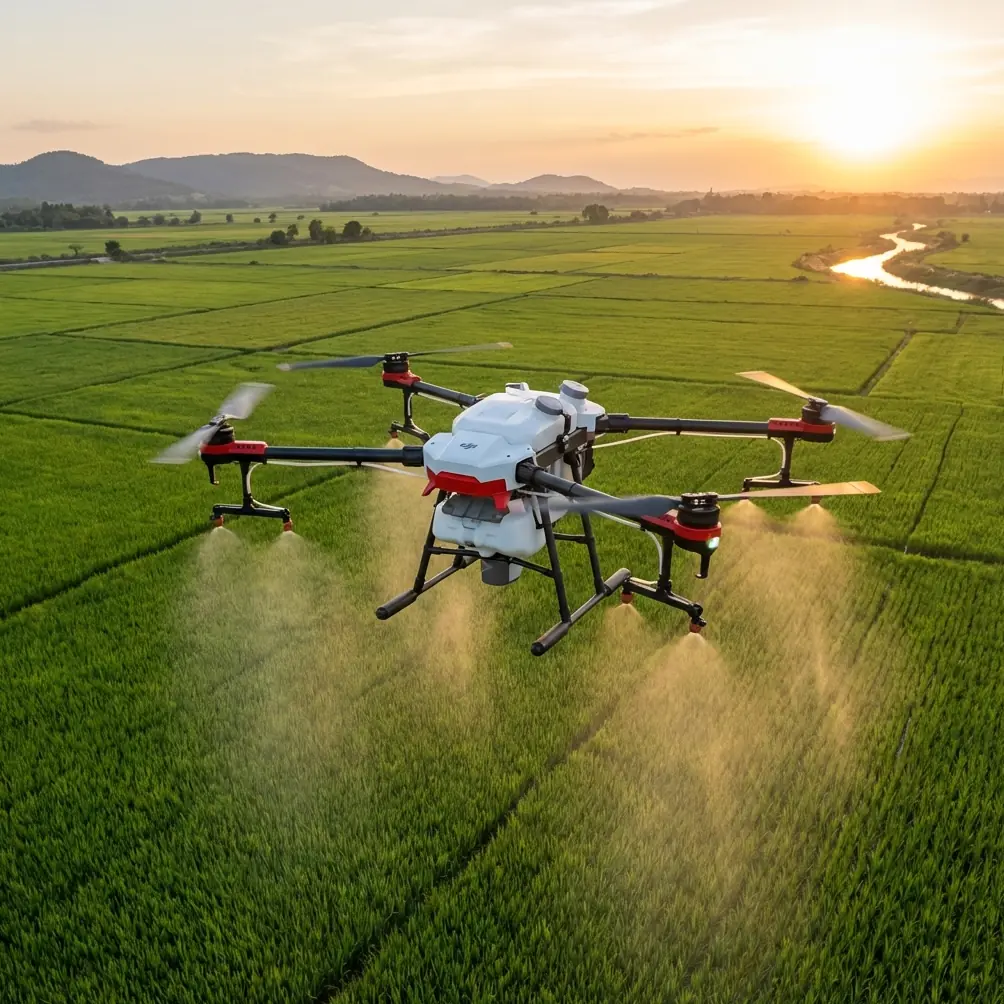
Monitoring Coastal Solar Farms with the Agras T50: A Smarter Pre-Flight Safety Workflow
META: Learn how an Agras T50 can support coastal solar farm monitoring through disciplined pre-flight checks, RTK-aware planning, obstacle safety logic, and survey-style field coordination.
Coastal solar sites are hard on equipment and unforgiving toward sloppy flight routines.
Salt in the air settles on housings, sensors, connectors, and moving parts. Wind shifts without much warning. Long rows of reflective panels can confuse depth perception during visual observation, while narrow service lanes leave little room for pilot hesitation. If you are considering the Agras T50 for monitoring work around coastal solar farms, the real question is not whether the aircraft is capable. It is whether your operating method is disciplined enough to make that capability useful.
That is where most conversations go wrong. People jump straight to payloads, coverage, or specs. For this kind of environment, the bigger differentiator is the workflow wrapped around the aircraft: cleaning, control logic, airspace coordination, and geospatial discipline.
The T50 can fit into that structure well, especially when the mission is less about broad agricultural application and more about repeatable low-altitude inspection and site awareness across large industrial energy assets.
The real problem: coastal solar monitoring is an operations problem, not just a flying problem
A coastal solar farm has several layers of complexity at once.
First, there is environmental exposure. Fine salt residue can degrade visibility on sensors and camera surfaces and interfere with reliable detection behavior if basic cleaning is skipped. This matters before every mission, not after a problem appears.
Second, there is layout complexity. Solar farms are repetitive, which sounds simple until you try to fly them consistently. Repetitive geometry makes it easy to lose orientation, especially near the edges of arrays, inverter pads, fencing, and maintenance structures.
Third, there is airspace complexity. Even if the site itself feels isolated, urban and regional drone traffic is becoming more coordinated. One recent example comes from Kansas City, Missouri, where a regional drone coordination and counter-UAS platform was deployed ahead of the FIFA World Cup. The system, built by Airspace Link with regional public safety agencies, was designed to improve shared airspace awareness and drone management during a major event. The bigger takeaway is not event security. It is that shared airspace awareness is becoming normal infrastructure, and officials there plan to use the network beyond the event to support future urban drone operations.
Why does that matter to a coastal solar operator using a T50? Because large industrial drone programs are increasingly expected to behave like part of a wider aviation system, not a standalone hobby workflow. Even when your mission is civilian and site-specific, your planning mindset should include coordinated airspace awareness, notification discipline, and documented operating zones.
In short: the aircraft is one piece. The operating system around it is the real asset.
Start with the least glamorous habit: clean before you calibrate
If I were building a standard operating procedure for coastal T50 monitoring, the first non-negotiable step would be a pre-flight cleaning pass focused on safety-critical surfaces.
Not a cosmetic wipe-down. A targeted one.
Salt film and grime can undermine confidence in obstacle sensing, visual checks, and even routine maintenance interpretation. Before power-up, inspect and clean the lenses, exposed sensor windows, landing gear contact points, body seams, and any area where residue can collect. If your platform is operating in a damp, salty environment, this should happen before calibration and before route loading.
That sequence matters. A clean aircraft gives you a more trustworthy baseline for every check that follows.
This is also the right place to inspect spray hardware if the T50 is being used in a hybrid role across vegetation control tasks near the solar site. Nozzle calibration should never be treated as separate from airworthiness logic. If nozzles are fouled, pressure behavior is inconsistent, or residue buildup is evident, you are not just risking uneven application. You are increasing the chance of drift, contamination, and unnecessary rework around high-value infrastructure. Coastal wind makes spray drift management especially sensitive, so the monitoring mission and the application system cannot be operationally siloed.
Borrow a lesson from training drones: know when to hover, and know when to kill the motors
One of the most useful safety lessons does not come from a large industrial drone at all. It comes from training material on emergency flight interruption logic.
The referenced educational document distinguishes between two very different actions: “stop movement and hover” versus “emergency motor stop.” That distinction is operationally critical. In the training example, the drone is placed about 2 meters from a wall, flown backward toward it, and the operator presses the space bar just before contact. The aircraft immediately stops and hovers, then lands. The point is not the keyboard control. The point is the logic chain: a controlled interruption preserves the aircraft and avoids collision.
The same source makes the opposite case for true emergency shutdown. If the aircraft is heading toward a person, hazardous object, or encounters sudden outdoor wind conditions, emergency stop may be necessary even though it can cause the drone to fall and be damaged. The tradeoff is blunt but real: controlled loss of the aircraft may prevent greater harm.
For Agras T50 operations at solar farms, this is not theoretical.
A disciplined pilot should define in advance which situations call for a hover command, which call for immediate braking and reassessment, and which qualify as a last-resort shutdown. Near panel rows, fencing, maintenance crews, or exposed electrical hardware, confusion between those categories can turn a small incident into a major one.
This is especially relevant in coastal wind. Gust fronts can arrive quickly. A pilot who has only one mental model — “fight through it” — is already behind. A pilot who has rehearsed graded responses has options.
If your team needs help building that kind of operating logic into T50 workflows, a practical next step is to message a technical specialist here and map out how your emergency procedures should fit your site geometry.
Why survey habits belong in a T50 monitoring program
A lot of industrial drone teams underperform because they separate “inspection flying” from “survey thinking.” That is a mistake.
The lidar workflow reference provides a stronger model. It starts with project requirements: accuracy target, deliverables, coordinate system, elevation datum, timeline, staffing, and field days. In the example, the project used a 1:1000 topographic map standard, a 20-day schedule, 4 field personnel, 6 days of fieldwork across 24 sorties, and 14 days of office processing. That is a survey mindset. Every flight is subordinate to a defined output.
Even if your Agras T50 mission is simpler than a full lidar survey, coastal solar monitoring benefits from the same structure.
1. Define the output before the mission
Do you want thermal anomaly checks? Vegetation encroachment records? Drainage observations after storms? Corrosion tracking around support structures? Security perimeter awareness? The answer changes route design, altitude, image overlap expectations, and revisit intervals.
2. Decide your coordinate and control strategy early
The reference material stresses preparing multiple coordinate frameworks and placing each base station on known points. It even recommends at least 4 to 5 known points, with extra points available in case one set is collected incorrectly. That is not bureaucratic overhead. It is how you avoid data that cannot be cleanly aligned later.
For a solar farm operator, this translates into one practical principle: if you care about change detection, your data must land in the same spatial truth every time. That is where RTK Fix rate matters. Centimeter precision is only operationally useful when the fix is stable enough to support repeatability across missions. If one flight is loosely referenced and the next is tightly controlled, your comparison layer becomes suspect.
3. Treat base station planning as part of risk management
The survey reference notes that a single base station has an effective range of 25 km and should be positioned according to route planning. It also specifies static collection mode with a 0.5-second sampling interval. Those details may sound remote from a T50 operator doing solar monitoring, but they point to something fundamental: positioning quality is not accidental. It is designed.
If your coastal site is expansive or segmented, do not assume a convenient setup point is a good setup point. Establish where your control lives, how terrain or structures affect visibility, and how your RTK workflow behaves under real field conditions.
4. Don’t launch before the satellite picture is healthy
The same field process requires checking the top-left satellite count and waiting until at least 10 satellites are available before entering the route and beginning measurement. That is exactly the kind of threshold-based discipline industrial drone programs need more of.
With the T50, a pilot should be thinking in terms of go/no-go criteria, not vague confidence. If your RTK Fix rate is weak, if satellite conditions are unstable, or if the route edges drift close to obstructions, delay the mission. Coastal sites punish optimism.
Adapting the T50 to solar monitoring without pretending it is a dedicated survey aircraft
The Agras T50 is not a niche survey drone, and pretending otherwise creates bad expectations. But that does not prevent it from being useful in solar environments.
Its value is strongest when operators build a repeatable mission architecture around it:
- structured pre-flight cleaning in salt-heavy conditions
- route design that respects row geometry and service access lanes
- RTK-centered repeatability for comparison flights
- emergency action logic that distinguishes hover from shutdown
- documented weather thresholds for coastal gusts
- application-system checks if the aircraft also supports vegetation management around the site
This last point deserves more attention than it usually gets. Many solar sites need regular vegetation control near fencing, access roads, drainage paths, and peripheral areas. If the T50 is part of both monitoring and spraying operations, your procedures must account for nozzle calibration, drift boundaries, and post-application cleaning. Spray drift near photovoltaic equipment is not just an agronomy issue. It is an asset protection issue.
That is where terms like swath width become operational rather than theoretical. A wider pass pattern may improve productivity in open perimeter zones, but if it increases drift exposure near panels or electrical assets, efficiency on paper becomes inefficiency in practice. Site-specific tuning beats generic “maximum coverage” thinking every time.
The Kansas City lesson, applied to private industrial sites
The Kansas City deployment is easy to dismiss as a special case tied to a major global sporting event. That would miss the trend line.
A regional platform was created to improve shared airspace awareness and drone management, then positioned for long-term use beyond the event. That suggests the future of civilian drone operations will be more networked, more visible, and more coordinated across public and private stakeholders.
For solar farm operators, especially near infrastructure corridors or expanding suburban edges, that means one thing: drone programs should be built to fit a connected ecosystem from the beginning. Logging routes, defining operating windows, documenting emergency procedures, and maintaining airspace awareness are not “extra.” They are signs of a mature operation.
The T50 can absolutely sit inside that kind of program. But it performs best when it is treated as part of a managed system, not a single tool sent out to solve every problem.
A practical operating model for coastal T50 missions
If I were advising a solar asset manager deploying the Agras T50 in coastal conditions, I would recommend this sequence:
- Pre-clean all safety-relevant surfaces before power-up, with special attention to salt residue.
- Confirm mission objective before route load: anomaly detection, vegetation follow-up, drainage review, or perimeter check.
- Validate control and positioning using known site references; prioritize stable RTK performance over speed.
- Apply survey discipline to route design, including repeatable launch points and documented altitude logic.
- Require minimum satellite confidence before entering the route, following a threshold mindset similar to the 10-satellite field rule in the lidar workflow.
- Brief emergency response logic so every operator knows when to stop and hover versus when a last-resort shutdown is justified.
- If spray equipment is installed or recently used, verify nozzle calibration and assess drift risk before any mission near arrays.
- Log the flight in a broader coordination framework, especially where nearby infrastructure or shared airspace complexity exists.
That is how you make a versatile platform useful in an environment that rewards rigor.
The strongest T50 operations at coastal solar farms will not be defined by marketing claims. They will be defined by clean sensors, stable positioning, rehearsed interruption logic, and repeatable field methods. Those are the habits that turn a capable aircraft into a dependable industrial tool.
Ready for your own Agras T50? Contact our team for expert consultation.