
Agras T50 for Remote Power Line Work: A Technical Review
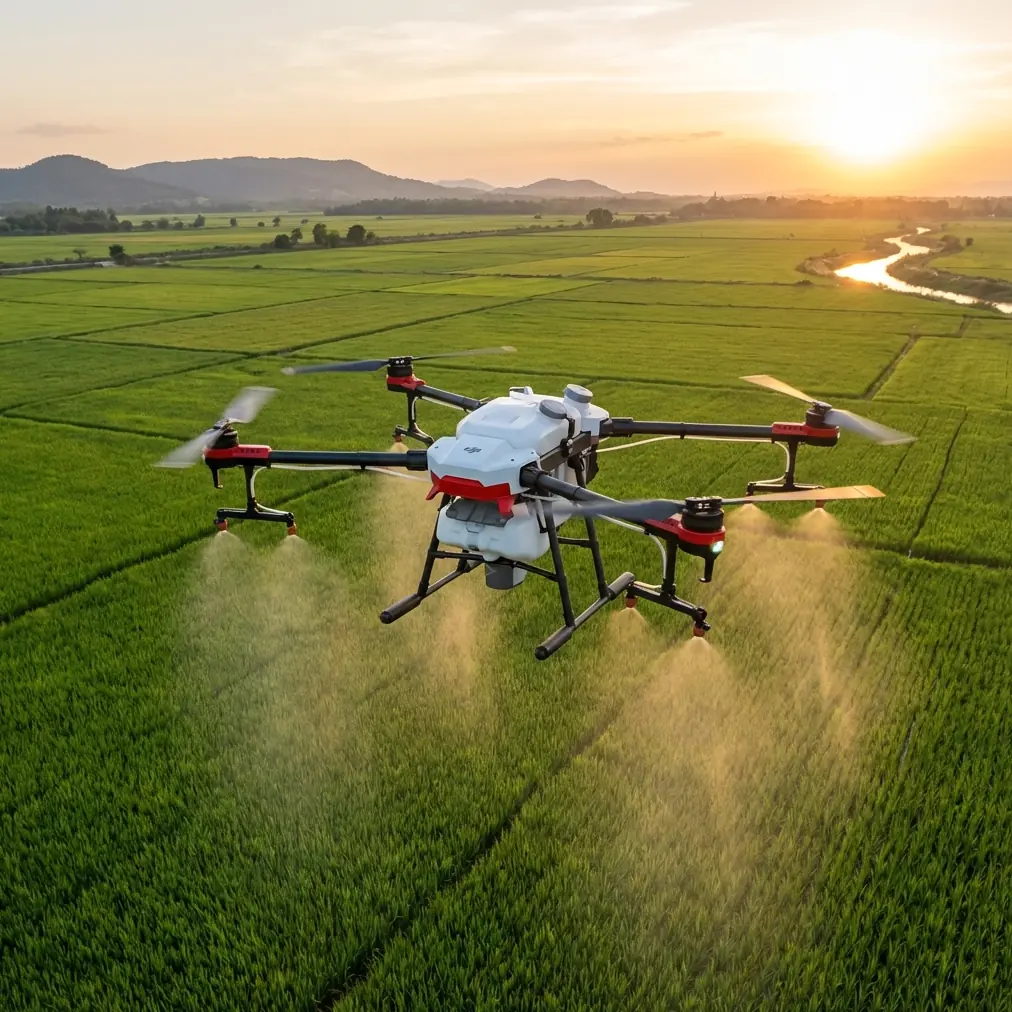
Agras T50 for Remote Power Line Work: A Technical Review from the Field
META: Expert review of the DJI Agras T50 for remote power line operations, covering RTK accuracy, IPX6K durability, pre-flight cleaning, drift control, and practical mission planning.
The DJI Agras T50 is usually discussed in an agricultural frame: tank capacity, hectare throughput, spray efficiency. That is the obvious lens. It is not the only useful one.
For operators tasked with monitoring power lines in remote terrain, the more interesting question is whether a platform built for high-volume field work can be repurposed into a disciplined, repeatable inspection tool. That question becomes especially relevant when access roads are poor, weather windows are narrow, and crews need a system that can be cleaned, redeployed, and trusted after long days around dust, moisture, and conductive grime.
From that perspective, the Agras T50 deserves a harder look. Not as a conventional utility-inspection drone, and not as a catch-all solution, but as a robust heavy-duty UAV with a set of technical characteristics that matter more than many buyers initially realize.
Why the T50 Enters the Power Line Conversation
Remote line corridors create a punishing operating environment. The aircraft may launch from unprepared ground. It may be exposed to atomized moisture, windborne debris, fertilizer residue from adjacent farmland, or sticky contamination that ends up on arms, landing gear, sensors, and connectors. In those conditions, reliability often starts with mundane details rather than headline specifications.
That is one reason the T50’s IPX6K protection rating deserves attention. On paper, IPX6K signals resistance to high-pressure water ingress. Operationally, it means the aircraft is built for a cleaning routine that would be reckless on less protected platforms. For a team working near remote substations, transmission easements, or lines crossing cultivated land, that matters. A platform that can be washed down properly between missions is easier to maintain in a known state. Dirt accumulation around vision elements, cooling paths, or moving parts is not just cosmetic. It can degrade sensor confidence, create thermal issues, and introduce uncertainty into the next sortie.
A rigorous pre-flight cleaning step is therefore not housekeeping. It is a safety procedure.
Before any line-adjacent mission, the operator should inspect and clean downward-facing sensing surfaces, arm joints, landing gear interfaces, payload mounting points, and any exposed connection areas that may have collected dust or spray residue. On a machine like the T50, this procedure supports the aircraft’s own safety systems. Obstructed sensing hardware or contamination near structural interfaces can weaken the very features crews rely on when operating close to terrain, towers, or irregular vegetation. In remote work, where recovery options are limited, that extra discipline pays for itself quickly.
RTK Performance Is Not a Marketing Detail
Another specification that shifts from “nice to have” to mission-critical is RTK positioning.
The T50’s value in a nontraditional role is tied closely to centimeter-level positioning capability. In agricultural work, high RTK fix quality supports straight lines, repeatable passes, and precise application. In power line monitoring, the significance is different but no less practical. A strong RTK fix rate improves route repeatability when crews need to revisit the same corridor segment, compare imagery from different days, or document anomalies with consistent geospatial context.
That repeatability has operational consequences. If a crew identifies a suspect insulator string, vegetation encroachment point, or erosion pattern near a structure, centimeter precision makes follow-up work far more efficient. Return flights can be structured around the same geometry instead of relying on approximate manual recreation. For organizations trying to standardize inspection evidence, that precision helps turn raw flights into defensible maintenance records.
There is another layer here. Remote line work often happens in topographies that challenge navigation quality: slopes, tree canopies, broken terrain, and partial sky obstruction. Under those conditions, RTK fix rate is not just about best-case accuracy. It is a proxy for how stable the aircraft’s positional confidence remains during real missions. Stable fixes support smoother path control and reduce the burden on the pilot when close coordination is required.
If your workflow depends on consistent stand-off distances from assets or repeat corridor tracking, RTK stability should be treated as a primary performance metric, not a checklist item buried in the datasheet.
The T50’s Agricultural DNA Can Be Useful
Some readers will reasonably object: the Agras T50 was designed for spraying and spreading, not transmission inspection. That is correct. But product lineage cuts both ways.
A UAV built to manage payload weight, repetitive route execution, outdoor abuse, and long duty cycles often brings advantages to infrastructure operations, especially in remote areas where logistics matter as much as optics. The T50’s structure, propulsion system, and field-service orientation are designed for demanding work, not occasional showcase flights. That alone gives it a different character from many lighter enterprise aircraft.
Its agricultural origins also force operators to think carefully about spray drift, nozzle calibration, and swath width, even if the current mission is not crop treatment. Why mention those topics in a power line article? Because they shape whether the T50 is a responsible multi-role platform.
Many utility-adjacent operations involve vegetation management, right-of-way assessment, and boundary zones where adjacent farmland complicates decision-making. If a contractor uses the T50 across both inspection and treatment workflows, then spray drift becomes a line-safety issue as much as an agronomy issue. Wind-driven drift near energized infrastructure, roadside corridors, or neighboring properties introduces operational and compliance risks. Nozzle calibration matters because poor droplet control does not simply waste liquid. It changes deposition behavior and can enlarge the error margin in constrained areas.
Swath width is equally relevant. In field spraying, wide swaths are efficient. In corridor work, efficiency without control can be a liability. A route-of-way is linear, irregular, and full of edge conditions. Aircraft setup must reflect that reality. If the same platform alternates between inspection and treatment tasks, configuration discipline is essential. Otherwise, crews carry agricultural assumptions into a utility environment where the margins are narrower.
Sensor Strategy: What the T50 Can and Cannot Replace
The T50 is not a substitute for every specialized inspection platform. That needs to be said plainly.
If the objective is detailed thermal fault detection on connectors or high-resolution close visual analysis of conductor hardware, dedicated inspection payloads remain the stronger choice. The T50’s relevance lies elsewhere: broad-area access, repeatable routing, harsh-environment tolerance, and integration into mixed operational programs where the same drone fleet may support vegetation surveillance, treatment planning, and corridor condition assessment.
This is where multispectral thinking becomes useful, even if it is not the first feature associated with the T50. In remote line management, vegetation is often the operational problem before it becomes a fault risk. Multispectral workflows can help identify plant stress, moisture variation, and growth patterns that indicate where encroachment risk is likely to intensify. The point is not to force the T50 into a sensor role it does not natively dominate. The point is to evaluate it within a broader mission architecture.
In practice, that means a utility contractor or service provider may use the T50 as one node in a layered workflow: corridor mapping, vegetation condition monitoring, targeted treatment planning, and repeat visits to known trouble spots. The platform’s heavy-duty field characteristics then become more valuable than a narrow reading of its agricultural label would suggest.
Field Handling in Remote Terrain
Remote power line work exposes another often-overlooked variable: turnaround time in imperfect conditions.
Aircraft that perform well in brochures can become frustrating when crews need to operate from uneven ground, manage dust contamination, and keep equipment functional across multiple launches without workshop support. The T50’s real appeal in those circumstances is not elegance. It is operational toughness.
That toughness, however, only produces good outcomes if crews adopt an equally tough discipline. The pre-flight sequence should include cleaning, but it should also include a verification of RTK readiness, control link stability, obstacle sensing status, and any residue or moisture around payload interfaces. If a team has recently completed an agricultural mission, the aircraft should not be assumed “inspection-ready” simply because the tank is empty. Residual contamination from previous tasks can affect balance, sensing confidence, and maintenance integrity.
I would go further: for remote utility deployments, operators should formalize a two-stage cleaning routine. First, a post-mission washdown after agricultural or dusty operations. Second, a dry pre-flight inspection before line monitoring missions. That second stage is where crews confirm that protective features, sensors, and mounting hardware are actually ready for risk-sensitive flight.
This is one of those procedural details that separates professional UAV operations from improvised ones.
Flight Planning Near Lines: Precision Over Speed
The T50’s agricultural pedigree can tempt crews into optimizing for area covered per hour. Around power lines, that instinct must be resisted.
Monitoring line corridors is not a spray-volume contest. It is a precision task shaped by terrain, electromagnetic considerations, wind, and the need to preserve safe separation from assets. The better planning model is to prioritize route stability, conservative stand-off distances, and data consistency. Centimeter precision supports that mindset because it enables deliberate track management rather than reactive stick work.
In practical terms, that means slowing down when topography changes sharply, narrowing operational assumptions in gusty conditions, and treating each pass as a data collection event rather than a throughput metric. If vegetation treatment is part of the same contract, swath width and nozzle setup should be recalibrated specifically for corridor geometry rather than inherited from open-field settings.
That is also where operator communication matters. A compact field checklist and a direct escalation path are worth more than a thick manual nobody opens in the truck. Teams that need a fast peer exchange about setup logic in remote deployments often benefit from a simple support channel such as messaging our field operations desk.
Where the T50 Fits Best
The strongest case for the Agras T50 in remote power line work is not that it does everything. It is that it handles a difficult slice of the job with seriousness.
It fits best where operators need:
- A rugged aircraft that tolerates demanding outdoor duty cycles
- Repeatable route performance supported by RTK-based centimeter precision
- Cleaning-friendly hardware protection, including IPX6K resilience
- A platform that can sit inside a broader vegetation and corridor management program
- Strong field practicality in places where access and maintenance support are limited
It fits less well where the mission demands highly specialized close-up inspection payloads or where the organization expects an agricultural drone to behave like a purpose-built transmission inspection aircraft without workflow adjustments.
That distinction is not a criticism. It is what mature fleet planning looks like.
Final Assessment
The most useful way to judge the Agras T50 for remote power line monitoring is to stop asking whether it is “meant” for the job and start asking whether its engineering traits match the operational problem.
In several important respects, they do. IPX6K protection is not just a durability badge; it supports a cleaning regime that protects flight-critical safety features. RTK fix quality is not just a precision talking point; it enables repeatable corridor work and better follow-up documentation. Even agricultural concepts like spray drift, nozzle calibration, and swath width remain relevant when the aircraft is used across mixed vegetation-management and monitoring roles.
The T50 is not the universal answer for utility inspection. But in remote environments, where reliability, repeatability, and field readiness carry unusual weight, it becomes far more than an agricultural machine with a different paint job. Properly deployed, and properly cleaned before launch, it can be a serious working asset in the power line toolkit.
Ready for your own Agras T50? Contact our team for expert consultation.