
Agras T50 Field Report: Monitoring High-Altitude Power
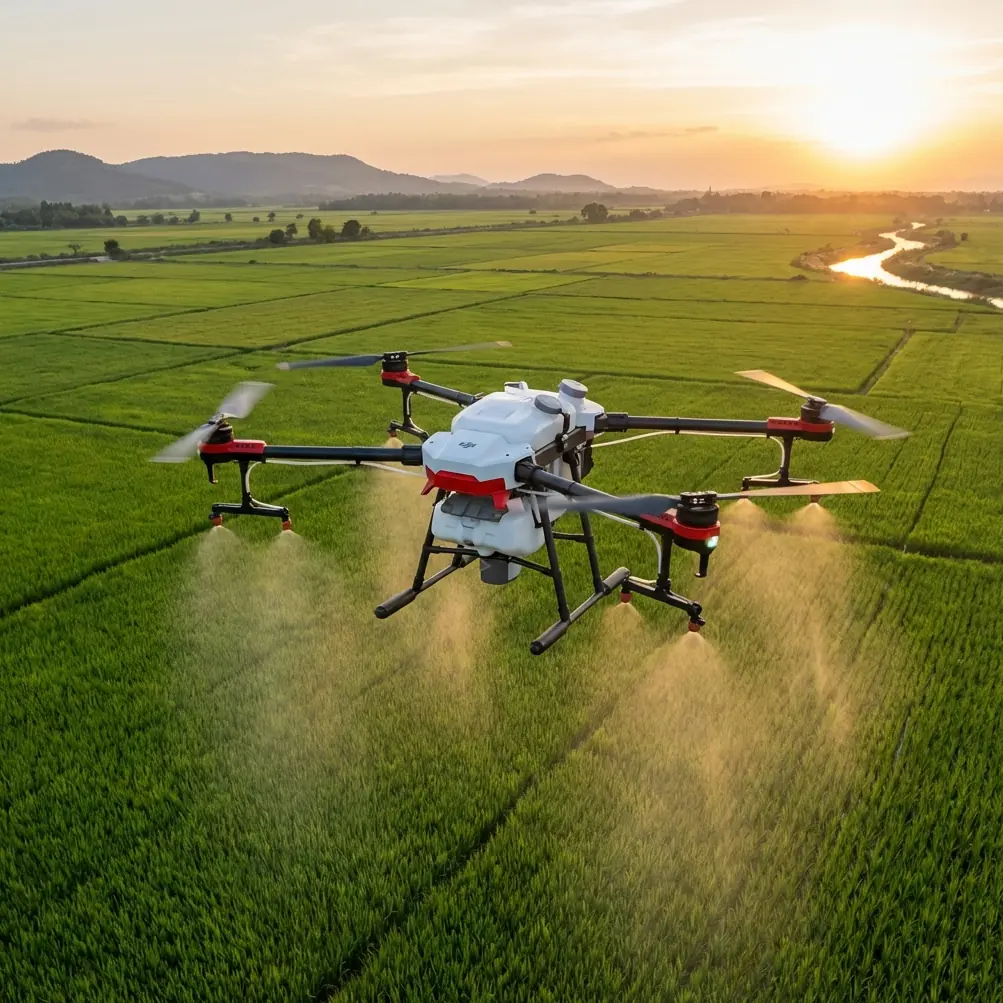
Agras T50 Field Report: Monitoring High-Altitude Power Lines With Better Discipline, Not Bigger Claims
META: A field-style expert report on using the DJI Agras T50 near high-altitude power lines, with practical notes on RTK fix rate, centimeter precision, IPX6K cleaning, spray drift control, nozzle calibration, and pre-flight safety.
High-altitude power line inspection creates a strange kind of pressure. The air is thinner. Wind behaves badly. Terrain pushes signal paths in awkward directions. A routine mission at lower elevation can become a messy exercise in judgment once towers climb onto ridgelines and weather starts changing by the minute.
That is exactly why the Agras T50 deserves a more careful conversation than the usual broad claims attached to agricultural drones. In this context, the aircraft is not simply being asked to cover acreage efficiently. It is being asked to work close to critical infrastructure, in elevation conditions that punish sloppy setup, and under flight profiles where positional confidence matters more than marketing language.
I am framing this as a field report because that is the most honest way to discuss the T50 for power line monitoring. Not as a brochure. Not as a generic “best practices” article. As an operational reading of what actually matters when the mission involves steep ground, transmission corridors, and the need to maintain reliable spacing from structures.
The first thing that changes at altitude is your tolerance for small errors. A weak RTK fix rate is not an abstract annoyance when you are tracing a line across uneven slopes. It can be the difference between a clean, repeatable corridor pass and a sequence of corrections that slowly erodes pilot bandwidth. The phrase “centimeter precision” gets repeated so often in drone literature that it has almost lost its force. Near power lines, it regains that force immediately. If the aircraft is tasked with following a predictable path parallel to conductors or towers, positional stability is not a luxury feature. It is the basis for safe separation and usable data.
That is why I would start every high-altitude T50 power line mission with one question: how stable is the RTK environment on this route, right now, under today’s conditions? Mountain shadowing, ridge interference, and station geometry can all chip away at what looks satisfactory on the ground. A pilot who checks only battery status and route upload is already behind. A pilot who actively verifies RTK behavior before committing to a tower run has understood the mission.
The second issue is less glamorous and often neglected: pre-flight cleaning. I want to be specific here because this detail is usually buried under maintenance generalities. Before a high-altitude mission near power lines, I recommend a deliberate cleaning pass around sensors, radar-facing surfaces, camera windows, arm joints, and spray-related components, even if spraying is not the primary task that day. Dust, residue, dried droplets, and fine grime accumulate faster than many operators admit. In cold or highland conditions, that contamination can interact with moisture, temperature shifts, and airflow in ways that degrade performance at exactly the wrong moment.
This is where the T50’s IPX6K protection rating becomes operationally meaningful rather than decorative. IPX6K is not just a toughness badge for rough field use. It supports a maintenance discipline. When operators know the airframe is designed for aggressive washdown resistance, they are more likely to build proper cleaning into the mission cycle rather than treating it as an occasional chore. For power line work, that matters because safety features only work as well as the surfaces and sensing windows you preserve. If a residue layer interferes with detection or if grime obscures a visual element used during inspection alignment, the aircraft does not become “slightly less ideal.” It becomes less predictable.
I have seen teams obsess over route planning software and then rush through airframe prep with a cloth and a guess. That is backward. On a high-altitude corridor, cleaning is part of safety assurance.
There is another reason the T50 remains interesting for this kind of work: its platform logic comes from precision agriculture, where repeatability and controlled coverage define success. Those design priorities do not map perfectly to utility inspection, but they do create useful habits. Consider swath width. In spraying, swath width is a productivity variable tied to application quality. In corridor monitoring, the equivalent mindset is route envelope discipline. You are no longer asking, “How much ground can I cover per pass?” You are asking, “How tightly can I control my observation corridor while maintaining reliable stand-off from the line and consistent overlap in the visual record?” Operators who understand swath behavior tend to think in structured lanes and margins. That mindset transfers well.
Of course, using an Agras platform near power lines raises an obvious point: this is not a dedicated utility inspection aircraft in the narrow traditional sense. So why discuss it here at all? Because many field teams already work in mixed operational environments. They manage crops, terrain mapping, vegetation assessment, and infrastructure awareness within the same seasonal workflow. In those settings, the T50’s value lies in platform familiarity and mission adaptation. A crew that already understands the aircraft’s handling, cleaning requirements, nozzle system, and positioning behavior can repurpose it more safely than a crew trying to improvise with an unfamiliar platform.
That mention of the nozzle system is not incidental. Even if the day’s mission is visual monitoring rather than active spraying, nozzle calibration still deserves attention. Residual imbalance in the spray system can create more than maintenance noise. It can alter weight distribution, leave unnoticed deposits, or complicate later missions if the aircraft cycles back into vegetation management near utility corridors. In a high-altitude environment, where wind can shift from manageable to hostile in minutes, any follow-on spraying task demands especially strict calibration because spray drift becomes much harder to predict.
Spray drift is usually discussed from an agronomy perspective, but near power lines it becomes a broader operational risk question. Drift can affect nearby vegetation selectively, reduce treatment accuracy, and in some environments raise concerns around unintended deposition near assets or access paths. The point is not that the T50 should avoid these jobs. The point is that altitude amplifies consequences. A crew that calibrates nozzles carefully and respects wind windows is not being conservative for appearances. It is preserving controllability in an environment that punishes approximation.
One detail I would like to see discussed more often is how altitude changes pilot psychology. The T50 is a substantial working aircraft. That can encourage confidence, which is useful until it turns into normalization. Around high structures and sloping terrain, confidence must be tied to procedure. The cleanest operators I know use almost ritualized checks: washdown status, sensor surface inspection, RTK verification, route confirmation, wind assessment at multiple elevations, emergency descent options, and only then mission execution. Their flights look calm because their preparation is not casual.
If the route includes vegetation encroachment concerns below or adjacent to the line, the case for adding multispectral support in the wider workflow becomes stronger, even if that capability sits outside the core T50 configuration. Multispectral data can help teams distinguish simple visual greenness from stress patterns that may signal growth pressure along a corridor. That matters operationally because line monitoring is not only about hardware condition. It is also about the space around the asset. A healthy-looking slope can still contain vegetation trends that complicate maintenance scheduling. Pairing corridor observation with data that sharpens vegetation interpretation gives utility-adjacent teams a better planning cycle.
Still, the central lesson from the T50 in this scenario is much simpler. It is not that one aircraft solves every corridor problem. It is that disciplined setup translates farther than feature lists do.
For example, if your RTK fix rate is unstable, you do not compensate with bravado. You widen margins, recheck line-of-sight assumptions, or postpone the pass. If your cleaning step reveals residue around critical surfaces, you do not rationalize that the aircraft “flew fine yesterday.” You clean it properly and inspect again. If the wind profile suggests a drift-prone environment, you do not assume yesterday’s nozzle calibration is close enough. You recalibrate. These are not academic ideals. They are the difference between an orderly mission and a stack of preventable variables.
This is one reason I advise teams to write pre-flight procedures in language that reflects what they are actually doing. Not “inspect drone.” That phrase is almost useless. Say what must be checked and why. Confirm sensor windows are clean. Verify no dried chemical residue remains near spray hardware. Confirm RTK status is stable before approach to corridor. Review route spacing against tower geometry. Reassess wind at operating altitude, not just launch point. A checklist should sharpen judgment, not replace it.
For crews building this capability, a short operational exchange with experienced operators can save weeks of error; if you want a direct field discussion, use this quick pilot support channel: message the operations desk.
There is a final point worth stating plainly. The Agras T50 should not be judged in high-altitude power line work by how impressively it covers distance. It should be judged by how predictably it behaves when the environment gets less forgiving. Predictability comes from maintained sensors, stable positioning, calibrated systems, and a crew that understands that contamination, drift, and route discipline are connected problems rather than separate checkboxes.
That is why the pre-flight cleaning step deserves to sit at the center of this conversation. It sounds minor. It is not. On an aircraft with IPX6K protection, cleaning is not merely post-mission housekeeping. It is a practical way to protect safety features, preserve sensor reliability, and reduce uncertainty before the aircraft goes anywhere near energized infrastructure in thin mountain air.
The T50 can be a capable tool in this setting, but only in the hands of operators willing to treat precision as a habit instead of a headline. High-altitude power line monitoring is not won by bold claims. It is won by clean surfaces, stable fixes, calibrated systems, and decisions made early enough to matter.
Ready for your own Agras T50? Contact our team for expert consultation.