
Monitoring Urban-Edge Fields with the Agras T50
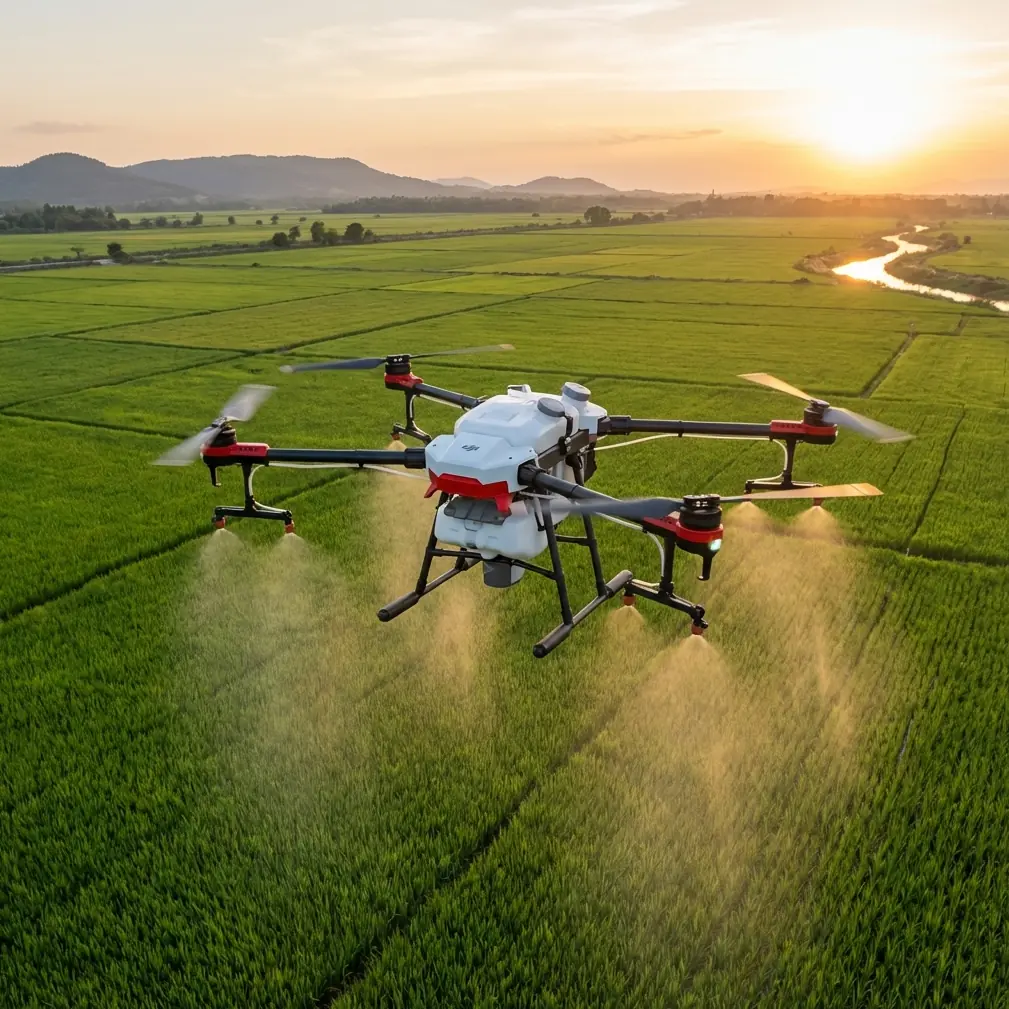
Monitoring Urban-Edge Fields with the Agras T50: Why Pressure, Cleanliness, and Flight Discipline Matter
META: A practical expert guide to monitoring urban-edge fields with the Agras T50, covering pre-flight cleaning, pressure behavior, flight setup, spray drift awareness, RTK precision, and safer field operations.
Urban agriculture creates a strange operating environment for drones. The field may be small, but the complexity is not. Buildings interrupt airflow. Tree lines generate turbulence. Narrow access lanes make setup less forgiving. And when the mission involves the Agras T50, the real difference between a smooth day and a frustrating one often comes down to details that many crews dismiss as routine: a clean flow path, stable pressure behavior, and disciplined entry into each flight line.
That may sound less glamorous than payload specs or headline acreage numbers. Yet in practice, these are the factors that shape whether field monitoring is reliable, repeatable, and safe.
I want to focus on one narrow but critical story: the T50 works best when operators understand that fluid systems and aircraft behavior are governed by simple physical rules. The reference material behind this discussion comes from two seemingly unrelated training sources. One explains a basic pressure principle using a straw with a hole in it. The other breaks down how a model aircraft enters a loop safely, emphasizing level wings, proper throttle, and a gradual elevator input over 1 to 2 seconds. On the surface, neither source is about the Agras T50. Underneath, both describe habits that matter directly in real field operations.
The hidden problem in urban field monitoring
When people say they are “monitoring fields” with an agricultural platform, they often mean more than visual inspection. They may be checking crop uniformity, verifying application coverage, watching for blocked nozzles, confirming edge performance near roads or walls, or comparing conditions across rows after treatment. In urban-edge plots, this becomes harder because the environment amplifies small errors.
A tiny issue in the spray system can distort droplet behavior along the boundary of a field. A partially contaminated flow path can throw off nozzle calibration. A rushed takeoff or sloppy line entry can create uneven passes. Poor cleaning before the mission can also compromise sensors, seals, and visibility around critical components. On a platform expected to work around moisture, dust, and chemical residue, that pre-flight cleaning step is not cosmetic. It is part of the safety system.
The T50 is built for demanding agricultural work, and operators rightly care about rugged features such as IPX6K-level protection. But water resistance should never be treated as permission to ignore residue. Dried formulation around nozzles, deposits on spray hardware, and grime near connectors or moving parts can obscure problems that only become obvious once the aircraft is airborne. In an urban setting, where you may be working close to property boundaries and sensitive drift zones, discovering a flow irregularity late is exactly what you want to avoid.
Why a straw with a hole explains real spray problems
One of the source texts makes a deceptively simple point. When someone drinks through a straw, the liquid does not rise because the person “pulls” it upward in some mystical way. The liquid rises because lowering pressure inside the straw allows higher atmospheric pressure outside to push the liquid into that low-pressure zone. The same text adds a practical twist: if you cut a large hole in the straw, outside air keeps entering through the gap, and the low-pressure region cannot form properly. Result: the water no longer comes up.
That idea is useful far beyond a classroom.
On an agricultural drone, fluid delivery depends on maintaining a controlled path and predictable pressure conditions. If the system has contamination, leakage, poor sealing, or partial obstruction, the result may not look dramatic at first. It may simply appear as inconsistent atomization, unstable flow, or uneven output from one side of the boom or nozzle set. In monitoring work, this matters because the aircraft is not just “doing a job”; it is producing evidence. If your field observations are based on a pass delivered through a compromised flow path, the data you infer from crop appearance may be wrong.
This is where pre-flight cleaning becomes operationally significant. Before entering the field, inspect and clean the tank interfaces, hoses, nozzle bodies, filters, and exposed spray surfaces. The goal is not cleanliness for its own sake. The goal is to eliminate the equivalent of that “hole in the straw” problem: unwanted air paths, residue-created restrictions, or debris that prevents the system from behaving as designed.
For crews concerned about spray drift, this is even more relevant. Drift is not only a weather problem. It can also be a system-behavior problem. If a nozzle is dirty or flow is uneven, droplet size distribution can shift. Near homes, roads, school boundaries, greenhouses, or ornamental plantings, that shift is not trivial. It changes risk.
The Coandă effect and why edges are deceptive
The same educational source also mentions the Coandă effect, the tendency of a fluid stream to follow a curved surface and deviate from its original direction. Again, that sounds abstract until you work an urban-edge field.
Any drone pilot who has flown near walls, greenhouse roofs, tree canopies, or tightly spaced structures has seen airflow behave in ways that do not match a simple open-field mental model. Air can cling, curl, and deflect around surfaces. Add rotor wash to that environment and the edge of a field becomes the least forgiving place to assume your droplets or observations are behaving “normally.”
That does not mean the T50 is unsuitable for these fields. It means operators should be deliberate. Watch spray drift at boundaries. Review swath width assumptions instead of applying open-field expectations blindly. If your mission includes documenting crop response or verifying application quality, edge rows deserve extra scrutiny because local airflow distortion can change deposition patterns.
This is also one reason centimeter-level positioning matters. A strong RTK fix rate helps the aircraft repeat lines accurately, especially where urban boundaries force narrow margins. But precision navigation alone does not solve aerodynamic complexity. You still need to pair that positioning performance with clean hardware, sensible line spacing, and realistic expectations about how air moves around obstacles.
What aerobatic training teaches an Agras T50 operator
The second source discusses how to enter a loop with a radio-controlled airplane. It insists on a few fundamentals: begin with wings level, maintain level flight before the maneuver, use at least more than half throttle, and apply elevator gradually over 1 to 2 seconds. It also warns that if the input is too weak or too slow, the radius becomes too large and the aircraft may not hold the top of the loop, risking a stall or drop.
No, you are not looping an Agras T50. But the underlying discipline translates beautifully.
Many agricultural flight problems begin before the working pass even starts. A pilot enters the line slightly unbalanced. The aircraft is creeping upward without noticing. Speed is inconsistent. The transition into the treatment or monitoring path is rushed. Then the operator blames the system when the real issue was setup.
The model-flight lesson is clear: the maneuver starts with the entry condition. For the T50, that means establishing a stable, level approach before each pass, especially when working in constrained urban-adjacent plots. The aircraft should not “secretly” drift into a climb during setup. That exact warning appears in the source material for aerobatic training: if the aircraft climbs before the maneuver, it loses speed, and the pilot may later misdiagnose the problem. Replace “loop” with “productive agricultural pass” and the logic still holds.
Operationally, this affects several things:
- Coverage consistency: A stable entry helps maintain intended swath width and overlap.
- Sensor reliability: If you are using visual field monitoring methods or integrating with multispectral workflow decisions elsewhere in your operation, repeatable line geometry matters.
- Drift management: Unsteady transitions can change height and local wake behavior at the field edge.
- Pilot workload: Predictable line entry reduces the number of corrections needed once the aircraft is already in the sensitive part of the pass.
The source also notes that the safest place to perform the maneuver is in front of the pilot, at a distance where observation is easier. That idea matters in urban field monitoring too. Position yourself where you can actually judge aircraft attitude, spacing, and edge interactions. Good observation geometry is underrated. When looking upward, it is harder to tell whether wings are truly level. In tight agricultural plots bordered by visual clutter, that challenge only grows.
A practical pre-flight cleaning routine for the T50
If I were building a field checklist around the narrative above, I would start with cleaning before calibration and before route execution.
Remove visible residue from spray hardware
Pay close attention to nozzles, filters, exposed tubing connections, and the underside around delivery components. Dried chemical film can conceal clogging or asymmetry.Inspect for the “straw with a hole” equivalent
Look for loose fittings, damaged seals, cracked lines, or anything that could destabilize pressure or flow continuity.Confirm nozzle calibration after cleaning, not before
Calibration only has value if the system state is representative of actual flight condition.Clean positioning and sensing surfaces
Urban-edge missions often depend on reliable hold performance and precise route tracking. Dust, residue, and splash contamination should not be allowed to build up around critical components.Verify RTK status before entering the constrained zone
A strong fix supports centimeter precision, but only if confirmed before the aircraft reaches the area where tight alignment matters most.Check edge-pass strategy for drift exposure
Review wind direction relative to walls, homes, roads, or non-target vegetation. Reassess line order if necessary.Enter every first pass like a maneuver, not a shortcut
Stable height. Stable speed. Wings level. No casual rushing into the line.
This is the sort of discipline that separates clean-looking operation logs from trustworthy field outcomes.
Why this matters for urban monitoring, not just spraying
Some readers may wonder why so much attention is being paid to spray-system behavior when the scenario is field monitoring. Because on real farms, monitoring and application quality are linked. If you are using the T50 to assess field condition after treatments, identify weak zones, or compare crop response, the reliability of your observations depends on how consistently the aircraft operated during prior missions. A blocked nozzle, irregular flow, or unstable edge pass can create patterns in the crop that look agronomic but are actually operational.
That is also why terms like multispectral should be treated carefully. Multispectral tools can add real value in broader crop diagnostics, but they do not rescue poor execution. If the underlying application geometry or delivery consistency is flawed, advanced imaging may simply document those flaws in higher resolution.
The real skill is recognizing cause and effect
The common thread in both reference texts is cause and effect.
A hole in the straw prevents the pressure differential needed to move water. A poor maneuver entry undermines the entire loop before it begins. On the Agras T50, dirty or compromised spray hardware can produce unstable delivery, and unstable entry conditions can degrade the pass before monitoring even starts.
This is exactly the mindset urban agriculture demands. Not just technical literacy, but diagnostic literacy. If you see uneven crop response near a boundary, ask whether airflow around structures, nozzle condition, pressure continuity, or line entry may have contributed. If repeatability is poor, investigate RTK status, observation position, and route discipline before blaming the airframe.
For operators building a tighter standard operating procedure, a short consultation can help translate those principles into a site-specific checklist. If you need that kind of practical workflow discussion, you can message a field operations specialist here.
The Agras T50 is a capable platform. But capability alone is never the whole story. In urban-edge field work, small physical truths decide outcomes. Pressure only works when the path is sealed. Airflow does not always go where intuition says it should. And every good pass begins before the pass itself.
Ready for your own Agras T50? Contact our team for expert consultation.