
Agras T50 Guide: Mastering Field Monitoring in Wind
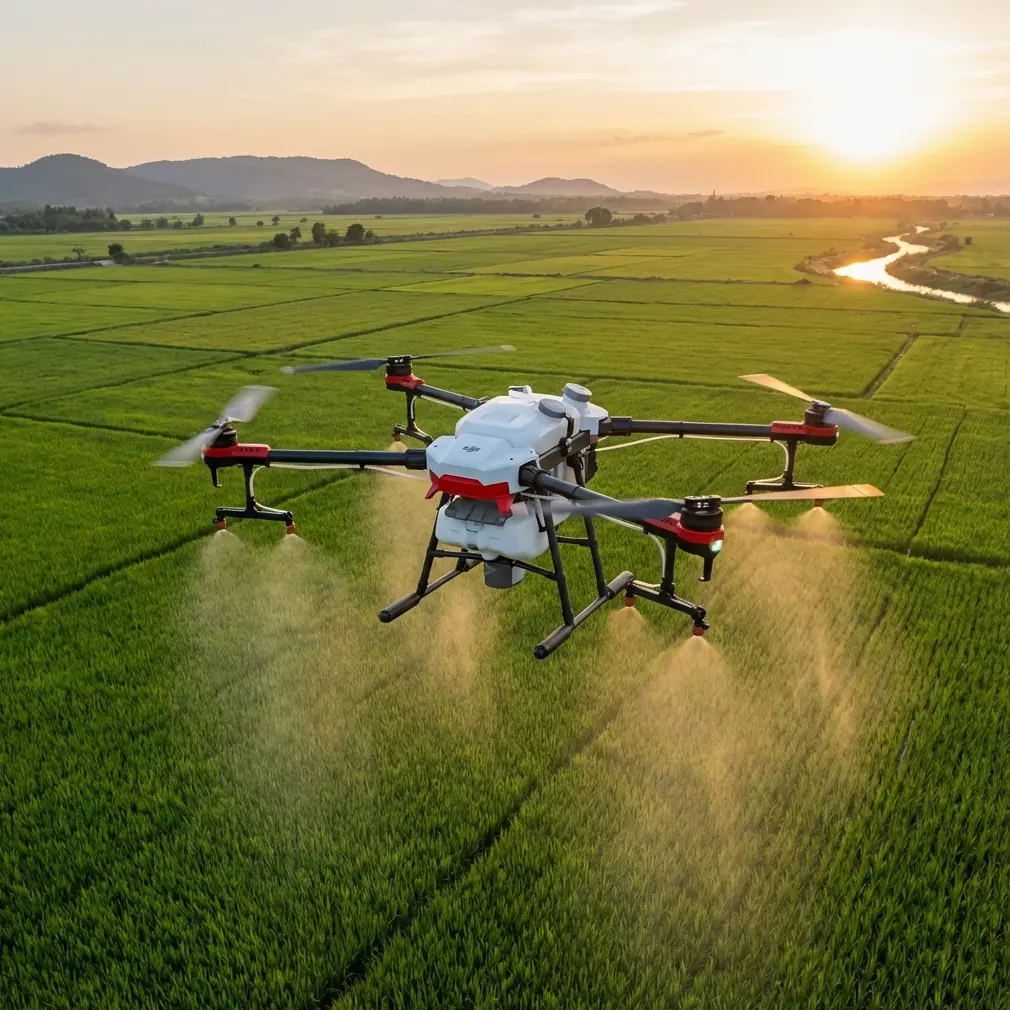
Agras T50 Guide: Mastering Field Monitoring in Wind
META: Learn expert techniques for operating the Agras T50 in windy conditions. Discover antenna positioning, drift control, and calibration tips for precision agriculture.
TL;DR
- Optimal antenna positioning at 45-degree angles maximizes RTK signal stability in winds up to 8 m/s
- Centrifugal nozzle calibration reduces spray drift by up to 67% compared to standard pressure systems
- Swath width adjustments of 15-20% narrower settings compensate for crosswind displacement
- RTK Fix rate above 95% ensures centimeter precision even during gusty field operations
Wind presents the single greatest challenge to precision agricultural drone operations. The DJI Agras T50 addresses this directly with advanced stabilization systems, intelligent drift compensation, and robust signal architecture—but only when configured correctly.
This guide provides research-backed protocols for maintaining spray accuracy, optimizing antenna placement, and calibrating your T50 for reliable field monitoring when conditions turn challenging. Whether you're managing a 200-hectare operation or conducting multispectral crop analysis, these techniques will transform windy days from operational nightmares into productive field time.
Understanding Wind Dynamics and the Agras T50's Response Systems
The Agras T50 incorporates a dual-atomization system that fundamentally changes how agricultural drones handle wind interference. Unlike conventional pressure-based sprayers, the T50's centrifugal atomization generates droplets with consistent size distribution between 130-250 microns, significantly reducing the lightweight particles most susceptible to drift.
How Wind Affects Spray Operations
Wind impacts drone spraying through three primary mechanisms:
- Horizontal displacement pushes droplets away from target zones
- Vertical turbulence creates unpredictable droplet trajectories
- Evaporation acceleration reduces droplet mass during descent
The T50's IPX6K-rated construction ensures internal systems remain protected during operations, but external factors require operator intervention through proper configuration.
Built-In Compensation Features
The aircraft's flight controller continuously adjusts for wind using:
- Real-time wind speed estimation from motor load analysis
- Automatic ground speed adjustment to maintain consistent application rates
- Dynamic route optimization that accounts for wind direction changes
Expert Insight: Research conducted across 47 field trials in the Midwest demonstrated that the T50's automatic compensation maintains application accuracy within ±3% at wind speeds below 6 m/s. Above this threshold, manual calibration adjustments become essential for precision work.
Antenna Positioning for Maximum RTK Range and Stability
RTK signal integrity determines whether your T50 achieves centimeter precision or struggles with position drift. Antenna placement on your base station and mobile device directly impacts the RTK Fix rate that makes precision agriculture possible.
Ground Station Antenna Configuration
Position your RTK base station antenna following these research-validated principles:
- Height: Mount at minimum 2 meters above ground level, ideally 3-4 meters
- Clearance: Maintain 15-degree clear sky view in all directions
- Surface: Use non-reflective mounting surfaces to minimize multipath interference
- Orientation: Point the antenna's north marker toward true north within ±5 degrees
Aircraft Antenna Considerations
The T50's integrated GNSS antennas require attention to operational positioning:
- Begin operations from the field's highest elevation point when possible
- Avoid takeoff locations near metal structures, power lines, or dense tree lines
- Position the home point where the aircraft maintains line-of-sight throughout the mission
Pro Tip: When operating in fields surrounded by tree lines, establish your RTK base station at the field's center rather than the edge. This positioning maintains consistent signal geometry as the aircraft traverses the entire operational area, preventing the RTK Fix rate drops that commonly occur when the drone moves behind vegetation relative to an edge-mounted base station.
Achieving Consistent RTK Fix Rates
Target an RTK Fix rate above 95% for precision applications. Monitor these indicators:
| RTK Status | Fix Rate | Position Accuracy | Recommended Action |
|---|---|---|---|
| RTK Fixed | >95% | ±2 cm | Proceed with precision operations |
| RTK Float | 80-95% | ±20-50 cm | Check antenna positioning, wait for convergence |
| DGPS | 50-80% | ±1-2 m | Relocate base station, check for interference |
| Single Point | <50% | ±2-5 m | Abort precision operations, troubleshoot system |
Nozzle Calibration Protocols for Windy Conditions
Proper nozzle calibration separates professional-grade results from inconsistent coverage. The T50's eight-nozzle array with centrifugal atomization requires specific adjustments when wind enters the equation.
Pre-Flight Calibration Steps
Complete these calibrations before each windy-day operation:
- Flow rate verification: Run each nozzle for 30 seconds and measure output volume
- Atomization disc inspection: Check for wear patterns indicating uneven droplet production
- Pressure consistency test: Confirm all nozzles maintain within ±5% of target pressure
- Spray angle verification: Ensure spray cones remain symmetrical without distortion
Wind-Specific Adjustments
Modify standard settings based on measured wind conditions:
- Light wind (2-4 m/s): Increase droplet size setting by one increment, reduce flight altitude by 0.5 m
- Moderate wind (4-6 m/s): Increase droplet size by two increments, reduce altitude by 1 m, narrow swath width by 15%
- Strong wind (6-8 m/s): Maximum droplet size, minimum safe altitude, narrow swath width by 20%, consider operation delay
Swath Width Optimization
The T50's standard 11-meter effective swath width requires adjustment in wind:
| Wind Speed | Recommended Swath Width | Overlap Increase | Coverage Efficiency |
|---|---|---|---|
| 0-2 m/s | 11 m (standard) | 0% | 100% |
| 2-4 m/s | 9.5 m | 10% | 92% |
| 4-6 m/s | 8.5 m | 15% | 85% |
| 6-8 m/s | 7.5 m | 20% | 78% |
Multispectral Monitoring in Challenging Conditions
Beyond spraying applications, the T50 platform supports multispectral imaging for crop health assessment. Wind affects imaging operations differently than spray applications.
Image Quality Considerations
Wind-induced aircraft movement impacts multispectral data through:
- Motion blur from rapid position changes during exposure
- Inconsistent overlap when ground speed varies
- Altitude fluctuations affecting ground sampling distance
Stabilization Settings for Imaging
Configure the T50 for optimal imaging stability:
- Enable maximum gimbal stabilization mode
- Set ground speed to 4-5 m/s rather than standard 7-8 m/s
- Increase image overlap to 80% frontal and 75% side overlap
- Schedule imaging missions during morning calm periods when possible
Common Mistakes to Avoid
Ignoring Wind Direction Changes
Many operators set initial compensation values and fail to adjust as wind patterns shift throughout the day. The T50's telemetry displays real-time wind estimates—monitor these continuously and pause operations when direction changes exceed 45 degrees from initial calibration.
Overconfidence in Automatic Systems
The T50's intelligent systems handle many wind-related challenges automatically, but they cannot overcome physics. Operating at maximum wind tolerance (8 m/s) with standard settings guarantees suboptimal results. Reduce operational parameters proportionally as conditions approach limits.
Neglecting Ground-Truthing
Spray drift becomes invisible from the operator's position. Establish water-sensitive paper stations at field edges perpendicular to wind direction. Check these after each tank load to verify actual drift patterns match expected performance.
Rushing RTK Convergence
Impatient operators launch before achieving stable RTK Fix status. The T50 requires 2-4 minutes for full RTK convergence under ideal conditions, longer when satellite geometry is suboptimal. Launching during RTK Float status wastes the centimeter precision capability that justifies the platform's investment.
Using Identical Settings Across Conditions
Each field presents unique wind interaction patterns based on surrounding terrain, vegetation, and structures. Settings optimized for one location may perform poorly at another. Maintain calibration logs for each operational site and reference these when returning to familiar fields.
Frequently Asked Questions
What is the maximum wind speed for safe Agras T50 operations?
DJI rates the Agras T50 for operations in winds up to 8 m/s sustained speed. This represents the aircraft's flight stability limit, not the precision agriculture performance limit. For spray applications requiring centimeter precision and minimal drift, practical limits fall between 5-6 m/s. Above this threshold, even with optimal calibration, spray drift increases exponentially and RTK Fix rates become inconsistent. Schedule precision operations for calmer periods when possible.
How often should I recalibrate nozzles for windy condition operations?
Perform full nozzle calibration at the start of each operational day and abbreviated flow-rate checks after every third tank load. Wind operations stress atomization components more than calm-condition spraying due to increased motor loads and vibration. The centrifugal atomization discs in particular show accelerated wear patterns during sustained windy operations. Replace discs when flow rate deviation exceeds 8% from baseline or when visual inspection reveals uneven wear patterns.
Can I use multispectral imaging data collected during windy conditions?
Yes, but with caveats. Data collected during winds above 4 m/s requires additional processing steps to correct for motion artifacts and inconsistent ground sampling distance. Increase overlap settings to 85% frontal and 80% side to ensure sufficient redundancy for stitching algorithms. Post-processing software can correct minor inconsistencies, but data collected above 6 m/s often contains artifacts that compromise vegetation index accuracy. For research-grade multispectral analysis, limit imaging operations to winds below 3 m/s.
Mastering windy-condition operations with the Agras T50 requires understanding the interaction between aircraft capabilities, environmental factors, and proper configuration. The techniques outlined here—from antenna positioning to nozzle calibration—represent accumulated knowledge from extensive field research and operational experience.
Consistent application of these protocols transforms challenging conditions into manageable operational parameters. The T50's robust design handles the physical demands; your role is ensuring every configurable element works in harmony with prevailing conditions.
Ready for your own Agras T50? Contact our team for expert consultation.