
Agras T50 for High-Altitude Construction Site Monitoring
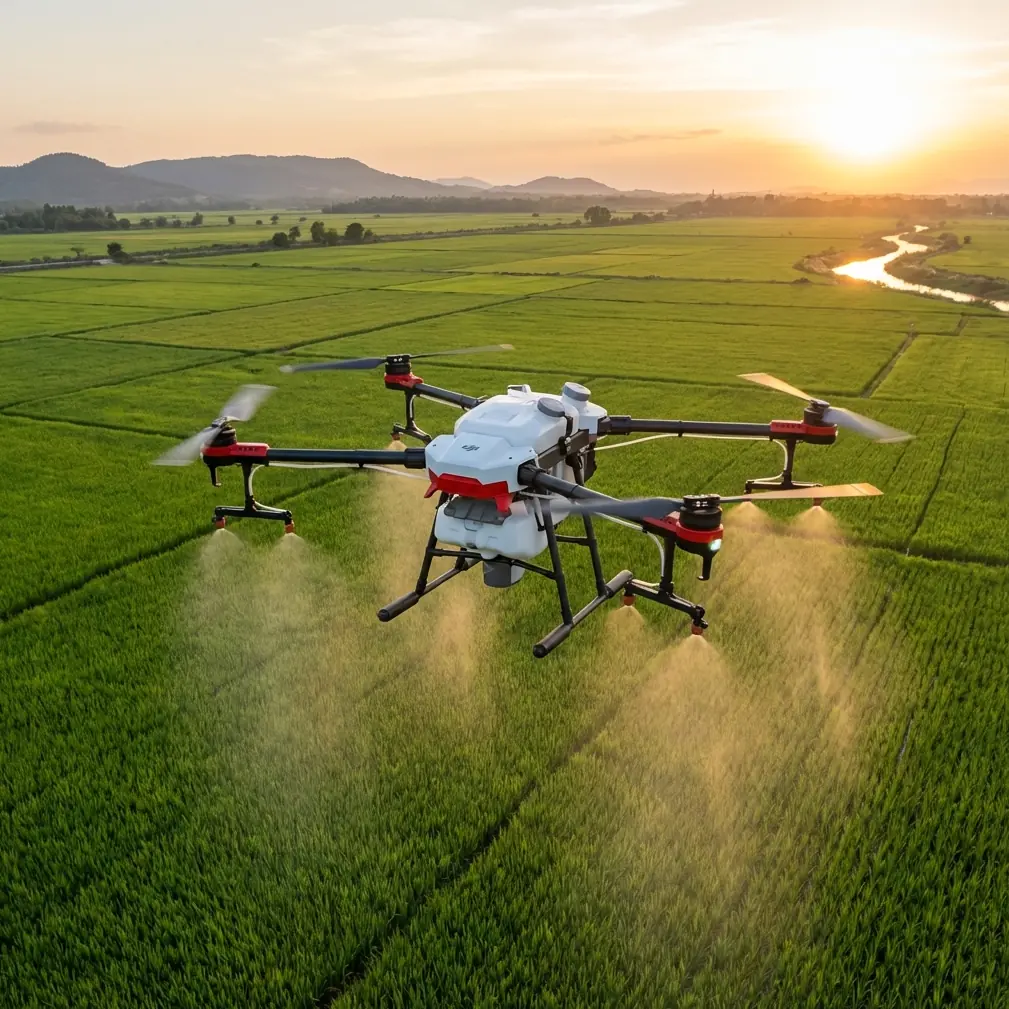
Agras T50 for High-Altitude Construction Site Monitoring: Practical Field Strategy That Actually Holds Up
META: A field-focused Agras T50 guide for high-altitude construction site monitoring, covering RTK fix rate, antenna placement, spray drift risk, nozzle calibration, swath width, and IPX6K durability.
High-altitude construction sites punish weak workflows. Thin air changes rotor behavior. Gusts arrive without warning. Dust gets everywhere. GNSS conditions can swing from excellent to frustrating in a single pass, especially near steel structures, cut slopes, and temporary towers. If you are considering the Agras T50 for monitoring these environments, the wrong question is whether it can fly there. The better question is how to configure and operate it so the data and mission consistency remain trustworthy when the site becomes messy.
That distinction matters.
The Agras T50 is usually discussed in the context of agricultural operations, yet many of its most useful traits translate surprisingly well to construction oversight in mountainous or elevated terrain. Its robust airframe, high-output propulsion, route automation, and centimeter-class positioning workflow make it relevant for repeated site observation, perimeter checks, stockpile review, drainage inspection, and progress verification across difficult ground. But success does not come from simply taking an agriculture platform and treating it like a generic camera drone. At high altitude, small setup decisions become operational decisions.
From an academic and field-method perspective, the main problem is reliability under variable conditions. Monitoring only has value if repeat flights align closely enough to expose change. On a remote build site, that means stable positioning, predictable links, and disciplined route geometry. It also means understanding which agricultural concepts still matter, even if you are not there to spray a field.
The Core Problem at Altitude: Repeatability Breaks First
Construction monitoring is not just about seeing the site. It is about seeing the same site, the same way, over time. The Agras T50 becomes useful when it can reproduce vantage points, route spacing, and flight behavior with enough precision that a supervisor or engineer can compare one mission against another. That is where RTK performance becomes central.
If your RTK fix rate degrades, the mission quality degrades with it. A route that should hold centimeter precision begins to wander. On a hillside excavation or retaining wall project, even modest horizontal drift can blur the difference between actual earth movement and mapping inconsistency. If you are checking haul-road edge erosion, drainage pond expansion, or material encroachment near a cliffside platform, a weak fix can quietly undermine decision-making.
At altitude, this challenge is amplified by terrain masking and reflective surfaces. Temporary metal roofing, scaffolding, concrete formwork, and parked machinery can all complicate signal conditions. The result is not always a mission failure. More often, it is a mission that appears acceptable until you compare outputs and realize the alignment is just loose enough to limit confidence.
The solution is to treat RTK fix rate as a pre-flight gate, not a technical afterthought. Before launching a repeated monitoring mission, confirm the aircraft is holding a stable fixed solution in the actual operating zone, not just at takeoff. If the site includes benches, cut faces, or narrow elevated corridors, test the route start point and the far edge of the work area. A stable lock at one end does not guarantee stable geometry across the full mission footprint.
Antenna Positioning: The Overlooked Range Multiplier
One detail that consistently separates smooth operations from frustrating ones is antenna placement. On high-altitude sites, crews often focus on wind and battery planning but ignore where the control station operator stands and how the antennas are oriented. That is a mistake.
For maximum range and more consistent link quality, position yourself where the antennas maintain the cleanest possible line of sight to the aircraft’s expected route, not where it is most comfortable to stand. In mountainous construction zones, a difference of 10 to 20 meters in operator position can remove a ridgeline shoulder, parked crane, concrete batch tower, or stacked materials from the signal path. That can be the difference between a steady mission and repeated throughput drops.
The practical advice is simple:
Keep the controller antennas unobstructed and broadside to the aircraft’s route rather than pointed carelessly while you watch the screen. If the mission corridor runs laterally across the slope, stand where your body, vehicle, and site structures are not shadowing the signal. Avoid operating directly beside reinforced concrete walls, metal containers, or generator trailers. Elevation helps, but clean geometry helps more.
This matters because construction monitoring often depends on consistent image transmission and command responsiveness during route adjustments. If you lose confidence in the link at the exact moment the aircraft approaches a tower crane or traverses a dusty cut line, you are more likely to abort, re-fly, or collect mismatched coverage. Those inefficiencies compound quickly on sites where weather windows are short.
If your team is building a standard operating procedure and wants a practical checklist for field communications, send it through this quick site ops channel: message our flight support desk.
Why Swath Width Still Matters When You Are Not Spraying
The term swath width sounds agricultural, but the operational logic applies directly to construction monitoring. Any repeated route mission relies on controlled lateral spacing between passes. In effect, your monitoring coverage pattern has its own swath width, whether you call it that or not.
On a high-altitude site, it is tempting to widen pass spacing to shorten flight time. That usually backfires. Uneven terrain, changing wind vectors, and abrupt elevation transitions make edge coverage less reliable than it appears in a flat-site plan. If you stretch pass intervals too far, the areas most likely to create problems, such as slope shoulders, runoff channels, scaffold margins, or stockpile edges, are often the first to receive inconsistent overlap.
A disciplined swath strategy improves two things at once: visual continuity and comparative analysis. When your route spacing is conservative and repeatable, you reduce blind zones and improve your ability to identify subtle changes between missions. That is especially useful on mountain roadwork, dam shoulders, transmission-related civil works, and terraced foundation projects where the geometry is irregular.
In other words, swath width is not just a coverage metric. It is a confidence metric.
Spray Drift and Nozzle Calibration: Relevant Even in a Monitoring Role
At first glance, spray drift and nozzle calibration may seem unrelated to construction monitoring. They are not. If the Agras T50 is being used in a dual-role environment, perhaps for dust suppression support around haul roads or targeted liquid application near exposed soil, these factors become critical near active surveying and inspection workflows.
Spray drift is a serious issue at altitude because gust behavior is less forgiving and terrain funnels airflow unpredictably. A light crosswind on the launch pad can become a stronger lateral stream along a cut slope or ridge edge. If liquid application is part of the mission set, drift can contaminate sensitive areas, distort treatment boundaries, and create avoidable complications around fresh concrete zones, exposed electrical work, or neighboring properties.
Nozzle calibration matters for the same reason. If output is inconsistent, your application map becomes an assumption rather than a record of what actually happened. For construction operators using the T50 across both observation and treatment tasks, poor calibration creates a chain reaction: liquid delivery becomes uneven, follow-up imagery becomes harder to interpret, and crews may misread the reason for surface changes.
Operationally, the answer is discipline. Calibrate nozzles on schedule, verify output uniformity before any application mission, and separate monitoring-only route templates from treatment route templates. Do not assume one flight profile serves both. The aircraft may be the same, but the mission logic is not.
IPX6K Durability Is Useful, But It Does Not Replace Procedure
The Agras T50’s IPX6K-rated protection is not a marketing footnote for this kind of work. On elevated construction sites, equipment often encounters water spray, slurry mist, dense dust, and abrasive particulate blown by crosswinds. A platform built to tolerate harsh environmental exposure has real practical value, particularly when work continues around washdown zones or unstable weather.
Still, IPX6K should be understood correctly. It increases resilience. It does not cancel maintenance discipline.
Dust accumulation on sensors, connectors, arms, landing gear interfaces, and payload-related components can still degrade performance over time. At high altitude, where every sortie may require a longer transit and narrower weather window, even minor reliability losses become expensive in operational terms. A durable aircraft gives you margin, but only if your inspection routine remains strict. Post-flight wipe-downs, connector checks, prop inspection, and payload bay review should be routine, especially after flights near blasting residue, cement dust, or wet aggregate operations.
What About Multispectral Expectations?
Readers often ask whether multispectral output is necessary for construction monitoring. Usually, the answer is no, but the question deserves nuance. Multispectral tools are designed for detecting spectral differences that standard visual workflows may miss, and that can be useful in limited construction-adjacent cases such as vegetation encroachment, runoff stress indicators, or environmental compliance checks around disturbed land.
For the average high-altitude construction mission, however, the real value still comes from route consistency, positional accuracy, and disciplined data capture rather than advanced spectral layering. If a team is struggling to maintain a strong RTK fix rate, consistent overlap, and proper antenna geometry, adding multispectral ambition before fixing those basics is the wrong sequence.
First secure repeatable flights. Then consider whether specialized sensing solves a defined problem.
A Field-Ready Operating Model for High-Altitude Sites
If I were setting up an Agras T50 monitoring workflow for a mountain construction project, I would structure it around five non-negotiables.
First, choose operator position based on antenna line of sight. Do not let convenience dictate signal geometry.
Second, verify RTK fix stability across the actual mission area, not just near the launch point. Centimeter precision only helps when it persists throughout the route.
Third, keep route spacing conservative enough to preserve overlap at changing elevations. Aggressive swath assumptions often look efficient on paper and weak in practice.
Fourth, separate monitoring settings from any application settings. If the aircraft is also used for liquid tasks, nozzle calibration and spray drift planning need their own checklist.
Fifth, treat IPX6K as a resilience advantage, not permission to skip cleaning and inspections.
This approach is not glamorous. It is effective. And on high-altitude projects, effective usually beats clever.
The Real Takeaway for Agras T50 Users
The Agras T50 can be a capable site-monitoring platform in elevated construction environments, but only when operators respect the conditions that make high-altitude work difficult in the first place. The aircraft’s durability, route automation, and RTK-enabled centimeter precision are meaningful advantages. So are less obvious factors like proper antenna positioning, disciplined swath planning, and attention to drift and calibration if the platform serves more than one role.
What determines success is not a spec sheet in isolation. It is whether your team can build repeatable missions in a setting where terrain, wind, dust, and signal complexity all fight against repeatability.
That is the standard that matters on a real jobsite. Not whether the aircraft can get airborne, but whether it can return useful, comparable, decision-grade information flight after flight.
Ready for your own Agras T50? Contact our team for expert consultation.