
How to Monitor High-Altitude Coastlines With the Agras T50
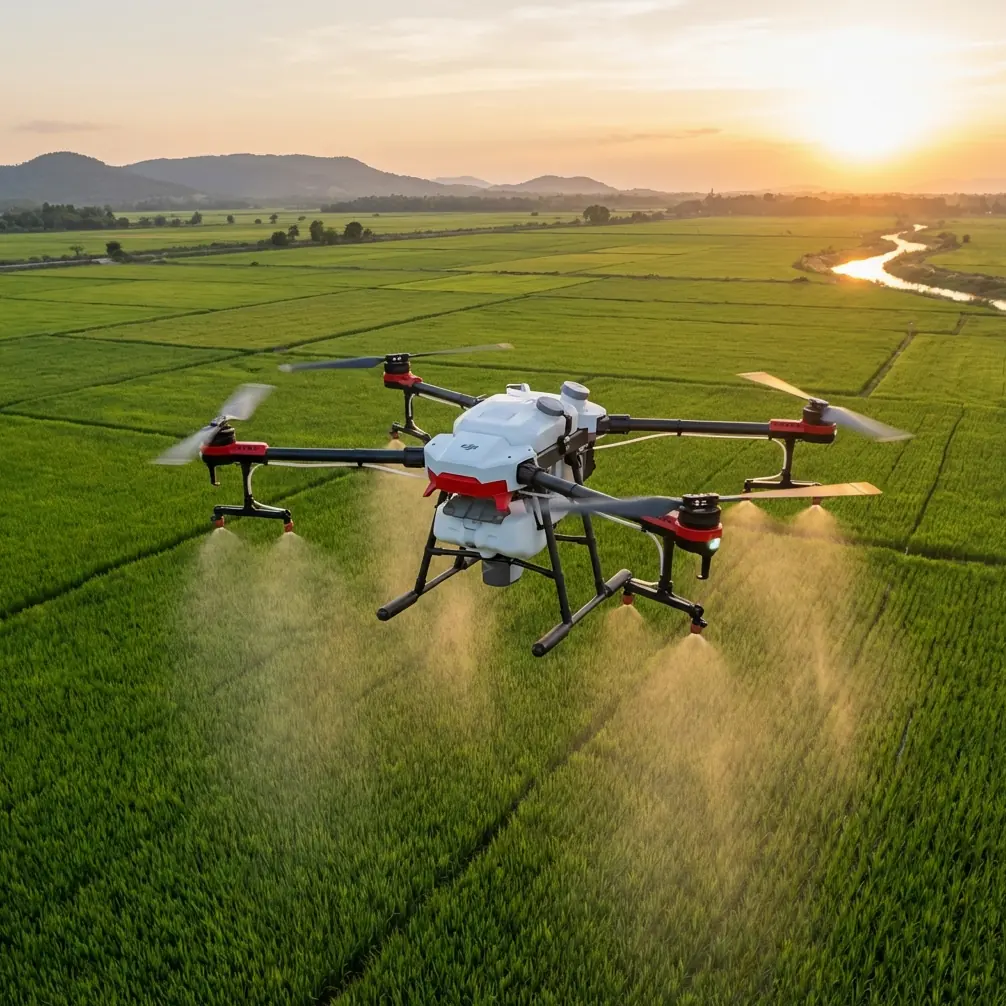
How to Monitor High-Altitude Coastlines With the Agras T50
META: A practical expert guide to using the Agras T50 for high-altitude coastline monitoring, with field tactics for RTK accuracy, spray drift control, nozzle calibration, sensor awareness, and safer wildlife-sensitive operations.
Coastline monitoring at altitude is not the first mission profile most operators associate with the Agras T50. It is better known for agricultural work, heavy payloads, and broad-area treatment. Yet in exposed coastal terrain, especially where steep bluffs, salt-laden wind, and broken access roads complicate ground surveys, the T50 becomes surprisingly useful when its capabilities are adapted with discipline.
That distinction matters. A coastline mission is not a farm mission moved next to the ocean. The aircraft may be flying above uneven cliffs, over surf zones that confuse depth perception, and through wind fields that change direction from one ridge face to the next. If the objective is to document erosion, inspect vegetation stress, observe runoff patterns, or map fragile nesting areas without disturbing wildlife, the T50 must be flown as a precision platform, not simply as a large field drone.
I have seen this firsthand during a high-elevation coastal survey where a group of gulls lifted from a rock shelf just as the aircraft came around a headland. The onboard sensing and careful route spacing gave the pilot enough margin to hold separation, reduce closure rate, and continue the pass without pressing the birds toward the cliff wall. That moment captures the real discipline of coastal monitoring with the T50: the aircraft is capable, but the mission succeeds only when the operator respects the environment, the wind, and the biological sensitivity of the area.
1. Start with the right mission definition
Before launch, clarify what “monitoring” means in operational terms. On high-altitude coastlines, there are usually four practical targets:
- shoreline retreat and bluff instability
- vegetation health on salt-exposed slopes
- drainage channels and sediment movement
- wildlife-sensitive areas that require low-disturbance observation
The Agras T50 can contribute to all four, but not with the same setup. If you want repeatable change detection, your priority is RTK Fix rate and route consistency. If you are checking plant stress on coastal margins, the workflow benefits from pairing the operation with multispectral data sources rather than relying on visual impressions alone. If the concern is drift from any liquid application used for marker, treatment, or testing work, nozzle calibration and wind handling become central.
That is why planning should begin with the data product, not the aircraft. Decide whether the deliverable is a georeferenced visual record, a repeat flight path for comparison, a vegetation condition layer, or a disturbance-minimized inspection log. Once that is defined, the T50’s strengths can be used appropriately.
2. Treat RTK reliability as mission-critical, not optional
For coastline work at elevation, centimeter precision is not a luxury feature. It is the difference between a useful trend line and a rough guess.
A bluff edge can retreat subtly over time. Drainage scars can widen by small margins before they become major failures. Nesting zones can shift within narrow bands of ledge habitat. If your repeat flight is offset because the RTK Fix rate degrades near terrain masking or because the base setup is weak, your comparison loses value fast.
The T50’s ability to support centimeter-level positioning becomes especially significant along coastal escarpments where GNSS performance can vary with topography. Pilots often assume open coast equals perfect satellite visibility. In reality, high ridges, sharp relief, and lateral cliff faces can create uneven reception conditions, especially on flights that hug contour lines.
Operationally, this means:
- establish your RTK solution before the mission reaches the cliffline
- verify fix stability during route rehearsal, not after data collection begins
- avoid launching into a survey corridor if the fix is intermittent
- record areas where terrain geometry may compromise repeatability
If your coastline program depends on monthly or seasonal comparison, a stable RTK Fix rate is one of the most valuable details in the entire workflow. It protects the integrity of every future dataset.
3. Use swath width carefully in coastal wind, even for non-application tasks
Swath width is typically discussed in spraying operations, but it has planning value even when the primary objective is monitoring.
The reason is simple. Coastal wind rarely behaves evenly across the width of the aircraft’s working path. On a plateau, the air may appear manageable. Ten meters farther out, the same pass can be pushed by crossflow rolling up a cliff face. When operators choose route spacing too aggressively, they create blind zones, overlap inconsistencies, and unnecessary workload for correction passes.
A conservative swath width gives the pilot more room to preserve image consistency, maintain stable attitude, and react to abrupt wind shear. It also reduces pressure when flying near sensitive zones where reruns are undesirable. In practical terms, the widest possible pattern is rarely the smartest one on a high-altitude shoreline.
This becomes even more important if the T50 is being used in a dual-purpose mission where monitoring is combined with targeted treatment or testing. In those cases, broad swath assumptions borrowed from flat agricultural fields can produce poor edge control and uneven coverage along cliffs or dune breaks.
4. Spray drift is the coastal hazard many teams underestimate
The phrase “spray drift” sounds narrow until you are working above the ocean. Then it becomes a mission-defining concern.
Any liquid operation along a coastline faces an amplified drift risk because wind direction changes with terrain, humidity affects droplet behavior, and updrafts from the cliff face can hold material aloft longer than expected. If the T50 is being used for vegetation management, tracer testing, or controlled spot application near erosion-control zones, drift discipline is non-negotiable.
Two details matter here: nozzle calibration and environmental timing.
Nozzle calibration determines whether droplet output matches the actual task. In coastal wind, poor calibration can produce droplets that are too fine for the conditions, increasing lateral movement and off-target deposition. That is not just an efficiency problem. On a wildlife-sensitive shoreline, it can create exposure where none was intended.
Environmental timing matters just as much. The best window is not simply “low wind.” It is the period when the wind profile is stable across the actual flight altitude and cliff interface. Surface readings alone are not enough. A sheltered launch point may hide a far more aggressive flow over the edge.
For operators used to broadacre missions inland, this is often the biggest adjustment. On high coastlines, spray drift should be assessed as a three-dimensional problem. The T50 has the capacity for serious work, but capacity without calibration is exactly how coastal drift incidents happen.
5. Respect the T50’s protection rating, but do not confuse durability with immunity
The Agras T50’s IPX6K protection rating is operationally meaningful in coastal environments. Salt mist, blowing spray, and abrasive moisture are common realities on exposed shorelines, and a robust ingress rating gives the aircraft a stronger margin than lighter platforms typically used for visual inspection.
Still, there is a mistake I regularly see in field planning: assuming that a high protection rating means the coastal environment is no longer a maintenance issue.
It absolutely is.
IPX6K helps the aircraft tolerate harsh exposure. It does not remove the need for disciplined post-flight cleaning, corrosion checks, connector inspection, and careful handling of spray residue. Salt is patient. It will exploit rushed pack-down habits and small maintenance shortcuts. If your monitoring program is recurring, maintenance quality directly affects data reliability because sensor cleanliness, power integrity, and mechanical consistency all influence repeatable performance.
The practical takeaway is straightforward. The T50 is better suited to punishing weather exposure than many people realize, but a shoreline operation should still include a maintenance protocol designed specifically for salt environments.
6. Build a wildlife-aware route, not just a terrain-aware route
Coastlines are biological corridors. That means your route design must account for animals, not only landforms.
During one survey, the aircraft approached a rock platform where a large seabird rose unexpectedly from the lee side of the slope. The encounter was brief, but instructive. The aircraft’s sensing systems and measured control inputs allowed the operator to adjust without forcing the bird inland or down toward the surf. What mattered was not only the sensor response. It was the route design that had already limited the aircraft’s speed and kept lateral escape space available.
This is the operational significance of sensor-supported awareness. On wildlife-sensitive coastlines, obstacle and proximity sensing should be treated as a buffer, not as permission to fly tighter. The T50’s sensors can help the pilot manage surprise movement, but the route itself should minimize the need for abrupt avoidance.
A few principles help:
- avoid direct overflight of likely nesting shelves
- slow before blind headlands and rock outcrops
- maintain predictable lateral tracks rather than abrupt vertical moves
- preserve a retreat corridor whenever visibility is partially masked
If your team coordinates with land managers or researchers, it can also be useful to maintain a quick field communication channel. In some programs, operators share launch timing or wildlife observations through a simple coordination link such as direct mission updates, especially when site access is fragmented across several observation points.
7. Pair visual monitoring with multispectral thinking
Even when the aircraft itself is not carrying a full multispectral payload for every sortie, the mission should still be designed with multispectral interpretation in mind.
Why? Because many coastal problems are not obvious in standard visual imagery until they are advanced. Vegetation stress from salt intrusion, drainage changes affecting root zones, and dune-margin degradation often become meaningful when you compare visible patterns with spectral indicators from adjacent datasets or companion surveys.
This is where the T50 can play a useful role in a broader monitoring architecture. Its route stability, area coverage, and precision make it effective for repeat observation missions that support layered analysis. In practice, that may mean using T50-collected positional consistency and visual documentation to validate or target zones that later receive dedicated multispectral review.
For high-altitude coastlines, that combination is stronger than visual-only patrols. It lets you move from “something looks different” to “this section is showing a repeatable vegetation response that aligns with salt stress or water movement.”
8. Field checklist for high-altitude coastline operations
A practical mission with the T50 should include the following checks before the first operational pass:
- confirm RTK Fix rate stability at the actual survey edge, not only at the launch point
- reduce swath width assumptions to match crosswind variability and terrain-induced turbulence
- complete nozzle calibration if any liquid operation is involved
- assess spray drift risk at flight height, cliff edge, and return corridor
- inspect weather exposure points with the IPX6K advantage in mind, but plan full salt-environment maintenance afterward
- identify bird congregation zones, ledges, haul-out areas, and blind terrain corners
- establish repeatable altitude and track parameters for future comparison flights
- define how visual observations will connect to multispectral or habitat data later
This checklist is not glamorous. It is what makes the dataset usable.
9. When the Agras T50 is the right tool for this job
The T50 is not the only aircraft suitable for coastal work, and there are cases where a smaller dedicated mapping platform will be more efficient. But on high-altitude shorelines with difficult access, mixed monitoring needs, and environmental exposure, the T50 occupies a useful middle ground.
It brings durability, area productivity, and centimeter precision into places where traditional field inspection is slow and sometimes hazardous. Its value increases when the operator understands three things clearly:
- coastline wind punishes sloppy assumptions
- RTK quality determines whether repeat monitoring is defensible
- wildlife and drift considerations shape every route decision
Used that way, the aircraft stops being “an ag drone used somewhere unusual” and becomes a serious coastal field platform.
That is the more accurate way to think about the Agras T50 in this context. Not as a novelty. Not as a universal answer. As a tool that can deliver high-quality shoreline intelligence when the mission is engineered around the coastline, the atmosphere, and the living systems in front of it.
Ready for your own Agras T50? Contact our team for expert consultation.