
Agras T50 for Low-Light Vineyard Mapping
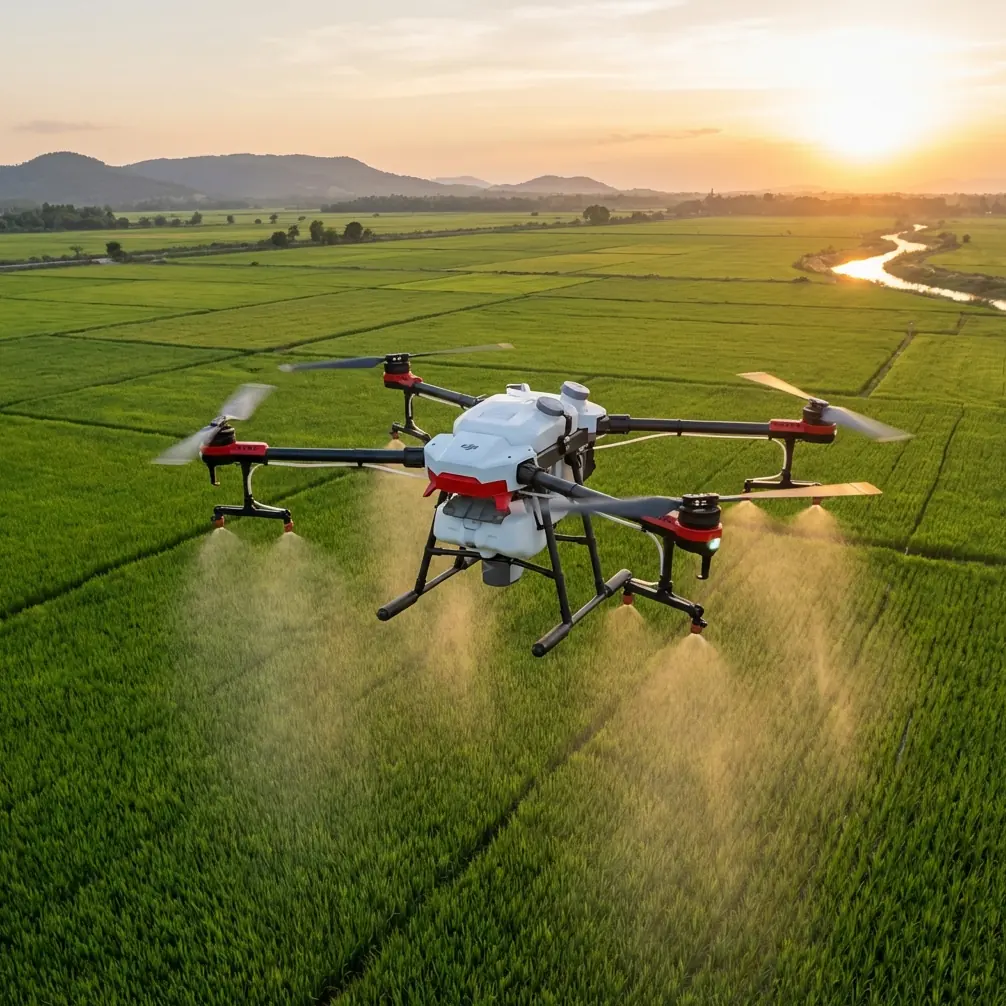
Agras T50 for Low-Light Vineyard Mapping: What Actually Matters in the Field
META: A field-focused Agras T50 article for vineyard operators mapping in low light, covering visibility, control discipline, precision workflow, and why background contrast and launch habits affect results.
Vineyard mapping at dawn, dusk, or under broken shade is rarely limited by one thing. It is usually a stack of small problems that compound fast: uneven rows, weak contrast, patchy satellite visibility near trellises, and pilots trying to move too quickly before the aircraft, sensor view, and route logic are all settled.
That is where the Agras T50 becomes interesting.
Not because low-light vineyard work is its headline use case on paper. It usually is not. The real reason is simpler: operators in vineyards need a machine that behaves predictably when visual conditions are less forgiving, ground texture varies, and precision matters more than speed on the first pass. In that setting, a platform is only as good as the workflow wrapped around it.
I spend a lot of time helping growers and UAV teams separate marketing assumptions from field behavior. With the T50, the strongest story is not a single spec sheet number. It is how the aircraft fits into a disciplined operating method for difficult agricultural environments, especially when rows are narrow, canopy shadows are deep, and the margin for error shrinks.
The low-light vineyard problem is really a contrast problem
A lot of mapping failures in vineyards come from a basic visual mistake: operators chase brightness when they should be chasing separation.
One of the reference points that matters here comes from an unlikely place: mobile flower photography. The principle is dead useful in vineyards. You do not need a perfectly black background to isolate a subject. A dark or subdued background is enough. The practical examples given were tree-shaded soil, a dark stand of trees, and dim walls or ground surfaces. The key move was to keep the subject brighter than the area behind it by changing shooting angle.
That same logic carries over into low-light vine mapping.
When you are trying to interpret row edges, canopy gaps, missing vines, wet patches, or variability in vigor, you do not always need “more light.” You need cleaner foreground-background separation. In a vineyard, that can mean planning flight lines so the camera view places illuminated leaves against darker understory, or timing the mission so the front side of the canopy catches what little ambient light is available while the back side falls into shadow. Small angle changes can produce a much more readable map layer than simply pushing the mission later into the evening.
This is one place where the T50 can outperform lighter or less stable competitors in practical terms. Not because the vineyard suddenly becomes bright, but because a more robust agricultural platform can hold a steadier working path while you optimize for contrast instead of improvising in marginal conditions. In low light, steadiness is not cosmetic. It is data quality.
Why launch discipline matters more than people think
The second reference point looks unrelated at first glance. It comes from a training document for DJI’s TT educational drone, but the lesson applies directly to vineyard operations with bigger aircraft.
That document describes an automatic takeoff to about 80 centimeters, followed by hover. It also recommends early flight practice at just 30 to 50 centimeters, keeping initial control inputs small and avoiding aggressive stick movement. There is even a practical ceiling for beginners: do not climb higher than your own height while learning basic control.
For a T50 operator mapping vineyards in low light, those numbers are more than beginner trivia.
They point to a field truth many teams ignore: your first meter off the ground tells you whether the mission should happen at all.
If the aircraft lifts and settles cleanly in a controlled hover, if the visual scene is readable, if route alignment looks right, and if the aircraft response feels crisp rather than hesitant, you have validated the conditions before committing to the row set. If not, the smart move is to rework the plan, adjust angle, wait for better separation, or stand down.
That 80-centimeter auto-hover concept is operationally valuable because it creates a pause point. In vineyard work, especially before sunrise or after the sun drops behind ridge lines, you need a deliberate hover check before flying between visually repetitive rows. The T50 benefits from this kind of methodical start because it is a serious agricultural tool, not a toy-class camera drone that rewards casual habits.
The training document also stresses small stick movements and gradual practice. Again, that matters. Low-light vineyard mapping is one of the worst times to fly with abrupt inputs. The rows can look deceptively uniform. Trellis geometry can distort visual depth. Shadow can hide elevation changes at row ends. Fine control keeps the aircraft stable and protects the quality of the overlap and line consistency you need from a useful map.
Precision in vineyards is not just about RTK buzzwords
People throw around terms like RTK fix rate and centimeter precision as if saying them solves the mission. It does not.
In vineyards, precision only becomes valuable when it is repeatable across the entire block. You are not trying to win a spec battle. You are trying to revisit the same rows, identify the same anomalies, and compare one pass against another without introducing positional noise that muddies decision-making.
That is why the T50 deserves attention here. Compared with many general-purpose drones pressed into agricultural duty, the T50 sits closer to the realities of structured farm operations. If your team is already thinking in swath width, route consistency, nozzle calibration, and drift risk, then you are thinking like agricultural operators, not hobby fliers. The aircraft fits that mentality.
Even if the immediate mission is mapping rather than spraying, the same discipline applies. A vineyard map that lacks consistent path spacing or produces poor repeatability is the data equivalent of bad nozzle calibration: technically completed, operationally weak. The usefulness of centimeter-level positioning lies in making one mission comparable to the next. That matters when you are tracking canopy development, blocked emitters, water stress patterns, or row-to-row variability.
And yes, this is one area where the T50 often stands taller than competitors that can fly the route but are less integrated into a broader ag workflow. Vineyard teams rarely want a one-off pretty map. They want an actionable layer that lines up with later treatment decisions.
The spray drift question still belongs in a mapping conversation
At first that sounds off-topic. It is not.
If you are evaluating an Agras platform for vineyard use, you should not isolate mapping from treatment planning. The reason many operators map in low light is to make the next spray window smarter, narrower, and more defensible. That means drift control, nozzle setup, and row targeting are part of the same operational chain.
A poor map can encourage over-application. A poor revisit can mask edge conditions. A poor understanding of canopy geometry can widen the treatment area more than necessary. So when we talk about the T50 in vineyards, mapping quality feeds directly into drift discipline later.
This is where experienced operators think differently from spec shoppers. They ask whether the aircraft, route planning, and field process can help reduce ambiguity. If the map clearly separates lit canopy faces from dark ground under shade, if row boundaries are easy to interpret, and if revisit accuracy is reliable, then later spray planning can be tighter. That means fewer assumptions and fewer broad-brush corrections in the field.
Background choice is a mapping tactic, not just a photography trick
Let’s return to that dark-background principle because it is more powerful than it first appears.
The reference material said you do not need a pure black background; a darker area is enough, and you should change angles until the subject is bright and the background is dark. In vineyard terms, that can influence:
- row orientation for the mission start
- side of canopy prioritized for capture
- whether early morning or late afternoon produces cleaner separation
- whether bordering woods, soil under shade, or dark retaining surfaces can help define the edge of the vine structure
This matters because vineyards are full of visual clutter. Posts, wires, understory growth, changing soil color, and sloped terrain can all weaken canopy interpretation. Angle selection is one of the cheapest performance gains available. You are not changing the aircraft. You are changing the readability of the scene.
A lot of competing platforms can technically carry out a mapping mission. Fewer reward this kind of agronomic thinking as effectively because they are not usually deployed by teams already trained to read the field in operational terms. The T50 lives in a more process-driven world. That becomes an advantage when the mission depends on fieldcraft, not just airborne capability.
Why ruggedness still matters when the mission is “only” mapping
Vineyards are not lab environments. Moisture, dust, chemical residue, mud at takeoff points, and quick redeployment between blocks are normal. That is where design traits associated with agricultural aircraft matter, including the expectation of weather and contamination resistance that operators often summarize with ratings such as IPX6K.
Even if your low-light mission is purely observational, the working day around it is not sterile. An aircraft that is built for agricultural duty tends to make more sense for vineyard programs that blend mapping with treatment operations and frequent field movement. It reduces the friction between tasks.
That practical durability is another place where the T50 often has the edge over drones that feel adequate on a calm demo morning but less convincing after repeated deployments in real farm conditions.
A better way to run a low-light T50 vineyard mission
Here is the workflow I recommend most often.
Start with the block, not the aircraft. Walk the first rows and identify where canopy faces can appear brighter than the background. Look for shaded soil, darker tree lines, or naturally dim surfaces behind the vines. Those are your contrast allies.
Then use a conservative launch sequence. The TT training reference is valuable here: low, controlled takeoff behavior tells you a lot. Treat the first hover as a condition check. Stable lift, readable live view, predictable controls, no rush.
Keep the early segment of the mission gentle. The training document’s 30 to 50 centimeter practice range is obviously from a beginner context, but the principle is sound even with professional systems: controlled, incremental inputs beat aggressive movement when visibility is compromised. In the vineyard, smoothness protects both the aircraft and the data.
After that, let precision do its real job. Use the T50’s agricultural operating logic to maintain route consistency and repeatability. If you are integrating later multispectral analysis or comparing passes over time, consistency is the foundation. Without it, precision language is just decoration.
And if your team is trying to refine the setup for a specific vineyard layout or difficult light window, send the field details here: message our UAV consultant directly. A quick exchange about row spacing, slope, canopy density, and your target outputs can save multiple test flights.
The real advantage of the Agras T50 in vineyards
The strongest case for the Agras T50 in low-light vineyard mapping is not that it magically removes the constraints of dawn or dusk. It does not.
Its advantage is that it fits a disciplined agricultural workflow better than many alternatives.
It rewards operators who understand contrast. It benefits from cautious launch habits. It turns precision into repeatability instead of marketing language. It sits naturally inside a broader program where mapping, spray planning, drift control, and calibration all connect.
That is the difference between owning an aircraft and running an operation.
For vineyard managers and drone teams working in marginal light, the T50 is at its best when used like a field instrument: carefully staged, deliberately flown, and interpreted in context. If you do that, low light stops being a vague obstacle and becomes just another variable you manage.
Ready for your own Agras T50? Contact our team for expert consultation.