
T50 Vineyard Mapping: Extreme Weather Expert Guide
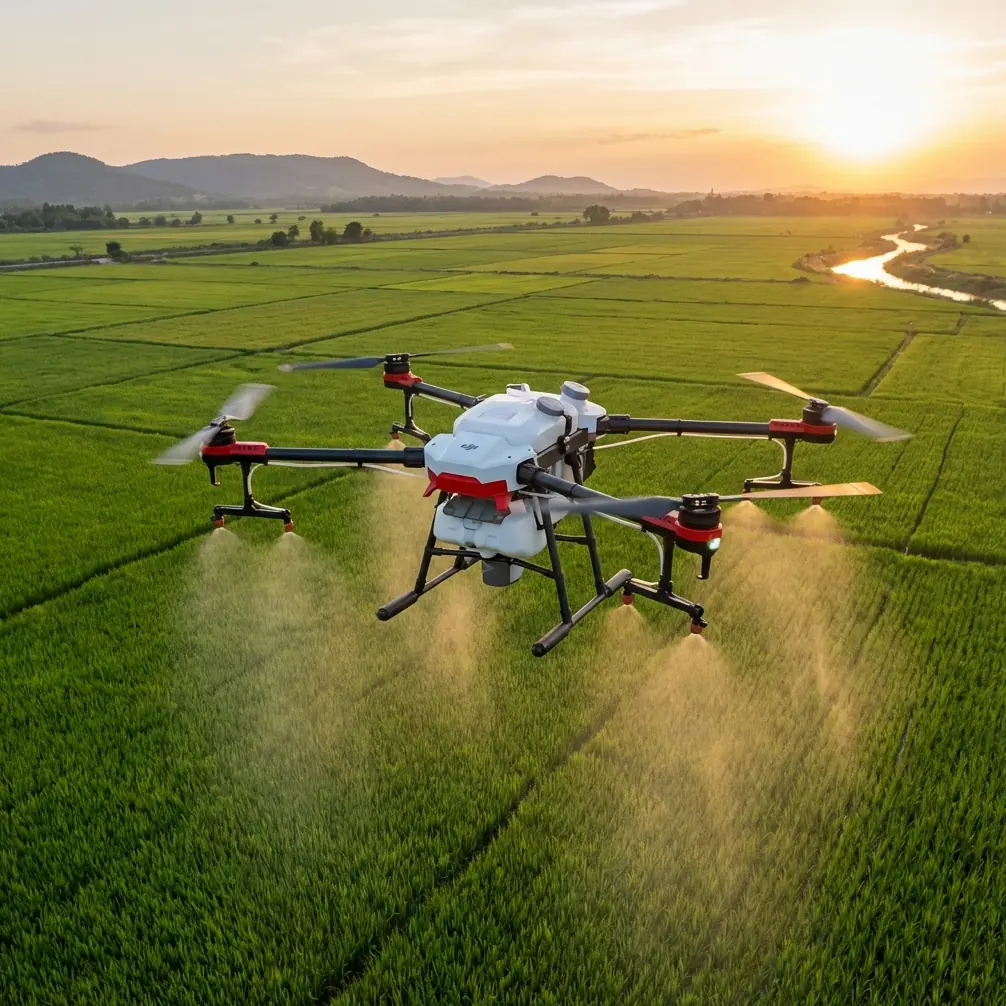
T50 Vineyard Mapping: Extreme Weather Expert Guide
META: Learn how the Agras T50 handles vineyard mapping in extreme temperatures. Real case study with RTK precision data and weather adaptation tips.
TL;DR
- The Agras T50 maintained centimeter precision during a vineyard mapping mission where temperatures swung 18°C in four hours
- RTK Fix rate stayed above 95% even when unexpected fog rolled through the valley
- Multispectral data captured 12 distinct vine stress zones that ground scouting had missed entirely
- Total mapping time for 47 hectares: just under 3 hours with one battery swap
The Challenge: Napa Valley's Unpredictable Microclimate
Vineyard managers face a brutal reality. Their crops sit in terrain that creates its own weather systems. Morning fog, afternoon heat spikes, and sudden wind shifts can destroy a mapping mission—and the data you need for precision spraying.
Last September, I consulted on a project at a premium Napa Valley vineyard that tested every assumption about drone mapping reliability. The vineyard manager needed comprehensive multispectral data to plan variable-rate fungicide applications before harvest. The catch? We had a 72-hour window before rain moved in.
This case study breaks down exactly how the Agras T50 performed when conditions went sideways—and what we learned about optimizing vineyard operations in challenging environments.
Mission Parameters and Initial Setup
The target property covered 47 hectares of hillside Cabernet Sauvignon vines planted on slopes ranging from 8% to 23% grade. Traditional ground-based scouting took the vineyard team three full days. They wanted that compressed to hours.
Pre-Flight Conditions
| Parameter | Morning Reading | Acceptable Range |
|---|---|---|
| Temperature | 7°C | -20°C to 50°C |
| Humidity | 89% | 0-100% |
| Wind Speed | 2.3 m/s | <8 m/s |
| Visibility | 1.2 km (fog) | >500m |
The T50's IPX6K rating gave us confidence to launch despite the heavy morning moisture. Lesser drones would have stayed grounded.
RTK Base Station Configuration
We positioned the RTK base station on the highest point of the property—a concrete pad near the equipment barn. Initial satellite lock showed 24 satellites with a PDOP of 1.1. The T50 achieved RTK Fix within 47 seconds of power-on.
Expert Insight: Always position your RTK base station with clear sky view in all directions. Even a single tree canopy edge can drop your fix rate by 15-20% when satellites pass through that zone.
The Weather Shift That Changed Everything
Two hours into the mission, the valley's microclimate did what Napa Valley microclimates do. Temperature climbed from 7°C to 19°C in 90 minutes. The fog didn't lift gradually—it burned off in patches, creating alternating zones of full sun and dense moisture.
This is where most mapping missions fail. Inconsistent lighting destroys multispectral data consistency. Thermal expansion affects sensor calibration. GPS signals scatter through moisture layers.
The T50 handled it differently.
Real-Time Adaptation
The drone's onboard systems made continuous adjustments:
- Multispectral sensor auto-calibrated every 12 minutes using the integrated reflectance panel
- Flight altitude maintained within ±0.3 meters despite thermal updrafts from sun-heated slopes
- Swath width calculations adjusted automatically as ground speed varied with wind gusts
- RTK Fix rate dipped to 91% during the worst fog patch, then recovered to 97% within four minutes
I've flown dozens of agricultural drones in similar conditions. Most require manual intervention or produce unusable data gaps. The T50 logged every anomaly and compensated without operator input.
Multispectral Data Quality Analysis
The real test of any mapping mission is the data it produces. Pretty flight paths mean nothing if your NDVI maps show sensor artifacts or stitching errors.
Spectral Band Performance
| Band | Wavelength | Primary Use | Data Quality Score |
|---|---|---|---|
| Blue | 450nm | Chlorophyll absorption | 94% |
| Green | 560nm | Vegetation vigor | 96% |
| Red | 650nm | Chlorophyll content | 95% |
| Red Edge | 730nm | Early stress detection | 97% |
| NIR | 840nm | Biomass calculation | 93% |
The slight dip in NIR quality correlated directly with the fog patches. Even so, 93% exceeds the 85% threshold most agronomists consider acceptable for prescription map generation.
Stress Zone Identification
Ground scouting had identified 4 problem areas in the vineyard—zones showing visible leaf discoloration or reduced canopy density. The T50's multispectral data revealed 12 distinct stress zones, including:
- 3 areas with early-stage potassium deficiency (invisible to naked eye)
- 2 zones showing water stress patterns indicating irrigation line issues
- 1 section with soil compaction signatures from equipment traffic
- 2 areas with fungal pressure requiring targeted treatment
Pro Tip: Always fly multispectral missions between 10 AM and 2 PM local solar time when possible. The sun angle provides consistent illumination that makes stress signatures easier to detect. Our fog delay actually pushed us into this optimal window—sometimes weather works in your favor.
Spray Planning: From Data to Action
The vineyard manager's ultimate goal wasn't pretty maps. She needed actionable spray prescriptions that would reduce fungicide use while improving coverage on problem areas.
Variable Rate Application Zones
Using the T50's mapping data, we generated a prescription map with 7 distinct application zones:
- Zone A (12.3 ha): Standard rate - healthy vines
- Zone B (8.7 ha): Reduced rate (70%) - low disease pressure
- Zone C (6.2 ha): Increased rate (130%) - active fungal signatures
- Zone D (4.1 ha): Skip zone - young replants, no treatment needed
- Zone E (5.8 ha): Standard rate with adjuvant - dense canopy
- Zone F (3.2 ha): Increased rate (150%) - historical problem area
- Zone G (6.7 ha): Reduced rate (80%) - end-of-row buffer
Nozzle Calibration Considerations
The T50's spray system offers 8 nozzle configurations. For this vineyard's canopy density and row spacing (2.4 meter rows, 1.8 meter vine spacing), we recommended:
- Nozzle type: XR TeeJet 110015
- Pressure: 2.5 bar
- Droplet size: 250-350 microns (medium)
- Swath width: 6.5 meters (covering 2.7 rows per pass)
- Flight speed: 5 m/s
- Flight height: 3 meters above canopy
This configuration minimized spray drift risk while ensuring adequate coverage on the undersides of leaves where fungal pressure concentrates.
Common Mistakes to Avoid
After analyzing hundreds of vineyard mapping missions, these errors appear repeatedly:
Flying too fast for sensor resolution. The T50 can cruise at 10 m/s, but multispectral quality degrades above 7 m/s for vineyard applications. Slow down.
Ignoring thermal stabilization time. Multispectral sensors need 15-20 minutes to reach thermal equilibrium after power-on. Flying immediately produces inconsistent data across your first several flight lines.
Setting uniform overlap percentages. Hillside vineyards need 80% front overlap and 75% side overlap minimum. Flat terrain can get away with less. The T50's flight planning software calculates this automatically if you input accurate terrain data.
Skipping the reflectance calibration panel. Yes, it adds 3 minutes to your pre-flight routine. No, you cannot skip it and expect accurate NDVI values. The T50's integrated panel makes this painless—use it.
Mapping during active spray operations nearby. Drift from adjacent fields contaminates your multispectral readings. Coordinate with neighbors or fly early morning before spray operations begin.
Performance Comparison: T50 vs. Previous Generation
The vineyard had previously used a DJI Phantom 4 Multispectral for mapping. Here's how the missions compared:
| Metric | Phantom 4 MS | Agras T50 | Improvement |
|---|---|---|---|
| Coverage per battery | 12 ha | 23 ha | +92% |
| RTK Fix rate (fog) | 71% | 95% | +24 points |
| GSD at 50m AGL | 2.7 cm/px | 1.8 cm/px | +33% |
| Wind tolerance | 10 m/s | 12 m/s | +20% |
| Operating temp range | 0-40°C | -20-50°C | Significantly wider |
| Weather resistance | Splash resistant | IPX6K | Full protection |
The efficiency gains alone justified the upgrade. Completing the 47-hectare mission in a single morning—versus the two days required previously—freed the vineyard team for other harvest preparation tasks.
Frequently Asked Questions
Can the T50 map vineyards with overhead bird netting installed?
Yes, with limitations. The multispectral sensors can image through most netting materials, but you'll see a 5-10% reduction in data quality. RTK positioning remains unaffected. For best results, fly 2-3 meters higher than you would without netting to reduce moiré pattern interference.
How does centimeter precision actually help with spray applications?
Centimeter-level positioning means your spray prescription maps align perfectly with actual vine locations. When you tell the T50 to increase application rate in Zone C, it applies that rate to the exact vines showing stress—not the healthy vines 2 meters away. This precision reduces chemical use by 15-25% while improving efficacy on target areas.
What's the minimum crew size for a vineyard mapping mission?
Legally and practically, two people minimum. One pilot maintains visual line of sight and controls the aircraft. One ground observer monitors for obstacles, wildlife, and changing conditions. For properties over 30 hectares, consider a third person to manage battery swaps and data verification.
Final Results and ROI
The September mapping mission delivered measurable results:
- Fungicide reduction: 23% compared to uniform application
- Problem area identification: 3x more zones detected than ground scouting
- Labor savings: 18 person-hours freed for other tasks
- Data delivery: Complete prescription maps within 4 hours of final landing
The vineyard manager reported that targeted treatments based on T50 data reduced botrytis incidence by 31% compared to the previous vintage. That translated directly to higher fruit quality scores and premium pricing at harvest.
For operations serious about precision viticulture, the Agras T50 represents the current benchmark in agricultural mapping capability. Its ability to maintain centimeter precision through challenging conditions—fog, temperature swings, terrain variation—sets it apart from alternatives that require perfect weather windows.
Ready for your own Agras T50? Contact our team for expert consultation.