
Mapping Windy Highways With the Agras T50
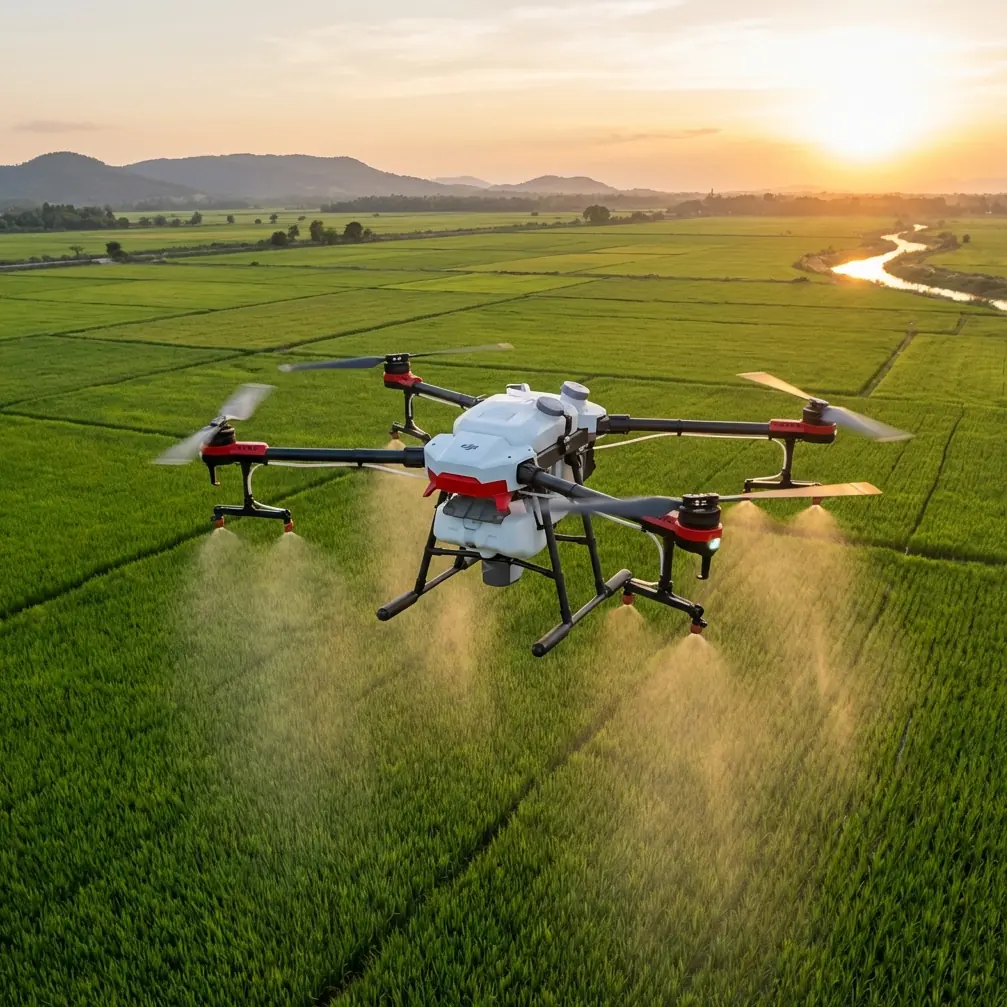
Mapping Windy Highways With the Agras T50: A Field Report on Altitude, Drift, and RTK Discipline
META: A field report on using the DJI Agras T50 around windy highway corridors, with practical insight on flight altitude, RTK fix stability, swath control, drift risk, and weather-exposed operations.
Highway work exposes every weakness in a flight plan.
Wind rarely moves cleanly across a road corridor. It tumbles over barriers, spills off embankments, curls around signage, and accelerates through open stretches. On paper, a route may look simple: long linear mileage, repeatable passes, predictable access points. In practice, the air above a highway behaves like a patchwork of micro-environments. That is why the Agras T50 deserves a more specific conversation than the usual broad claims about platform capability.
This report focuses on a narrow but common question: how should operators think about mapping or corridor work near highways when wind is the main operational constraint? The answer is not just “fly lower” or “wait for calmer weather.” It sits at the intersection of altitude, RTK fix rate, swath width discipline, and the operator’s tolerance for drift.
There is also a useful lesson hiding in an unlikely reference point. A recent 2026-04-18 article on night photography framed a problem most operators recognize immediately: people blame equipment when the real issue is technique. Its summary centered on blurred images and frames that are too dark, and the author—drawing on more than ten years of mobile photography experience across Nokia, Huawei, and Xiaomi devices—made a simple point: practical method matters more than hardware arguments. That idea translates cleanly to Agras T50 highway work. When corridor outputs look uneven in wind, the root cause is often not the aircraft itself. It is usually a planning mistake in altitude selection, speed, overlap, or calibration.
For the T50, that distinction matters.
Why highway corridors are harder than open-field mapping
An open agricultural block gives you room to smooth out small errors. A highway corridor does not. Linear assets magnify inconsistency. If the aircraft deviates laterally by a small amount in crosswind, that shift can propagate down the line and show up as uneven coverage, inconsistent edge fidelity, or poor repeatability on return passes.
Wind also changes character with height. That is the first operational significance of altitude in this scenario. Operators often talk about altitude as a visibility or obstacle-clearance setting, but near highways it is really a wind-exposure setting. Every meter higher can put the aircraft into faster, less predictable airflow. Drop too low, however, and you create a different set of problems: reduced line-of-sight margin around roadside structures, more turbulence shed by barriers and vegetation, and a narrower practical view of the corridor.
The goal is not the lowest possible altitude. It is the lowest stable altitude that preserves route clarity, control authority, and clean positional consistency.
With the Agras T50, that means treating flight altitude as a performance variable, not a checkbox.
The altitude insight that actually holds up in wind
For highway mapping in windy conditions, the best starting point is usually a conservative low-to-moderate altitude profile rather than a high corridor sweep. In field terms, that often means beginning with a test segment flown just high enough to clear roadside obstructions comfortably while staying below the stronger, cleaner crossflow that tends to build above the corridor.
Why is this the better starting point?
Because swath width and drift are linked. A wider swath can look efficient in software, but when wind is unstable, wider coverage increases the penalty for every lateral nudge. In other words, the operator who chases maximum swath width in a windy corridor is often buying throughput at the cost of consistency. The smarter move is to accept a more modest swath width, lower the exposure to crosswind, and prioritize repeatable passes.
This is where the T50’s positioning stack becomes central. If your RTK fix rate remains strong, the aircraft can hold corridor geometry with centimeter precision. That phrase gets overused in marketing, but around highways it has a practical meaning: lane-edge alignment, repeatable pass spacing, and cleaner georeferencing when the environment is trying to push the aircraft off line. Centimeter precision is not just a specification. It is the difference between a corridor dataset that stitches cleanly and one that forces unnecessary cleanup.
Still, RTK alone does not erase wind. It only gives the flight controller better truth about where the aircraft is. You still need an altitude strategy that minimizes how often the aircraft has to fight the air.
My recommendation for T50 operators in this setting is simple: do not lock altitude before you fly the first test strip. Use the first run to observe three things at once—cross-track stability, RTK fix consistency, and image or data uniformity across the width of the pass. If the aircraft is visibly correcting too often, or if edge quality drops on the windward side, come down slightly and tighten the corridor plan. If obstacle interference or turbulent roadside wash becomes worse, move up in small increments. Windy corridor work rewards adjustment in small steps, not dramatic changes.
Drift matters even when you are not spraying
The Agras line is agriculture-first hardware, so conversations around “drift” usually focus on spray drift. But the concept is broader. Drift is any unwanted displacement between intended path and actual outcome. For highway mapping, that may show up as lateral track error, variable overlap, inconsistent sampling density, or edge distortion.
That is the second reference detail worth pulling forward from the provided context: spray drift and nozzle calibration. Even if the mission is mapping rather than application, those concepts teach the right operational mindset. Agricultural operators already understand that small setup errors become field-scale problems. Nozzle calibration exists because uneven output cannot be corrected by wishful thinking after takeoff. The same logic applies to corridor mapping. If your payload, route spacing, gimbal behavior, and positioning checks are not calibrated before launch, the highway environment will expose every weakness.
On mixed-use teams, this is one of the biggest advantages of the T50 platform. Operators who come from application workflows often have a stronger instinct for environmental discipline than new corridor pilots do. They respect wind, know how quickly conditions can shift, and are accustomed to checking consistency instead of assuming it. That mindset transfers well.
For that reason, I treat preflight on a windy highway mission as a calibration exercise, not an administrative step. Verify RTK behavior early. Confirm your expected pass spacing against actual wind direction. Review whether your planned swath width is realistic for the day, not just for the platform. If the site includes embankments, bridges, barriers, or tree lines, assume each of them can create local airflow effects and build a margin around them.
RTK fix rate is not background information
Too many mission reports bury RTK status in the technical appendix. Around highways, it belongs in the headline findings.
The T50 can do excellent corridor work only if the positional solution stays dependable enough to support repeatable tracking. A weak RTK fix rate in windy conditions creates a compounding problem. First, the aircraft is already making more control corrections because of airflow. Second, reduced positioning confidence makes each correction less clean. The result is not always dramatic. More often it looks like a mission that is “almost fine,” except overlap is not as even as planned, edge geometry is less trustworthy, and post-processing takes longer than it should.
This is why I advise operators to watch RTK behavior as a live operational input, not a box checked before departure. If the fix degrades repeatedly in a particular segment of the corridor, investigate the cause instead of pushing through. Highway environments can include signal reflections, nearby structures, or terrain transitions that create localized headaches. Sometimes the answer is a minor route adjustment. Sometimes it is a different setup point. Sometimes it is simply postponement.
The T50’s value in corridor work grows when the whole system supports that centimeter-level intent. Without a healthy fix rate, the platform is working harder than necessary.
Weather exposure and the value of IPX6K
Wind rarely arrives alone. Highway work often means dust, blown moisture, grit from shoulders, and fast weather changes over exposed terrain. Here the T50’s IPX6K protection rating has real operational significance. It is not a decorative durability claim. It means the platform is better suited to the kind of dirty, weather-exposed field conditions that corridor crews actually face.
That does not mean operators should treat rough weather casually. It means the aircraft is built with the expectation that professional work happens outside controlled environments. On a highway shoulder, where vehicle movement, dust, and sudden gusts are part of normal operations, that resilience reduces downtime pressure and helps crews focus on mission quality rather than constant concern over incidental exposure.
I would still stress discipline. Protective rating is a margin, not permission to ignore site conditions. If wind is degrading data quality, the issue is mission validity, not whether the aircraft can physically remain airborne.
Where multispectral fits—and where it does not
Multispectral capability appears in many modern corridor conversations because infrastructure owners increasingly want more than geometry. They may want vegetation encroachment assessment, drainage pattern clues, or land-condition context around the roadway. If your T50 workflow includes multispectral collection, windy conditions put even more pressure on consistent altitude and overlap, because analytical value depends heavily on uniform capture.
That said, not every highway job benefits from multispectral. I mention it here because it changes the altitude conversation. A mission designed for analytical consistency is even less tolerant of aggressive swath decisions in unstable wind. If the objective includes surface comparison or vegetation interpretation along the corridor, prioritize stable repeatability over raw speed. The best output is the one you can trust later.
A practical workflow for the T50 on a windy corridor day
Here is the sequence I use conceptually:
Start with a short test section, not the whole route. Fly at a restrained altitude chosen for obstacle clearance and wind moderation, not maximum visual comfort. Monitor how hard the aircraft is correcting. Confirm RTK fix behavior. Check whether your planned swath width still makes sense once the wind starts pushing laterally.
Then inspect the output from that first segment as if you expect to find problems. Look for uneven edges, overlap inconsistency, and directional bias. If the windward side of the pass degrades first, the solution is often to narrow expectations, reduce altitude slightly if safe, and tighten route geometry. If turbulence close to the roadside is worse than expected, move upward carefully rather than jumping to a much higher profile.
Once the pattern is stable, continue with disciplined repeatability. Do not let a few clean passes tempt you into widening the swath just to accelerate the job. Corridor work rewards boring consistency.
If your team wants a second set of eyes on route planning or operational setup, share the site conditions here: send the corridor details directly.
The larger lesson
That 2026 phone photography piece talked about blurry and underexposed night shots, and the author’s argument was blunt: stop blaming the device when the technique is wrong. It is a useful analogy because the same trap exists with the Agras T50. Operators sometimes expect the airframe to overpower planning mistakes. On windy highway missions, it will not. No professional platform can turn poor altitude judgment and loose corridor discipline into clean results.
The T50 is strongest when the operator respects what the environment is doing. Choose altitude based on airflow behavior, not habit. Treat swath width as a risk control variable, not a bragging point. Watch RTK fix rate as closely as battery or route progress. Bring the same calibration mindset that agricultural teams apply to nozzle setup and drift management. Use the aircraft’s IPX6K durability as a resilience advantage, not an excuse to force a bad-weather mission.
If you do that, the T50 becomes a very capable highway platform in windy conditions. Not because it ignores the environment, but because it gives a disciplined crew the tools to manage it.
Ready for your own Agras T50? Contact our team for expert consultation.