
Mapping High-Altitude Forests with the Agras T50
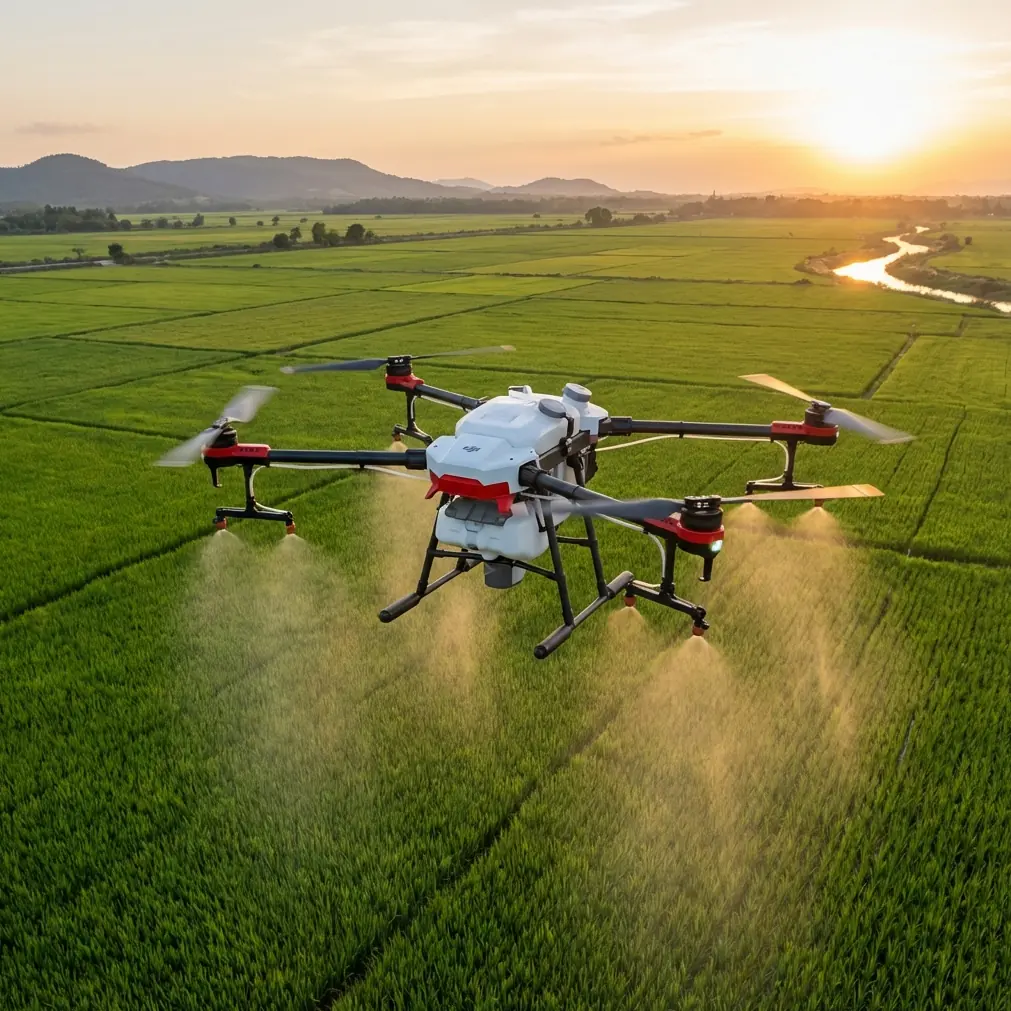
Mapping High-Altitude Forests with the Agras T50: What Actually Matters in the Field
META: A field-grounded look at using the Agras T50 for high-altitude forest mapping, with practical insight on RTK workflow, ArcGIS data handling, WGS 84 imagery, and why low-altitude digital infrastructure matters.
High-altitude forest mapping sounds straightforward until you are the one standing on a steep access road, watching weather move in, trying to keep image quality, positional consistency, and flight efficiency from falling apart at the same time.
I learned that the hard way on a mountain forestry project where the main issue was not simply getting a drone in the air. The real problem was turning hundreds of images into something reliable enough for management decisions. Tree cover was dense, terrain changed quickly, and every gap in positioning created extra office work later. What looked like a flying task was really a data discipline task.
That is the lens I would use for the Agras T50 in a forest-mapping context. Even though the T50 is usually discussed in agricultural operations, the more interesting conversation for professional users is how it fits into an increasingly connected low-altitude workflow: accurate route execution, stable data capture, and clean integration into GIS environments where the project is actually interpreted.
The real bottleneck is not flight time. It is data certainty.
In high-altitude forest environments, mapping quality is usually constrained by four things:
- uneven terrain
- patchy signal conditions
- repeated passes over similar canopy textures
- the office burden of sorting, locating, and validating imagery afterward
That last point gets overlooked. Yet the reference workflow from ArcGIS makes clear why it matters. In one documented UAV project workflow, source imagery was stored with a defined WGS 84 coordinate system and each image carried metadata including latitude, longitude, and altitude. One sample image entry showed altitude around 605.109. In another example, the project contained 523 images, all imported so the software could place each photo at its capture point and connect them into a visible flight path.
That is not a minor technical footnote. It is operationally significant.
When you are mapping forests at elevation, especially where visual landmarks repeat and slopes distort perception, image metadata becomes the backbone of trust. If each frame imports cleanly into a GIS project, aligns with a known coordinate system, and reconstructs the flight path automatically, the field team spends less time proving what happened and more time analyzing the forest itself. For a platform like the Agras T50, that matters because the aircraft is only one part of the workflow. The useful output is the mapped corridor, stand boundary, canopy condition layer, or treatment zone.
Why the T50 belongs in this conversation
The Agras T50 is not a conventional forestry mapping drone in the way fixed-wing survey systems are often positioned. But that misses the point. In difficult terrain, especially at high altitude, operators often need a platform that is practical, resilient, and repeatable rather than theoretically ideal on paper.
That is where the T50 can become useful in a broader forest operations stack.
Its relevance is strongest when the job is adjacent to vegetation management, treatment planning, access corridor assessment, or targeted operational mapping rather than pure large-block topographic surveying. If your forestry work overlaps with spray planning, canopy health checks, terrain-aware route design, or repeat missions over constrained mountain plots, the T50 starts making sense because it is built for real field conditions, not just clean survey diagrams.
And those field conditions are changing beyond the aircraft itself.
Guangdong’s low-altitude policy shift tells you where this is going
One of the most consequential reference points here is not a drone specification sheet at all. It is policy.
Guangdong’s provincial government office issued the 《广东省加快推进人工智能全域全时全行业高水平应用行动方案》, identified as 粤办函〔2026〕50号. In that plan, the province explicitly pushes “AI + low-altitude economy” and calls for AI-enabled development of the low-altitude sector. It also sets out a differentiated manufacturing and innovation pattern led by Guangzhou, Shenzhen, and Zhuhai, with surrounding cities working in coordination.
For an operator thinking about the Agras T50, this matters for a simple reason: drone value increasingly depends on the ecosystem around the aircraft.
The plan goes further by calling for a low-altitude intelligent networked system and a framework described as a “low-altitude digital foundation + low-altitude intelligent applications” system. The stated goal is province-wide dynamic airspace management and intelligent route planning.
That is highly relevant to forest mapping in hard terrain. Why? Because route quality and airspace clarity become more important as operations scale and move into more complex environments. If low-altitude infrastructure evolves toward dynamic management and smarter route allocation, aircraft like the T50 can be used with fewer coordination frictions and more predictable operational windows. In plain terms, less guesswork, better route discipline, and fewer avoidable interruptions.
For mountain forest work, that is not abstract policy language. It translates into smoother mission planning, safer corridor definition, and better repeatability for teams running multiple flights over changing terrain.
My past challenge: the map looked fine until we checked the track
On that earlier forest job I mentioned, the first review of the imagery looked promising. The canopy overlap seemed adequate. Exposure was acceptable. The crew thought the hard part was done.
Then we checked the actual image positions and realized the track consistency was weaker than expected along one ridge transition. That meant more time validating coverage, more manual interpretation, and less confidence in edge areas where management decisions were supposed to be made.
This is why I keep returning to the ArcGIS reference workflow. The moment where photos are imported from a project folder, placed automatically based on metadata, and linked into a flight trajectory is more than a software convenience. It is an early warning system. If your T50 mission data lands in a structured workflow and immediately reveals whether the route was clean, you catch problems before they become reporting errors.
For forestry teams, that can determine whether a mission remains a one-day field task or expands into a week of correction work.
RTK fix rate and centimeter precision are not just buzzwords here
The user context mentions RTK fix rate and centimeter precision, and in high-altitude forestry that is exactly the right conversation.
Dense canopy, steep relief, and variable sky visibility can expose any weakness in positional workflow. Even if your end product does not require survey-grade deliverables at every point, higher positioning confidence reduces ambiguity in image alignment, treatment boundary interpretation, and repeat mission comparisons.
The ArcGIS examples show how central metadata-backed imagery is: latitude, longitude, altitude, and a known coordinate system such as WGS 84 form the bridge between flight operations and mapping products. The better the positional consistency at capture, the cleaner that bridge becomes.
So when evaluating an Agras T50 for forest mapping support, I would focus less on generic claims and more on this question: how reliably can the aircraft maintain a clean, repeatable route in terrain where every meter of drift complicates the office workflow?
A good RTK fix rate is not just about precision for its own sake. It is about reducing rework.
Forest mapping with a spray platform? Yes, if you understand the use case
There is a fair objection here. The T50 is known as an agricultural aircraft. So why place it in a forest mapping article at all?
Because many real projects are hybrid projects.
Forest operations do not always separate neatly into “mapping mission” or “application mission.” A team may need to map a mountain block, identify treatment zones, assess vegetation density, define exclusion areas, then conduct or plan targeted operations later. In those cases, an aircraft that supports accurate low-altitude movement, disciplined route execution, and rugged field deployment can be more practical than switching between disconnected systems.
This is also where details like swath width, nozzle calibration, and spray drift still matter, even in a mapping-led discussion. They matter because they shape how the same operational data may later be used. If your T50 mapping pass helps establish vegetation structure, access lines, or treatment boundaries, the eventual application mission depends on those mapped decisions being spatially reliable. In mountain environments, drift risk and calibration decisions are tied to terrain, canopy edge, and route geometry. Bad mapping leads to bad application planning.
So even if the day’s mission is framed as “forest mapping,” the downstream value may sit in treatment design. That makes the quality of positional data and route reconstruction doubly important.
Multispectral isn’t always the first answer
Another easy mistake is assuming multispectral is automatically the next step. Sometimes it is. Sometimes it is not.
In high-altitude forest work, the first gain often comes from getting standard imagery, route consistency, and geospatial organization under control. The ArcGIS reference showing 523 images in a structured project folder is a good example of the discipline required. Before adding more sensors and more analytical layers, teams need a capture pipeline they can trust.
That means:
- images stored in an organized project structure
- a stable coordinate framework such as WGS 84
- metadata preserved from capture to GIS import
- a visible, reviewable flight track inside the processing environment
Once that foundation is solid, adding multispectral workflows makes much more sense.
Why low-altitude digital infrastructure changes the T50 conversation
Five years ago, many operators treated aircraft selection as the whole decision. Today that is too narrow.
The Guangdong policy direction toward a digital low-altitude foundation and intelligent applications points to a bigger shift: drones are being absorbed into managed airspace systems, coordinated digital platforms, and AI-supported route logic. For a working platform like the Agras T50, that means long-term value will increasingly come from how well it participates in connected operations, not just how it performs in isolation.
For forest managers and contractors, this has a practical upside. As dynamic airspace management and intelligent route planning mature, repeat operations in complex areas should become more standardized. That improves scheduling, documentation, compliance, and mission consistency.
In mountain forestry, consistency is everything.
What I would prioritize on a real T50 forest-mapping deployment
If I were deploying the Agras T50 for a high-altitude forest mapping support mission tomorrow, my priorities would be brutally simple:
1. Get the positional workflow right first
Use a disciplined image pipeline with coordinate consistency from capture through import. The ArcGIS references show exactly why WGS 84-tagged photos and auto-generated flight paths are so useful.
2. Review the track before celebrating the imagery
A visually good image set can still hide route inconsistency. Importing photos and checking the reconstructed path catches this early.
3. Treat mapping as part of operations, not a separate island
If the mapped outputs will later inform application work, then spray drift planning, nozzle calibration logic, and terrain-aware route design should already be in the conversation.
4. Build around the digital ecosystem
As policy and infrastructure move toward intelligent low-altitude networks, operators using aircraft like the T50 should think ahead about data integration, route management, and platform interoperability.
If you are trying to sort out whether this kind of workflow fits your own mountain forestry projects, a quick field-operations discussion can save a lot of trial and error: message Marcus directly on WhatsApp.
The bottom line on the Agras T50 for high-altitude forest mapping
The Agras T50 is not interesting because it can fly over trees. Plenty of aircraft can do that.
It is interesting because forest work at altitude punishes weak workflows. The aircraft has to be part of a chain that includes stable capture, reliable positioning, organized imagery, GIS-ready metadata, and mission repeatability. The references here underline that reality from two angles: first, the ArcGIS workflows show how image metadata, WGS 84 coordinates, and even a 523-image project become actionable when they reconstruct a trustworthy track; second, Guangdong’s 2026 AI and low-altitude action plan shows that the industry is moving toward intelligent route systems and dynamic airspace management that will make these workflows even more connected.
That combination is what makes the T50 worth discussing in this context.
Not as a generic forestry drone. Not as a buzzword machine. As a field tool that becomes more valuable when the mission is hard, the terrain is unforgiving, and the data has to stand up after the props stop spinning.
Ready for your own Agras T50? Contact our team for expert consultation.