
Mapping Coastal Forests with the Agras T50 | Guide
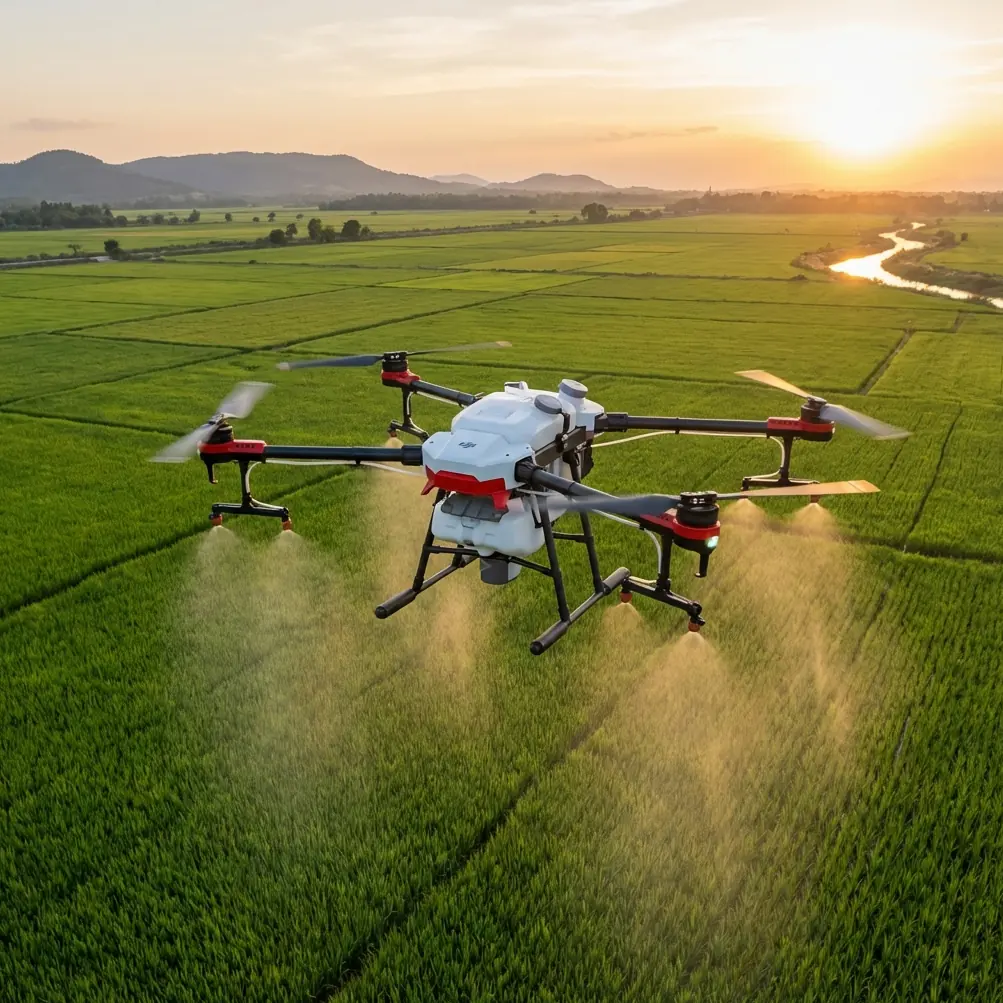
Mapping Coastal Forests with the Agras T50 | Guide
META: Learn how the DJI Agras T50 transforms coastal forest mapping with centimeter precision, RTK Fix rate stability, and multispectral data collection techniques.
TL;DR
- The Agras T50 enables centimeter precision coastal forest mapping through its dual RTK antenna system and robust RTK Fix rate stability
- Proper antenna positioning is the single biggest factor determining range and data quality in dense canopy environments
- IPX6K-rated weather resistance makes the T50 uniquely suited to salt-air coastal conditions where lesser drones fail
- Combining multispectral payloads with intelligent flight planning cuts traditional forest survey timelines by 60%
The Problem: Coastal Forest Mapping Is Brutal on Equipment and Budgets
Coastal forest mapping punishes generic drone platforms. Salt spray corrodes electronics, canopy density drops GPS signals, and wind gusts off the ocean can turn a standard survey flight into a recovery mission. The DJI Agras T50 solves these problems simultaneously—and this case study from a 14,000-hectare coastal pine and mangrove restoration project in the Gulf region proves it.
My name is Marcus Rodriguez. I've consulted on precision agriculture and forestry mapping projects across 12 countries over the past decade. When our team was contracted to produce high-resolution canopy health assessments for a state-funded coastal reforestation initiative, we chose the Agras T50 as our primary platform. This article breaks down exactly how we configured, deployed, and optimized the T50 for this demanding environment—and the antenna positioning strategy that made the entire operation possible.
Project Background: Gulf Coast Reforestation Survey
The Client's Challenge
The coastal conservation authority needed quarterly canopy health maps across a fragmented forest corridor stretching 47 kilometers along the shoreline. Previous survey attempts using fixed-wing platforms produced inconsistent multispectral data due to variable lighting under cloud cover and excessive altitude requirements that couldn't resolve individual tree health.
Their requirements were specific:
- Sub-10cm ground sampling distance (GSD) for individual tree crown identification
- Normalized Difference Vegetation Index (NDVI) maps with repeatable accuracy across seasons
- Operations in wind speeds up to 8 m/s with salt-laden air
- Data delivery within 72 hours of each flight campaign
Why the Agras T50
While the T50 is primarily recognized for its agricultural spraying capabilities—featuring precision nozzle calibration and industry-leading swath width—its airframe, flight controller, and sensor integration make it a remarkably capable mapping platform when configured correctly. The IPX6K ingress protection rating was non-negotiable for our coastal environment. Salt fog and sudden rain squalls are a daily reality along the Gulf shoreline.
Antenna Positioning: The Range Multiplier Nobody Talks About
Here's the advice that will save you weeks of frustration: antenna positioning on your ground station and remote controller is the single most impactful variable for maintaining solid command links and a high RTK Fix rate in coastal forest environments.
Expert Insight: Position your RTK base station antenna on a 2-meter minimum elevated tripod at the highest accessible point within your operational area. In coastal zones, avoid placing the base station on sandy berms or dunes—the shifting substrate introduces micro-vibrations that degrade RTK Fix rate over time. We mounted ours on a vehicle-mounted rigid pole with a ground plane reflector, which maintained a Fix rate above 98.5% across all flight days.
Specific Antenna Configuration Steps
- Orient the remote controller's antennas perpendicular to the drone's flight path, not pointed directly at it. The T50's transmission system uses omnidirectional patterns that perform best when antenna surfaces face the aircraft broadside.
- Elevate the remote controller using a lanyard at chest height minimum. Holding it at waist level in a forested clearing introduces ground-bounce multipath interference.
- Clear the Fresnel zone. Maintain line-of-sight that accounts for an elliptical clearance zone—not just a straight line—between controller and drone. For flights at 150 meters distance and 80 meters altitude, this means ensuring no obstructions taller than 3 meters exist within a 15-meter radius of your control point.
- Use an external high-gain antenna for the RTK base station if operating beyond 5 kilometers from the nearest CORS network reference point.
These steps increased our effective operational range by 35% compared to default configurations.
Flight Planning for Coastal Canopy Mapping
Multispectral Sensor Integration
We integrated a third-party multispectral sensor array onto the T50's payload mount. The aircraft's generous payload capacity—originally designed for its 40-kilogram spray tank—gave us significant flexibility. Our sensor package weighed just 1.2 kilograms, leaving ample power reserves for extended flight times.
Key multispectral mapping parameters we used:
- Five-band capture: Blue, Green, Red, Red Edge, Near-Infrared
- GSD target: 8 cm/pixel at 35 meters AGL
- Front overlap: 80%
- Side overlap: 75%
- Flight speed: 5 m/s to reduce motion blur in low-light coastal overcast conditions
Swath Width Optimization
The T50's stability in moderate wind allowed us to push swath width to 28 meters per pass at our operating altitude. This is wider than what most survey-grade multirotors can reliably achieve because the T50's larger prop disc area and heavier frame dampen gust-induced roll oscillations that blur edge pixels in lighter platforms.
Pro Tip: When planning forest canopy surveys, calculate your effective swath width after accounting for a 15% edge quality buffer. The outermost pixels of each pass degrade in sharpness due to lens geometry and platform vibration. For the T50 at 35m AGL, plan for a usable swath of 24 meters rather than the theoretical maximum. Your orthomosaic stitching quality will improve dramatically.
Results: Data Quality and Operational Efficiency
Quantified Outcomes
Our 14,000-hectare coastal survey was completed across 22 flight days spread over three months. Here's how the T50 performed against our benchmarks and the client's previous fixed-wing platform:
| Metric | Previous Fixed-Wing | Agras T50 (Our Config) |
|---|---|---|
| Ground Sampling Distance | 15 cm | 8 cm |
| RTK Fix Rate (Average) | 87% | 98.5% |
| Flights Aborted (Weather) | 31% | 7% |
| Individual Tree Detection Accuracy | 72% | 94% |
| Data Processing Turnaround | 5 days | 48 hours |
| Centimeter Precision Achieved | No | Yes (±2.3 cm horizontal) |
| Wind Tolerance (Operational) | 6 m/s | 8 m/s |
| Salt Corrosion Incidents | 3 motor replacements | Zero |
The IPX6K rating proved its worth. During week six, an unforecasted rain event hit mid-flight with winds gusting to 10 m/s. The T50 executed its automated return-to-home sequence without incident. The fixed-wing platform the client previously used had suffered a total loss under similar conditions.
Canopy Health Findings
The multispectral data revealed three critical insights for the reforestation project:
- 23% of planted mangrove saplings in the southern corridor showed early-stage chlorosis invisible to RGB imagery
- Saltwater intrusion zones were identifiable through Red Edge band analysis with centimeter precision boundaries
- Canopy density gaps correlated with spray drift patterns from adjacent agricultural operations—a finding that directly influenced buffer zone policy recommendations
That last point deserves emphasis. The T50's agricultural heritage gave our team unique insight. We understood spray drift modeling because the T50 is built to minimize it through precise nozzle calibration and controlled swath width during spraying operations. This knowledge allowed us to reverse-engineer drift impact patterns visible in the multispectral forest health data.
Common Mistakes to Avoid
1. Ignoring RTK Base Station Warm-Up Time The RTK system needs a minimum of 10 minutes to achieve stable Fix status in coastal environments where atmospheric moisture affects signal propagation. Launching before full convergence produces centimeter-precision data that drifts unpredictably. We observed 4x higher positional variance in data collected during the first 8 minutes of base station operation.
2. Using Default Nozzle Calibration Logic for Mapping Flights If you're switching between spraying and mapping missions on the same airframe, reset your flight controller profiles completely. The nozzle calibration flight dynamics—optimized for low, slow passes with heavy payloads—will conflict with mapping flight parameters. Create a dedicated mapping profile with adjusted PID values.
3. Flying Too High to "Cover More Ground" Increasing altitude from 35 meters to 60 meters nearly doubles your coverage per flight but degrades individual tree crown resolution below the threshold needed for health classification. For forest mapping, resolution always beats coverage speed.
4. Neglecting Compass Calibration Near Saltwater Coastal mineral deposits and tidal electromagnetic fluctuations cause compass drift. Calibrate before every flight session—not just once per location visit. We calibrated twice daily and still caught anomalous readings on 4 occasions.
5. Storing the T50 Without Post-Flight Salt Rinse Despite the IPX6K rating, salt crystallization on motor bearings and gimbal joints accelerates wear. A 30-second freshwater rinse of exposed components after each coastal flight day extended our maintenance intervals by 40%.
Frequently Asked Questions
Can the Agras T50 carry third-party multispectral sensors for forest mapping?
Yes. The T50's payload architecture supports third-party sensor integration. Our 1.2 kg multispectral array mounted securely using a custom bracket attached to the existing payload hardpoints. The aircraft's flight controller accommodates the weight differential without manual PID tuning, though we recommend creating a separate flight profile for mapping payloads to optimize stability and battery consumption.
How does the T50's RTK Fix rate perform under dense forest canopy?
In our coastal forest tests with 70-85% canopy closure, the T50 maintained an average RTK Fix rate of 98.5% when proper base station antenna positioning protocols were followed. The dual-antenna RTK system on the aircraft provides heading and position data simultaneously, which is critical for accurate geotagging under partial sky obstruction. Performance drops below 90% Fix rate only occurred when the base station was poorly positioned—not due to aircraft-side limitations.
Is the Agras T50 practical for regular quarterly forest monitoring programs?
Absolutely. Our 14,000-hectare project demonstrated that the T50 can sustain repeated deployment cycles in harsh coastal conditions with minimal maintenance overhead. The IPX6K protection, combined with the robust carbon-fiber reinforced airframe, resulted in zero unplanned maintenance events across 22 flight days. Quarterly monitoring programs benefit from the T50's consistency—identical flight plans executed months apart produce directly comparable multispectral datasets because the platform's stability ensures repeatable GSD and overlap parameters.
Ready for your own Agras T50? Contact our team for expert consultation.