
Agras T50 Mapping Tips for Dusty Fields: A Smarter Pre
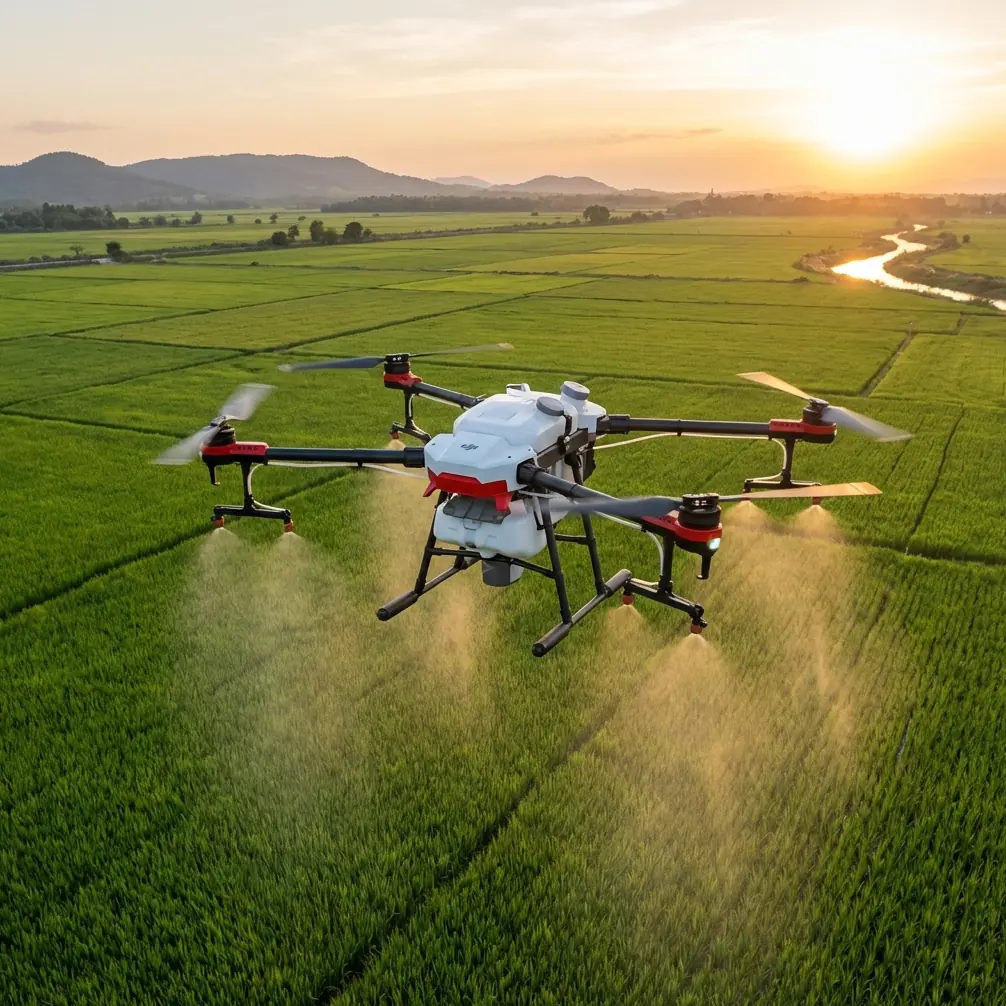
Agras T50 Mapping Tips for Dusty Fields: A Smarter Pre-Flight Routine in the Era of Low-Altitude Agriculture
META: Practical Agras T50 mapping tips for dusty farm conditions, with a pre-flight cleaning routine, RTK accuracy considerations, nozzle calibration checks, and why China’s low-altitude economy growth matters for T50 operators.
Dust changes the way a field drone behaves.
Not dramatically at first. A little film on the airframe. A bit of residue around spray hardware. Fine particles collecting where connectors, sensors, and moving parts do their work. Then accuracy starts to slip, cleaning takes longer than it should, and a machine built for precise agricultural work starts fighting avoidable friction.
That is why a good Agras T50 mapping workflow for dusty fields starts before takeoff, not after the first pass.
I’ve spent enough time around farm drone operations to know that operators often focus on route planning, swath width, payload setup, and coverage speed while overlooking a simpler question: is the aircraft physically clean enough to deliver the precision the mission demands? With the T50, that question matters even more when you are working in dry plots, loose soil, and wind-prone field edges where dust becomes part of the operating environment.
At the same time, the backdrop around agricultural UAV work is getting bigger and more serious. China’s low-altitude economy reached 506 billion yuan in 2023, growing 33.8% year over year, according to data cited from CCID under the Ministry of Industry and Information Technology. That kind of expansion is not just macroeconomic trivia. It signals rising expectations for professional field operations, better standards, tighter workflows, and more pressure on operators to treat drones like real production tools rather than occasional gadgets. The policy direction reinforces it too: low-altitude economy planning entered national development planning in 2021, and in 2024 it was written into the government work report as a new growth engine. For Agras T50 users, the implication is straightforward. Agricultural drone work is moving into a more structured, scalable phase. Sloppy field habits will stand out.
So if your reader scenario is mapping fields in dusty conditions, here is the practical approach I recommend.
Start with a dry-field mindset, not a normal-field checklist
Dusty fields create three operational problems at once.
First, visibility and sensor reliability can degrade as particles accumulate on exposed surfaces. Second, spray system residue can mix with dust and create buildup that is harder to spot than obvious mud or liquid contamination. Third, small losses in positioning confidence become more costly when you are trying to preserve consistent line spacing and repeatable coverage.
That matters for a platform like the Agras T50 because field mapping and application quality are linked. Even if the mission begins as reconnaissance, boundary checking, or route validation, the same aircraft condition affects later spray work. If the machine is carrying contamination into the job, you are increasing the chances of spray drift from uneven delivery, poor nozzle behavior, or less stable path execution.
A dusty-field routine should therefore treat mapping, positioning, and spray readiness as connected.
The pre-flight cleaning step that actually improves safety
Most operators hear “clean the drone” and think of cosmetic maintenance. That misses the point.
Before powering up the Agras T50 in dusty farm conditions, perform a targeted dry clean focused on functional surfaces. Not a casual wipe-down. A methodical check.
Start with these areas:
- sensor windows and exposed detection surfaces
- RTK-related surfaces and mounting points that must remain clear for dependable positioning performance
- arm joints and fold points where dust can work into motion interfaces
- landing gear contact points
- spray hardware, especially around nozzles and lines
- battery interface areas and external connectors
The reason this step is a safety feature, not just housekeeping, is simple: dust hides developing issues. A crusted nozzle body can obscure partial blockage. A dirty sensing surface can reduce reliability in obstacle-aware behavior. Fine contamination around connectors can become a long-term electrical and maintenance problem. And on a sprayer platform, residue plus dust is rarely neutral. It tends to become buildup.
If the aircraft is rated for harsh environmental use, such as an IPX6K-level protection profile often discussed in relation to heavy-duty ag drones, that does not mean you should ignore cleaning. It means the machine is built to tolerate tough working conditions better than a lightly protected platform. Tolerate is not the same as perform indefinitely without care.
In dusty operations, I recommend doing the cleaning before the battery goes in. That forces a deliberate inspection while the aircraft is still cold, unpowered, and easier to handle safely.
Why nozzle calibration belongs in a mapping article
Because the T50 is not living in separate boxes labeled “mapping mode” and “spraying mode” in the real world.
Many operators map or verify a field, then move quickly into treatment planning or application. If your nozzles are carrying residue or your calibration is drifting, the problem may not show up during route creation. It shows up when the field receives inconsistent coverage. In dusty conditions, partial obstruction is especially easy to miss because external dirt can make everything look uniformly used.
A clean pre-flight check should include visual nozzle inspection and a calibration review if the aircraft is going from recent spraying activity into another productive day. This is operationally significant for two reasons.
First, nozzle consistency affects droplet formation, which directly affects spray drift. Dusty fields are often dry fields, and dry fields frequently come with airflow concerns near open plots. If one nozzle is not behaving like the others, the route may be perfect while the deposition pattern is not.
Second, route confidence can lead operators into false confidence. Centimeter precision from RTK does not rescue a bad fluid system. An accurate line flown with uneven output is still uneven work.
That is why I never separate positioning discipline from spray discipline on an Agras platform.
Protect your RTK fix rate before the mission starts
When operators talk about precision in the field, they usually jump straight to “centimeter precision.” Fine. But precision is not a slogan. It is a condition that has to be maintained.
In dusty field environments, your RTK fix rate deserves attention before takeoff, during initialization, and at the first edge of the mission area. The goal is not to admire the spec. The goal is to confirm stable positioning in the exact environment where the aircraft will work.
Here is the practical sequence:
- Clean the relevant external surfaces before startup.
- Power on in an open area with minimal obstruction.
- Wait for a stable RTK state rather than rushing into the route.
- Confirm the planned field boundary against what you physically see on the ground.
- Watch for any delay, inconsistency, or unexpected behavior in lock stability before committing to productive passes.
This matters more in dusty fields than many people realize. Dust itself is not “breaking” RTK, but dusty operations often happen in harsher working setups: roadside staging, dry embankments, improvised launch spots, and long workdays where setup discipline weakens. The positioning system performs best when the whole launch process is clean and repeatable.
If your fix behavior is inconsistent, do not write it off as a temporary quirk. Resolve it before you rely on the aircraft for narrow margins, repeat runs, or tightly managed swath width.
Swath width is a field decision, not a brochure number
Dusty conditions expose operators who chase idealized swath width.
A broad swath looks efficient on paper. In the field, dry soil, crosswind pockets, crop height changes, and nozzle condition all influence whether that width is still delivering usable coverage. On the Agras T50, practical swath decisions should be based on environmental stability and application uniformity, not the widest number an operator hopes to claim.
For mapping-related route setup, that means using field observations to inform spacing and pass confidence. If a section is especially dusty, open, and prone to airflow shifts, slightly more conservative line spacing can preserve quality better than trying to stretch every pass. That is not lost efficiency. It is controlled efficiency.
The same logic applies if you are integrating multispectral scouting from another workflow or comparing crop variability data with planned treatment zones. Better route reliability beats theoretical maximum width every time, especially when the field surface is actively kicking contamination into the airframe.
Build a short dusty-field T50 routine that crews will actually follow
A good procedure is not the most exhaustive one. It is the one your team will repeat under pressure.
Here is a practical routine I give crews for dusty field days:
1. Stage the launch area carefully
Avoid parking the aircraft where vehicle movement, foot traffic, or rotor wash will stir up loose dust before takeoff. Even a few extra meters can help.
2. Dry-clean before battery install
Use a soft method appropriate for the aircraft and remove loose dust from critical surfaces. Do not turn a simple clean into a moisture-heavy process right before launch unless your maintenance method specifically calls for it.
3. Inspect nozzles and fluid path touchpoints
Look for residue, partial obstruction, or crusting. If the aircraft recently sprayed, this is mandatory.
4. Confirm tank, lines, and hardware condition
Even if the task is mapping-focused, the aircraft should be checked as the ag platform it is.
5. Verify RTK stability
Do not shortcut initialization. A stable fix rate is the backbone of repeatable field work.
6. Check field edge realism
Compare the planned route with actual obstacles, poles, tree lines, irrigation features, and terrain transitions.
7. Watch the first passes closely
The first minute tells you whether the day’s conditions support your intended spacing, speed, and route confidence.
That routine is fast. More importantly, it is realistic.
Why the broader low-altitude economy matters to T50 operators in the dirt
The upcoming Shanghai International Low-Altitude Economy Expo, scheduled for July 22 to 25, 2026 at the National Exhibition and Convention Center in Shanghai, is one more sign that agricultural drone operations now sit inside a much larger industrial conversation. The point is not the event itself. The point is what it represents.
Low-altitude aviation is no longer a niche story told only by hardware enthusiasts. It is being shaped by national planning, industrial policy, and commercial scaling. When low-altitude economy was first brought into national development planning in 2021, that gave the sector formal strategic standing. When it entered the 2024 government work report as a new growth engine, expectations rose another level.
For an Agras T50 operator, that means professionalism becomes a competitive advantage in ordinary field details: cleaner setups, better nozzle discipline, more reliable RTK practices, better documentation, and repeatable field outcomes. The market growth figure—506 billion yuan in 2023 with 33.8% annual growth—tells you the sector is expanding fast. Fast-growing sectors reward operators who can reduce inconsistency.
And inconsistency usually starts in the small things.
Dust on a sensor. A rushed calibration. An unstable launch setup. A swath width chosen from optimism instead of conditions.
One final habit worth adopting
After every dusty mission, write down one line: what contamination showed up first?
Was it on the sensor surfaces? Around the nozzles? At the fold joints? Near the connectors? That single note becomes valuable after a few weeks because it tells you where your T50 is actually experiencing stress in your environment, not where you assume it is.
That pattern lets you refine your pre-flight cleaning order, adjust staging habits, and catch maintenance issues before they interrupt a workday.
If you want to compare field routines or troubleshoot a dusty-site setup with someone who understands agricultural UAV workflows, you can reach out directly on this WhatsApp line for Agras discussions.
The Agras T50 is at its best when operators treat precision as a discipline, not a feature list. In dusty fields, that discipline begins with cleaning, continues with RTK verification, and shows up in every pass you trust enough to repeat.
Ready for your own Agras T50? Contact our team for expert consultation.