
Agras T50 for Urban Coastline Mapping: A Practical Guide
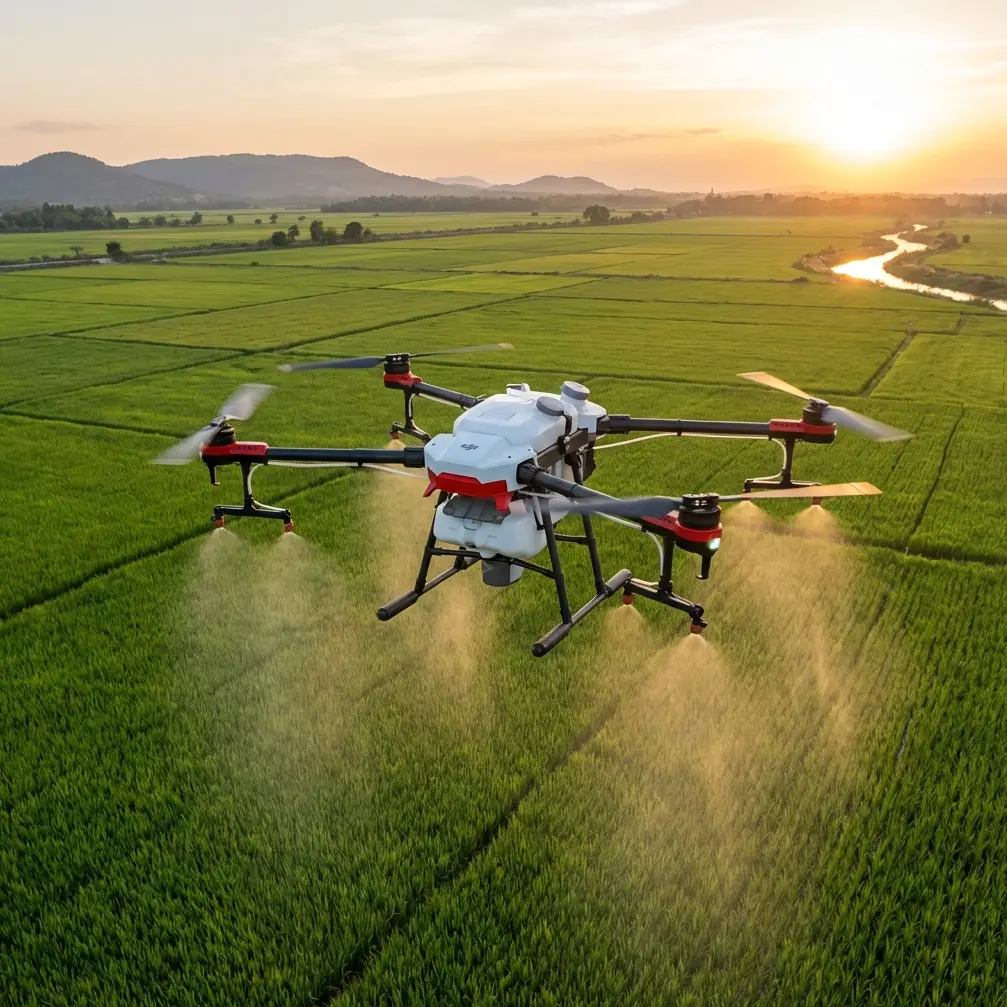
Agras T50 for Urban Coastline Mapping: A Practical Guide to Precision, Boundaries, and Field Discipline
META: A field-focused guide to using the Agras T50 for urban coastline mapping, covering RTK precision, swath planning, IPX6K durability, workflow choices, and the legal boundaries every operator must respect.
Urban coastline mapping looks simple from a distance. Fly the edge. Capture the surface. Build the map.
On the ground, it is messier than that.
You are dealing with sea spray, reflective water, wind shear off buildings, pedestrians, boats, roads, private property, and a public environment where cameras can create legal trouble fast if the operation is careless. That last point matters more than many pilots admit. A recent photography-focused legal article from China made the issue plain: imaging in public spaces is not unlimited freedom, and crossing rights boundaries can lead to forced deletion of images, apologies, compensation for emotional harm, and in more serious cases, administrative detention or even criminal liability. The article framed the problem around legal red lines, ethical no-go zones, and high-risk situations. That is not just a warning for street photographers. It is directly relevant to urban drone work with the Agras T50 when your mission skirts promenades, marinas, seawalls, and residential waterfronts.
So if the real job is urban coastline mapping with an Agras T50, the serious question is not “Can it fly there?” It is “Can you build a workflow that is precise, productive, and defensible?”
That is where the T50 becomes interesting.
Why the Agras T50 deserves a closer look for coastline work
The Agras T50 is usually discussed in spraying terms, which is understandable. But limiting it to that role misses something useful for coastal operations: it is a robust platform built for punishing field conditions. If your coastline project includes salt-laden air, wet launch points, and repeated setup in exposed urban edges, durability is not a side note. It is operational continuity.
The IPX6K-rated protection is a strong example. In a shoreline environment, that matters because urban coastlines are rarely clean, dry, controlled spaces. You can be staging near mist, splash, wet concrete, and airborne salt particles. A drone that tolerates harsh exposure better than lightly protected alternatives reduces downtime and lowers the risk of mission interruptions caused by environmental stress. Competitor platforms in adjacent categories may offer imaging-first configurations, but many of them do not inspire the same confidence when the work site feels like a mix of marine weather and construction dust. The T50’s ruggedness is one reason it stands out.
Then there is positioning. For coastline mapping near infrastructure, centimeter precision is not a luxury phrase. It affects whether repeated passes align correctly, whether shoreline change analysis is believable, and whether the aircraft stays on a disciplined track when operating close to visual obstacles and no-fly margins. A strong RTK fix rate is critical in these environments because the geometry of the site can be hostile to stable positioning: tall buildings, metal structures, cranes, bridges, and reflective surfaces all conspire to make precision harder than a wide-open rural field.
If you are evaluating the T50 against more generic UAV options, this is one of its quiet strengths. When a platform can maintain reliable precision while working around urban coastal clutter, the value shows up in cleaner data, tighter corridor consistency, and fewer corrective reflys.
Start with the hard truth: mapping near people is also a rights-management exercise
Before discussing swath width, route spacing, or multispectral payload logic, it is worth resetting the mission mindset.
Urban coastline mapping often overlaps with public recreation zones. Boardwalks, beaches, ferry piers, bike lanes, waterfront cafés, apartment towers, and fishing areas all turn a “simple mapping flight” into a data-collection activity involving real people and private spaces. The reference article’s warning about legal boundaries is operationally significant here. If improper image capture can trigger demands to delete files, issue apologies, or compensate for non-material harm, then careless framing is not just unprofessional. It can compromise the whole project.
That is why a good T50 coastline workflow begins with exclusion logic:
- Avoid low-angle imaging that peers into windows, balconies, terraces, or enclosed private spaces.
- Keep route design focused on the shoreline asset, seawall, embankment, erosion zone, drainage outfall, or public infrastructure you are actually tasked to document.
- Build geofenced buffers around sensitive zones where incidental imaging risk is high.
- Use mission timing strategically. Early morning can reduce pedestrian density and simplify privacy management, though you still need local compliance and safe operating conditions.
The article’s structure around legal red lines, ethical no-go areas, and high-risk scenarios is useful because those categories mirror real preflight planning. Legal compliance is one layer. Ethical restraint is another. Risk concentration is the third. A pilot who treats these as separate filters usually runs a cleaner mission.
A practical Agras T50 workflow for coastline mapping in urban areas
1. Define the coastline segment before defining the flight
This sounds obvious, but many poor missions begin with an aircraft-first mindset.
Start by identifying the exact mapping objective. Are you documenting shoreline retreat, seawall defects, sediment displacement, drainage discharge points, vegetation edge changes, or construction progress? The answer changes how you use the T50. If the deliverable is a repeatable corridor map, route consistency matters most. If it is anomaly detection, then you may need supplemental imaging angles and more deliberate waypoint density.
For urban coastline work, narrower mission goals usually produce better outcomes than broad visual collection. They also reduce the privacy exposure described in the source material.
2. Lock in RTK stability before launch
If your RTK fix rate is unstable on the ground, it rarely improves in a meaningful way once the aircraft is committed to a complex waterfront corridor.
Take the extra time to validate your correction source and monitor whether nearby structures are degrading signal integrity. Centimeter precision is the difference between trustworthy repeat surveys and vague approximations. Along a city shoreline, even small positional drift can ruin comparative analysis if you are trying to measure movement at retaining walls, revetments, or intertidal boundaries.
This is one area where the T50 can outperform less field-hardened competitors in practical use. Precision is not only a specification. It is a workflow advantage when the site itself is noisy, reflective, and crowded.
3. Treat swath width as a control variable, not a bragging point
People love to talk about swath width because it sounds like productivity. In coastline mapping, oversized coverage can create more problems than it solves.
A broader swath can be efficient over open, uncomplicated terrain. Along an urban waterfront, it may pull too much irrelevant area into the mission: roads, parked vehicles, private docks, apartment façades, or pedestrians. Better to optimize overlap and route spacing around the actual shoreline corridor than to maximize width for its own sake.
This is also where the usual agricultural vocabulary can be misleading. Terms like spray drift and nozzle calibration belong to application work, but they still offer a useful analogy. In spraying, drift means material ends up where it should not. In mapping, drift shows up as visual overreach and unnecessary data capture. The discipline is similar: control the mission envelope tightly.
4. Build for the marine environment, not just the map
Salt air punishes equipment in slow, expensive ways.
The T50’s IPX6K protection gives it a meaningful edge in wet, exposed staging conditions. That does not mean you can ignore maintenance. It means the aircraft starts from a stronger position than platforms that are less suited to harsh field conditions. After every shoreline mission, inspect for residue, clean exposed surfaces, and pay special attention to connectors and moving assemblies. Coastal operations are cumulative. The aircraft that seems fine after one day can begin showing reliability issues after repeated salt exposure if post-mission care is lazy.
This is where rugged design stops being brochure material and becomes uptime insurance.
5. Use multispectral only when the shoreline question justifies it
Not every coastline project needs multispectral data. But when the assignment involves vegetation stress near dunes, wetland edge transitions, invasive growth patterns, or sediment-vegetation interactions, multispectral can turn a pretty map into a decision tool.
The mistake is adding sensor complexity without a clear analytical purpose. Along an urban coastline, standard visual data may already be enough if the goal is structural condition mapping or alignment monitoring. If the project concerns ecological transition zones, then multispectral becomes more than a technical flourish. It helps distinguish surface conditions that a standard visual pass may flatten.
The T50 conversation often leans heavily toward payload capability in agricultural contexts, but the wider lesson is flexibility. The stronger your mission definition, the easier it is to decide whether extra sensing actually improves the deliverable.
The privacy and ethics layer is part of mission quality
This deserves its own section because many operators still treat it as paperwork.
The source article warned that improper shooting can escalate from inconvenience to real legal exposure. For drone teams in urban coastline environments, that means image governance should be part of standard operating procedure. If a route captures identifiable people unnecessarily, or frames private spaces with no mapping justification, you are not just risking complaints. You are weakening your professional position.
Here is the operational significance: the cleanest dataset is often the most defensible dataset. Less irrelevant imagery means less review time, less redaction pressure, less client risk, and fewer disputes with the public.
For teams building repeatable urban coastal surveys, I recommend a simple rule: every segment of captured imagery should be easy to justify in relation to the mapping objective. If you cannot explain why it was necessary, it probably should not have been collected.
If you need a second opinion on route design for a sensitive waterfront project, you can share the mission scenario here: message Marcus Rodriguez for a preflight workflow review.
Common mistakes operators make with the T50 on waterfront jobs
Flying as if this were an open agricultural block
It is not. Urban coastlines are narrow, cluttered, and socially exposed. Your mission geometry has to reflect that.
Chasing maximum coverage
More area captured is not automatically more value. It often just means more noise and more legal sensitivity.
Ignoring reflective-surface effects
Water and glass can distort situational judgment. This is another reason a dependable RTK workflow matters.
Underestimating the marine environment
An IPX6K-rated aircraft starts strong, but post-flight maintenance still decides long-term reliability.
Treating public-space imaging as automatically permissible
The reference article’s warning should reset that assumption. Public location does not erase other people’s rights.
Where the Agras T50 genuinely excels
The T50 is strongest when the job demands a rugged aircraft, disciplined repeatability, and strong precision in less-than-friendly environments. That combination is more valuable on an urban coastline than on a marketing page.
Compared with lighter or more fragile platforms, the T50 is simply better suited to repeat deployments where wet surfaces, salt air, and variable conditions are normal. Compared with systems that prioritize generic aerial capture over field resilience, it holds an advantage in operational durability. And for projects where route consistency and centimeter precision matter, RTK-backed positioning gives it the kind of stability that makes longitudinal shoreline analysis credible.
That does not mean it replaces every specialist mapping drone in every scenario. It means that in real waterfront operations, where the environment is harsh and the mission has to be repeatable, the T50 often makes more sense than aircraft chosen only for optics-first appeal.
Final field advice
If you are taking the Agras T50 into an urban coastline project, think like a survey professional and a rights-conscious operator at the same time.
Use RTK to protect repeatability. Use swath planning to prevent unnecessary capture. Use ruggedness as a field advantage, not an excuse for sloppy maintenance. Use multispectral only when the shoreline question warrants it. And above all, respect the fact that imaging in public-facing urban spaces has boundaries. The source material’s warning about deletion, apology, compensation, and even more severe penalties is not abstract. It is the practical backdrop to any drone mission that records people or property near the water’s edge.
The best coastline maps come from disciplined flights. The best drone operations come from disciplined judgment.
Ready for your own Agras T50? Contact our team for expert consultation.