
Agras T50 for Urban Coastline Mapping: A Technical Review
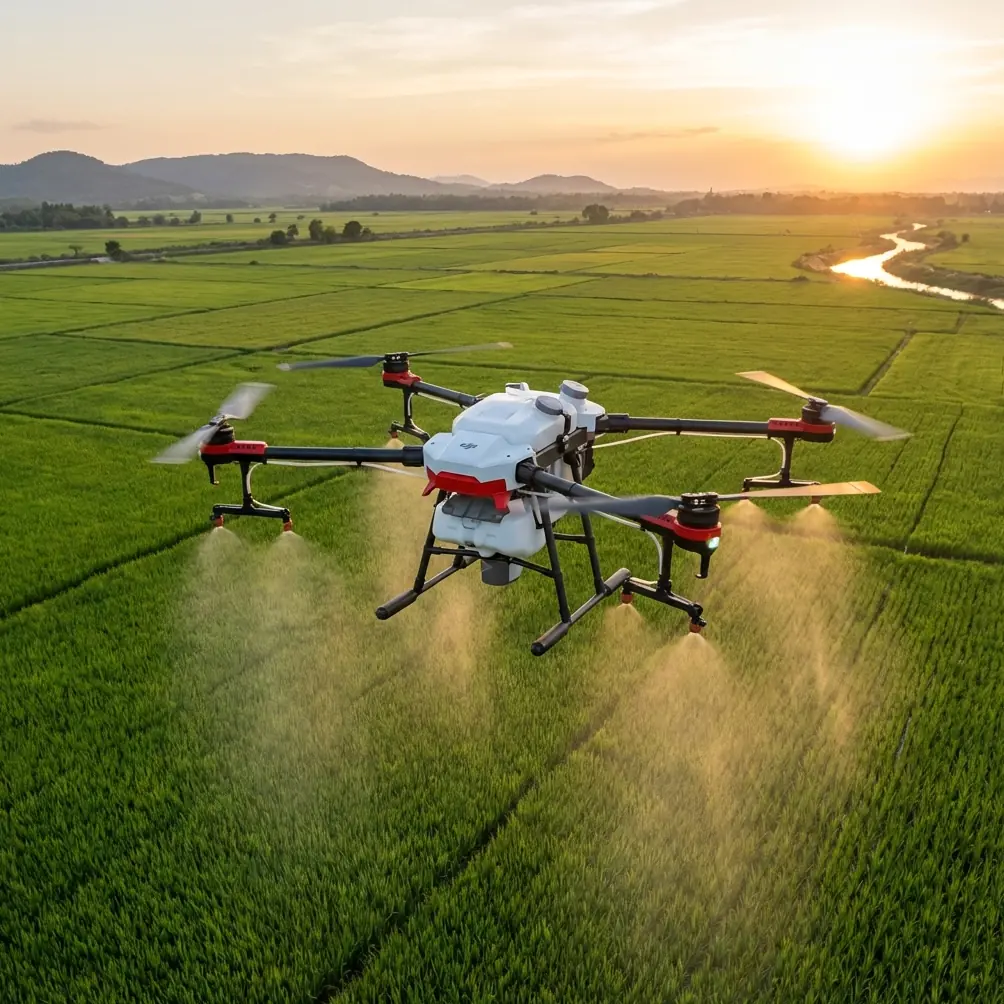
Agras T50 for Urban Coastline Mapping: A Technical Review from the Field
META: Expert technical review of the DJI Agras T50 for urban coastline mapping, covering RTK fix rate, centimeter precision, spray drift control, nozzle calibration, IPX6K cleaning, and operational safety.
Most people look at the DJI Agras T50 and see an agricultural spray platform. That is fair, but incomplete. In practice, the aircraft’s value in urban coastline work comes from something less obvious: it is built for harsh, messy, repetitive operations where salt, wind, moisture, and tight corridors punish weak systems fast.
For teams mapping shore-adjacent infrastructure, seawalls, drainage channels, embankments, and coastal green belts in urban environments, the T50 sits in an unusual category. It is not a classic survey drone. It is a heavy-duty field machine with the resilience, positioning discipline, and payload ecosystem to support specialized coastal workflows when the mission is designed correctly.
That distinction matters. Urban coastlines are difficult for reasons that do not show up on spec sheets alone. Wind vectors bounce off buildings. Salt mist coats sensors and connectors. Concrete, glass, cranes, and utility poles complicate line-of-sight and signal behavior. Ground control placement is often awkward. And if the aircraft is expected to alternate between treatment work and data collection support tasks, then cleaning discipline and calibration quality become as important as flight planning.
Why the Agras T50 is relevant to coastline operations
The T50 is not a coastline mapping aircraft in the traditional fixed-camera survey sense. It earns its place because urban shoreline work often blends several operational demands at once: precision navigation, repeat passes over narrow strips, stability near obstacles, and reliability in wet or corrosive conditions. This is where details like RTK performance, swath management, and enclosure protection become operational issues rather than brochure items.
Agras platforms are built around controlled, repeatable movement over linear and irregular ground patterns. That translates well to coastal edges, especially in projects involving vegetation management, salt-tolerant planting zones, drainage monitoring, or targeted application work alongside mapping tasks. If your mission includes documenting the site, maintaining it, and revisiting it with high positional consistency, the T50 starts to make more sense than many assume.
Centimeter precision is one of the practical reasons. In urban coastal work, a few meters of drift is not just a data-quality problem. It can mean overlap into pedestrian space, vehicle lanes, protected planting beds, or marine-edge exclusion zones. When the RTK fix rate is stable, the aircraft can repeat corridor passes with far better confidence than a platform relying on standard GNSS alone. That repeatability helps teams compare site conditions over time, especially where shoreline erosion, vegetation growth, or runoff pathways need to be tracked on a recurring schedule.
The real first step: pre-flight cleaning, not battery insertion
The most overlooked safety habit in coastal drone work is also the least glamorous. Before power-up, clean the aircraft.
Not casually. Intentionally.
The T50’s rugged design is a major advantage in wet and dirty environments, and its IPX6K-rated protection is a serious field benefit. But that rating should not tempt crews into complacency. Salt residue is not ordinary dust. It accumulates in seams, around mounting points, on nozzle bodies, near connectors, and across landing gear surfaces. Left in place, it can compromise moving parts, contaminate payload systems, and interfere with inspection of cracks, loose fittings, or worn seals.
For urban coastlines, I recommend a specific pre-flight cleaning check before every mission day and a faster version between sorties if sea spray is visible:
- Inspect and wipe the landing gear and lower body, where salt and sand tend to collect first.
- Clean around the nozzle assemblies even if the mission is not a spray run, because residue there can obstruct later calibration and conceal minor damage.
- Check sensor windows and positioning-related surfaces for haze or spotting.
- Inspect connectors and latch points for moisture or crusting.
- Confirm that any protective covers or seals are seated correctly after cleaning.
This is not housekeeping. It is flight safety. On a coastline mission, a dirty airframe can produce false confidence because the aircraft may still arm, lift, and hover normally. The problem shows up later, usually as degraded reliability, inconsistent spray behavior, or maintenance issues that could have been prevented.
RTK fix rate is not a spec-sheet brag; it decides whether your passes mean anything
When crews discuss precision, they often jump straight to “centimeter accuracy.” The more useful question is simpler: how often does the aircraft actually hold a dependable RTK solution in your real operating environment?
Urban coastlines are hard on satellite geometry and correction continuity. High-rises, port structures, bridges, and reflective surfaces can degrade positioning quality in ways that are easy to underestimate from the ground. A strong RTK fix rate is what turns planned lines into repeatable lines.
That matters in at least three ways.
First, it affects corridor consistency. If you are documenting a seawall, retaining edge, canal margin, or coastal road shoulder, stable positioning reduces the need for excessive overlap caused by uncertainty. Second, it improves change detection. A site revisited next month is only comparable if the aircraft can fly nearly the same path again. Third, it supports safer edge operations. Near water, boundaries matter. So do setbacks from facades, streetlights, parked vehicles, and public walkways.
Teams using the T50 in shoreline-adjacent operations should monitor RTK behavior as a live operational variable, not a setup item to forget after takeoff. If the fix drops repeatedly in a particular segment, that area should be treated as a constrained navigation zone and replanned accordingly. The aircraft may still be flyable there, but your confidence in precision work should change immediately.
Swath width near the coast: wider is not always better
One of the common mistakes in adapting a high-capacity platform to urban coastal use is assuming maximum swath width is automatically efficient. It often is not.
On exposed shoreline edges, crosswinds and turbulent air around buildings can distort coverage patterns. Whether the mission involves treatment, suppression, or data-support passes, the useful swath is the swath you can control, not the one you can claim in perfect conditions.
In coastal green belts and embankment zones, narrower operational swaths often produce better real-world results because they reduce uncertainty at the edges. This becomes especially relevant when there is a hard boundary on one side and water, pavement, or pedestrian access on the other. Urban coastlines rarely forgive sloppy margins.
The T50’s platform stability and route repeatability help here, but they do not eliminate atmospheric reality. Crews should tune pass spacing to actual wind behavior observed on-site, not just to ideal performance assumptions. That is especially true in the first hour after sunrise and late afternoon, when shoreline microclimates can shift quickly.
Spray drift is the coastal problem that punishes poor planning
If the T50 is being used in vegetation management or targeted application work along an urban coastline, spray drift becomes the central operational risk.
Salt air already stresses nearby surfaces, planted areas, and infrastructure. Add uncontrolled droplet movement and the margin for error shrinks further. Drift into water, onto cars, across walkways, or into ornamental planting can create immediate compliance and safety problems.
This is where nozzle calibration stops being a maintenance chore and becomes a mission-critical control. A poorly calibrated system changes droplet size distribution and application consistency, which in turn alters drift behavior. In an open field, that may reduce efficiency. Along a city shoreline, it can create off-target exposure in seconds.
Before any coastal application run, nozzle calibration should be verified with the same seriousness as flight control checks. Not assumed. Verified. If the aircraft has been recently cleaned after salt exposure, calibration matters even more because partial residue or uneven wear can affect output without being obvious during a quick visual inspection.
Operationally, this means:
- calibrate after cleaning and before the mission window,
- confirm even output across nozzles,
- reduce assumptions about standard settings in gust-prone areas,
- and adjust route geometry to keep the aircraft from spraying across unstable wind corridors.
If a team needs a second opinion on coastal setup logic, I usually suggest they share their mission profile early through this quick field coordination channel: https://wa.me/example. That conversation is often more useful before the aircraft is loaded than after a drift event has already exposed a planning weakness.
Can multispectral workflows fit the T50 mission profile?
This is where crews need honesty instead of hype. If your project is pure photogrammetric mapping of coastlines, there are purpose-built platforms better suited to that role. But many urban shoreline projects are not pure mapping jobs. They are mixed operational programs involving vegetation condition assessment, treatment planning, drainage edge review, and repeated site management.
In those cases, multispectral data has real value if it is part of a larger workflow rather than treated as a standalone magic layer. Coastal vegetation health, salinity stress, irrigation inconsistency, and invasive growth patterns can all benefit from multispectral interpretation. The T50 becomes relevant when the same operation requires rugged deployment, repeatable route execution, and direct field action after analysis.
That means the aircraft’s role is best understood as part of an operational chain:
- identify stressed or irregular zones,
- return with precise routing,
- execute targeted intervention,
- and document repeat outcomes with consistent positioning.
The advantage is not that the T50 replaces a dedicated survey stack. The advantage is that it can sit inside a practical coastal operations cycle where mapping and action are tightly linked.
Where the T50 works best along urban coastlines
Not every shoreline site is suitable. The best use cases tend to share three characteristics.
First, they are linear or segmented. Think promenades, seawalls, channels, levees, drainage margins, or landscaped coastal buffers. Second, they benefit from repeat access. The T50 becomes more valuable when the same route must be revisited with dependable precision. Third, they involve environmental mess. Salt spray, wet surfaces, particulate contamination, and infrastructure clutter favor a machine designed for hard field conditions.
It is less compelling when the assignment is a pure high-resolution mapping job over a dense urban waterfront where optical payload flexibility and survey-specific capture geometry are the primary concerns. That is a different mission class.
But if the work combines route precision, rugged deployment, edge management, and post-analysis action, the T50 has a stronger case than many teams initially expect.
The operational bottom line
The Agras T50 should not be marketed as something it is not. It is not a universal answer to coastline mapping. It is a robust, precision-capable field platform that becomes highly useful in urban coastal environments when the mission includes more than image capture alone.
Two details tell the story. The first is its IPX6K protection, which matters because salt, spray, and washdown conditions are routine near the coast, not exceptional. The second is RTK-backed centimeter precision, which matters because repeat passes along seawalls, embankments, and narrow urban shoreline corridors only have value if they can actually be reproduced with confidence.
Add disciplined nozzle calibration, realistic swath width planning, and aggressive attention to spray drift, and the T50 becomes a serious working tool for shoreline-adjacent operations.
The mistake is to think of the aircraft only in terms of payload volume or agricultural heritage. The smarter view is to see it as a durable low-altitude operations platform for difficult edge environments. Urban coastlines qualify.
And the pre-flight ritual says everything about whether the crew understands that reality. Before batteries. Before route upload. Before takeoff. Clean the aircraft, inspect the critical interfaces, verify calibration, confirm the RTK behavior, then fly the mission the site actually allows, not the one the spreadsheet assumed.
Ready for your own Agras T50? Contact our team for expert consultation.