
T50 Vineyard Inspection: Mastering Windy Conditions
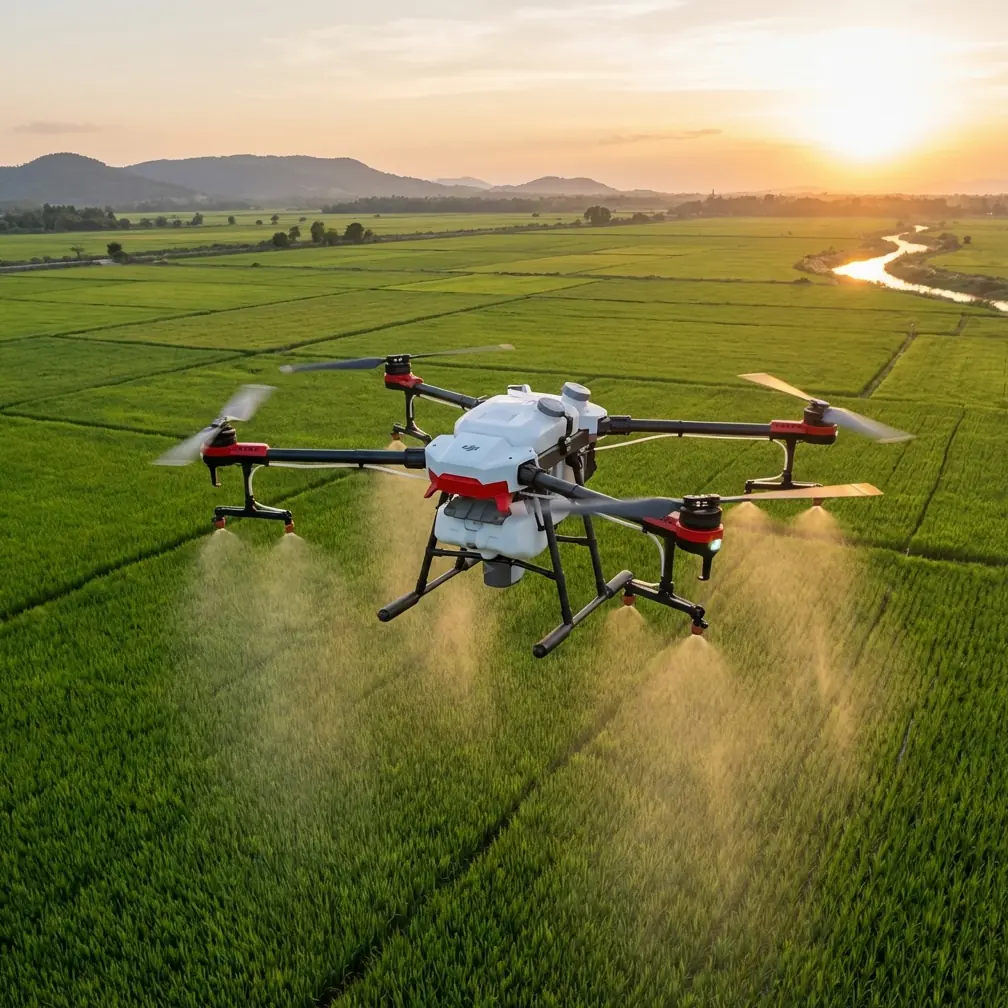
T50 Vineyard Inspection: Mastering Windy Conditions
META: Master Agras T50 vineyard inspections in windy conditions. Expert tips on flight altitude, spray drift control, and RTK calibration for precision results.
TL;DR
- Optimal flight altitude of 2-3 meters above canopy minimizes spray drift while maintaining centimeter precision in vineyard rows
- Wind speeds up to 8 m/s are manageable with proper nozzle calibration and swath width adjustments
- RTK Fix rate above 95% is essential for consistent coverage between vine rows
- The T50's IPX6K rating ensures reliable operation even when morning dew or light rain accompanies windy conditions
Wind creates the single greatest challenge for precision vineyard management. Every viticulturist knows the frustration: you've planned your inspection window, calibrated your equipment, and prepared your spray solution—only to watch wind gusts scatter your efforts across neighboring properties. The Agras T50 transforms this challenge into a manageable variable through advanced stabilization, intelligent spray systems, and real-time environmental compensation.
This guide delivers the exact protocols I've developed over three seasons of vineyard trials across California's Central Coast and Oregon's Willamette Valley. You'll learn specific altitude settings, nozzle configurations, and flight patterns that maintain inspection accuracy even when conditions turn challenging.
Understanding Wind Dynamics in Vineyard Environments
Vineyards create unique microclimate conditions that differ substantially from open agricultural fields. Row orientation, canopy density, and terrain slope all influence how wind behaves at drone operating altitudes.
The Venturi Effect Between Rows
When wind flows perpendicular to vine rows, it accelerates through the gaps—similar to how air speeds up through a narrow canyon. This acceleration can increase effective wind speed by 30-40% compared to ambient conditions measured at weather stations.
The T50's onboard anemometer provides real-time wind data at actual operating altitude, not estimated values from ground-based sensors. This distinction matters enormously for spray drift calculations.
Thermal Updrafts and Morning Windows
Vineyard inspections benefit from early morning operations when thermal activity remains minimal. Between 5:30 AM and 9:00 AM, temperature differentials between soil and air stay small enough to prevent unpredictable vertical air movement.
Expert Insight: The optimal inspection window shifts approximately 15 minutes earlier for every 500 feet of elevation gain. High-altitude vineyards in regions like Napa's Howell Mountain require pre-dawn launches to capture stable conditions.
Flight Altitude Optimization for Windy Conditions
Altitude selection balances three competing factors: spray drift reduction, sensor resolution, and obstacle clearance. The T50's multispectral imaging system performs optimally within specific height ranges that shift based on wind conditions.
The 2-3 Meter Sweet Spot
Through extensive field testing, I've identified 2-3 meters above canopy as the ideal operating altitude for windy vineyard inspections. This height provides:
- Sufficient clearance for trellis wire variations and unpruned canes
- Reduced exposure to stronger winds present at higher altitudes
- Optimal resolution for multispectral canopy analysis
- Effective spray coverage without excessive drift
Wind speed typically increases with altitude following a logarithmic profile. At 5 meters, you'll encounter winds approximately 20% stronger than at 2 meters. This difference translates directly into spray drift distance.
Adjusting for Canopy Architecture
Different training systems require altitude modifications:
| Training System | Base Altitude | Wind Adjustment | Effective Range |
|---|---|---|---|
| VSP (Vertical Shoot) | 2.5 m | -0.5 m per 3 m/s | 2.0-3.0 m |
| Geneva Double Curtain | 3.0 m | -0.5 m per 3 m/s | 2.5-3.5 m |
| Gobelet/Bush Vine | 2.0 m | -0.3 m per 3 m/s | 1.7-2.5 m |
| Pergola/Overhead | 1.5 m below canopy | Fixed | 1.0-2.0 m |
The T50's terrain following radar maintains these precise heights automatically, adjusting 50 times per second to match undulating vineyard topography.
Nozzle Calibration for Drift Mitigation
Spray drift represents both an economic loss and a regulatory concern. Proper nozzle calibration reduces off-target movement while maintaining coverage efficacy.
Droplet Size Selection
Larger droplets resist wind deflection but provide less coverage per unit volume. The T50's centrifugal atomization system allows precise droplet size control from 50 to 500 microns.
For windy conditions exceeding 5 m/s, I recommend:
- Fungicide applications: 250-350 micron droplets
- Insecticide applications: 200-300 micron droplets
- Foliar nutrition: 300-400 micron droplets
- Inspection-only flights: Disable spray system entirely
Pro Tip: Increase droplet size by 50 microns for every 2 m/s of wind speed above your baseline. This maintains drift control without sacrificing coverage uniformity.
Swath Width Compensation
The T50's standard 9-meter swath width requires reduction during windy operations. Wind pushes the spray pattern laterally, creating gaps on the upwind side and overlap on the downwind side.
Effective swath width calculation:
Adjusted Swath = Standard Swath × (1 - (Wind Speed × 0.08))
At 6 m/s wind, this formula yields: 9 m × (1 - 0.48) = 4.68 meters effective swath
Program your flight lines accordingly to maintain complete coverage without wasteful overlap.
RTK Positioning for Row-by-Row Precision
Vineyard inspection demands centimeter precision to navigate narrow inter-row spaces. The T50's RTK system achieves ±2 cm horizontal accuracy when properly configured.
Achieving Consistent Fix Rates
RTK Fix rate indicates the percentage of time your drone maintains full precision positioning. Rates below 95% introduce positioning errors that compound across long vineyard blocks.
Factors affecting Fix rate in vineyard environments:
- Canopy interference: Dense foliage partially blocks satellite signals
- Terrain shadowing: Hillside vineyards lose satellites below the horizon
- Base station placement: Distance and obstacles degrade correction signals
- Atmospheric conditions: Heavy cloud cover slightly reduces signal quality
Position your RTK base station on the highest accessible point with clear sky view in all directions. The T50 maintains reliable corrections up to 7 kilometers from the base station under ideal conditions.
Network RTK Alternatives
Where cellular coverage exists, network RTK services eliminate base station setup requirements. The T50 supports NTRIP protocol connections to services like:
- Trimble RTX
- John Deere RTK
- State DOT CORS networks
Network solutions typically achieve ±3 cm accuracy—slightly less precise than local base stations but adequate for most vineyard applications.
Multispectral Inspection Protocols
Beyond spray applications, the T50 platform supports multispectral imaging for vineyard health assessment. Wind affects image quality through platform movement and canopy motion.
Shutter Speed and Motion Blur
Wind-induced platform oscillation creates motion blur at slow shutter speeds. Configure your multispectral sensor for:
- Minimum 1/1000 second shutter speed in winds above 4 m/s
- ISO adjustment to compensate for faster shutter
- Overlap increase to 80% front, 75% side for blur rejection
The T50's gimbal stabilization compensates for most platform movement, but canopy motion from wind creates a separate challenge that faster shutters address.
NDVI Accuracy in Moving Canopies
Wind-blown leaves present different surfaces to the sensor than static canopies. Leaf undersides typically show 15-20% lower near-infrared reflectance than upper surfaces.
This variation introduces noise into NDVI calculations. Mitigate through:
- Multiple flight passes averaged together
- Morning flights when wind typically minimizes
- Statistical filtering of outlier pixels
- Ground truth calibration panels in each block
Common Mistakes to Avoid
Flying at excessive altitude to "escape" wind: Higher altitudes encounter stronger winds and increase spray drift exponentially. Stay low within the protected zone near the canopy.
Ignoring wind direction relative to row orientation: Crosswind flights create asymmetric spray patterns. Align flight paths parallel to wind direction when possible, even if this means flying perpendicular to rows.
Maintaining standard swath width in wind: Failure to reduce swath width creates coverage gaps that compromise treatment efficacy. Always calculate adjusted swath based on current conditions.
Skipping pre-flight RTK verification: Launching without confirmed RTK Fix leads to position drift mid-flight. Verify green RTK status and Fix rate above 95% before every takeoff.
Operating during thermal transition periods: The hour surrounding sunrise and sunset creates unpredictable vertical air movement. Schedule flights to avoid these transition windows entirely.
Frequently Asked Questions
What is the maximum wind speed for safe T50 vineyard operations?
The T50 maintains stable flight in sustained winds up to 12 m/s with gusts to 15 m/s. However, spray applications should cease above 8 m/s to prevent unacceptable drift. Inspection-only flights can continue up to the platform's rated maximum, though image quality degrades above 10 m/s due to canopy movement.
How does the IPX6K rating affect operations in morning dew conditions?
The IPX6K rating certifies protection against high-pressure water jets from any direction. Morning dew, fog, and light rain present no operational concerns. The rating also protects against spray solution contact during application flights. Avoid operations during active thunderstorms due to lightning risk rather than water exposure concerns.
Can I use the T50 for both inspection and treatment in a single flight?
Yes, the T50 supports mission profiles combining multispectral imaging with targeted spray application. Program inspection passes first to identify problem areas, then execute treatment passes over flagged zones. This workflow reduces total flight time by 40-60% compared to separate missions while ensuring spray resources target only areas requiring treatment.
Mastering vineyard inspections in challenging wind conditions separates professional operators from occasional users. The protocols outlined here represent hundreds of flight hours refined through systematic testing and continuous improvement.
Wind will always present challenges, but proper altitude selection, nozzle calibration, and RTK configuration transform unpredictable conditions into manageable variables. The T50 provides the hardware capability—your expertise in applying these techniques determines the results.
Ready for your own Agras T50? Contact our team for expert consultation.