
Agras T50 in Urban Inspection Work: What the Crop
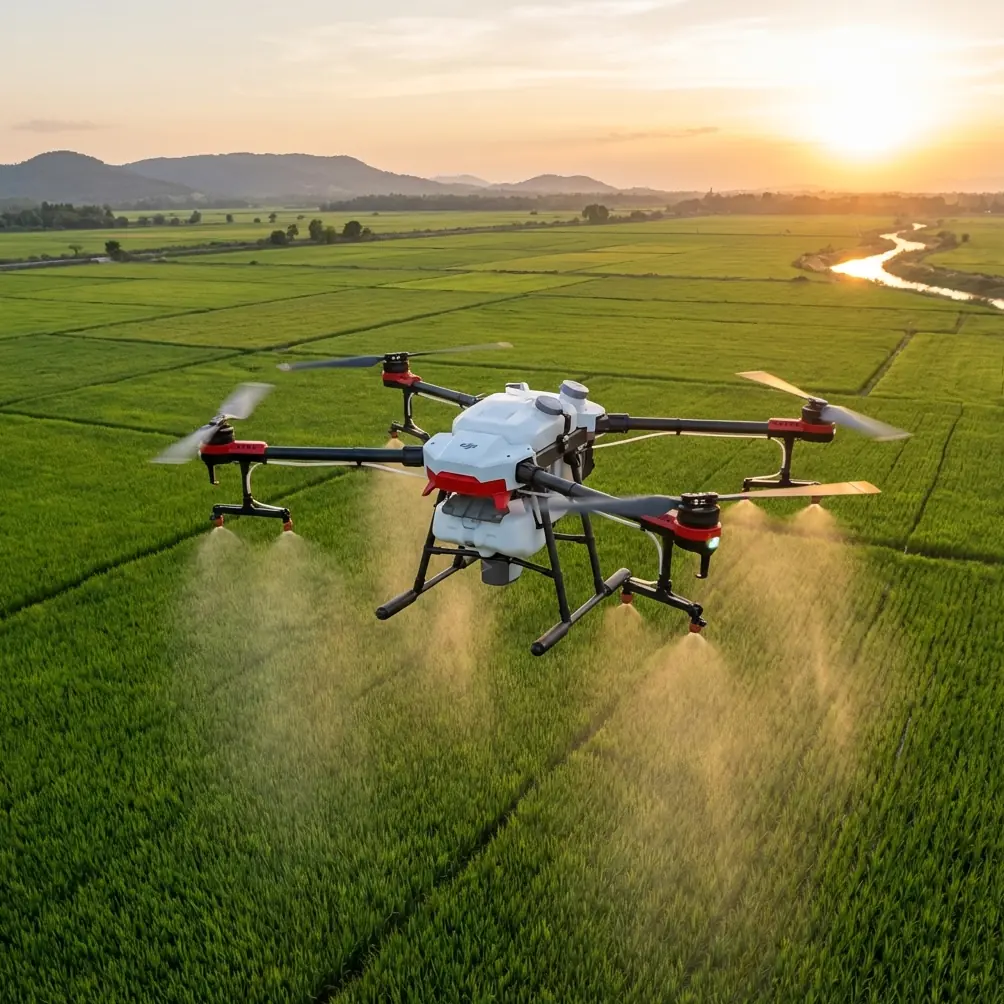
Agras T50 in Urban Inspection Work: What the Crop-Survey Evidence Really Tells Us
META: A technical review of how Agras T50 fits urban inspection workflows, using real low-altitude survey lessons, image-capture constraints, flight method implications, and practical RTK and antenna advice.
The DJI Agras T50 is usually discussed through an agricultural lens: tank size, spray efficiency, spreading throughput, nozzle behavior, drift control. That is useful, but incomplete. For urban inspection readers, the more interesting question is this: what happens when a platform built for demanding field operations is pushed into close-range visual inspection tasks where image interpretability, precise positioning, and obstacle-aware flight discipline matter more than headline payload numbers?
That question becomes sharper when you read the reference material closely. Two details stand out.
First, in the ArcGIS crop-survey workflow, even 3 cm resolution orthomosaic imagery was not sufficient to clearly identify leaf-level crop types. Operators could see planting density, plant form, and distribution patterns, but not the fine visual detail needed for confident classification. Second, the field team adapted by changing the flight method. They flew at roughly 40 meters for safe transit, then descended vertically to 15–20 meters over the plot to capture one or two straight-down sample photos before climbing back up and moving to the next location. The document compares that method to “dragonfly skimming the water,” which is a vivid way of describing a practical truth: in cluttered environments, the inspection workflow matters as much as the aircraft.
That matters directly to anyone evaluating the Agras T50 for urban venue inspection.
The main lesson: wide-area imagery is not the same as usable inspection imagery
Urban inspection buyers often assume that if a drone can produce a sharp orthomosaic or fly a repeatable route, it can also deliver inspection-grade visual evidence. The ArcGIS survey references undermine that assumption. Even at 3 cm ground resolution, the imagery still failed at the point where a human analyst needed to distinguish specific crop types from leaf characteristics.
Translate that into urban work. A roof membrane, façade joint, drainage edge, lighting bracket, vent opening, or surface crack may appear visible in a map product, yet still be ambiguous when someone tries to make an operational decision from it. The issue is not whether the drone “captured the site.” The issue is whether the image captured enough context and enough close-detail evidence to support interpretation without forcing a second visit.
This is where the Agras T50 becomes more interesting than its category label suggests. Its relevance is not that it replaces a dedicated mapping platform or a compact inspection drone in every scenario. It is that a heavy-duty aircraft designed for hard outdoor operating conditions can support an inspection method built around safe transit at one altitude and evidence capture at another.
That field-proven logic from agricultural surveying carries over neatly into urban venue work.
Why the 40-meter to 15–20-meter method has real operational value
The reference workflow is simple: cruise high enough to avoid low-level obstacles, descend vertically over the target, take the needed images, then climb and continue. The reason given in the source is practical and specific. Low horizontal flight can tangle with wires or collide with raised terrain, tall embankments, or buildings.
For urban inspections, that risk profile becomes even more relevant. Venues and developed sites often contain:
- overhead utility lines
- decorative light poles
- rooftop protrusions
- HVAC clusters
- cable runs
- signage structures
- canopies
- irregular parapets
In that environment, horizontal low-altitude repositioning is where a lot of risk accumulates. A disciplined “high transit, vertical descent, short capture window, vertical climb” routine reduces exposure time in the most obstacle-dense zone.
An Agras T50 operator inspecting an urban venue should think less like a photographer chasing smooth cinematic movement and more like a survey professional managing airspace layers around the site. The source material supports that approach. It was not written for urban inspection, yet the method solves a universal drone problem: the safest route between inspection points is often not the shortest line.
What this means for the T50 specifically
The Agras T50 is overbuilt compared with many lightweight visual inspection drones. That can be a disadvantage in tight spaces, but it can also be an asset when the site is large, exposed, and operationally messy. Urban venues are not always downtown courtyards. They can be sports complexes, exhibition grounds, campus properties, logistics yards, transit-adjacent sites, or mixed-use developments with broad exterior surfaces and open perimeter space.
In those environments, several T50-relevant ideas become useful.
1. Stability and repeatability matter more than marketing around image sharpness
The survey references remind us that image usefulness is tied to capture geometry, not just pixel density. A stable aircraft flying a repeatable vertical approach over a known point often produces more usable inspection evidence than a smaller drone wandering through marginal angles and inconsistent heights.
If you are documenting surface conditions or checking maintenance points across many structures, centimeter precision in positioning and a strong RTK fix rate can matter more than squeezing theoretical detail from a single pass. Consistency lets teams revisit the same point, compare images over time, and build inspection records that are actually defensible.
2. Orthomosaic outputs are not enough for close-condition assessment
The ArcGIS material lays this out clearly. The orthomosaic was useful for seeing density, morphology, and distribution patterns, but not enough for identifying the exact crop from leaf detail. In urban inspection terms, a top-down stitched output can show layout and change zones, but not always the fine defect signature that maintenance staff need.
For the T50, that means a proper workflow should combine:
- overview capture for spatial context
- point-specific low-altitude images for interpretation
- position tagging for repeat surveys
- field notes tied to exact locations
That hybrid method is more valuable than treating the inspection as one automated capture block.
3. Obstacle strategy should come before camera strategy
The source document explicitly warns against low-level horizontal transitions because of wires, steep ground edges, and structures. That hierarchy is smart. Too many inspection plans start with “how close can we get?” instead of “what altitude layer keeps transitions safe?”
With the T50, obstacle strategy should define:
- safe transit height
- vertical descent points
- exclusion zones
- abort climb direction
- antenna orientation and pilot position
The camera plan then fits inside that structure.
Antenna positioning advice for maximum range in urban inspection
This is one of the least glamorous topics and one of the most important.
If you want the best control link and the cleanest telemetry performance during urban venue work, do not stand wherever the parking lot happens to be convenient. Stand where the aircraft has the clearest line of sight for the majority of the route, especially at the moment it transitions from broad-area transit into lower-altitude point capture.
A few practical rules help:
- Keep the controller antennas oriented broadside to the aircraft, not pointed like a spear directly at it.
- Avoid standing close to metal fences, vehicles, shipping containers, or concrete walls that can reflect or mask signal.
- If the route crosses buildings, reposition the pilot station so the drone is not repeatedly dropping behind rooflines during low-altitude capture.
- In dense venue environments, choose a pilot location slightly offset from the structure rather than directly beneath the main inspection target. That usually preserves a better link angle during vertical descents.
- When using RTK, place the system components where the sky view is open and multipath interference is minimized.
For teams planning repeated venue inspections with the T50, it can be worth getting a second opinion on layout, controller placement, and route segmentation through this direct planning channel: message a flight workflow specialist.
The key point is simple: “maximum range” in urban inspection is rarely about absolute distance. It is about maintaining the most reliable link through the worst part of the geometry.
The hidden relevance of airworthiness discipline
One reference item may seem unrelated at first glance: the CAAC familiarization meeting for the Honghu Mark1, held on December 26 in Xi’an. But one technical detail from that report deserves attention: the aircraft developer highlighted an airworthiness-grade triple-redundant flight control system, and the project had already completed hundreds of full-tilt flight tests.
No, the Honghu Mark1 is not an Agras T50, and an eVTOL certification program is not the same thing as urban drone inspection. Still, the operational lesson is relevant. Mature UAV work is moving toward disciplined systems thinking: aerodynamic behavior, control redundancy, predictable testing, and formalized communication around risk.
That mindset should influence how professionals use the T50 in urban settings. If your inspection workflow depends on low-altitude descents around structures, then reliability is not just a feature checklist item. It becomes the foundation of your standard operating method. The more complex the environment, the less room there is for casual route improvisation.
This is also why inspection teams should care about details such as:
- RTK lock behavior near structures
- repeatable hover precision
- calibration discipline
- return path design
- weather exposure tolerance, including IPX6K-relevant operating expectations where appropriate
An industrial-grade platform earns its value when the workflow itself is industrial-grade.
Don’t ignore the agricultural DNA of the T50
Even in an urban-inspection review, the T50’s agricultural design language matters. Not because you will necessarily be spraying, but because the aircraft was built around the messy reality of outdoor operations: variable terrain, repetitive task cycles, and mission continuity under field pressure.
That has side benefits for inspection teams:
- mission pacing across large properties
- tolerance for repeated stop-and-capture routines
- stable operation during long exterior workdays
- compatibility with structured route logic
At the same time, some agriculture-specific concepts still matter indirectly. Swath width, for example, is usually discussed in application work, but the broader idea behind it is coverage efficiency. In inspection terms, the equivalent question is how much useful visual area you can document per sortie without sacrificing interpretability.
Likewise, nozzle calibration and spray drift belong to application operations, not visual inspection. But the mindset they reflect—careful setup, environmental awareness, and adjustment based on actual field conditions—is exactly the discipline that improves urban inspection quality. A team that understands drift, pattern control, and setup verification often adapts well to inspection work because it already thinks operationally rather than casually.
Where multispectral expectations often go wrong
Some readers looking at urban inspection workflows also ask whether multispectral capability is the answer to better diagnostics. Sometimes it helps, especially in vegetation stress mapping or broader surface differentiation tasks. But the survey evidence in the reference materials still points to a basic truth: interpretation often fails because the image is taken from the wrong altitude for the decision being made.
Sensor type cannot always compensate for stand-off distance.
If the inspection objective is identifying fine visible features, the first correction is often flight geometry, not spectral sophistication. The ArcGIS team discovered that by necessity. They had a good orthographic product. It still was not enough. So they changed the acquisition method.
That is exactly the sort of practical, evidence-based thinking that should shape T50 inspection programs.
A better way to evaluate the Agras T50 for urban venues
If you are assessing the Agras T50 for venue inspection, do not ask only whether it can fly the site. Ask these instead:
- Can it maintain a reliable RTK fix and repeat the same capture points over time?
- Can your team operate with a safe high-transit and vertical-descent workflow?
- Can the aircraft gather both overview context and low-altitude evidence without forcing risky low-level repositioning?
- Can your controller and antenna setup preserve strong link quality around structures?
- Can you turn image capture into an inspection record rather than a folder full of pretty but ambiguous photos?
The references provided here are not T50 brochures. That is exactly why they are useful. They reveal how real-world UAV work succeeds: not through abstract capability claims, but through small operational decisions that improve evidence quality and reduce risk.
The strongest insight is the simplest one. Even 3 cm orthomosaic resolution may fail when detail recognition is the true task. When that happens, the answer is not wishful interpretation. The answer is to redesign the flight method—like the documented approach that used 40 meters for safe movement and 15–20 meters for sample capture.
For urban inspection, that principle is worth more than any generic feature summary. And for the Agras T50, it may be the difference between using a powerful aircraft as a blunt instrument and using it as a disciplined inspection platform.
Ready for your own Agras T50? Contact our team for expert consultation.