
Agras T50 for Windy Power-Line Work: A Field Case Study
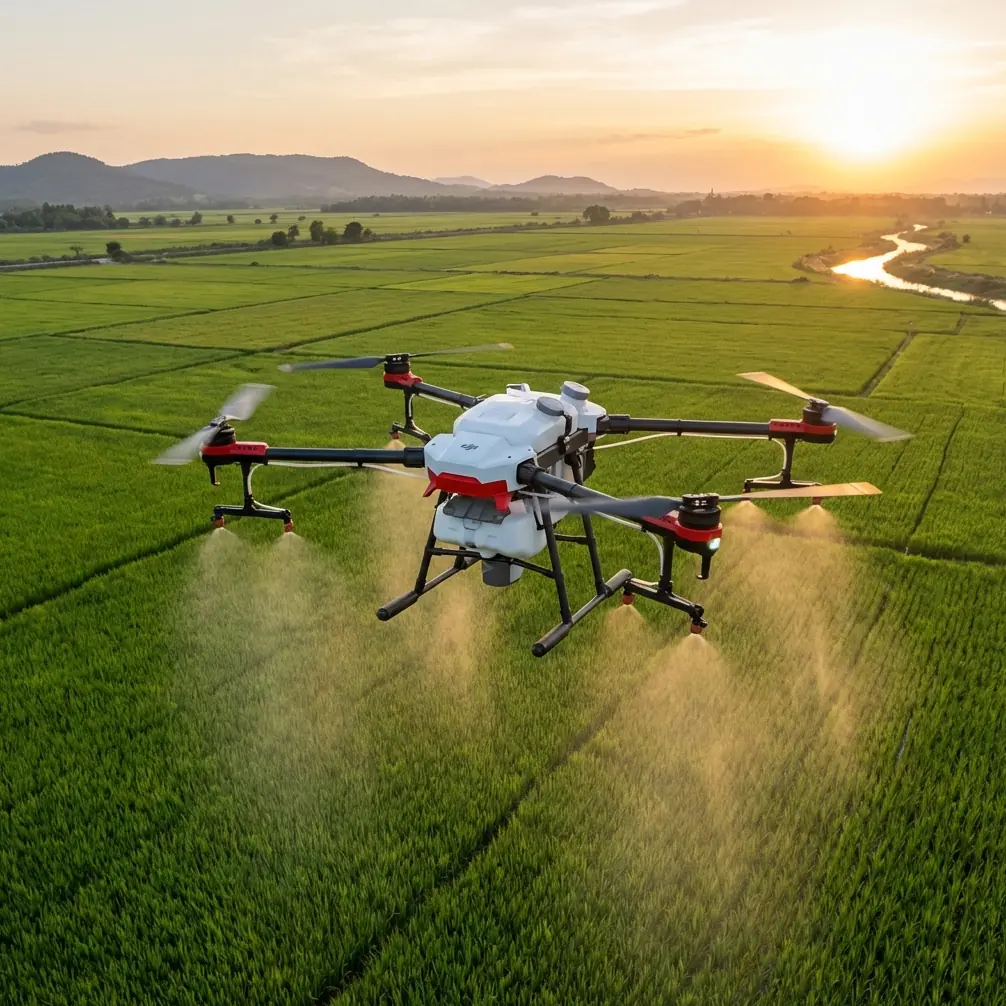
Agras T50 for Windy Power-Line Work: A Field Case Study on Stability, Precision, and Pilot Discipline
META: A practical case study on using the DJI Agras T50 around power lines in windy conditions, with insights on RTK precision, spray drift control, nozzle calibration, and why pilot training still matters.
When people search for advice on using the Agras T50 near power infrastructure, they often get two kinds of information: generic spec recaps or broad drone-safety reminders. Neither helps much when the real question is operational: how does this platform behave when wind, wires, terrain, and precision all matter at the same time?
That is where the Agras T50 earns serious attention.
This article looks at the T50 through a specific lens: civilian inspection support and vegetation-management work around power lines in windy conditions. Not military, not abstract theory, and not a one-size-fits-all drone overview. A real operating context. The kind where centimeter-level placement is useful, spray drift becomes a liability fast, and a pilot’s control habits matter just as much as the aircraft’s headline capability.
The scenario: power lines, wind, and narrow margins
Power-line environments are unforgiving. Airflow around poles, towers, tree corridors, and uneven ground is rarely smooth. Gusts can curl around structures, lift from embankments, and push across a right-of-way in ways that seem minor on the ground but become obvious once a drone is committed to a line.
For an Agras T50 operator, that changes the mission profile immediately.
This is not only about whether the aircraft can remain airborne in wind. The better question is whether it can maintain an accurate path, preserve swath consistency, and support repeatable application or observation results without forcing the pilot into constant correction. That distinction separates a capable agricultural platform from one that genuinely works in utility-adjacent operations.
The T50’s value here is not a single feature. It is the way several systems combine: precise positioning, disciplined path execution, environmental durability, and payload control that can be tuned instead of guessed.
Why the T50 stands out in this use case
Compared with lighter, less specialized drones, the Agras T50 is built for harder outdoor work. That matters near power corridors because the aircraft is not simply hovering for a few photos. It may be tasked with structured flight along vegetation edges, spot treatment near access routes, or repeat passes in open corridors where wind exposure is constant.
Two details matter more than most operators admit.
First, RTK fix quality. In power-line work, “close enough” positioning tends to create compounding errors. A slightly loose line on one pass becomes an overlap issue on the next. That affects swath width, efficiency, and in spray operations, drift risk. A stable RTK fix rate supports the kind of centimeter precision that helps the T50 hold its intended track rather than wandering across it. The operational significance is straightforward: tighter path control means less over-application, fewer misses, and less time spent reworking sections of corridor.
Second, nozzle calibration. Many teams obsess over aircraft stability but neglect liquid delivery accuracy. Around utility infrastructure, that is backwards. If the aircraft flies well but the output is inconsistent, the mission still degrades. Correct nozzle calibration keeps droplet behavior and flow performance aligned with the actual target area. In windy conditions, that directly affects spray drift. Drift is not a side note near power assets. It is one of the main reasons a mission that looks acceptable in logs can fail in practice.
Those two factors—RTK precision and nozzle calibration—are where the T50 can outperform less mature setups, especially when the operator treats the aircraft as a system rather than a flying tank.
Wind reveals whether your workflow is real or just optimistic
A lot of drone platforms look competent in calm demonstrations. Wind exposes the truth.
On paper, a broad swath width sounds efficient. In the field, the wider the effective application zone, the more carefully it has to be managed when crosswinds begin to push droplets or alter the aircraft’s lateral behavior. With the T50, the smart move is not to chase the largest possible swath on every pass. It is to match swath width to corridor geometry, wind direction, and vegetation density.
That is where experienced operators separate themselves from casual users. The best T50 crews do not ask, “What is the maximum coverage?” They ask, “What width still gives us consistent deposition and corridor control under today’s conditions?”
That shift in thinking matters.
It also helps explain why the T50 is often a stronger choice than smaller drones pressed into utility work. Competitor platforms can look nimble, but once wind starts affecting line holding, application consistency, and battery pacing over long rights-of-way, that nimbleness often turns into more pilot workload and more variable output. The T50’s heavier-duty design and professional ag workflow give it an edge when repeatability matters more than appearances.
The training gap most buyers ignore
A drone can be technically advanced and still underperform if the pilot lacks disciplined control habits. This is where one seemingly unrelated reference from training literature becomes surprisingly useful.
A technical training text on aerobatic model aircraft describes a simple but powerful concept: accurate flight attitude takes repetition, and exact geometry—such as entering a 45° descending line—comes only after the pilot has made each control input familiar and deliberate. It also notes that a brief pause before a roll helps preserve the already established flight line.
That sounds far removed from an Agras T50 near power lines, but the lesson applies directly.
In windy utility corridors, overcorrection is one of the biggest hidden problems. Pilots who react constantly to every small motion often create larger path deviations than the wind itself. The operational takeaway from that training principle is this: establish the line, let the aircraft settle, then make the next correction with intention. A short moment of control discipline can preserve alignment far better than continuous stick noise.
The same reference emphasizes that true precision requires long practice. That may be obvious, but it is worth saying because many organizations still treat high-end drone operations as if the hardware automatically replaces pilot skill. It does not. With the T50, especially around wires and gusty corridor edges, refined inputs are not optional. They are part of the safety and quality system.
What an education drone book reveals about professional T50 operations
Another useful clue comes from a very different source: a 220-page educational drone text built around the DJI TT platform. The book’s scope includes flight principles, flight safety, manual control, programming flight, formation flight, and scenario-based applications.
Why does that matter for the Agras T50?
Because it reinforces a broader truth about advanced UAV work: good outcomes come from layered competence, not isolated device familiarity. The educational framework combines flight principles, safety, programmed flight, and real-world scenarios. That is exactly the mindset utility-adjacent T50 teams need.
For example:
- Flight principles matter when wind interacts with topography and obstacles.
- Flight safety matters because power-line environments punish complacency.
- Programming flight matters because repeatability beats improvisation in corridor work.
- Scenario application matters because no two sections of line behave the same in airflow.
The significance is practical. If your T50 crew only knows button sequences, they will struggle when a mission drifts outside ideal conditions. If they understand flight behavior, safety logic, and mission structure together, they can adapt without losing control of quality.
That educational drone book may target learning, but its core message scales up perfectly: competent UAV operations are built, not bought.
A realistic T50 workflow for windy inspection-support missions
Let’s make this concrete.
Imagine a contractor supporting vegetation management along a power-line route after a stormy week. The corridor includes uneven ground, tree regrowth, and exposed spans where crosswinds accelerate. The goal is not only to fly the route, but to do it with enough control that application areas remain predictable and any inspection-support passes can be repeated with confidence.
A disciplined T50 workflow would look like this:
1. Verify RTK stability before trusting path precision
Do not assume centimeter precision because RTK is available. Confirm fix quality and monitor whether the positioning remains stable along the route. This is especially relevant where terrain or structures may interrupt ideal satellite geometry.
Operational significance: a poor or inconsistent fix rate can turn a carefully planned path into a series of small deviations that widen overlap and narrow safety margins near wires or vegetation edges.
2. Reduce swath width when wind begins shaping the outcome
In calm air, a broader swath may be acceptable. In corridor wind, it may be irresponsible. The T50 gives operators the ability to work efficiently, but efficiency is not the same as excess width.
Operational significance: a slightly narrower swath can dramatically improve deposition consistency and reduce drift outside the intended treatment zone.
3. Treat nozzle calibration as part of safety, not just agronomy
Many teams calibrate once and move on. Around power-line work, that is not enough. Flow consistency, droplet behavior, and target match should be checked against actual field conditions.
Operational significance: proper calibration reduces uneven coverage and helps control spray drift, which is one of the main liabilities in windy utility corridors.
4. Use the aircraft’s weather-tolerant build the right way
The T50’s IPX6K-rated design is meaningful in real field work. Dust, moisture, and general exposure are part of utility-adjacent operations. But environmental resistance should support discipline, not replace it.
Operational significance: the aircraft is built for demanding outdoor conditions, which improves uptime and field practicality, but operators still need sane launch, landing, and maintenance routines.
5. Fly with pauses in mind, not constant correction
This is where the aerobatic training insight becomes surprisingly valuable. Establish the line. Let the aircraft hold it. Then adjust deliberately. That brief mental reset can keep the T50 on a cleaner track than a stream of anxious stick movements.
Operational significance: less pilot-induced oscillation means more stable route execution and better consistency pass to pass.
Where multispectral fits, and where it doesn’t
The T50 conversation sometimes gets tangled with payload fantasies. In power-line corridor work, multispectral data can be useful if the mission includes vegetation health assessment or targeted maintenance planning. But it is not automatically the star of the show.
If the real issue is wind control, droplet behavior, and repeat route accuracy, then multispectral capability is secondary to execution fundamentals. Good data layered onto poor flight discipline does not rescue the operation. It just documents inconsistency in greater detail.
The better sequence is this: first lock down route stability, calibration, and environmental judgment. Then add sensing workflows where they genuinely improve decision-making.
Why the T50 tends to beat lighter alternatives here
Competitors may promise convenience, portability, or faster deployment. Those points matter in some jobs. Around windy power lines, they are rarely the deciding factor.
The more relevant questions are:
- Can the platform maintain a clean line under gusty conditions?
- Can it support repeatable, centimeter-aware routing through RTK?
- Can it manage application quality when spray drift is a real concern?
- Can it withstand demanding outdoor use without becoming a maintenance headache?
That is where the Agras T50 often pulls ahead. Not because it is flashy, but because it is built for serious field execution. In this kind of work, that is what operators remember after a long day: not the brochure language, but whether the aircraft held the route, finished the corridor, and produced results they could trust.
The human factor still decides the mission
Even with a strong platform, windy power-line work is never a “set it and forget it” exercise. The T50 gives crews a professional-grade base. It does not exempt them from judgment.
That means:
- respecting wind instead of trying to out-muscle it,
- calibrating nozzles for the actual mission,
- watching RTK fix behavior rather than assuming it,
- and training pilots to avoid control noise.
If your team is evaluating setup choices or route strategy for utility-adjacent T50 work, this is the kind of problem best discussed in real operational terms, not abstract marketing language. For field-specific questions, you can message a T50 operations specialist here.
The Agras T50 is not defined by one standout spec. Its strength comes from how well it integrates precision, durability, and work-rate into a platform that can still be flown with discipline in messy real-world conditions. Near power lines, in wind, that combination matters more than almost anything else.
Ready for your own Agras T50? Contact our team for expert consultation.