
Inspecting High-Altitude Highways With the Agras T50
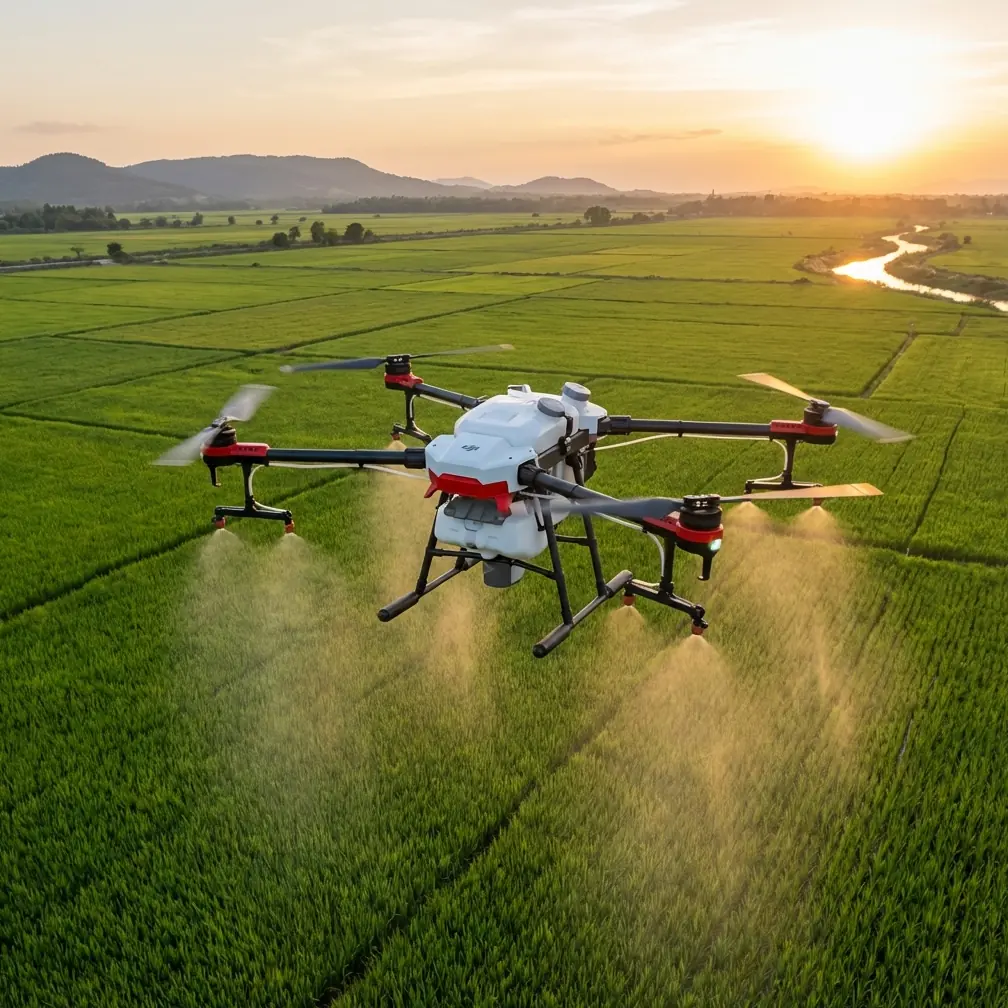
Inspecting High-Altitude Highways With the Agras T50: What Actually Works in Thin Air and Crosswinds
META: A field-informed look at using the Agras T50 for high-altitude highway inspection, with practical insight on RTK fix rate, spray drift, nozzle calibration, swath control, IPX6K durability, and accessory-based workflow upgrades.
High-altitude highway inspection is not a forgiving job. Air density changes rotor behavior. Wind channels through cut slopes and bridge approaches. GNSS performance can vary with terrain masking, and every pass has to be deliberate because the margin for error narrows fast when a drone is flying near retaining walls, rockfall fencing, power corridors, and moving traffic.
That is exactly why the Agras T50 deserves a more specific discussion than the usual “ag drone used for another task” headline. On paper, it is a heavy-duty agricultural platform. In practice, it can be adapted into a highly capable corridor inspection tool for mountainous highways—if the operator understands where the platform helps, where it does not, and which accessories turn a broad-acre machine into a credible infrastructure asset.
From an academic and operational standpoint, the core question is simple: can a system built around payload efficiency and repetitive route work deliver reliable inspection value on elevated road networks? The answer is yes, but only when the workflow is engineered around precision, environmental control, and data consistency rather than around raw flight endurance alone.
The Problem: Highway Inspection at Altitude Punishes Weak Workflows
High-altitude roads create a peculiar inspection environment. The road itself may appear linear and predictable, yet the airspace above it is often turbulent and cluttered. One section may run across an exposed ridge, while the next drops into a narrow valley with partial satellite blockage. Bridge decks, slopes, drainage structures, avalanche galleries, barrier systems, and pavement edges all demand different viewing angles. A single “fly once down the centerline” plan rarely captures what maintenance teams actually need.
This is where many operations go wrong. They treat flight stability as the only metric that matters, when the real challenge is repeatable data acquisition under changing atmospheric and terrain conditions. In highway work, repeatability matters because inspectors need to compare culvert outlets, guardrail deformation, slope creep, crack propagation, and runoff damage over time. Without a dependable route geometry and a strong RTK fix rate, the drone may still fly safely, but the inspection data becomes harder to align and trust.
The Agras T50 brings an interesting advantage here. It belongs to a class of aircraft designed for disciplined, path-based missions. That matters. Its operating logic is built around consistent line spacing, predictable coverage, and low-altitude precision work. Those characteristics transfer surprisingly well to long transportation corridors, particularly when the mission objective is not cinematic imagery but structured, repeatable condition assessment.
Still, there is a catch. High-altitude inspection is not spraying. The aircraft’s agricultural DNA gives it robustness and route discipline, but it also requires careful adaptation. If an operator simply mounts a visual payload and follows a broad swath strategy, the result can be excessive overlap in some areas, inadequate detail in others, and inefficient battery use on terrain that already reduces performance margins.
Why RTK Fix Rate Becomes More Than a Spec Sheet Detail
In mountain highway inspection, centimeter precision is not marketing fluff. It directly affects how useful the data is after the flight.
Consider a slope above a two-lane alpine road where maintenance teams are tracking minor rock movement near a retaining structure. If the drone’s route shifts between flights because the RTK fix rate drops or positional confidence fluctuates, the imagery may still look acceptable to the eye, but temporal comparison suffers. Small geometry changes in image capture can disguise or exaggerate real ground movement.
For the T50, this makes RTK behavior operationally significant. A stable fix rate supports repeatable flight paths along the shoulder, median, bridge edge, or embankment toe. That consistency helps maintenance engineers compare conditions over weeks or months rather than treating each mission as an isolated visual survey. On a highway network where inspections often need to be repeated after storms, freeze-thaw cycles, or minor seismic activity, that is a serious advantage.
It also improves safety. A drone holding a tighter, more predictable path near signage, poles, cable barriers, and roadside vegetation gives the pilot more confidence and reduces unnecessary corrections. In thin air, where control inputs can feel less forgiving, fewer corrections usually means cleaner data and lower pilot workload.
Swath Width Still Matters—Even When You Are Not Spraying
The term “swath width” comes from coverage operations, but it remains relevant in a highway context. Here, it should be understood as the practical lateral strip of useful inspection coverage per pass.
A high-altitude highway operator using the T50 has to define that strip with care. Too wide, and edge details become weak: drainage channels disappear into shadow, concrete joints lose clarity, and roadside defects become ambiguous. Too narrow, and the mission count expands unnecessarily, driving up battery cycles and crew time.
The T50’s route-oriented design helps structure that compromise. Its ability to fly repeated lines with disciplined spacing is valuable on long corridors, especially for shoulders, medians, and cut slopes that require systematic visual records. But the ideal pass width changes by asset type. A bridge parapet inspection is not a slope stability survey; a snow-shed roof check is not a culvert headwall review.
This is one reason I encourage operators to think in segmented corridors rather than in one continuous highway mission. Break the route into operational blocks based on asset geometry and wind exposure. Then assign each block a target stand-off distance and effective swath width. The aircraft becomes more than a flying camera carrier; it becomes part of a repeatable inspection methodology.
The Unexpected Value of Nozzle Calibration Knowledge
At first glance, nozzle calibration sounds irrelevant to infrastructure inspection. It is not. The habits that come from good spray calibration translate directly into disciplined corridor operations.
Experienced T50 crews already understand that small setup errors can distort field performance across a large area. That same mindset is useful when preparing an inspection mission. If a team is meticulous about nozzle calibration in agricultural work, they are often similarly attentive to route spacing, altitude consistency, payload balance, and environmental correction during imaging work.
There is also a literal cross-over case. Some highway agencies and contractors use targeted liquid applications for roadside vegetation management in steep or difficult-to-access segments. In those operations, the T50’s spray heritage becomes directly relevant. Spray drift is not just an agronomic issue; alongside highways, drift can affect adjacent vegetation buffers, drainage systems, exposed traffic surfaces, and nearby work crews.
That means calibration discipline matters twice over. First, it establishes an operational culture of measurable accuracy. Second, in mixed-use missions where a corridor is inspected and then treated for vegetation hotspots, proper nozzle calibration and drift control become essential risk-management tools. In high-altitude wind corridors, drift can increase quickly with exposure, and the operator who ignores that will create more problems than the drone solves.
IPX6K Durability Is More Useful on Highways Than Many Pilots Realize
One detail that deserves more respect is IPX6K protection. In infrastructure work, especially along mountain roads, the aircraft is constantly exposed to conditions that are not dramatic enough to halt a mission but are persistent enough to degrade equipment over time.
Think about fine road spray kicked up by service vehicles, mist near drainage discharge points, wet particulate near tunnel approaches, or slushy residue during shoulder-season operations. An airframe with IPX6K-level resistance is not invincible, but it is better suited to repeated use in exactly these messy environments.
Operationally, that durability reduces hesitation when conditions are marginal but manageable. Inspection windows in mountain regions are often short. If crews have to stand down every time the air is damp or roadside contamination is likely, the maintenance backlog grows. A more protected platform helps agencies and contractors exploit short weather gaps more confidently.
The significance is practical, not theoretical: more usable days, more consistent deployment, fewer interruptions in corridor monitoring.
A Third-Party Accessory Can Change the Mission Profile
The most effective T50 highway inspection setups I have seen do not rely on the base aircraft alone. One third-party accessory in particular makes a genuine difference: a gimbal-mounted multispectral imaging kit adapted for corridor analysis.
This is not a standard pairing people expect from an Agras platform, but it can be surprisingly useful. Multispectral data is often associated with crops, yet highway infrastructure also benefits from spectral differentiation. Moisture intrusion along embankments, stressed vegetation indicating drainage failure, and early signs of slope instability can appear more clearly when spectral layers supplement conventional imagery.
That does not replace visual inspection. It sharpens it.
On high-altitude roads, where access to suspect slopes may be limited and the terrain can hide early deterioration, a multispectral accessory can help crews prioritize where to send geotechnical teams or maintenance vehicles. It turns the mission from passive observation into decision support. That is a meaningful step up.
Of course, integration must be done carefully. Weight, balance, power draw, and mounting security all matter. A poorly integrated accessory can compromise flight performance and erase the gains it promised. But a well-chosen third-party system extends the T50 beyond simple line-of-sight documentation and into richer asset intelligence.
If you are evaluating setups for your own corridor workflow, a technical discussion with an experienced integration team can save months of trial and error; one practical place to start that conversation is through a direct project chat.
A Better Way to Use the T50 for Highway Work
The strongest T50 deployments in this niche follow a problem-solution model, even if the crews do not describe it that way.
The problem is environmental variability and data inconsistency. The solution is not merely “fly a stronger drone.” It is to use the T50 as a structured platform inside a disciplined inspection system.
That system usually includes:
- RTK-enabled repeat flights over fixed corridor segments
- Narrowly defined pass widths tailored to the asset being inspected
- Environmental thresholds that account for altitude-driven wind variability
- Payload integration that serves a specific maintenance question
- Calibration habits borrowed from spray operations and applied to imaging precision
- Post-flight comparison workflows designed for recurring inspection cycles
When those elements are present, the T50 becomes unexpectedly effective for mountainous highway inspection. Not because it was originally marketed for this role, but because its design principles—repeatability, payload utility, route discipline, and ruggedness—map well onto corridor maintenance challenges.
What Operators Should Watch Closely
There are, however, clear limitations. Rotor wash can affect nearby loose debris and lightweight vegetation, which may interfere with image quality around embankment edges. Terrain-induced wind shear can alter capture consistency even when the flight controller appears stable. And because the aircraft is substantial, mission planning near active traffic requires conservative stand-off distances and a stricter safety perimeter than many smaller inspection drones would need.
Operators should also resist the temptation to over-generalize from successful agricultural use. Highway assets are heterogeneous. A retaining wall, a drainage ditch, a bridge bearing zone, and a rockfall net do not ask for the same capture geometry. The T50 can support each task, but not with a one-template workflow.
That is where professional maturity shows. The best crews do not ask, “Can the T50 inspect highways?” They ask, “Which highway inspection tasks fit the T50’s strengths, and what operational controls make those tasks repeatable?”
That is the right question.
The Broader Significance
There is a larger industry point here. UAV categories are becoming less rigid in real-world operations. Platforms designed for one dominant vertical are increasingly crossing into adjacent use cases because their core engineering solves broader field problems. The T50 is a good example. Its agricultural origins do not limit it as much as many assume. In high-altitude highway work, those origins actually contribute useful traits: route discipline, robust construction, and operational familiarity with environmental variables like drift, coverage width, and calibration accuracy.
For infrastructure teams working in mountainous regions, that opens a practical path forward. Instead of building every aerial workflow around lightweight visual drones alone, they can consider whether a more robust platform—with the right payload adaptation and RTK-centered process—offers better repeatability for specific corridor tasks.
That does not make the T50 the answer to every inspection problem. It does make it worth serious consideration in one very specific setting: long, elevated, weather-exposed highways where consistency matters as much as image capture itself.
And that specificity is what matters most. The Agras T50 is not interesting here because it is versatile in the abstract. It is interesting because, in high-altitude highway inspection, a few concrete characteristics—RTK-supported centimeter precision, route repeatability, IPX6K resilience, and the option to enhance capability with a multispectral accessory—combine into a workflow that is more practical than many teams expect.
Ready for your own Agras T50? Contact our team for expert consultation.