
How to Inspect Dusty Highways With the Agras T50 Without Los
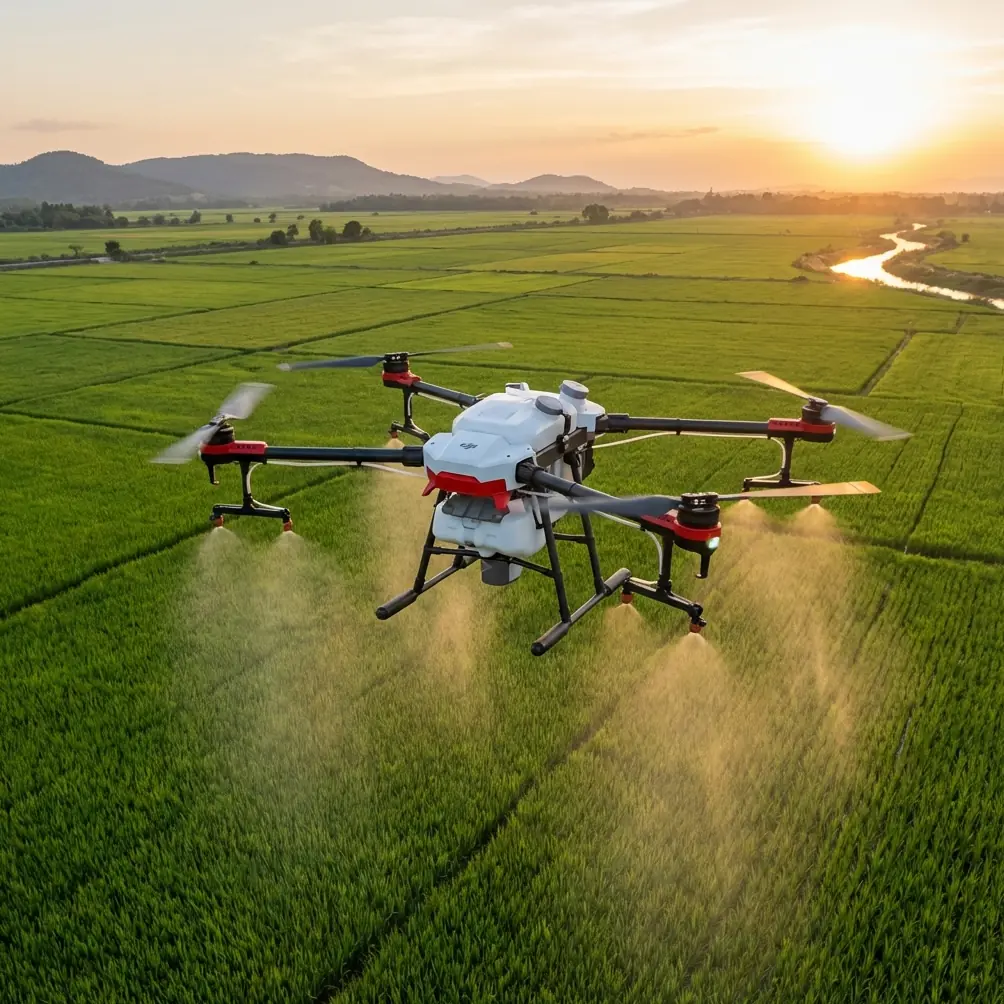
How to Inspect Dusty Highways With the Agras T50 Without Losing Precision
META: A practical expert guide to using the DJI Agras T50 for dusty highway inspection workflows, with field tactics for RTK stability, nozzle calibration, spray drift control, swath planning, and IPX6K durability.
Highway inspection in dusty conditions punishes weak workflows long before it punishes weak aircraft.
That lesson usually arrives the hard way. A crew heads out with a solid flight plan, good batteries, and clean checklists, then spends half the day fighting airborne grit, poor visual contrast, drifting coverage lines, and inconsistent positioning. The problem is not simply that dust is inconvenient. Dust changes how a mission behaves. It affects visibility, contaminates exposed surfaces, challenges sensor confidence, and turns small setup mistakes into repeat flights.
This is where the Agras T50 becomes more interesting than many people expect.
Although it is better known in crop operations, the T50 has traits that transfer surprisingly well to corridor work when the job is not classic mapping, but repeatable low-altitude inspection support along highways in harsh, dusty environments. If your goal is to cover roadside assets, embankments, drainage edges, barriers, vegetation encroachment zones, or treatment areas with stable, disciplined passes, the T50 can reduce friction in places where less robust platforms become temperamental.
I say that as someone who has watched dust ruin otherwise careful field operations. Years ago, one of the most persistent problems on roadside UAV jobs was not flight endurance or route design. It was consistency. The aircraft might fly the line, but operators would lose confidence in pass spacing, struggle to maintain reliable centimeter-level alignment near reflective surfaces and moving traffic, or end up with degraded effectiveness after dust settled into every exposed seam and connector. The T50 does not make the environment easy. It makes it manageable.
Why the Agras T50 fits dusty highway work better than many teams assume
The first operational advantage is durability. The T50’s IPX6K protection matters in dusty roadside work because highway inspection is rarely a clean mission profile. Fine particulate builds up fast, especially near shoulders, dry median edges, unsealed service roads, and active construction interfaces. An airframe with strong environmental sealing gives the team more confidence when dust clouds spike during takeoff, low passes, or repositioning stops. That does not eliminate maintenance. It changes the risk profile. You spend less time worrying that a harsh day in the field is quietly shortening the aircraft’s service life.
The second advantage is positioning discipline. Dusty highway corridors often create visual monotony: long stretches of similar pavement color, repeated barriers, low-texture shoulders, and intermittent obstructions. In those conditions, a strong RTK fix rate is not a luxury. It is the difference between a mission that holds its intended geometry and one that slowly accumulates error. If you are inspecting repeat segments or documenting changes over time, centimeter precision becomes operationally significant. It allows crews to compare the same roadside strip, drainage line, or vegetation boundary across separate sorties without guessing whether a variation is real or just flight-path inconsistency.
The third advantage is coverage efficiency. Swath width is usually discussed in agricultural terms, but in corridor work it translates into fewer passes, fewer turns, and fewer moments where the aircraft must transition across turbulent roadside air. That matters more than people realize. The turns, not the straight sections, often introduce the greatest inconsistency in dusty conditions. A wider effective working path can simplify mission geometry and reduce the number of opportunities for a dirty, gusty environment to disrupt the job.
Start with the right mission definition
Before touching batteries or route settings, define what “inspection” means for this highway segment.
That sounds obvious, but many teams under-specify the mission. Are you documenting roadside vegetation that may obstruct signage or drainage? Assessing shoulder stability after dry erosion? Applying a targeted liquid workflow to support visual confirmation of coverage zones? Looking for recurring edge degradation across a set distance? The T50 performs best when the mission objective is narrow enough to dictate altitude, speed, overlap logic, and payload setup.
A vague mission creates two failures at once. First, it encourages unnecessary data capture. Second, it invites poor flight discipline because the crew starts improvising mid-operation.
For dusty highway work, I recommend defining the corridor in segments based on environmental behavior rather than administrative distance. A 2-kilometer section that includes a bridge approach, a gravel maintenance turnout, and a low drainage basin behaves like three different operating environments. Treating it as one homogenous route is how crews end up re-flying pieces of the mission.
Build your flight plan around dust, not around ideal conditions
Most planning errors happen because the route is built for a clean day and then “adjusted” when reality intrudes.
Reverse that logic. Assume dust is present from the start.
Choose launch and recovery points that are slightly offset from the heaviest passing traffic turbulence and loose roadside material. A small relocation of the takeoff zone can make the difference between a clean departure and a dust plume that immediately coats the aircraft. Keep your staging area organized enough that batteries, tools, and connectors are not sitting exposed on gritty surfaces.
Then think through your corridor geometry. Along highways, straight-line thinking is tempting, but surface conditions change. Where the road edge opens into dry shoulders or cut slopes, the dust signature often intensifies. On those sections, lower speed can help maintain better control margin and more stable execution. On cleaner sections, you may regain efficiency. The point is not to fly slowly everywhere. It is to match the profile to the environment instead of forcing the environment to accept your default settings.
This is also where RTK discipline shows its value. If the mission relies on repeatability, do not settle for a marginal positioning state just because the aircraft is technically ready to fly. A strong RTK fix rate gives you a far more trustworthy baseline for pass spacing and return missions. On long highway stretches, even modest positioning inconsistency can distort comparisons over time.
Nozzle calibration is not just for spraying performance
A surprising number of operators treat nozzle calibration as a narrow setup task that matters only when application quality is the main objective. That is too limited, especially on the T50.
In dusty highway work, nozzle calibration has broader importance because it influences consistency in any mission where liquid delivery, marking, or treatment uniformity intersects with inspection logic. If you are using the aircraft in a support role tied to visible treatment areas or roadside management tasks, poor calibration can create misleading field evidence. You might think a coverage gap reflects environmental conditions when the real cause is uneven output behavior.
Dust adds another layer. Fine particulates can interfere with system cleanliness and performance over time, so calibration should not be treated as something you did once last month. It should be part of the pre-mission rhythm on active roadside schedules. A well-calibrated system helps the crew separate actual field variability from equipment-induced inconsistency.
Operationally, that matters because inspection decisions depend on trust. If a shoulder strip appears uneven, is it a flow issue, a wind issue, or a route issue? Teams that calibrate carefully answer that question faster.
Control spray drift like a corridor hazard, not a minor side effect
If your T50 mission includes any liquid application element, spray drift becomes a highway safety and accuracy issue immediately.
Open roadside corridors are not forgiving. Vehicle movement, heat gradients off pavement, crosswinds near embankments, and pressure changes around barriers all complicate droplet behavior. Drift is not just waste. It is loss of control. On a highway job, that can mean poor treatment placement, uncertain visual interpretation, or contamination of adjacent areas that were not meant to be touched.
This is why the T50’s precision-oriented workflow matters. Good route design, proper nozzle calibration, and reliable positioning work together. They are not separate checklist items. They are one system.
When drift risk rises, crews should be ready to narrow operational windows, modify pass direction, reduce exposure near turbulence-prone sections, or postpone the task entirely. Discipline beats speed here. The wrong pass completed quickly is still the wrong pass.
Use swath width intelligently, not aggressively
Wider coverage sounds efficient, and sometimes it is. But on dusty highways, intelligent swath planning beats maximum swath width every time.
The right question is not “How much area can I cover per pass?” It is “How wide can I work while keeping edge confidence high?”
On a long shoulder or roadside management strip, wider passes reduce the number of turns and save time. That is valuable. But if dust, crosswind, or corridor complexity are causing edge uncertainty, pushing width too far creates hidden misses or overlap excess. Both are expensive in operational terms because they force second-guessing and often second flights.
The T50 gives teams room to optimize. Use that flexibility carefully. Start from the mission’s need for repeatable edges, then widen only as conditions allow. In my experience, corridor operations become smoother when pilots resist the urge to treat every route like an endurance contest.
Where multispectral thinking can still help
The T50 is not defined by multispectral sensing, yet multispectral thinking remains useful in inspection planning.
By that I mean this: highway corridor teams should think in layers, not just in visible surface appearance. Dust often masks subtle transitions in vegetation stress, moisture retention, and surface condition. Even if a separate sensor platform is used for deeper analysis, the T50 can support a workflow that acts on those findings with high positional confidence. That connection matters. Analysis without precise action wastes time. Action without informed interpretation wastes product and flight hours.
For mixed fleets, this is where the T50 earns its place. A multispectral survey may identify problem zones along drainage-adjacent vegetation or erosion-prone edges, and the T50 can then execute targeted follow-up work with the repeatability needed for corridor operations.
A field routine that actually holds up
For dusty highway inspection support with the Agras T50, the most reliable teams I have observed follow a simple pattern:
Inspect the launch area first. Dust source matters.
Confirm RTK status before committing to the route. If you need consistency, do not compromise here.
Check nozzle calibration as part of mission readiness, not as an afterthought.
Set swath width for control, then expand only if conditions stay stable.
Watch for drift behavior near pavement heat and passing traffic turbulence.
Clean methodically after each segment, not only at the end of the day.
This is not glamorous advice. It is the kind that keeps the fourth sortie as dependable as the first.
If your team is refining a corridor workflow and needs a second opinion on setup logic, mission structure, or field adaptation, you can message a flight specialist here and compare notes before the next deployment.
The real operational gain
What changed with the T50 is not that dusty highway work suddenly became simple. It is that the aircraft reduces the penalty for doing difficult work in a difficult place.
Its environmental protection, including IPX6K-rated resilience, gives operators a stronger margin in dirty conditions. Its RTK-centered workflow supports the centimeter precision that repeat corridor work demands. And its configurable coverage behavior lets crews think seriously about swath width instead of accepting whatever a less capable platform can manage.
Those are not abstract specifications. They affect whether a team trusts the mission result.
That trust is the whole story. In roadside operations, you rarely get rewarded for flashy flights. You get rewarded for repeatable ones. For coverage that aligns where it should. For treatment behavior that makes sense when reviewed later. For aircraft performance that does not unravel after a long day in dust.
The Agras T50 is valuable in this setting because it helps turn a punishing environment into a controlled workflow. Not perfect. Controlled. And in highway inspection, that distinction is often what separates useful field data from expensive ambiguity.
Ready for your own Agras T50? Contact our team for expert consultation.