
Agras T50 for Coastal Forest Inspection: A Field Tutorial
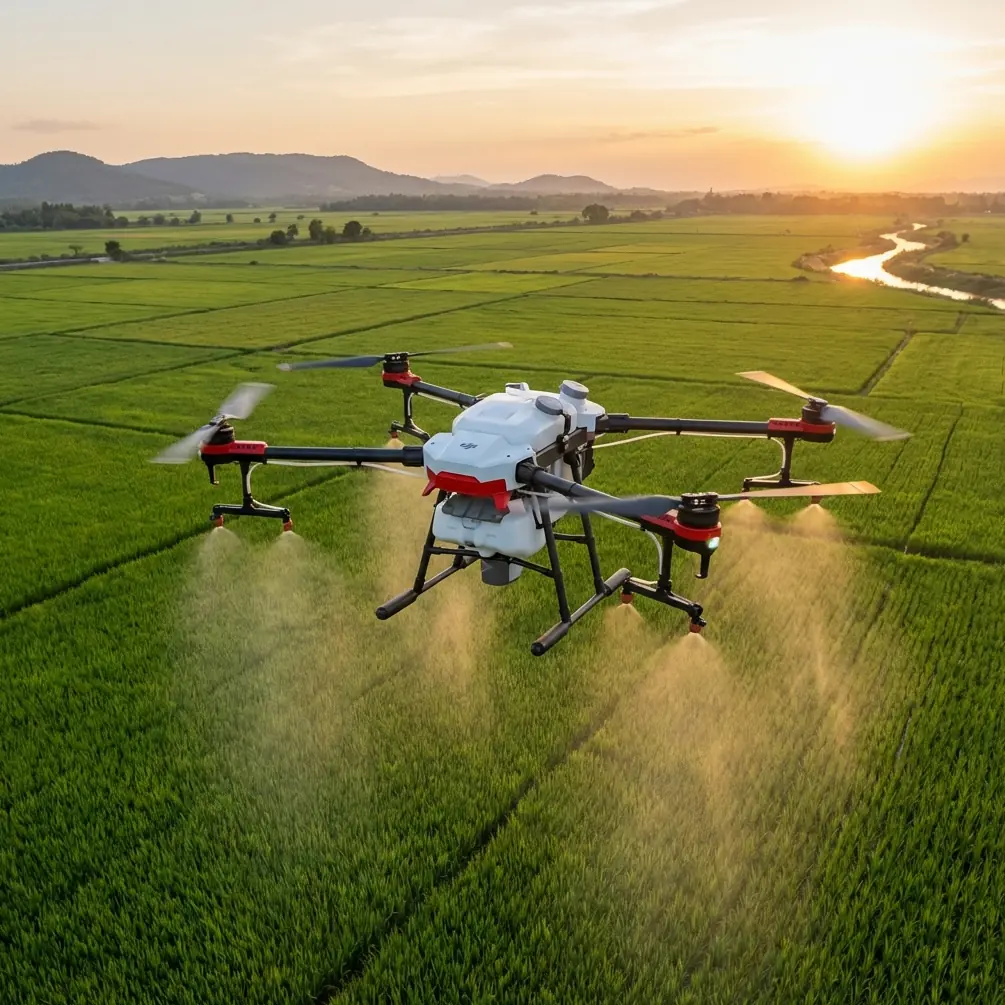
Agras T50 for Coastal Forest Inspection: A Field Tutorial on Precision, Drift Control, and Signal Stability
META: A practical Agras T50 coastal forest inspection tutorial covering RTK fix stability, spray drift control, nozzle calibration, IPX6K durability, and electromagnetic interference handling.
Coastal forestry is unforgiving terrain for any UAV platform. Salt moisture hangs in the air, winds shift without much warning, canopy density disrupts visibility, and electromagnetic interference can appear in places operators do not expect—near communication towers, utility corridors, port infrastructure, and even temporary field equipment. If your mission involves inspecting forests in coastal conditions with an Agras T50, success depends less on the headline specifications and more on how you set the aircraft up before takeoff, how you stabilize positioning in marginal signal environments, and how you adapt flight behavior to drift, canopy structure, and moisture.
This tutorial is written from a field operations perspective. The Agras T50 is often discussed for agricultural application work, but that misses an important reality: many of the same design features that make it effective over crops also matter in coastal forest inspection. Its stable flight control, high-throughput mission capability, rugged environmental protection, and precision positioning all become highly relevant when the task is not simply covering acreage, but documenting vegetation condition, identifying stress corridors, and navigating edge cases where ocean weather and forest structure complicate every pass.
The first point to understand is that coastal forest inspection is not one problem. It is three overlapping problems: aircraft survivability in wet, corrosive conditions, positional accuracy under canopy-edge and infrastructure interference, and mission discipline when environmental forces distort your intended flight line. The Agras T50 gives you a workable platform for all three, but only if you treat preparation as part of the inspection itself.
Start with environmental hardening. The Agras T50’s IPX6K protection level matters in coastal work because spray exposure is not limited to direct rain. Fine saline mist, splashback during low-altitude edge operations, and moisture accumulation during dawn missions all increase the stress on exposed airframe surfaces. In inland flying, operators can sometimes get away with casual post-flight cleaning. On the coast, that habit shortens equipment life. The operational significance of an IPX6K-rated airframe is not that the drone is “waterproof” in some abstract sense. It means the platform is built for aggressive water exposure scenarios, which gives you a margin of resilience during inspection windows where humidity and blown moisture are unavoidable. That margin is valuable, but it is not permission to ignore rinse-down procedures, motor inspection, or connector checks after flying around salt-bearing air.
Positioning is the second major issue, and here RTK behavior deserves more attention than it usually gets. In coastal forest inspections, a strong RTK fix rate is not just a technical preference. It changes the quality of your data. If your objective is to revisit a stand boundary, map a disease progression zone, or compare crown condition across multiple flights, centimeter precision is the difference between reliable change detection and visual guesswork. This becomes especially important where forest edges run alongside roads, sea walls, or drainage corridors. Even small lateral deviations can make it difficult to separate actual vegetation change from simple flight-path inconsistency.
Yet coastal settings often produce the exact conditions that undermine RTK stability. Multipath reflections from metal structures, communications equipment, wet surfaces, and nearby infrastructure can interfere with clean satellite signal interpretation. Add electromagnetic interference and the result is a fix that appears acceptable on the ground but deteriorates as the aircraft moves along a problematic corridor. This is where antenna adjustment becomes a real operational skill rather than a box-checking exercise.
If you suspect electromagnetic interference, do not begin by blaming the aircraft. Instead, evaluate the geometry of your ground setup. In the field, one of the most practical corrections is repositioning and reorienting the RTK or communication antenna away from reflective surfaces and concentrated emitters. A small change in antenna angle or base station placement can improve signal consistency enough to prevent repeated fix drops. I advise operators to avoid setting up near vehicles, steel fencing, temporary generators, and tower support structures, even when those locations feel convenient. In a coastal forest context, the easy launch point is often the wrong launch point.
A good field method is to establish the base or receiving system in a cleaner electromagnetic environment first, then walk the planned mission boundary and watch for degradation zones before full execution. If your RTK fix rate weakens at a specific stand edge, note what is physically nearby. Port infrastructure, repeater installations, overhead utility hardware, and metal-roofed service buildings are common culprits. Sometimes a modest antenna tilt adjustment restores stability. Sometimes you need to move the whole setup. That decision can save an hour of rework and produce cleaner geospatial alignment across the entire inspection dataset.
Now to flight behavior. The phrase “spray drift” is usually associated with application missions, but it still matters during inspection if your T50 is being used in mixed operational roles or if you are evaluating treatment corridors during the same field day. Coastal wind fields can change quickly as air moves off water and through tree breaks. Even light crosswinds distort low-altitude movement, and if the aircraft is carrying any liquid payload for diagnostic marking, targeted treatment, or operational crossover work, drift control becomes essential. The practical lesson is that drift management starts before you arm the motors. Choose flight lines that minimize lateral exposure on the seaward side of the stand first, then work inward as conditions stabilize.
Swath width also deserves disciplined adjustment. Operators often think about swath width as a productivity setting, but in coastal forests it is equally a data quality variable. Wider passes may look efficient on paper, yet canopy heterogeneity and wind shear can create inconsistent overlap or uneven coverage patterns near stand edges. Tightening swath width in difficult sections improves consistency, especially where forest density changes abruptly or where mangrove-like edge vegetation produces irregular airflow. For inspection work, this can make the difference between a useful comparative image set and a patchy one that forces you back out for another flight.
Nozzle calibration enters the conversation for the same reason. Even if the primary mission is inspection, many Agras T50 users operate in environments where scouting and treatment planning are connected. If you are validating disease pressure, salt-stress impact, or pest spread in coastal shelterbelts, there may be a need to conduct a precision follow-up application on a later pass. Poor nozzle calibration distorts that workflow because it weakens the link between what you observed and what the aircraft will actually deliver when it returns for intervention. Calibration is not glamorous, but it directly supports trust in your operational decisions. In wind-sensitive coastal conditions, a miscalibrated nozzle array compounds drift and coverage uncertainty. A calibrated one gives you a more predictable droplet profile and a better basis for assessing whether a treatment corridor is operationally viable at all.
The sensor side is equally important. For visual inspection alone, operators can miss subtle vegetation stress in coastal forests because salt exposure, root-zone saturation, and early disease symptoms often do not present as obvious damage at first glance. This is where multispectral data can improve mission value. Used properly, multispectral imaging helps distinguish broad canopy health from localized stress signatures before defoliation becomes obvious. In mixed-species coastal forests, that matters. A stand may appear uniformly green from a standard RGB perspective while already showing stress variation tied to drainage, salinity intrusion, or pest pressure. Integrating multispectral collection into a repeatable T50 workflow gives you earlier warning and stronger comparative baselines.
However, the addition of multispectral methods only pays off if your positioning remains stable and repeatable. Again, centimeter precision is not a marketing phrase here. It is what allows the same trees, rows, or canopy clusters to be evaluated across time with enough confidence to support intervention decisions. If you are mapping salt-burn progression after a storm event, or tracking the recovery of a shelterbelt adjacent to coastal agriculture, positional repeatability determines whether your analysis reflects biology or navigation error.
Battery and sortie planning also change in coastal forests. Because tree lines can obscure direct visual orientation and weather windows may close quickly, conservative mission segmentation is smarter than trying to finish too much in one sortie. Break the forest into manageable blocks. Fly edge zones separately from interior sections. Reserve time for a second pass over any area where interference or wind instability degraded the first run. This sounds slower, but it usually improves total field efficiency because you spend less time untangling poor data afterward.
One field discipline I strongly recommend is documenting interference observations in the same mission notes as canopy and weather conditions. If one section of the coastal forest repeatedly shows degraded fix performance, that is part of the site profile, not a one-off inconvenience. Over time, those notes allow you to choose better launch positions, better antenna orientations, and better approach vectors. They also make team handoffs more reliable. Another pilot stepping into the site later should know that the western drainage edge loses positional confidence near a communications structure, or that the northern access road produces reflectivity issues after heavy rain.
Operators often underestimate how much coastal moisture influences decision-making before takeoff. Wet leaves alter reflectance. Damp air affects visibility and signal behavior. Surfaces that look benign at setup can become problematic as sunlight changes and reflective intensity increases. The Agras T50 is a capable platform for these environments, but it rewards deliberate fieldcraft. Its ruggedness, precision potential, and operational flexibility are only fully realized when paired with disciplined antenna placement, ongoing RTK monitoring, conservative swath planning, and meaningful calibration habits.
If you are building a repeatable inspection protocol, keep the workflow simple:
First, inspect the launch zone for interference sources before evaluating the forest itself. Second, confirm a stable RTK fix rate and do not treat temporary lock as proof of mission readiness. Third, reduce swath width in difficult edge zones where airflow shifts and canopy geometry become irregular. Fourth, verify nozzle calibration if your inspection workflow connects directly to treatment validation. Fifth, use multispectral collection where subtle stress detection matters more than surface appearance. Sixth, clean thoroughly after every coastal mission, because salt exposure is cumulative even when the aircraft’s IPX6K build gives you a strong protection buffer.
For teams that want to compare mission planning approaches or troubleshoot difficult signal environments, it helps to discuss real field setups with other operators; this quick Agras T50 operations chat can be useful for exchanging practical notes.
The larger point is that the Agras T50 becomes especially valuable in coastal forest inspection when you stop treating it as a generic drone and start using it as a precision field instrument. Its durability matters because coastal air is harsh. Its RTK capability matters because repeatable forest analysis demands stable positioning. Its swath behavior and calibration discipline matter because edge environments punish sloppy setup. And its compatibility with advanced sensing logic, including multispectral workflows, matters because coastal forest stress often emerges before the human eye can interpret it confidently.
That is what separates a routine flight from a defensible inspection program. In this environment, the aircraft is only half the system. The rest is operator method.
Ready for your own Agras T50? Contact our team for expert consultation.