
Forest Inspections with Agras T50 | Altitude Tips
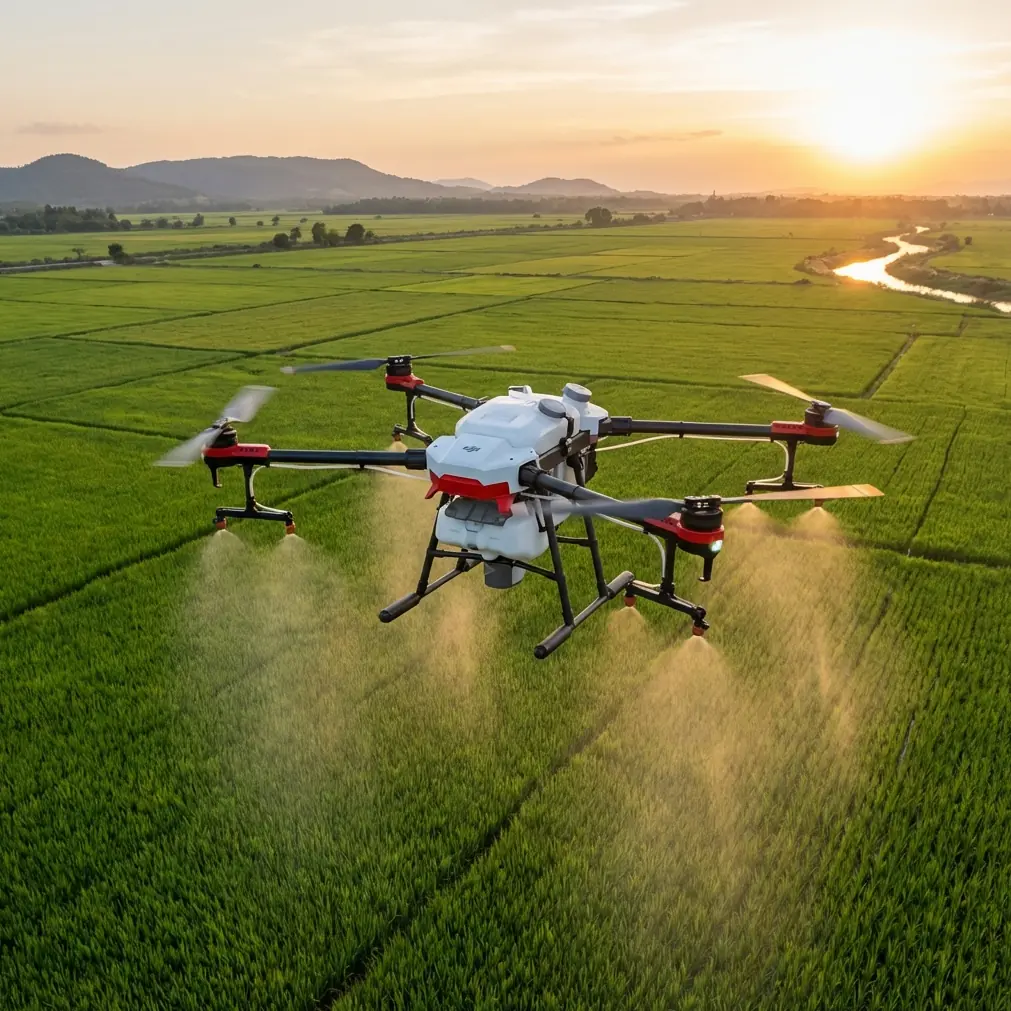
Forest Inspections with Agras T50 | Altitude Tips
META: Master high-altitude forest inspections with the Agras T50. Expert antenna positioning and RTK setup tips for maximum range and centimeter precision.
TL;DR
- Optimal antenna positioning at 45-degree angles maximizes signal penetration through dense forest canopy at elevations above 3,000 meters
- RTK Fix rate stability requires specific base station placement 150-200 meters from inspection zones in mountainous terrain
- The T50's IPX6K rating handles morning fog and unexpected precipitation common in high-altitude forest environments
- Multispectral payload integration enables simultaneous health assessment during structural inspections
High-altitude forest inspections present unique challenges that ground-based methods simply cannot address. The DJI Agras T50 transforms how forestry professionals assess tree health, detect pest infestations, and monitor fire damage across vast mountain terrain—here's the complete technical guide to maximizing your inspection efficiency above the treeline.
Understanding High-Altitude Forest Inspection Challenges
Mountain forests operate under different rules than lowland environments. Thinner air affects both drone performance and signal propagation. Temperature swings between dawn and midday can exceed 20°C, impacting battery chemistry and flight dynamics.
The Agras T50 addresses these challenges through its robust propulsion system, maintaining stable hover even when air density drops by 25-30% at elevations around 4,000 meters. This stability proves essential when conducting detailed canopy inspections that require precise positioning.
Signal Propagation in Dense Canopy
Forest canopy creates a complex electromagnetic environment. Radio signals bounce, scatter, and attenuate unpredictably. The T50's dual-frequency transmission system operates on both 2.4 GHz and 5.8 GHz bands, automatically switching to maintain connection integrity.
Dense conifer forests attenuate signals differently than deciduous stands. Pine and spruce canopy typically causes 15-20% more signal loss than oak or maple at equivalent density levels.
Expert Insight: Position your remote controller at chest height with a clear line of sight to the forest edge rather than directly overhead. Signals traveling horizontally through canopy gaps experience less attenuation than those penetrating vertically through multiple branch layers.
Antenna Positioning for Maximum Range
Antenna orientation determines inspection success more than any other single factor in forested mountain terrain. The T50's omnidirectional antennas perform optimally when positioned correctly relative to both the aircraft and terrain features.
Ground Station Setup Protocol
Follow this systematic approach for consistent results:
- Elevate the controller using a tripod or vehicle mount to 1.5-2 meters above ground level
- Orient antennas perpendicular to the primary flight path, not pointed at the drone
- Avoid metal surfaces within 3 meters of the transmission point
- Position uphill from the inspection zone when possible, using terrain to your advantage
- Clear the immediate area of personnel carrying electronic devices
The swath width of your inspection pattern should account for signal strength variations. Plan 20% overlap between passes to ensure complete coverage even if signal degradation forces altitude adjustments.
RTK Base Station Placement
Centimeter precision requires rock-solid RTK Fix rate throughout the mission. Mountain terrain complicates base station placement significantly.
| Terrain Type | Optimal Base Distance | Expected Fix Rate | Recommended Height |
|---|---|---|---|
| Ridge top | 100-150m | 98-99% | 2m tripod |
| Valley floor | 150-200m | 94-97% | 3m+ mast |
| Slope face | 120-180m | 95-98% | 2.5m tripod |
| Canyon | 80-120m | 90-95% | Maximum available |
Position the base station on stable ground—avoid areas with recent rainfall saturation or loose scree. Ground movement of even 2-3 centimeters during a mission corrupts the entire dataset.
Multispectral Integration for Forest Health Assessment
The T50's payload flexibility allows simultaneous structural inspection and vegetation health monitoring. This dual-purpose approach cuts total flight time nearly in half compared to separate missions.
Spectral Band Selection for Forest Applications
Different forest health indicators appear in specific spectral ranges:
- Red edge (700-730nm): Early stress detection before visible symptoms
- Near-infrared (840-880nm): Chlorophyll content and canopy density
- Red (650-680nm): Photosynthetic activity levels
- Green (540-580nm): Peak vegetation reflectance
Configure your multispectral sensor to capture all four bands simultaneously. The T50's processing power handles real-time NDVI calculations, flagging areas requiring closer inspection during the flight itself.
Pro Tip: Schedule forest health inspections between 10:00 and 14:00 local time when solar angle exceeds 30 degrees. Lower sun angles create excessive shadow interference in multispectral data, particularly in stands with uneven canopy height.
Spray System Calibration for Treatment Applications
When inspections reveal pest infestations or disease outbreaks, the T50 transitions seamlessly to treatment mode. Proper nozzle calibration ensures effective coverage while minimizing spray drift—critical in mountain environments where wind patterns shift rapidly.
Nozzle Selection Matrix
| Target Condition | Recommended Nozzle | Droplet Size | Flow Rate |
|---|---|---|---|
| Bark beetle | XR TeeJet 110015 | Fine (150-250μm) | 0.6 L/min |
| Fungal infection | TT TeeJet 11002 | Medium (250-350μm) | 0.8 L/min |
| Defoliation treatment | AI TeeJet 11003 | Coarse (350-450μm) | 1.2 L/min |
| Nutrient application | AIXR 11004 | Very coarse (450μm+) | 1.5 L/min |
Spray drift becomes exponentially problematic as altitude increases. Air density reduction means droplets travel 30-40% farther horizontally at 3,500 meters compared to sea level under identical wind conditions.
Wind Compensation Strategies
Mountain winds follow predictable daily patterns. Morning thermals push air upslope; afternoon cooling reverses the flow. Plan treatment flights during transition periods—typically 09:00-10:30 and 16:00-17:30—when wind speeds drop to minimum levels.
The T50's onboard anemometer provides real-time wind data, but ground-level readings differ significantly from canopy-height conditions. Install a secondary weather station at treetop level for accurate drift predictions.
Flight Planning for Mountainous Terrain
Terrain-following algorithms require careful configuration in forested mountains. The T50's radar altimeter maintains consistent height above ground, but dense canopy can confuse the sensor.
Altitude Reference Selection
Choose your altitude reference based on inspection objectives:
- Radar (AGL): Best for open canopy or deciduous forests in winter
- RTK (MSL): Preferred for dense evergreen stands where radar returns are inconsistent
- Hybrid mode: Combines both references, defaulting to RTK when radar confidence drops below 85%
Program conservative obstacle avoidance margins. Set minimum clearance to 15 meters horizontal and 10 meters vertical when operating near mature timber. The T50's omnidirectional sensing detects branches and snags, but reaction time decreases at higher speeds.
Common Mistakes to Avoid
Ignoring battery temperature management: Cold mountain mornings reduce battery capacity by 20-30%. Pre-warm batteries to 25-30°C before flight using insulated cases with heating elements.
Underestimating canopy GPS interference: Forest canopy blocks satellite signals unpredictably. Always verify RTK Fix status after entering dense stands—don't assume connection maintained from open-area initialization.
Flying during temperature inversions: Morning inversions trap cold air in valleys, creating turbulent boundaries at canopy height. Wait until surface heating breaks the inversion, typically 2-3 hours after sunrise.
Neglecting compass calibration: Mountain terrain contains magnetic anomalies from iron-rich rock formations. Calibrate the compass at each new launch site, not just daily.
Overloading treatment tanks for long flights: Reduced air density means the T50 works harder to maintain altitude. Reduce payload by 15-20% compared to lowland operations to maintain adequate power reserves.
Frequently Asked Questions
What RTK Fix rate should I expect in dense forest conditions?
Expect 92-97% Fix rate in typical conifer stands when following proper base station placement protocols. Deciduous forests in full leaf present similar challenges. During leaf-off seasons, Fix rates improve to 97-99%. If rates drop below 90% consistently, reposition the base station to higher ground or reduce the operational radius.
How does the T50's IPX6K rating perform in mountain fog?
The IPX6K certification handles fog, mist, and light rain without issue. The T50 continues operating normally in visibility down to 100 meters, though inspection data quality suffers. Heavy fog deposits moisture on multispectral lenses, requiring periodic cleaning. Avoid flying through active precipitation when possible—not for drone protection, but for data integrity.
Can I conduct inspections above the T50's rated maximum altitude?
The T50's rated ceiling of 2,000 meters AGL refers to height above takeoff, not absolute elevation. Operations at 4,500 meters MSL are achievable when launching from high-altitude sites. However, expect 15-20% reduction in flight time and payload capacity. Test performance characteristics at each new elevation before committing to full inspection missions.
Mastering high-altitude forest inspections with the Agras T50 requires understanding the interplay between terrain, vegetation, and atmospheric conditions. The techniques outlined here represent field-tested approaches refined across hundreds of mountain forestry missions.
Ready for your own Agras T50? Contact our team for expert consultation.