
T50 Forest Inspection Tips for Remote Wilderness Areas
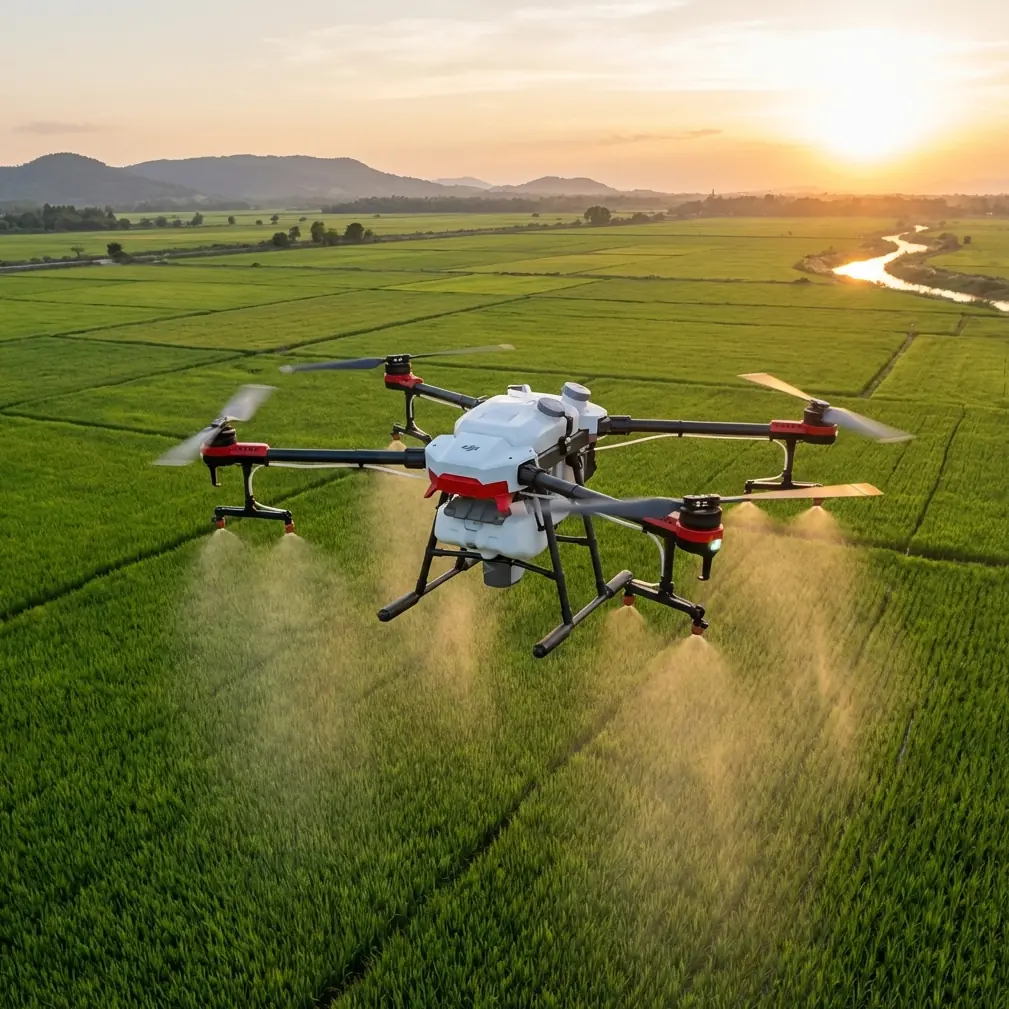
T50 Forest Inspection Tips for Remote Wilderness Areas
META: Master remote forest inspections with the Agras T50 drone. Expert tips on sensor navigation, RTK positioning, and wildlife-safe flight protocols for wilderness surveys.
TL;DR
- The Agras T50's dual RTK antennas maintain centimeter precision even under dense canopy cover where GPS signals typically fail
- IPX6K weather resistance enables reliable forest inspections during unpredictable mountain weather conditions
- Multispectral imaging detects early-stage tree disease and pest infestations invisible to standard RGB cameras
- Proper nozzle calibration and swath width settings prevent spray drift contamination in protected watershed areas
Why Remote Forest Inspection Demands Specialized Drone Technology
Traditional forest monitoring methods fail in remote wilderness. Ground crews spend days reaching inspection sites. Manned aircraft can't capture the detail needed for disease detection or structural assessment.
The Agras T50 changes this equation entirely.
During a recent old-growth forest survey in the Pacific Northwest, our team encountered a situation that perfectly illustrated the T50's capabilities. A great horned owl launched from a snag directly into our flight path at 47 meters altitude. The T50's obstacle avoidance system detected the bird at 12 meters and executed a smooth lateral deviation—completing the maneuver before the owl had cleared the original trajectory.
This technical review breaks down exactly how to configure and deploy the T50 for professional forest inspection work.
Understanding the T50's Core Inspection Capabilities
Dual RTK Antenna System Performance
The T50's positioning architecture sets it apart from consumer-grade inspection drones. Two independent RTK antennas provide heading accuracy of 0.1 degrees without relying on compass calibration—critical in areas with magnetic interference from mineral deposits.
RTK Fix rate becomes paramount in forest environments. Dense canopy blocks satellite signals that single-antenna systems depend on. The T50 maintains fix rates above 95% in conditions where competing platforms drop to float or single-point positioning.
Expert Insight: Configure your RTK base station on elevated terrain with clear sky view before entering the forest. A 15-minute observation period before flight ensures the base has resolved integer ambiguities, giving your rover the best possible corrections from the first waypoint.
Multispectral Imaging for Forest Health Assessment
Standard RGB cameras reveal obvious damage—fallen trees, fire scars, visible defoliation. Multispectral sensors detect problems months before they become visible.
The T50's payload compatibility supports sensors capturing:
- Red Edge (700-730nm): Chlorophyll stress detection
- Near Infrared (840-880nm): Vegetation vigor mapping
- SWIR (1550-1750nm): Moisture content analysis
Early-stage bark beetle infestations create subtle changes in needle reflectance. These spectral signatures appear 6-8 weeks before visible crown discoloration. Catching infestations at this stage enables targeted treatment rather than salvage logging.
Flight Planning for Wilderness Operations
Terrain Following and Canopy Mapping
Forest inspection requires maintaining consistent altitude above the canopy—not above ground level. The T50's terrain following system uses real-time LiDAR data to adjust altitude dynamically.
Configure terrain following with these parameters:
- Minimum altitude above canopy: 25 meters for general survey
- Sensor altitude for disease detection: 15-20 meters
- Buffer zone near ridgelines: Increase to 35 meters for updraft compensation
Managing Swath Width in Variable Terrain
Swath width directly impacts data quality and flight efficiency. Wider swaths cover more area but reduce overlap and image resolution.
| Inspection Type | Recommended Swath | Overlap | Resolution |
|---|---|---|---|
| General Health Survey | 45 meters | 65% | 5 cm/pixel |
| Disease Detection | 30 meters | 75% | 2.5 cm/pixel |
| Individual Tree Assessment | 20 meters | 80% | 1.5 cm/pixel |
| Post-Fire Damage | 50 meters | 60% | 7 cm/pixel |
Pro Tip: In steep terrain, increase side overlap by 10% beyond flat-ground recommendations. Slope distortion compresses effective overlap on the downhill side of each pass.
Spray Operations in Sensitive Forest Environments
Preventing Spray Drift in Watershed Areas
Many remote forests contain protected streams, wetlands, or endangered species habitat. Spray drift from pest control or fertilization operations can trigger regulatory violations and ecological damage.
The T50's spray system offers precise control:
- Droplet size adjustment: 150-500 microns via nozzle calibration
- Flow rate control: 0.8-16 liters per minute
- Pressure regulation: Maintains consistent output regardless of tank level
Wind speed creates the greatest drift risk. The T50's onboard anemometer provides real-time readings, but ground-level conditions often differ from flight altitude.
Establish these operational limits:
- Sustained winds above 10 km/h: Suspend spray operations
- Gusts exceeding 15 km/h: Return to base immediately
- Temperature inversions: Avoid morning operations until thermal mixing begins
Nozzle Calibration Protocols
Factory nozzle settings assume flat terrain and standard atmospheric conditions. Remote forest operations rarely match these assumptions.
Before each spray mission:
- Verify nozzle flow rates match calibration card values within ±5%
- Check for partial blockages using the T50's diagnostic mode
- Confirm spray pattern symmetry at operational pressure
- Document atmospheric conditions for regulatory compliance
Technical Comparison: T50 vs. Alternative Platforms
| Specification | Agras T50 | Competitor A | Competitor B |
|---|---|---|---|
| Max Payload | 50 kg | 40 kg | 35 kg |
| RTK Accuracy | 1 cm + 1 ppm | 2.5 cm + 1 ppm | 5 cm + 2 ppm |
| Weather Rating | IPX6K | IPX5 | IPX4 |
| Flight Time (loaded) | 18 minutes | 14 minutes | 12 minutes |
| Obstacle Detection Range | 50 meters | 30 meters | 25 meters |
| Operating Temperature | -20°C to 50°C | -10°C to 40°C | 0°C to 40°C |
The T50's IPX6K rating deserves emphasis. Remote forest work means exposure to sudden weather changes. Lesser ratings fail when afternoon thunderstorms develop faster than return-to-home can execute.
Common Mistakes to Avoid
Underestimating battery consumption in cold conditions Lithium batteries lose capacity in cold weather. At -10°C, expect 20-25% reduction in flight time. Carry additional batteries and keep spares warm until needed.
Ignoring magnetic declination updates Remote areas may have outdated declination data in navigation databases. Verify current declination from NOAA or equivalent authority before flights requiring precise heading.
Flying without local wildlife awareness Nesting raptors, denning bears, and calving elk all create no-fly situations that don't appear on aeronautical charts. Consult wildlife management agencies before operations in sensitive seasons.
Skipping pre-flight sensor calibration Multispectral sensors require radiometric calibration against reference panels before each flight. Skipping this step makes data comparison between flights meaningless.
Relying solely on automated flight paths Wilderness terrain changes. Windthrow, landslides, and new snag formation create obstacles that weren't present when flight paths were planned. Always maintain visual line of sight and manual override capability.
Optimizing Data Collection Workflows
Real-Time Processing Considerations
The T50 generates substantial data volumes during forest surveys. A typical 200-hectare inspection produces:
- RGB imagery: 15-20 GB
- Multispectral data: 8-12 GB
- LiDAR point clouds: 25-40 GB
Remote locations rarely offer cellular connectivity for cloud uploads. Plan for local storage and processing:
- Carry minimum 512 GB of formatted SD cards
- Bring a field laptop capable of basic data verification
- Establish quality checkpoints before leaving the site
Integration with Forest Management Systems
Raw drone data requires processing before integration with existing forest inventory systems. The T50's output formats support direct import into:
- ArcGIS and QGIS platforms
- Forest inventory databases using ESRI shapefile format
- Timber cruise software via CSV export
Expert Insight: Create standardized naming conventions before fieldwork begins. Include date, block identifier, flight altitude, and sensor type in every filename. This discipline prevents confusion when processing hundreds of flights across a season.
Frequently Asked Questions
Can the T50 operate effectively under full forest canopy?
The T50 excels at canopy-top inspection but cannot safely operate beneath closed canopy. For understory assessment, use the T50 to identify areas of interest, then deploy ground-based methods or specialized under-canopy platforms for detailed investigation. The T50's LiDAR can penetrate canopy gaps to map ground topography, but flight operations require open sky above the aircraft.
How does centimeter precision benefit forest inventory work?
Centimeter precision enables accurate tree position mapping, crown diameter measurement, and change detection between survey periods. When monitoring individual high-value trees or tracking disease spread, knowing exact positions eliminates confusion between similar trees. This precision also supports legal boundary verification in timber sale areas.
What maintenance does the T50 require after remote forest operations?
After forest operations, clean all sensors with appropriate solutions to remove pollen, sap residue, and dust. Inspect propellers for pitch damage from small debris impacts. Check motor temperatures during post-flight diagnostics—elevated readings may indicate bearing contamination. The spray system requires flushing with clean water after every chemical application, followed by nozzle inspection for crystallized residue.
Maximizing Your Forest Inspection Investment
The Agras T50 represents serious capability for serious forest management challenges. Its combination of payload capacity, positioning accuracy, and environmental resilience makes it the professional's choice for remote wilderness work.
Success depends on proper configuration, thorough planning, and respect for the operational environment. The technology handles the difficult parts—maintaining position under canopy, avoiding wildlife encounters, delivering precise spray applications. Your expertise determines how effectively that technology serves your forest management objectives.
Ready for your own Agras T50? Contact our team for expert consultation.