
Inspecting Remote Fields with the Agras T50
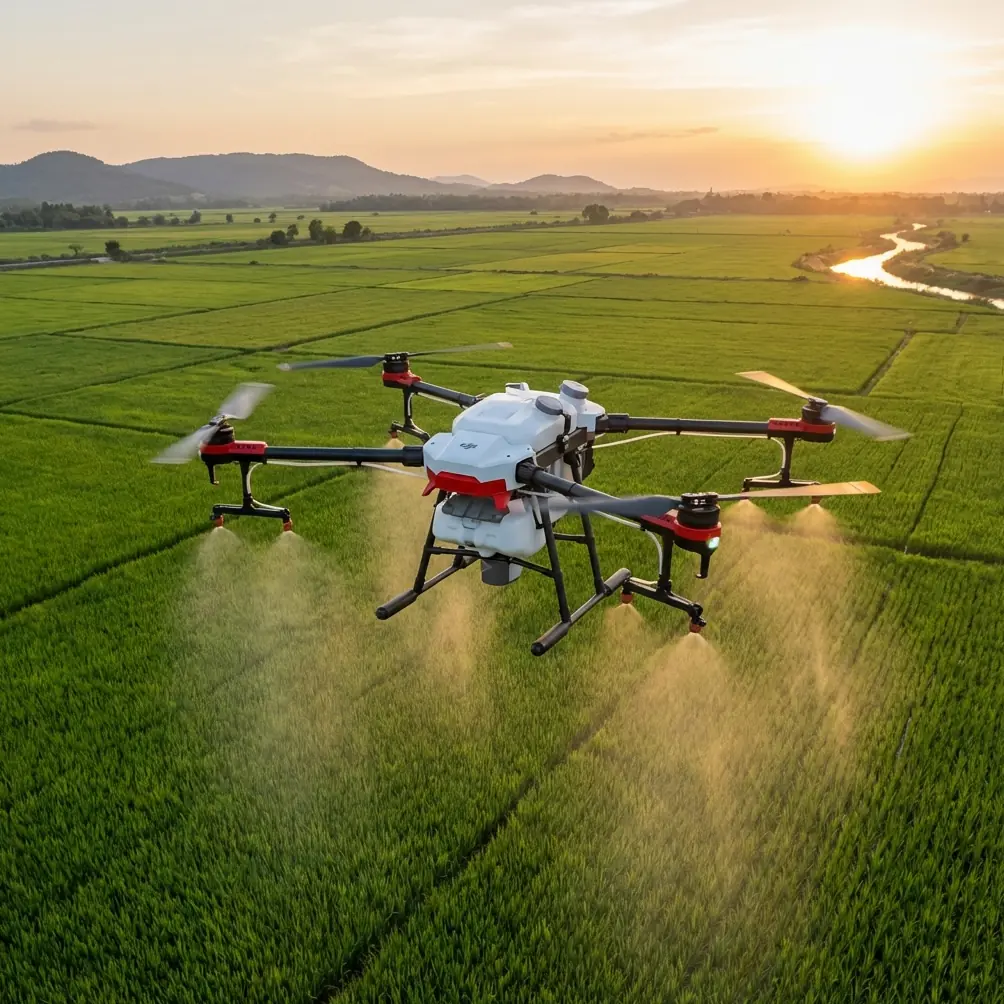
Inspecting Remote Fields with the Agras T50: A Case Study in Setup Discipline, Flight Control, and Cleaner Data
META: A field-based Agras T50 case study covering remote crop inspection, pre-flight cleaning, RTK precision, swath management, spray drift control, and why disciplined setup improves results.
Remote field inspection exposes every weak habit a drone team has.
Distance magnifies small mistakes. A dusty sensor becomes a navigation problem. A partially clogged nozzle becomes uneven application. A rushed takeoff becomes wasted battery cycles, lost time, and messy field records that are hard to trust later. When operators ask me whether the Agras T50 is suitable for inspecting and working remote agricultural blocks, my answer usually starts somewhere unexpected: not with payload, not with speed, and not with software menus.
It starts with cleaning.
That may sound trivial until you remember a core truth from flight training: repeatable results depend heavily on how well you enter the task. One of the technical references behind this piece makes that point bluntly in a different aviation context, noting that successful execution is driven mostly by proper entry conditions, even citing a figure as high as 90% dependence on whether the wings are level before a maneuver begins. Agricultural drone work is not aerobatics, of course, but the operational lesson transfers cleanly. In remote field inspection, the quality of the mission often depends on whether the aircraft is correctly prepared before the props ever spin.
That is exactly how we approached a recent Agras T50 deployment on a remote mixed-crop property where the goal was twofold: inspect crop variability across several separated blocks and prepare for precise spraying later in the day. The site had poor road access, intermittent signal conditions, and the usual field realities—fine dust on equipment cases, residue around fluid handling components, and limited margin for return trips once the crew was committed.
The pre-flight step that people skip too often
Before powering the T50, the first job was a deliberate cleaning pass.
Not cosmetic cleaning. Functional cleaning.
The aircraft had been used on a previous operation, and even when a platform is built for harsh farm conditions, contamination still matters. On a machine expected to maintain stable positioning, predictable flow, and reliable obstacle awareness, grime is not just dirt. It is uncertainty. We cleaned around the spray system contact points, checked the nozzle area for residue buildup, wiped key sensor surfaces, and inspected exposed sealing interfaces. On a platform working around water, fertilizer, and suspended dust, that discipline pays back quickly.
This is where the T50’s ruggedization matters in real farm terms. The reason operators care about an IPX6K-level protection concept is not because they want a spec sheet trophy. They care because field equipment gets washed, splashed, and exposed to mud and chemical residue. A drone that can tolerate aggressive agricultural conditions is not automatically a drone that should be neglected, but it does give crews a more realistic maintenance rhythm between jobs. For remote inspection work, that toughness helps preserve uptime when clean workspace conditions are basically nonexistent.
The result of that cleaning step showed up later in the mission. RTK lock stabilized faster than expected once we moved to the launch point, and the aircraft held position with the kind of confidence you want when operating close to irregular field boundaries. In remote blocks, centimeter precision is not a luxury feature. It changes whether you can trust your recorded passes, your edge behavior, and your return planning.
Why airflow still matters when you are “just inspecting”
Another reference in the source material discusses fluid attaching itself to a curved surface, using the example of running water bending along the outside of a cup. The document frames it as an illustration of wall-attachment effects in fluids. That sounds academic until you apply the same thinking to agricultural drone operations.
With the T50, airflow and liquid behavior are practical, daily concerns.
If you are inspecting fields with the intention to spray afterward, you are not simply observing crop conditions. You are already making decisions about droplet placement, canopy penetration, and spray drift risk. Air does not move through a field in neat textbook lines. It bends around tree lines, sheds off berms, rolls across irrigation structures, and accelerates along edges. In the same way a flowing stream of water can be pulled into contact with a nearby surface, spray and airflow can interact with the terrain and crop structure in ways that surprise inexperienced operators.
That matters especially in remote plots where topography changes across short distances. During this case study, one block sat beside a raised service road and another bordered a windbreak. The inspection phase with the Agras T50 helped identify where drift risk would be higher later, not because the drone magically solved the atmosphere, but because disciplined low-altitude observation revealed pattern changes in the crop canopy and surface exposure. We adjusted expected swath width accordingly and flagged sections requiring tighter nozzle calibration and lower tolerance for crosswind.
A lot of crews treat inspection and application as separate activities. In reality, the best operators use inspection to improve the spray plan before a liter ever leaves the tank.
Remote fields punish poor alignment
The same flight-training reference also makes another point worth stealing for agricultural operations: skilled pilots do not wait until the aircraft is already misaligned to start fixing the problem. They choose the turn point correctly so the aircraft comes out aligned from the start.
That is exactly how efficient T50 crews work around field entries, edge passes, and segmented blocks.
On this job, the field shapes were inconvenient. One plot narrowed at the far end and another had a diagonal boundary that could easily induce overlap or missed strips if approached lazily. Instead of relying on mid-course corrections, we planned entry lines that set the aircraft up square to the effective work area. This improved two things at once.
First, it reduced wasted lateral correction near the boundary, which improves consistency in both inspection and later application. Second, it made the RTK-based track history cleaner, which matters when the farm manager wants to compare one block against another and make repeat decisions later.
People often ask whether multispectral capability is necessary for remote field inspection. My view is simple: it depends on the agronomic question. If the task is broad stress detection or comparative vigor assessment across large blocks, multispectral can be valuable. But even without turning every job into a sensor-heavy analytics exercise, the T50 becomes more useful when the operator treats route alignment, positional precision, and observational consistency as part of the data chain. Clean inputs produce more credible decisions.
What the Agras T50 did well in this scenario
The T50 fit this mission because remote agricultural work requires a machine that can bridge inspection discipline and work execution without becoming fragile or cumbersome.
Its value here was not theoretical horsepower. It was operational continuity.
We used the aircraft to assess stand uniformity, patchy growth, and water-stressed edges, then translated those observations into a more precise action plan. Because RTK fix rate remained stable through most of the active area, the team was comfortable using the flight records to mark problem zones with repeatable reference points. That level of confidence is what turns a field visit into a usable management record rather than just “we saw something over there.”
Centimeter precision matters most when the field is not forgiving. In remote sites, landmarks are often poor, boundaries can be inconsistent, and mobile connectivity may be weak. If the aircraft can hold a dependable positional solution, the operator spends less mental energy second-guessing where the machine actually is. That frees attention for what matters more: crop condition, surface moisture, canopy gaps, and downstream spray choices.
Swath width also became a live operational variable rather than a default setting. In the more open block, a wider effective pass strategy was reasonable. Along the sheltered edge near the windbreak, the field behavior changed enough that we tightened expectations. That kind of adaptation is where experienced crews separate themselves from checklist-only operators. A field is not uniform just because the crop type is the same.
Nozzle calibration is not a “spray phase” issue only
One mistake I see repeatedly is postponing nozzle thinking until the moment of application.
That is too late.
During inspection, we already knew one block had denser biomass and another had patchier establishment. Those differences affect how liquid should be delivered later. Nozzle calibration, therefore, starts with inspection intelligence. If canopy density changes, your droplet strategy and flow expectations may need to change with it. If drift-sensitive edges are present, application behavior at the boundary cannot simply mirror the center of the field.
On this mission, inspection findings led us to recommend a calibration check before any treatment phase began, specifically because residue from previous work and changing crop structure can combine into uneven output risk. That brings us back to the opening point: the pre-flight cleaning step was not a housekeeping ritual. It was part of protecting the spray system’s integrity and preserving confidence in later decisions.
If you are building a remote-field workflow around the Agras T50, think of cleaning, calibration, and route alignment as one chain. Break any link and the whole mission becomes less trustworthy.
The human factor still decides the outcome
The drone industry loves hardware language because it feels measurable. Payload. Precision. Protection rating. Mapping efficiency. Those are useful, but they do not explain why one crew consistently gets better agronomic outcomes than another using similar equipment.
The difference is usually procedural quality.
The best T50 operators are not reactive. They do not wait for drift to become visible before reconsidering the plan. They do not wait for inconsistent coverage to suspect a nozzle issue. They do not wait for the aircraft to come out crooked at the field edge before thinking about line entry. They build a mission so that corrections are needed less often.
That mindset echoes both of the seemingly unrelated source references. One shows how fluid behavior changes when it encounters a nearby surface. The other argues that successful aircraft execution depends largely on entering the maneuver correctly. Together, they point to a practical truth for agricultural drone work: field results are shaped before the obvious action begins. Airflow, fluid behavior, alignment, and preparation all stack together.
In remote agriculture, that is not philosophy. It is economics, labor management, and crop protection.
A better way to think about “inspection” with the Agras T50
If your use case is inspecting remote fields, the Agras T50 makes the most sense when you stop treating inspection as a standalone visual pass.
Instead, use it as a decision stage that prepares every later step:
- verify the aircraft is clean enough for its sensors and spray components to behave predictably
- confirm RTK performance before relying on repeatable field references
- assess local airflow and edge conditions that may affect spray drift
- adjust expected swath width based on terrain and shelter effects
- tie crop observations directly into nozzle calibration choices
That is how the aircraft earns its place on difficult sites.
And if you are building a remote-field workflow and want to compare setup approaches or operational planning, you can message our field team here to discuss practical T50 deployment questions.
The Agras T50 is a capable platform. But in remote field inspection, capability alone is never the headline. The headline is whether the operator can turn that capability into repeatable, field-relevant decisions under imperfect conditions. On that measure, the crews who slow down for the right pre-flight steps often finish the day faster, cleaner, and with better records.
Ready for your own Agras T50? Contact our team for expert consultation.