
Agras T50 for Urban Field Inspection: What a Biodiversity
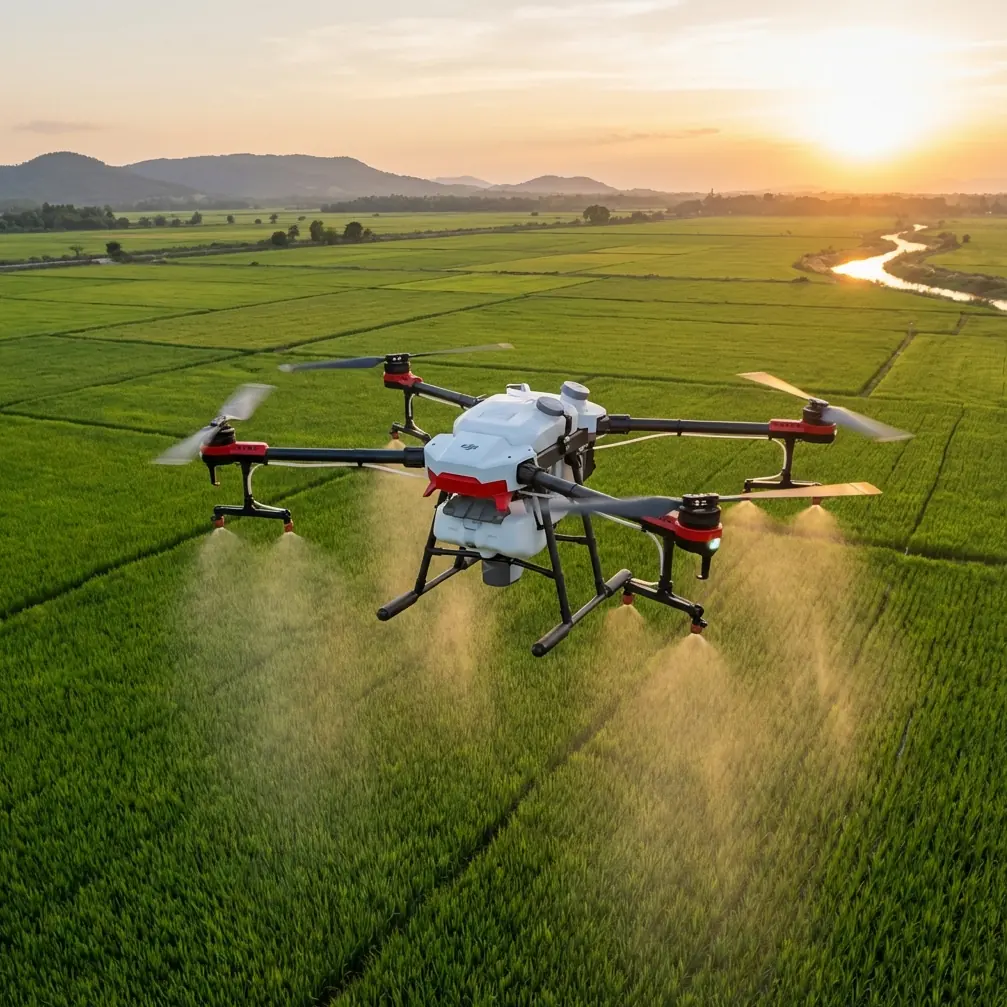
Agras T50 for Urban Field Inspection: What a Biodiversity Story Taught Me About Flying Smarter
META: A field-tested case study on using the Agras T50 for urban agricultural inspection, with practical insight on precision flight, spray drift control, nozzle calibration, RTK performance, and why environmentally sensitive sites demand a different mindset.
I’ve spent enough time around agricultural drone programs to know that urban-adjacent fields are rarely simple. They look manageable on a map. Then you arrive and find tree lines, pedestrian paths, greenbelts, drainage edges, utility corridors, ornamental plantings, and neighbors who notice everything. Inspection work in these environments demands more than a capable aircraft. It demands restraint, precision, and a clear understanding of what’s around the crop, not just what’s in it.
That is why an unexpected reference point keeps coming back to me when I think about the Agras T50: Shennongjia in Hubei, a place described as a “species gene bank,” home to many ancient species. One of them, the Sichuan golden snub-nosed monkey, was first recorded there by a scientific expedition in 1977. Under strict protection, that local population grew from just over 500 animals in 1990 to 1,473 in the latest count. Those numbers matter. They show what happens when management becomes disciplined, consistent, and habitat-aware.
At first glance, a biodiversity recovery story and an agricultural drone platform may seem unrelated. They are not. In urban field inspection, especially near ecologically sensitive edges, the central question is the same: how do you get closer to the target without creating collateral impact?
That’s where the Agras T50 changed my workflow.
The challenge: urban fields don’t forgive sloppy operations
A few seasons ago, I was brought into a project involving small and fragmented production blocks near developed areas. The crops were commercially valuable, but the surrounding landscape complicated everything. We were dealing with narrow access lanes, structures that interfered with line of sight, and enough environmental sensitivity that any discussion about spray drift or poor boundary discipline immediately became a management issue rather than a technical footnote.
Before moving to a stronger T50-centered workflow, inspection itself was one of the bottlenecks. Teams spent too much time reconciling field observations with inconsistent location marks. Ground scouts could identify stress, lodging, drainage problems, or patchy vigor, but translating those observations into repeatable drone action was harder than it should have been. In dense edge conditions, a few meters of uncertainty can mean the difference between staying within the intended block and crossing toward a non-target area.
That’s why centimeter precision isn’t just a specification to me. It’s operational discipline. When the RTK fix rate is stable and the aircraft is reliably holding position, field inspection stops being approximate. You can revisit the same zone, compare changes over time, and make decisions that aren’t based on guesswork. In urban agriculture, that precision protects both crop performance and community trust.
Why the biodiversity analogy matters
The Shennongjia golden snub-nosed monkey is often described as visually striking, with vivid fur and a distinctive blue face. The local monkey groups there are known as the “most beautiful primate tribe.” That description is memorable, but the more useful lesson is not aesthetic. It’s management.
A population doesn’t grow from around 500 to 1,473 because people simply care in the abstract. It grows because protections become real on the ground. Boundaries are respected. Disturbance is reduced. Monitoring improves. Decisions are made with the habitat in mind.
Urban field inspection should be approached the same way. The T50 is powerful, but in sensitive environments the real value is not brute capacity. It’s controlled access to information and controlled application where needed. If your operation sits near biodiversity corridors, public-facing green spaces, or mixed-use land, your aircraft strategy should reflect that reality.
That was the shift for us. We stopped thinking of the drone as a fast way to cover hectares and started treating it as a precision instrument that had to coexist with a complex landscape.
What the Agras T50 made easier in practice
The first practical advantage was route repeatability. When inspecting irregular urban parcels, consistency matters more than speed. With a dependable RTK workflow, I could return to known trouble spots and assess whether a drainage issue was expanding, whether edge pest pressure was creeping inward, or whether a fertility correction had actually changed plant response. That sounds basic, but too many field programs are still operating with rough geolocation and memory-based scouting logic.
The second advantage was better control over swath width planning. In broadacre settings, operators can sometimes tolerate a wider operational margin. Urban fields usually don’t offer that luxury. Swath width is not just about efficiency. It determines how confidently you can work around boundaries, obstacles, and sensitive edges without overextending into areas that should remain untouched. On the T50, planning around realistic swath behavior helped us build mission patterns that respected the site instead of forcing the site to fit the aircraft.
Then there’s nozzle calibration, which I consider one of the most overlooked disciplines in drone operations. In mixed urban-ag settings, calibration errors show up fast. Uneven droplet formation, inconsistent flow, or a mismatch between target and output can lead to poor deposition and a higher risk of off-target movement. With the T50, careful nozzle calibration became part of the standard operating rhythm, not a one-time setup item. That alone improved confidence in follow-up applications after inspection findings.
Spray drift, of course, was never far from the conversation. In a rural monocrop block, drift is already a serious concern. Near urban edges, it becomes central. The T50 gave us a platform capable of disciplined execution, but the key was using that capability correctly: tighter boundary planning, weather-aware timing, conservative mission design, and no shortcuts on calibration. A strong aircraft does not eliminate drift risk. It gives a skilled operator a better chance to reduce it.
Inspection is not separate from application
One mistake I still see in the market is treating inspection and application as unrelated jobs. In reality, the quality of your inspection determines the quality of your intervention. If scouting data is weak, your spray mission becomes a blunt instrument.
That’s why I pay attention to multispectral workflows even when clients first approach me with a spraying question. Multispectral insight can sharpen zone prioritization, reveal stress before it becomes visually obvious, and support more defensible decisions in compact urban fields where blanket responses often create unnecessary exposure. The T50 sits in an operational ecosystem where precision matters at every stage, from identifying the issue to executing the response.
This is especially relevant in places where urban agriculture shares edges with ecological value. Think parks, restoration strips, roadside vegetation, campus-adjacent plots, demonstration farms, or peri-urban specialty production. In those settings, the discipline behind your data collection is not academic. It directly affects how much product moves, where it moves, and whether that movement stays justified.
Durability matters more than spec-sheet bragging
Urban field work often happens in less-than-ideal conditions: dusty access points, muddy transitions, residue on equipment, washdown demands between sites. That’s where build quality earns its keep. An IPX6K-rated platform gives operators a more practical maintenance and cleaning routine, which matters when a machine is moving between different environments and needs to remain reliable without endless downtime.
I’m careful not to exaggerate ruggedness claims. No aircraft is invincible, and no protection rating excuses poor handling. But on working days with multiple site visits, residue management and post-operation cleanup are real. A platform designed to tolerate demanding wash conditions supports better fleet care, and better fleet care supports more consistent inspection results over time.
The past problem the T50 helped solve
The specific challenge that convinced me was a recurring edge-zone issue in a field bordered by mixed vegetation and light urban infrastructure. Ground teams kept reporting inconsistent crop response near one margin. Some suspected irrigation distribution. Others thought pest pressure. A few blamed previous application inconsistency. We had observations, but not enough repeatable precision to isolate the pattern quickly.
Once we rebuilt the workflow around tighter T50 mission discipline, the picture sharpened. Repeat flights over the same boundary area, paired with more rigorous georeferencing, showed the problem wasn’t random at all. It followed a narrow strip influenced by water movement and local canopy shading from adjacent non-crop vegetation. That distinction changed the response. Instead of broad corrective action, we applied a narrower, better-timed strategy and avoided unnecessary treatment elsewhere.
This is exactly why I keep thinking about Shennongjia. Good management starts with seeing the environment as it actually is, not as a simplified block on paper. Whether you’re protecting a rare primate habitat or managing a productive field beside urban infrastructure, broad assumptions create bad outcomes.
The human side of urban drone inspection
There’s another reason the biodiversity reference stays with me. The golden snub-nosed monkey story is, at its core, a story about stewardship. Someone had to decide that close monitoring, strict protection, and long-term consistency were worth the effort.
Urban drone work needs the same mindset. Operators often focus on aircraft performance, battery cycles, throughput, or acres per hour. Those are valid metrics. But in urban-adjacent agriculture, stewardship is also a performance metric. Did you keep the mission inside the intended boundary? Did your RTK hold? Did your nozzle calibration match the agronomic objective? Did your swath width plan reflect the site’s real constraints? Did you reduce drift exposure instead of merely hoping conditions were acceptable?
These questions matter because urban operations are visible. They are often one complaint away from scrutiny. Precision is not only agronomic. It is reputational.
What I would tell any operator evaluating the Agras T50 for this kind of work
Don’t judge the T50 only by its ability to carry out a task. Judge it by how well it supports disciplined operations in places where mistakes are expensive.
If your fields sit near environmentally valuable zones, urban development, or public interfaces, the T50’s real advantage is the combination of precise positioning, repeatable mission execution, practical durability, and the ability to support a tighter relationship between inspection and intervention. That’s where the aircraft earns its place.
And if you’re building a program from scratch, start with process before payload. Establish calibration routines. Verify RTK performance in your actual operating environment, not ideal conditions. Define acceptable drift thresholds operationally. Build swath plans around boundaries, not around theoretical productivity. If multispectral data is available, use it to narrow the response before any product goes out.
That is the difference between owning a capable drone and running a credible drone operation.
For teams trying to sort through urban inspection workflows or refine how the T50 fits into a precision program, I usually suggest starting with a site-specific discussion rather than a generic equipment comparison. If that would help, here’s a direct way to reach out: message me about your field layout and operating constraints.
Why this matters now
The lesson from Shennongjia is not sentimental. A region known as a species gene bank protected a rare animal population through discipline, and the numbers tell the story: from just over 500 in 1990 to 1,473 today, after the species was first documented there in 1977. Monitoring and protection worked because they were sustained and specific.
Urban agriculture deserves that same level of specificity. The Agras T50 fits best when it is used not as a blunt instrument, but as part of a careful operating system—one that values centimeter precision, respects boundaries, manages spray drift proactively, treats nozzle calibration as non-negotiable, and uses repeatable inspection to make better decisions.
That’s the kind of drone work that holds up under scrutiny. And in urban environments, that’s the only kind worth doing.
Ready for your own Agras T50? Contact our team for expert consultation.