
Agras T50 in Windy Field Conditions: A Practical Inspection
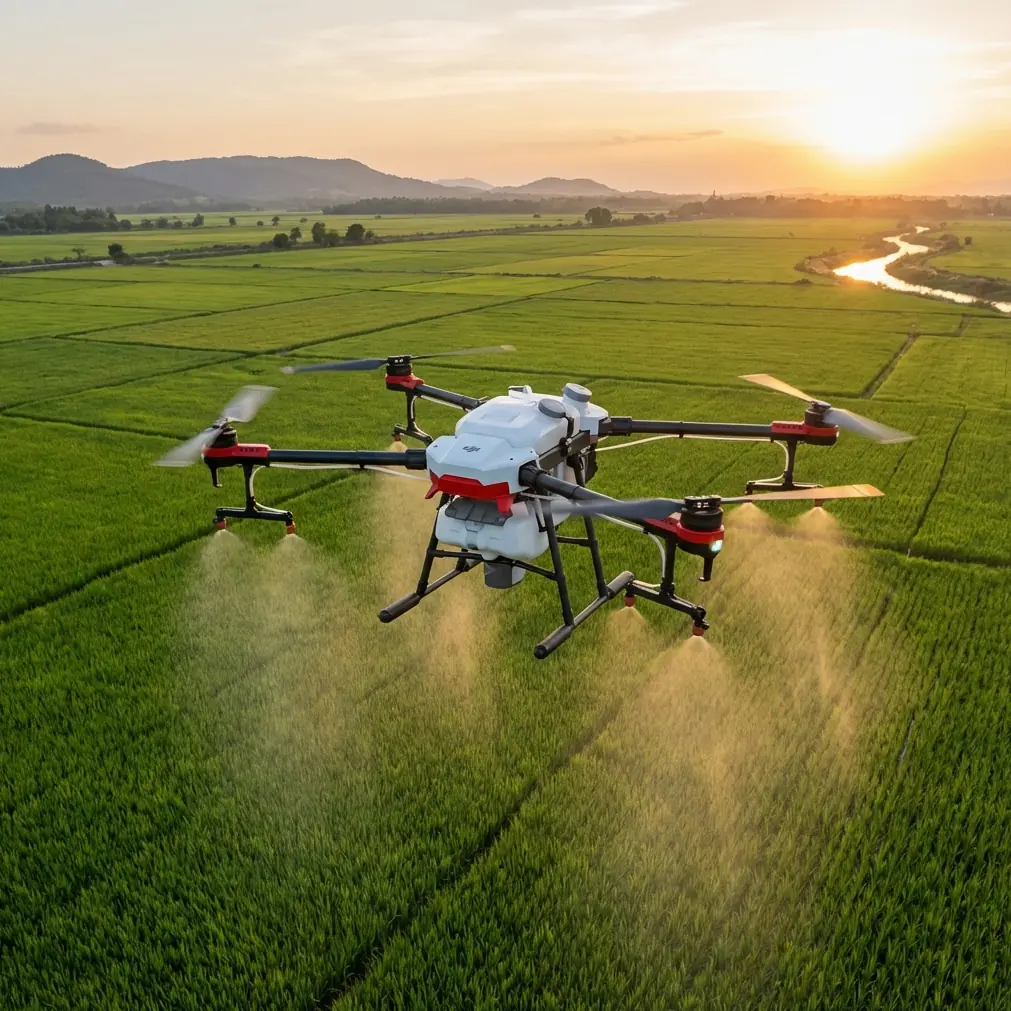
Agras T50 in Windy Field Conditions: A Practical Inspection Tutorial for Better Coverage and Less Drift
META: Learn how to inspect fields in windy conditions with the Agras T50, including spray drift control, nozzle calibration, RTK fix stability, antenna positioning, and flight planning for safer, more accurate operations.
Wind changes everything in the field. It changes how droplets move, how confidently you can hold a line, and how much trust you should place in a perfect-looking plan created back at the truck. If you are preparing to inspect or spray with the Agras T50 in breezy or unstable conditions, the drone itself is only part of the equation. The rest comes down to setup discipline, environmental reading, and a few operational habits that separate clean coverage from wasted passes.
This tutorial focuses on one real operating scenario: using the Agras T50 while inspecting fields in windy conditions. Not calm demo conditions. Not a flat, still morning where every route behaves exactly as drawn. Windy fields expose weak setup choices fast, especially around spray drift, RTK stability, swath consistency, and radio link confidence. That is where careful preparation matters.
As an aircraft platform, the Agras T50 gives operators a strong base for demanding work. Its high-capacity agricultural design, broad-area treatment capability, and centimeter-level positioning potential make it suitable for large blocks where consistency matters more than headline specs. But in wind, the operator’s workflow matters as much as payload or tank size. A drone can be capable on paper and still produce weak results if nozzle calibration is off, the antenna layout is careless, or the mission is flown with the wrong expectations about drift.
Start with the field, not the aircraft
The first mistake many operators make in windy weather is treating the drone setup as the starting point. It is not. The field is.
Before powering up the Agras T50, walk or drive the first section you plan to inspect. You are looking for three things:
- Wind direction relative to crop rows and route geometry
- Surface-level turbulence caused by trees, berms, irrigation structures, or uneven canopy
- Sensitive neighboring areas where drift or overshoot would matter
This matters because wind in the field is rarely uniform. A handheld reading at the road may tell you one story, while the downwind edge of a block tells another. In orchards and taller row crops, the transition zone near field boundaries can produce turbulent pockets that alter both inspection quality and spray placement. If you are using the Agras T50 to verify crop condition before treatment, your inspection passes need to reflect those local conditions rather than the average forecast.
That is where multispectral or visual scouting workflows become more useful than many operators realize. Even if the T50 mission is centered on application, a pre-treatment inspection mindset helps you see where canopy density, lodging, moisture differences, or shelterbelts may amplify wind effects. Wind does not hit every acre equally. Your route should not assume it does.
Why RTK fix rate matters more in wind
In calm conditions, operators sometimes get away with mediocre positioning habits because visual alignment and route logic mask small errors. Wind strips away that margin.
The Agras T50 benefits most when it is operating with a strong RTK fix rate and stable correction input. The operational significance is straightforward: when the aircraft is constantly making small positional corrections in moving air, centimeter precision is not just a marketing phrase. It directly affects whether adjacent passes stay uniform and whether boundary behavior remains predictable.
A weak or inconsistent RTK fix rate in wind can show up in practical ways:
- Slight lateral inconsistency between passes
- Uneven overlap across the swath width
- More visible correction behavior on turns and edges
- Lower confidence when operating near sensitive buffer zones
If your correction source is unstable, fix that before you think about increasing productivity. Confirm satellite visibility, verify the base or network source, and make sure the ground setup is not compromised by obstructions. In windy inspection work, a clean route line is not just tidy data. It is a risk-control measure.
Antenna positioning advice for maximum range
This is one of the least glamorous topics in agricultural drone work, and one of the most consequential.
If you want maximum range and a more reliable control link with the Agras T50, treat antenna positioning as part of the flight plan. Do not wait for signal weakness to remind you. In windy fields, the aircraft may spend more time making micro-adjustments, flying edge lines carefully, or holding exact geometry in less-than-ideal air. That makes link quality even more important.
Here is the practical approach I recommend:
- Position yourself where you maintain the clearest possible line of sight to the active work zone, not where it is most comfortable to stand.
- Keep the controller antennas oriented to present their strongest face toward the aircraft’s operating area rather than pointing the antenna tips directly at the drone.
- Avoid standing beside vehicles, metal tanks, power infrastructure, or dense tree lines that can block or reflect signal.
- If the field is long, relocate with the operation instead of trying to stretch one position too far.
The key principle is simple: range is not only about raw transmission power. It is about geometry. A well-positioned operator with clear line of sight often achieves a more stable link than someone relying on distance claims while standing behind obstructions. In the field, that difference can decide whether you finish a block smoothly or spend time recovering confidence after repeated signal degradation.
If you want to compare setup options for your own operating area, you can message our field team here and describe the terrain, crop type, and expected stand-off distance.
Nozzle calibration is not optional in gusty work
Wind magnifies every calibration mistake. A nozzle issue that seems minor in still air can become a visible coverage defect once droplets begin moving laterally.
With the Agras T50, nozzle calibration deserves attention before any serious windy-day deployment. The point is not simply to confirm that fluid is flowing. The point is to verify that the output pattern is balanced across the boom or spray system and aligned with the intended flight parameters.
This has direct operational significance for two reasons.
First, spray drift risk rises when droplets are not being produced consistently. If one side is underperforming and another is atomizing differently, the effective swath becomes uneven. Now add crosswind, and the weak side may leave underdosed strips while the opposite side drifts beyond the intended line.
Second, calibration directly affects how honestly you can use your target swath width. Many operators talk about swath width as if it were fixed by the aircraft alone. It is not. Real swath width is the result of nozzle condition, pressure behavior, flight speed, altitude, crop structure, and wind interaction. In other words, your practical width in moving air may be narrower than the theoretical width you use in ideal conditions.
For field inspection before a spray mission, that means you should look specifically for signs that indicate calibration or drift issues are already likely:
- Dusting or deposition on the downwind side of non-target surfaces
- Uneven moisture pattern on test runs
- Canopy penetration differences across neighboring rows
- Unexpected gaps where overlap should have been sufficient
Use wind to choose route direction, not just go/no-go timing
Operators often frame wind decisions too simply: either conditions are acceptable or they are not. In practice, route direction is just as important as launch timing.
When inspecting or spraying with the Agras T50, choose pass direction to reduce crosswind-induced error where possible. If the field layout allows, orient critical passes to minimize sideways drift across the crop and especially across the boundaries that matter most. There is no universal answer because crop architecture and terrain vary, but the principle holds: align route logic with the actual wind pattern on site.
For example, if one field edge borders a waterway, road, or sensitive crop, your most conservative route strategy should protect that side. That may mean adjusting the sequence of work, changing your staging point, or reducing your operational width on edge passes even if the center of the field could tolerate a broader pattern.
This is also why inspection in windy conditions should include periodic visual reassessment. Do not assume the wind at 8:15 is the same wind at 8:45. In many regions, small thermal changes can alter gust behavior within a single tank cycle. The best operators notice this early and adapt before the deposition pattern tells the story for them.
How IPX6K matters in real field use
The Agras T50’s IPX6K-level protection is not a reason to ignore field discipline, but it does matter operationally. In agricultural work, inspection and treatment rarely happen in clean, laboratory-like conditions. You are dealing with splash, residue, rinse cycles, and environments where dust can turn to grime quickly.
In windy conditions, that protection matters in a practical sense because airborne moisture, residue, and debris often circulate more aggressively around the aircraft and support equipment. A robust ingress protection rating helps the system tolerate harsher day-to-day exposure, especially during repetitive agricultural cycles. It supports reliability, but it does not replace maintenance.
After windy operations, especially where fine particulate matter is present, inspect exposed surfaces, spray components, and connector areas carefully. A drone built for harsh work still benefits from operators who clean with intention instead of habit.
Build a windy-day inspection checklist around three numbers
Even though this article is not about chasing arbitrary thresholds, disciplined operators work better when they anchor decisions to measurable checks. For the Agras T50 in wind, I suggest centering your pre-flight inspection around three numbers:
- Current and gust wind readings
- RTK fix stability over a short observation period
- Actual versus intended effective swath width from a controlled test section
The third item is the one most often skipped. Yet it is the one that tells you whether your plan reflects field reality. A short test pass can reveal more than a long discussion about manufacturer capacity figures. If your effective pattern is tightening under current conditions, accept that early and adjust. Covering fewer meters per pass with confidence is usually better than pretending the original width still applies.
Don’t confuse aircraft capability with agronomic suitability
The Agras T50 is engineered for serious agricultural work, and that matters. But windy inspection decisions should still be agronomic first, aviation second.
A technically successful flight is not automatically an agronomically successful operation. If wind pushes droplets into poor deposition behavior, or if route positioning introduces coverage irregularity, the mission may be “completed” while the field result is compromised. That distinction is where mature operators stand apart.
The best use of the T50 in these conditions is not to force work into marginal weather just because the aircraft can remain airborne. It is to use the platform’s precision, route control, and system robustness to operate intelligently within the limits that the field and chemistry allow.
A practical sequence before takeoff
If you want one repeatable routine for windy-day work with the Agras T50, use this:
- Read wind at the staging area and again at the field edge
- Identify the downwind risk side of the block
- Confirm strong RTK fix behavior before route execution
- Check antenna orientation and line of sight from your actual operating position
- Verify nozzle calibration and look for balanced output
- Run a short test section to validate real swath width
- Reassess after the first cycle rather than locking into the original plan
That sequence is not flashy. It is effective. And in agriculture, effective is what counts.
The Agras T50 performs best in wind not when the operator tries to overpower the environment, but when the setup respects it. Stable positioning improves line quality. Good antenna geometry protects control confidence. Proper nozzle calibration reduces drift risk. Realistic swath decisions preserve coverage integrity. None of those steps are theoretical. They show up in the field, row by row.
If your goal is better field inspection and more reliable spraying in windy conditions, start there. The aircraft can do serious work. Your process determines how well that capability translates into agronomic results.
Ready for your own Agras T50? Contact our team for expert consultation.