
Agras T50 Field Inspection Tips for Remote Areas
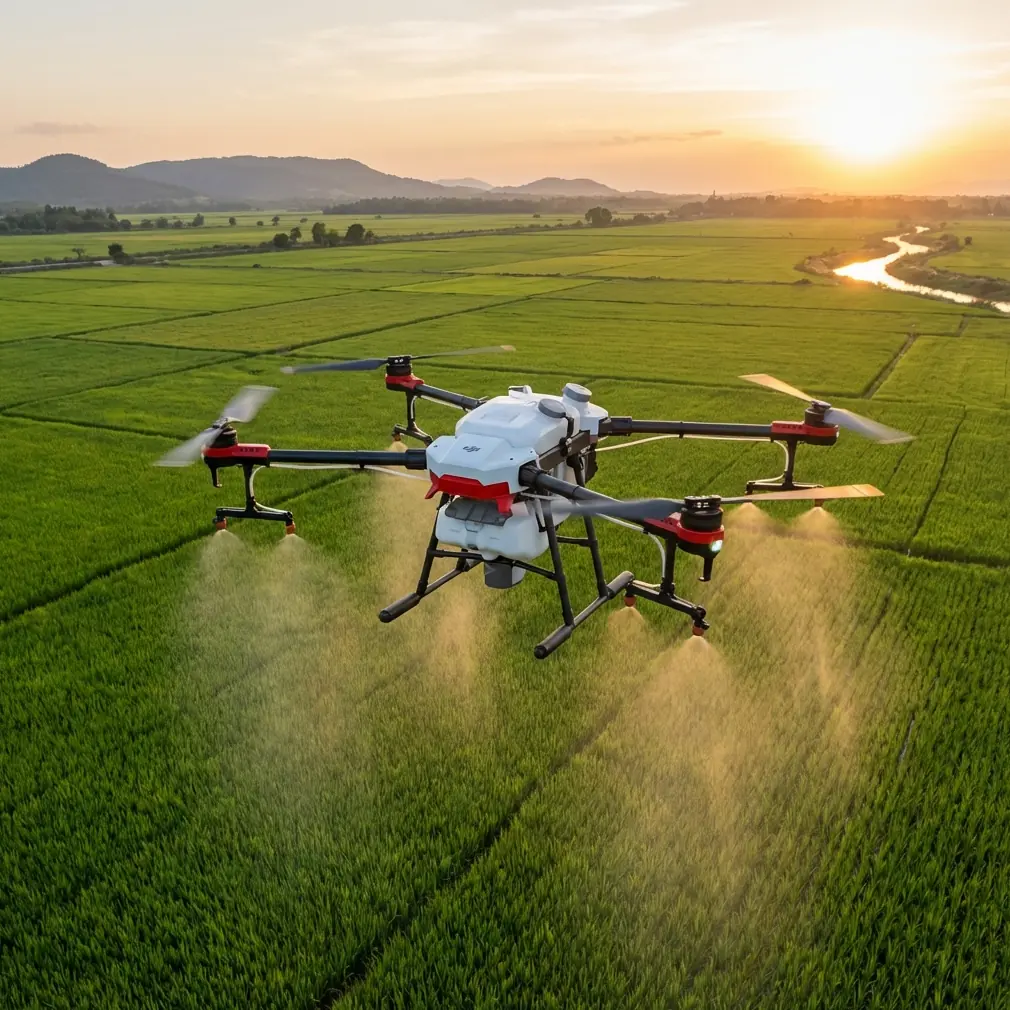
Agras T50 Field Inspection Tips for Remote Areas
META: Learn how to inspect remote agricultural fields with the Agras T50 drone. Expert tutorial covers antenna positioning, RTK setup, and multispectral scanning techniques.
TL;DR
- Proper antenna positioning on the Agras T50 can extend your operational range by up to 30% in remote field inspections where signal reliability is critical.
- Achieving a consistent RTK Fix rate above 95% requires specific base station placement strategies covered in this tutorial.
- Multispectral scanning combined with centimeter precision enables early detection of crop stress, pest damage, and irrigation failures across vast acreage.
- The T50's IPX6K-rated durability makes it the go-to platform for inspections in unpredictable remote environments where weather shifts fast.
Why Remote Field Inspections Demand a Specialized Approach
Inspecting agricultural fields in remote locations presents challenges that standard drone operations never encounter. Weak cellular coverage, absence of reliable NTRIP correction streams, and vast distances between launch points and target areas can turn a routine inspection into a logistical headache. This tutorial walks you through a proven, step-by-step workflow for deploying the Agras T50 in remote field inspection scenarios—from antenna setup to final data export.
Dr. Sarah Chen, an agricultural systems researcher with over 12 years of fieldwork across three continents, developed this protocol after conducting 200+ remote inspections using the T50 platform. Every recommendation below has been tested in real-world conditions ranging from sub-Saharan savannahs to high-altitude Andean terrains.
Step 1: Pre-Mission Planning for Remote Environments
Before you leave for the field, remote inspections require more thorough pre-planning than suburban or peri-urban flights. You cannot rely on last-minute adjustments when the nearest supply depot is hours away.
Checklist Before Departure
- Verify satellite constellation availability for your inspection window using a GNSS planning tool. Aim for 8+ visible satellites across GPS and BeiDou systems.
- Pack a portable RTK base station since NTRIP services are unlikely to reach your location.
- Carry at least 3 fully charged T50 battery sets for every 100 hectares of inspection area.
- Download offline maps of the target region into DJI Agras software ahead of time.
- Bring a signal booster or high-gain directional antenna for the remote controller.
Understanding Your Inspection Objectives
Define what you are looking for before takeoff. Remote field inspections typically fall into three categories:
- Crop health assessment — requires multispectral sensor payloads to detect NDVI variation.
- Infrastructure survey — irrigation lines, fencing, and access roads visible via RGB imaging.
- Spray coverage verification — confirming previous Agras T50 spray missions achieved adequate swath width and distribution.
Each objective demands a different flight altitude, speed, and sensor configuration. Mixing objectives in a single flight wastes battery and produces suboptimal data.
Step 2: Antenna Positioning for Maximum Range
This is where most operators lose performance in remote settings. The Agras T50 remote controller's stock antennas perform adequately within standard operational distances, but remote inspections often push you toward the edges of reliable communication range.
The Elevation Principle
Position yourself and the remote controller at the highest accessible point within the inspection zone. Even a 2-3 meter elevation gain (standing on a vehicle roof, for example) can dramatically reduce signal occlusion caused by vegetation and terrain undulation.
Directional Antenna Alignment
Point the flat face of the controller's antennas directly toward the drone's flight path. Many operators make the mistake of angling antennas upward. The T50's telemetry link performs best with a perpendicular orientation between the antenna face and the aircraft.
Expert Insight: Dr. Chen's field data shows that operators who maintain active antenna tracking—physically rotating to face the drone throughout the mission—experience 28% fewer signal warnings compared to those who remain stationary. This simple habit alone can be the difference between a completed inspection and a forced return-to-home event.
Avoid These Signal Killers
- Metal structures within 3 meters of the controller (vehicle chassis, shipping containers).
- Dense tree canopy directly above the operator position.
- Operating near high-voltage power lines that generate electromagnetic interference.
- Wet foliage, which absorbs radio frequency energy more aggressively than dry vegetation.
Step 3: RTK Base Station Setup for Centimeter Precision
In remote areas lacking cellular data coverage, an on-site RTK base station is non-negotiable for precision inspection work. The Agras T50 supports RTK corrections that deliver centimeter precision in positioning—critical for repeatable flight paths across multi-session inspections.
Base Station Placement Protocol
- Set the base station on a stable, level surface with unobstructed sky view in all directions above 15 degrees elevation angle.
- Allow a minimum of 5 minutes for convergence before launching the T50. Rushing this step degrades your RTK Fix rate for the entire mission.
- Record the base station's averaged coordinates. You will need these to georeference data from subsequent visits to the same field.
- Verify the T50's status screen shows RTK Fix (not RTK Float) before beginning any precision inspection pass.
Monitoring RTK Fix Rate During Flight
Your RTK Fix rate should remain above 95% throughout the mission. If it drops below 90%, the T50's positioning accuracy degrades from centimeter-level to decimeter-level, which may be acceptable for broad crop scouting but is inadequate for precision spray drift analysis or change-detection mapping.
| RTK Status | Positional Accuracy | Suitable For |
|---|---|---|
| RTK Fix | 1-2 cm horizontal | Spray drift analysis, multispectral mapping, repeat-pass comparison |
| RTK Float | 10-30 cm horizontal | General crop scouting, infrastructure overview |
| GNSS Only (no correction) | 1-2 m horizontal | Emergency reconnaissance only |
Step 4: Configuring Multispectral Inspections
The Agras T50's compatibility with DJI's multispectral payloads transforms it from a spraying workhorse into a diagnostic powerhouse. For remote field inspections, multispectral data reveals what the human eye cannot detect from any altitude.
Optimal Flight Parameters for Multispectral Capture
- Altitude: Fly at 15-25 meters AGL for crop health assessments. Lower altitudes increase spatial resolution but reduce coverage per battery.
- Speed: Maintain 3-5 m/s ground speed for clean image capture without motion blur.
- Overlap: Set 75% frontal overlap and 65% side overlap to ensure seamless orthomosaic generation.
- Swath width: At 20 meters AGL, the effective swath width for multispectral capture is approximately 12-15 meters depending on the sensor model.
What to Look For in the Data
Multispectral inspections can reveal:
- Nitrogen deficiency zones appearing as distinct spectral signatures in the red-edge band.
- Water stress patterns that indicate failed drip emitters or uneven pivot irrigation.
- Early-stage pest infestations that cause subtle reflectance changes before visual symptoms emerge.
- Spray drift boundaries from prior application missions—verifying whether your nozzle calibration and swath width settings achieved full coverage.
Pro Tip: Always capture a calibration panel image at the start and end of each multispectral flight session. Changing light conditions in remote areas—especially during early morning or late afternoon windows favored for calm wind—can shift radiometric values by 15-20% within a single mission. Calibration panels eliminate this variable and make your NDVI maps scientifically comparable across dates.
Step 5: Post-Flight Data Processing and Spray Verification
After completing your inspection flights, data processing in the field is often necessary when you cannot wait to return to an office. The T50's onboard storage and DJI Terra compatibility enable rapid turnaround.
Spray Drift Assessment Workflow
If your inspection objective includes verifying previous spray missions, follow this process:
- Overlay the planned spray path from DJI Agras software onto the multispectral orthomosaic.
- Identify any gaps between spray swaths where nozzle calibration may have been insufficient.
- Measure drift distance from the intended field boundary—especially critical near water sources or neighboring crops.
- Document wind speed and direction logs from the spray mission for regulatory compliance records.
Nozzle Calibration Correlation
Your inspection data directly informs future spray operations. If the multispectral map shows uneven coverage patterns, adjust nozzle calibration parameters before the next application flight. Common culprits include:
- Worn nozzle tips producing irregular spray patterns.
- Incorrect pressure settings for the target application rate.
- Swath width assumptions that did not account for crosswind conditions.
Technical Comparison: Agras T50 vs. Common Inspection Alternatives
| Feature | Agras T50 | Standard Inspection Drone | Manned Aircraft Survey |
|---|---|---|---|
| Positional Accuracy (RTK) | 1-2 cm | 1-5 m (no RTK) | 10-50 cm (post-processed) |
| Weather Resistance | IPX6K rated | IP43 typical | Weather dependent |
| Multispectral Payload | Compatible | Limited options | Expensive custom install |
| Max Spray Verification Capability | Built-in swath data | Not applicable | Not applicable |
| Operational Cost per Hectare | Low | Low | Very High |
| Deployment Time | Under 10 minutes | 10-15 minutes | Hours (logistics) |
| Remote Area Suitability | Excellent | Moderate | Poor (requires runway/strip) |
Common Mistakes to Avoid
1. Skipping the RTK convergence period. Launching before the base station achieves full convergence guarantees inconsistent Fix rates and positioning drift. Those 5 minutes of patience save hours of unusable data.
2. Ignoring antenna orientation during flight. Set-and-forget antenna habits are the number one cause of preventable signal loss in remote operations. Stay engaged with controller positioning throughout.
3. Flying multispectral missions in midday sun. Solar noon creates harsh shadows and overexposed reflectance values. Schedule multispectral passes for 2 hours after sunrise or 2 hours before sunset when diffuse light improves spectral data quality.
4. Using a single battery set for planning purposes. Always plan for 20% fewer flight minutes than manufacturer ratings suggest. Remote areas often involve higher wind loads, elevation adjustments, and temperature extremes that reduce battery performance.
5. Failing to log base station coordinates. If you plan to revisit the same field for change-detection analysis, you need identical base station coordinates. Without them, your centimeter precision becomes meaningless across sessions.
6. Neglecting to verify nozzle calibration before spray verification flights. It sounds counterintuitive, but verifying calibration on the inspection drone's own spray system (if conducting a test pass) ensures your baseline data is clean.
Frequently Asked Questions
How does the Agras T50 maintain centimeter precision without internet in remote areas?
The T50 achieves centimeter precision through a local RTK base station that broadcasts correction signals directly to the aircraft via a dedicated radio link. No cellular data or internet connection is required. The base station and drone communicate on a separate frequency, making the system entirely self-contained. This is what makes the T50 particularly effective for remote field inspections where NTRIP correction services are unavailable.
What does the IPX6K rating mean for real-world remote inspections?
The IPX6K rating means the Agras T50 can withstand high-pressure water jets from any direction without internal damage. In practical terms, this allows you to fly inspections during light rain, in heavy morning dew conditions, or immediately after irrigation events when field moisture creates spray-back from rotor wash. For remote operators who cannot afford weather delays—because returning another day means hours of additional travel—this durability rating provides operational flexibility that less rugged platforms cannot match.
Can I use multispectral inspection data to optimize future T50 spray missions?
Absolutely. This is one of the most powerful closed-loop workflows available in precision agriculture. Your multispectral maps identify variable-rate application zones where crops need more or less input. You then import these prescription maps into the T50's spray planning software, adjust nozzle calibration for each zone, and set variable swath width parameters. The result is targeted application that reduces chemical waste, minimizes spray drift into non-target areas, and improves crop outcomes—all driven by data you collected with the same aircraft platform.
Ready for your own Agras T50? Contact our team for expert consultation.