
Agras T50 for Coastline Work: A Practical Field Guide
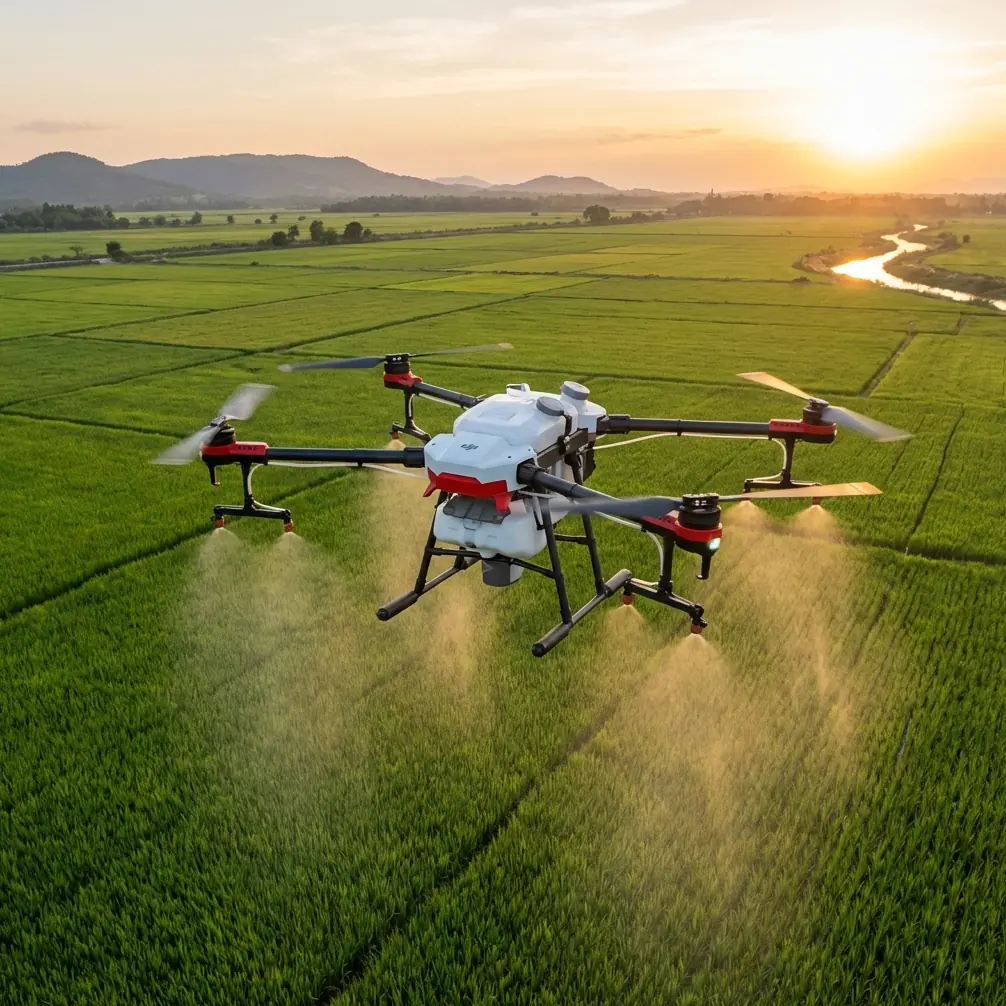
Agras T50 for Coastline Work: A Practical Field Guide to Accuracy, Interference, and What the Data Really Tells You
META: A field-driven guide to using the Agras T50 around coastlines, with practical advice on RTK fix stability, electromagnetic interference, orthomosaic workflow limits, nozzle calibration, spray drift control, and centimeter-level decision making.
Coastlines are deceptive work environments for drones. They look open. They feel simple. Then the aircraft starts dealing with reflected signals from wet surfaces, shifting wind, salt exposure, broken terrain, and patchy GNSS behavior near infrastructure. If you are evaluating the Agras T50 for coastline inspection or vegetation management, that setting matters more than any brochure spec sheet.
The T50 is usually discussed as an agricultural platform, but that misses a bigger point: it is a heavy-duty low-altitude work system that can be highly effective in coastal corridors where access is awkward and ground crews lose time. The question is not whether it can fly there. The real question is whether you can keep data quality, application consistency, and positioning confidence high enough to trust the output.
That is where most field teams either gain an edge or waste a day.
Why coastline operations expose weak workflows
Complex shoreline terrain compresses several problems into one mission. Cliffs, embankments, tidal flats, access roads, sea walls, utility lines, and vegetation edges all sit close together. Wind direction changes quickly. Surfaces reflect light differently from one minute to the next. If you are mapping, spraying, or documenting erosion or invasive growth, those conditions punish sloppy setup.
The Agras T50 is well suited to this kind of physically demanding environment because operators often need more than a camera drone. They need payload capacity, robust weather resistance, stable low-altitude control, and route repeatability. In shoreline maintenance work, that can mean targeted application across narrow strips, embankment vegetation control, or repeated inspection passes over difficult ground.
But hardware strength is only half the story. The rest comes down to how you process imagery, how you handle radio noise, and how you interpret what the final map can and cannot tell you.
The first hard lesson: sharp orthomosaics do not guarantee crop or vegetation identification
One of the most useful reference points in the source material comes from an ArcGIS integrated field-and-office workflow document. It describes a processing setup where the operator uses default initial processing, enables the orthomosaic workflow, and intentionally does not generate a digital surface model. The result is a clean 2D output, and the measured processing time for one field parcel is roughly 1 to 6 hours, depending on image resolution, image count, CPU cores, and memory.
That matters for T50 operators doing coastline work because many teams still underestimate the office side of a drone mission. They plan flying time and battery cycles but ignore the reality that coastal projects often need same-day interpretation. If your workflow creates a bottleneck back at the workstation, the aircraft is not the limiting factor anymore.
The more interesting detail is the document’s finding that even after producing an orthomosaic with measured ground resolution in the centimeter class, zooming in still did not allow the user to identify crop type simply by trying to see leaves clearly. That single point is operationally significant.
For coastline work, it means this: do not assume that a nice-looking orthomosaic from your T50 mission will automatically answer species-level or condition-level questions. If the task is distinguishing salt-tolerant weeds from desirable cover, identifying stress in coastal vegetation, or separating sprayed from unsprayed strips, RGB imagery alone may not be enough. You may need multispectral support, field truthing, or a different capture pattern.
A lot of drone plans fail because teams ask a visual map to do analytical work it was never equipped to do.
How that changes a serious T50 mission plan
If your goal is coastal inspection with the Agras T50, start by defining the output before you define the route.
Ask:
- Do I need a visually clean orthomosaic for documentation?
- Do I need centimeter precision for repeatable treatment along a sea wall or access track?
- Do I need to detect plant-type differences, moisture stress, washout, or coverage gaps?
- Do I need a DSM, or will a 2D orthomosaic be enough?
That ArcGIS reference is useful because it reminds us that processing choices are not cosmetic. Choosing Create Orthomosaic only and skipping DSM can speed delivery and simplify interpretation when the job is area documentation or treatment verification. Around coastlines, that is often the right call for fast operational review. But if slope behavior, drainage pathways, dune shape, or embankment deformation are central to the task, a 2D product alone may leave out the very thing you came to measure.
The T50 can generate valuable data, but the mission architecture has to match the decision you are trying to make.
RTK fix rate near the sea: what actually goes wrong
The user scenario here mentions complex terrain and the narrative spark points to electromagnetic interference and antenna adjustment. Good. That is one of the most practical issues in shoreline operations.
Along coastlines, RTK Fix rate can drop for reasons operators sometimes misread as satellite weakness alone. In reality, the problem is often compounded by local electromagnetic clutter and signal geometry. Sources include communication towers, radar-adjacent infrastructure, power distribution hardware, marine facilities, and reflective metallic surfaces. Add moisture-heavy air and uneven topography, and positioning can become unstable exactly where route fidelity matters most.
When the T50 starts showing inconsistent fix behavior, do not jump straight to blaming the aircraft. Work through the environment.
A reliable field approach to interference handling
Stop treating antenna orientation as an afterthought.
If the control link or RTK system is struggling, physically reassess your antenna angle relative to the intended flight corridor. Coastal operators often stand where access is easiest, not where signal geometry is best.Move the pilot station before changing the entire mission.
A short relocation away from metal fencing, parked vehicles, reinforced concrete edges, or utility cabinets can clean up the link dramatically.Avoid setting up beside elevated shoreline infrastructure.
Sea walls, towers, light poles, and harbors concentrate the exact clutter that can undermine centimeter precision.Watch the RTK state before takeoff and again at the far edge of the route.
Many flights launch with a healthy fix but degrade once the aircraft rounds a bluff or drops along a coastal cut.Use repeatable test legs.
Fly a short segment, note fix stability, then adjust antenna orientation and pilot position. This is faster than completing a bad full mission and discovering the route drift later.
That is the practical value of thinking in terms of RTK Fix rate rather than generic “signal strength.” On coastal jobs, route repeatability is part of treatment quality, inspection consistency, and post-processing trust.
Nozzle calibration matters more on the shoreline than inland
The Agras T50’s relevance in coastal corridors often includes vegetation control, right-of-way maintenance, invasive plant treatment, or sensitive-area spot application. In those contexts, nozzle calibration is not a routine box to tick. It is the difference between controlled deposition and expensive uncertainty.
Coastal air is rarely still. Spray drift becomes a central risk because wind can roll over embankments, wrap around retaining structures, or accelerate through narrow passages. Even modest changes can distort droplet placement across a narrow coastal strip.
That is why shoreline operators should calibrate with local conditions in mind, not just standard inland expectations.
Focus points for T50 application work near coastlines
- Verify output consistency before moving into exposed sections.
- Re-check swath width when wind direction changes relative to the route.
- Reduce assumptions about coverage on leeward versus windward passes.
- Confirm droplet behavior near vegetation edges, especially where there is open water immediately adjacent to the treatment zone.
- If the mission is partly inspection and partly treatment, separate those objectives operationally. Trying to optimize both at once usually compromises one.
The LSI terms around spray drift, swath width, and centimeter precision belong together here. Wide coverage sounds efficient until drift steals accuracy. A narrower, well-controlled swath often produces better real-world productivity because you avoid rework, edge misses, and questionable deposition.
The manufacturing backdrop matters, even if you never visit a factory
One source item notes that some foreign media have speculated China’s drone output is about 700,000 units per month, while the headline argues that estimate is too low and underestimates actual production capacity. There are no supporting production details in the source summary, so this is not a number to over-interpret. Still, it tells us something useful.
For an operator considering the Agras T50, large-scale production capacity matters operationally, not just economically. It suggests a mature supply environment where airframes, batteries, charging ecosystems, parts availability, and platform iteration can move faster than in smaller drone segments. For coastline teams, that usually translates into something practical: less fragility in fleet planning.
If you are maintaining vegetation or inspecting infrastructure across long coastal stretches, downtime is the enemy. A platform backed by deep manufacturing capacity is generally better positioned for support continuity, standardized accessories, and field replacement logistics. That does not guarantee perfection, but it does reduce one of the quiet risks in commercial drone programs: depending on a system that looks capable on paper and becomes difficult to sustain in the field.
What not to borrow from the logistics drone world
Another reference document discusses drone delivery companies and the barriers they face. It mentions that New Zealand was the only country at that time with legal authorization for drone delivery, while many other regions remained in testing or regulatory negotiation. It also cites Amazon’s target of serving customers within 16 kilometers, delivering up to 2 kilograms in as little as 30 minutes, and notes Google’s shift from fixed-wing experimentation back toward a four-rotor multirotor design.
Why bring that up in a T50 article? Because it highlights a mistake people make when evaluating heavy-duty multirotor systems: they borrow the wrong benchmark.
Coastline inspection and treatment work are not “last-mile logistics” problems. They are low-altitude precision execution problems. The logistics sector has spent years learning that route approval, obstacle behavior, safe contingency management, and payload stability are harder than they look. That lesson translates directly to coastal T50 work, but in a different way.
You should not judge the T50 by how far or how fast it can mimic a delivery mission. Judge it by whether it can hold repeatable low-altitude lines in messy air, maintain stable positioning around infrastructure, and deliver usable data or application coverage without creating a post-processing headache.
That is a better commercial standard.
A practical tutorial workflow for coastal T50 teams
Here is a field-tested structure for planning a shoreline mission with the Agras T50.
1. Define the deliverable first
Decide whether you need:
- treatment execution,
- orthomosaic documentation,
- comparative repeat flights,
- or vegetation condition interpretation.
If identification detail matters, assume RGB alone may not be enough. The ArcGIS reference makes that clear.
2. Build for centimeter precision, then verify it in the actual corridor
Do not trust a parking-lot RTK check. Test fix quality where the route bends, drops, or runs near structures.
3. Adjust antenna position early
If there is electromagnetic interference, changing pilot location and antenna orientation is often the quickest fix. This is especially true near marine infrastructure and utility-heavy shoreline sections.
4. Calibrate nozzles to the site, not to habit
For treatment work, account for wind channeling and edge effects. Reassess swath width instead of assuming standard settings will hold.
5. Keep image-processing expectations realistic
A clean orthomosaic is excellent for documenting extent, coverage, and repeatability. It may not tell you plant type or leaf-level condition. If your stakeholders expect that, correct the expectation before flying.
6. Budget office time honestly
The ArcGIS workflow reference found that processing one parcel could take 1 to 6 hours depending on photo count, resolution, CPU cores, and memory. If you have multiple coastal sections to inspect in one day, your reporting plan should reflect that reality.
7. Separate “pretty map” goals from operational decisions
The best map is not always the most useful product. A fast orthomosaic with clean geospatial alignment may be more valuable than a heavier dataset that delays action.
Where the Agras T50 fits best on the coast
The T50 makes sense where terrain is awkward, ground access is slow, repeatability matters, and environmental exposure would punish lighter-duty systems. Shoreline vegetation corridors, embankment maintenance, reclamation-zone monitoring, and repeat inspection of narrow coastal assets are all examples where a robust platform can earn its keep.
Its real strength is not just lift or throughput. It is the ability to turn difficult strips of land into manageable, repeatable workflows—provided the operator respects the limits of imagery interpretation, takes RTK behavior seriously, and treats antenna adjustment as a real field skill rather than a trivial setup detail.
If you are planning a T50 coastline program and want a second set of eyes on route design, interference handling, or data outputs, you can reach out here for a practical discussion: message Marcus directly.
A good coastal mission with the Agras T50 does not begin at takeoff. It begins with sharper questions, a cleaner positioning strategy, and a realistic understanding of what the final data will actually prove.
Ready for your own Agras T50? Contact our team for expert consultation.