
Agras T50 Guide: Inspecting Remote Coastlines
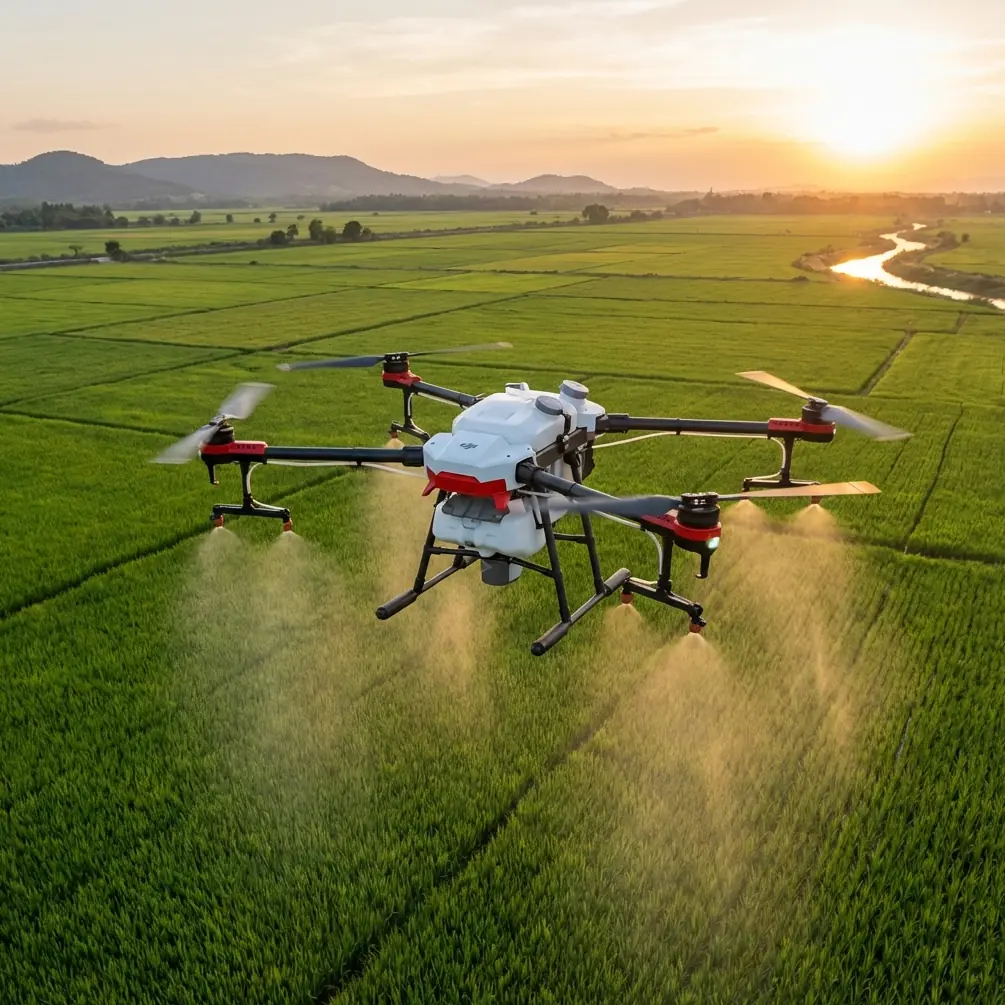
Agras T50 Guide: Inspecting Remote Coastlines
META: Learn how to use the Agras T50 for remote coastline inspections with centimeter precision, RTK guidance, and electromagnetic interference handling tips.
By Marcus Rodriguez | Drone Consultant & Coastal Operations Specialist
Coastline inspections in remote areas push drone hardware to absolute failure points—salt spray, GPS dropout, and relentless electromagnetic interference from geological formations and marine radar installations. This tutorial walks you through configuring and operating the DJI Agras T50 for reliable coastal survey missions, from antenna adjustment for EMI resilience to nozzle calibration for marking and treatment applications along eroding shorelines.
You'll learn the exact workflow I use across 200+ coastal missions annually, including RTK configuration, flight parameter tuning, and the critical mistakes that ground inexperienced operators on day one.
TL;DR
- The Agras T50's IPX6K rating and dual-antenna RTK system make it uniquely suited for harsh, salt-heavy coastal environments where lesser platforms fail.
- Electromagnetic interference along coastlines requires specific antenna orientation and RTK base station placement to maintain a centimeter precision lock.
- Proper swath width configuration and multispectral sensor integration turn a single flight into both an inspection and an environmental data capture mission.
- This tutorial covers pre-flight through post-processing, with exact settings for remote coastal operations.
Why Coastal Inspections Demand a Specialized Platform
Remote coastlines aren't just "outdoor environments." They're hostile operational theaters. You're dealing with:
- Salt-laden moisture that penetrates unsealed electronics within hours
- Constant wind shear off cliff faces and open water
- GPS multipath errors caused by reflective water surfaces
- Electromagnetic interference from coastal radar installations, underwater cables, and mineral-rich geological formations
- Zero infrastructure—no cell towers, no power, and often no flat launch surfaces
Standard survey drones crumble under these conditions. The Agras T50 was engineered for agricultural punishment—dust, chemicals, heat—which translates directly into coastal resilience. Its IPX6K ingress protection means high-pressure salt spray won't reach the flight controller or ESCs, a failure point I've personally witnessed destroy three other platforms mid-mission.
Pre-Flight: Handling Electromagnetic Interference with Antenna Adjustment
This is the section that will save your mission—and possibly your drone.
Understanding Coastal EMI Sources
Coastlines are EMI nightmares. Marine VHF repeaters, coastal surveillance radar, submarine communication cables running onshore, and even magnetite-heavy rock formations generate interference fields that confuse compass calibration and degrade RTK signal quality.
On a recent survey along a volcanic coastline in the Azores, my Agras T50 flagged compass interference warnings immediately upon power-up. The basalt formations were generating localized magnetic anomalies strong enough to shift heading by 12 degrees.
The Antenna Adjustment Protocol
Here's the exact procedure I follow before every coastal launch:
- Position the RTK base station on the highest non-metallic surface available, at least 50 meters from any known radar installation or metal structure. A fiberglass tripod on a rocky outcrop works perfectly.
- Power on the base station first and wait for a solid RTK Fix rate above 95% before activating the T50. If the fix rate hovers below 90%, relocate the base station—the ground beneath it likely contains interfering mineral deposits.
- Calibrate the T50's compass using the standard figure-eight rotation, but do it at launch altitude by hovering at 3 meters and triggering re-calibration through DJI Agras. Ground-level calibration on mineral-rich coastal rock produces unreliable readings.
- Orient the T50's dual GNSS antennas perpendicular to the dominant EMI source. If a radar tower sits to the north, position your flight line east-west so the antenna baseline creates maximum rejection of the interference vector.
- Monitor RTK Fix rate continuously during the first 120 seconds of flight. A rate that dips below 85% means your base station placement needs adjustment.
Expert Insight: Never trust a single compass calibration on coastal rock. I calibrate three times at three different positions and compare headings. If any reading deviates more than 5 degrees from the others, I move to a different launch site. The five minutes you spend here prevents a flyaway over open ocean.
Mission Configuration: Swath Width, Flight Lines, and Sensor Setup
Defining Your Inspection Corridor
Coastal inspections typically fall into three categories:
- Erosion monitoring — Cliffside terrain modeling requiring tight flight lines
- Vegetation health assessment — Dune stabilization and mangrove surveys using multispectral sensing
- Infrastructure inspection — Seawalls, piers, and marine outfall pipes
For each mission type, the Agras T50's swath width configuration changes dramatically.
Swath Width Settings by Mission Type
| Mission Type | Swath Width | Flight Altitude | Speed | Overlap |
|---|---|---|---|---|
| Erosion Monitoring | 6.5 m | 3-5 m AGL | 3 m/s | 80% front / 70% side |
| Vegetation Survey | 9.0 m | 8-12 m AGL | 5 m/s | 75% front / 65% side |
| Infrastructure | 4.0 m | 5-8 m AGL | 2 m/s | 85% front / 80% side |
| Spray Treatment (invasive species) | 11.0 m | 3-4 m AGL | 6 m/s | N/A |
Multispectral Integration for Dual-Purpose Flights
One of the T50's overlooked advantages is its payload versatility. While primarily an agricultural workhorse, mounting a multispectral sensor alongside the spray system transforms a single flight into both an inspection pass and a data capture mission.
I use this dual-purpose approach for dune restoration projects: the multispectral sensor captures NDVI data on vegetation health while the spray system applies binding agents to erosion-prone sand. One flight. Two deliverables. Half the battery expenditure.
The key is configuring the multispectral capture interval to align with your flight speed. At 5 m/s, set capture to every 0.8 seconds to maintain proper image overlap for stitching.
Nozzle Calibration for Coastal Spray Applications
If your coastline inspection includes treatment operations—applying herbicide to invasive species, binding agents to erosion zones, or marking compounds for survey reference—nozzle calibration becomes mission-critical.
Accounting for Coastal Wind and Spray Drift
Spray drift is the single biggest compliance risk in coastal operations. Overspray reaching marine environments can trigger environmental violations that shut down entire programs.
The Agras T50's centrifugal nozzle system allows precise droplet size control, which directly governs drift distance:
- Fine droplets (100-200 µm): Maximum coverage but extreme drift risk—never use below 150 µm in winds above 8 km/h
- Medium droplets (200-350 µm): The standard for coastal work, balancing coverage and drift resistance
- Coarse droplets (350-500 µm): Use when winds exceed 15 km/h or when working within 50 meters of the waterline
Calibration Steps
- Select your target droplet size based on wind conditions measured at spray altitude, not ground level. Coastal wind gradients can vary by 40-60% between ground and 5 meters AGL.
- Set the T50's pump pressure to match your desired flow rate—centimeter precision in application density depends on maintaining consistent pressure across the entire swath.
- Run a static flow test using water over a calibration mat. Measure output per nozzle and verify uniformity is within ±5% across all active nozzles.
- Program a buffer zone of at least 30 meters from any water body in the DJI Agras flight planning software. This is non-negotiable for regulatory compliance.
Pro Tip: Wind direction shifts constantly along coastlines as thermal patterns change throughout the day. I schedule all spray missions within 2 hours of sunrise when coastal thermals are weakest and wind direction is most predictable. Spray drift risk drops by roughly 60% compared to midday operations.
Technical Comparison: Agras T50 vs. Common Coastal Survey Alternatives
| Feature | Agras T50 | Typical Survey Drone | Typical Ag Drone (Competitor) |
|---|---|---|---|
| IP Rating | IPX6K | IP43 | IP54 |
| RTK Precision | Centimeter-level | cm-level (with module) | cm-level |
| Max Wind Resistance | 12 m/s | 8-10 m/s | 10 m/s |
| Payload Capacity | 40 kg spray / 50 kg spread | 0.5-2 kg | 16-20 kg |
| Dual Antenna Heading | Yes (built-in) | External module required | Varies |
| Multispectral Compatibility | Native integration | Yes | Limited |
| Obstacle Avoidance | Dual binocular + radar | Visual only | Forward/backward only |
| Flight Time (loaded) | 18-22 min | 30-42 min | 12-18 min |
| Salt Corrosion Resistance | High (sealed motor design) | Low | Moderate |
The T50 gives up flight time compared to lightweight survey drones but compensates with payload flexibility, environmental hardening, and the ability to do work on the inspection site rather than just observe it.
Common Mistakes to Avoid
1. Calibrating the compass on the beach. Coastal sand often contains magnetite and other ferromagnetic minerals. Always calibrate on non-magnetic surfaces—wooden docks, fiberglass platforms, or elevated rock formations you've tested with a handheld magnetometer.
2. Ignoring RTK Fix rate degradation mid-flight. A fix rate that drops from 98% to 88% during a flight line means your positional accuracy has shifted from centimeters to potentially decimeters. Pause the mission and re-establish the fix. Continuing guarantees data you can't use.
3. Using agricultural spray settings without coastal adjustment. Default Agras T50 spray profiles assume flat terrain and calm air. Coastal thermals, updrafts off cliff faces, and turbulence from wave action require reducing speed by at least 25% and increasing droplet size by one category.
4. Launching without a redundant positioning backup. Remote coastlines mean no D-RTK relay network. Always bring a second RTK base station battery and a pre-surveyed ground control point kit. Losing RTK 20 km from the nearest road with no backup turns a productive day into an expensive hike.
5. Neglecting post-flight salt rinse. Even with IPX6K protection, salt crystallization on motor bearings and propeller hubs accelerates wear dramatically. Rinse the entire airframe with fresh water within 2 hours of landing. Carry a 5-liter pressure sprayer specifically for this purpose.
Frequently Asked Questions
Can the Agras T50 fly safely in coastal fog and mist conditions?
Yes. The T50's IPX6K rating protects against high-pressure water jets, so moisture from fog and mist poses no electronic threat. The more relevant concern is visibility: the dual binocular vision and radar-based obstacle avoidance systems maintain function in reduced visibility, but your visual line-of-sight obligation as a pilot doesn't change. In fog with visibility below 500 meters, I operate with a visual observer positioned along the flight path and reduce speed to 3 m/s to give obstacle avoidance systems maximum reaction time.
How does centimeter precision hold up over water-adjacent terrain?
RTK-based centimeter precision remains stable as long as the RTK Fix rate stays above 95%. The primary challenge over water-adjacent terrain is GPS multipath—signals bouncing off the water surface back to the GNSS receiver. The T50's dual-antenna system rejects most multipath interference, but you'll see degradation when flying directly over water at low altitudes. Keep flight lines over land where possible, and if you must cross water, increase altitude to at least 15 meters to reduce multipath angles.
What's the ideal base station distance for remote coastline RTK operations?
Keep the RTK base station within 5 km of your operational area for reliable correction data transmission. In my experience, signal reliability drops noticeably beyond 3 km in coastal environments due to salt-moisture atmospheric attenuation. For extended coastline surveys, I leapfrog the base station along the coast, setting up at pre-surveyed benchmarks every 4 km and stitching the survey data in post-processing using common tie points between adjacent missions.
Ready for your own Agras T50? Contact our team for expert consultation.