
How to Film Wildlife in Low Light With the Agras T50
How to Film Wildlife in Low Light With the Agras T50
META: Practical field guide to using the Agras T50 for low-light wildlife filming, with altitude, RTK, stability, calibration, and safety considerations.
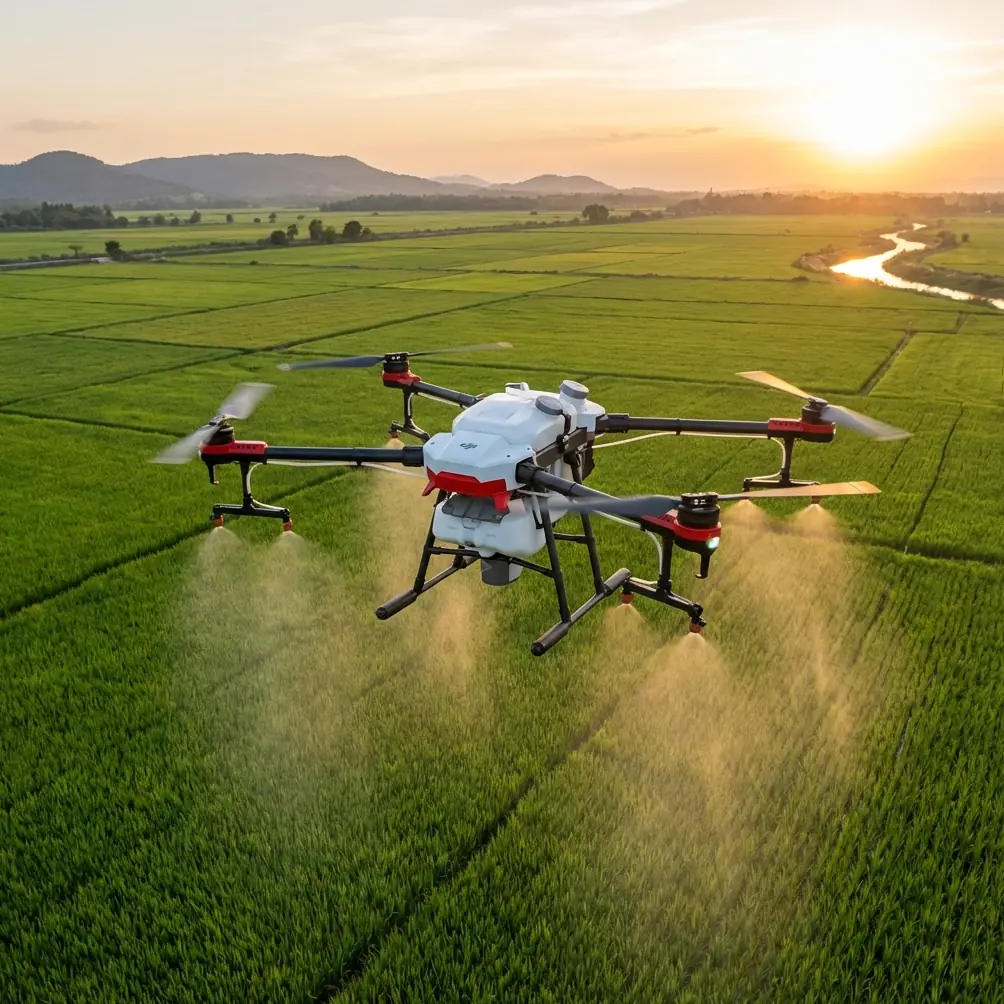
Most people looking at the DJI Agras T50 see an agricultural workhorse first. That is fair. It was built for spray jobs, spreading, heavy-duty field coverage, and repetitive precision over difficult terrain. But if you are a field operator, biologist, or specialist production crew working near large habitats after sunset or before sunrise, the T50 has another use case worth thinking about carefully: stable, repeatable low-light wildlife filming over broad tracts of land where positioning discipline matters more than cinematic flair.
That framing matters because the T50 is not a conventional camera drone. It is a robust platform with agricultural DNA. If you want to use it in a wildlife-filming scenario, you do not treat it like a lightweight consumer aircraft and hope for the best. You build a method around its strengths: carrying capacity, route consistency, weather resistance, and highly precise positioning. You also respect its limitations, especially rotor wash, operational noise, and the fact that agricultural configuration choices can directly affect nearby animals and vegetation if the aircraft is not properly prepared.
This guide focuses on one question that operators usually get wrong at the start: what is the right flight altitude for filming wildlife in low light with the Agras T50? The short answer is higher than many expect, then lower only when conditions prove it is safe and non-disruptive. In most wildlife observation setups, an initial working altitude around 20 to 30 meters above the subject area is the safest starting point for reconnaissance passes, with any descent handled gradually and only after you confirm the animals are not reacting to rotor presence, light signature, or repeated overhead movement.
Why start there? Because low light changes pilot judgment. Depth perception softens. Terrain contrast drops. Animal behavior becomes harder to read from a distance. A conservative altitude gives you more margin for reaction time, obstacle clearance, and flight-path correction, especially over uneven land or near tree lines. It also reduces the chance that downwash becomes a disturbance factor before you have even determined whether the species you are tracking will tolerate the aircraft.
The T50’s real edge in this kind of work is not raw proximity. It is repeatability. If you can hold a clean route with centimeter precision, you can document movement patterns at dawn or dusk without improvising every pass. That is where RTK performance becomes operationally significant. A strong RTK fix rate helps the aircraft maintain consistent track lines and predictable position hold, which is especially useful when visual references are weak. In agricultural work, that precision supports application accuracy. In wildlife filming, it supports route discipline. You can return to the same boundary, same observation corridor, and same altitude profile across multiple sessions, which makes your footage more analytically useful and reduces unnecessary repositioning near sensitive animals.
That precision also helps when the terrain is deceptive. Low-light filming near wetlands, stubble fields, or brushy edges can create visual flattening, where the aircraft appears farther from obstacles than it really is. RTK-assisted positioning will not replace pilot awareness, but it gives the T50 a more stable frame of reference when you need to hold a line near a habitat boundary without creeping inward.
Before any wildlife mission, the first rule is to neutralize the agricultural workflow. That means checking the whole spray system, not because you plan to spray, but because residual setup can still influence the environment around the aircraft. Nozzle calibration is one of those details many operators mentally file under “farm only.” That is a mistake. If the aircraft has been used for crop operations and nozzles, lines, or tanks are not fully cleaned and verified, you are bringing contamination risk into an ecological filming site. Even a small residue issue is unacceptable around wildlife, water margins, or protected vegetation.
The same is true for spray drift awareness. In crop protection, spray drift is a chemical-placement problem. In filming, the concept still matters because the airflow patterns that cause drift also tell you how aggressively the rotor system is interacting with the air and ground surface below. If your altitude is too low, downwash can move dust, surface moisture, light debris, and vegetation. Around nesting areas or animals already under low-light stress, that disturbance can change behavior quickly. Watching for drift-style indicators such as dust lift or plant agitation gives you an early warning that your filming altitude is too aggressive.
That is why a practical low-light workflow with the T50 often looks like this:
Start with a high reconnaissance orbit or lateral pass at 25 to 30 meters. Keep speed modest. Observe the animals, not just the aircraft telemetry. If they remain settled, you can test a slightly lower line, usually in small steps of 3 to 5 meters rather than a dramatic drop. The goal is not to get as close as possible. The goal is to find the lowest altitude that does not alter natural behavior while still giving your sensor package usable detail.
For many operators, the sweet spot ends up around 18 to 24 meters over open ground, but that is not a universal prescription. Species sensitivity, wind direction, terrain shape, and the density of vegetation all matter. Larger mammals in open plains may tolerate an overhead aircraft differently than birds near reed beds or animals sheltering under a canopy edge. In low light, conservative spacing is almost always the better decision because behavioral changes are easier to miss until you review footage later.
Swath width, another term borrowed from the T50’s agricultural world, becomes surprisingly useful here. In spraying, swath width determines efficient coverage. In wildlife filming, it helps you think systematically about what each pass actually captures. Instead of wandering around a habitat, define your observation lane the way a precision operator would define field coverage. That creates cleaner footage, fewer corrections, and less cumulative disturbance. If your target area is broad, use a wider observation corridor first and then narrow it only after you identify where the animals are entering, feeding, or bedding.
This is also where multispectral thinking can help, even if your exact filming package is not a classic multispectral payload. The point is not to force a farm sensor into a cinema role. The point is to adopt the analytical mindset behind multispectral operations: gather data that reveals patterns the naked eye may miss. In low light, that means planning your route around thermal contrast zones, moisture edges, crop residue lines, water adjacency, and movement corridors that tend to hold animals at dawn and dusk. The T50 is best used as a disciplined survey platform, not as a roaming chase aircraft.
Weather resilience is another reason some crews look at the T50 for harsh field conditions. Its IPX6K rating matters operationally in exactly the kind of sessions wildlife teams often face: damp mornings, mist, mud, and dirty recovery zones. IPX6K does not make the aircraft invincible, and it certainly does not excuse poor handling in rain or splash-heavy conditions. But it does mean the platform is designed with a level of environmental toughness that fits real agricultural terrain better than more delicate airframes. For wildlife operators working off utility vehicles, levee roads, or remote farm tracks near habitats, that robustness reduces the fragility factor that can derail a mission before it starts.
Still, durability does not solve the biggest tactical problem in low-light wildlife flying: noise discipline. The T50 is not subtle. You should assume animals will detect it before you feel close enough to gather your preferred footage. That is why route geometry matters more than dramatic approaches. Crossing a subject area once at a measured altitude is usually less disruptive than approaching, backing off, circling, then returning. Predictable movement is often tolerated better than indecisive movement. If the aircraft must pass overhead, make it brief, stable, and intentional.
A useful field technique is to approach from the least behaviorally sensitive direction, which is often downwind of the animals if scent and ground disturbance are concerns, but not always if wind is pushing rotor noise or debris toward them. Test this early. The right answer changes with species and terrain. Tree lines can amplify sound strangely in low light, and still air near dawn can make the aircraft seem closer than it is.
Battery planning needs extra discipline too. Low-light wildlife sessions tempt crews into “one more pass” behavior because the footage feels rare and difficult to replicate. With a large aircraft like the T50, that mindset is risky. Set a firm return threshold before launch. Build in extra reserve for night-adjacent visual limitations, uneven landing zones, and the possibility that you may need to abort a line if the animals react. Repeatability beats greed every time.
If you are building a professional workflow around the T50, document every pass like a survey mission. Record altitude, wind, species response, fix quality, and route geometry. After two or three sessions, patterns emerge fast. You will see which altitudes preserve natural behavior, which approach vectors trigger movement, and whether your RTK fix rate is giving you the consistency needed for comparative footage. That is when the T50 starts becoming genuinely useful rather than merely unconventional.
One overlooked advantage of a methodical log is that it sharpens handoff between pilot and observer. A wildlife consultant, conservation team member, or camera specialist can tell the pilot, “Use the same 22-meter east-to-west line as yesterday’s second pass,” and everyone knows what that means. Precision creates quieter operations. Quieter operations usually create better wildlife outcomes.
If you are adapting the T50 from farm work into conservation or habitat monitoring support, do not skip decontamination, nozzle verification, and dry-system checks just because the mission is “only filming.” Those details are not administrative box-ticking. They are the difference between using a powerful aircraft responsibly and introducing unnecessary environmental risk. If you want a field checklist tailored to mixed agriculture-and-observation operations, you can message the team directly through this quick field support link: https://wa.me/example.
The Agras T50 is not the obvious pick for wildlife filming in low light, and that is exactly why it deserves a more serious operational discussion. Used carelessly, it is too large, too loud, and too agricultural in its assumptions. Used thoughtfully, it becomes a precise, durable platform for repeatable observation over difficult ground, especially where centimeter precision, route consistency, and environmental toughness matter more than cinematic intimacy.
So if you need one practical altitude takeaway, use this: begin at 25 to 30 meters for your first low-light assessment pass, then only step down in small increments after you confirm zero meaningful behavioral disturbance. Let the animal response decide the final operating height, not the pilot’s desire for a closer frame. That single discipline will do more for ethical footage quality than any last-minute adjustment in the field.
Ready for your own Agras T50? Contact our team for expert consultation.