
Agras T50 for Vineyard Filming in Complex Terrain
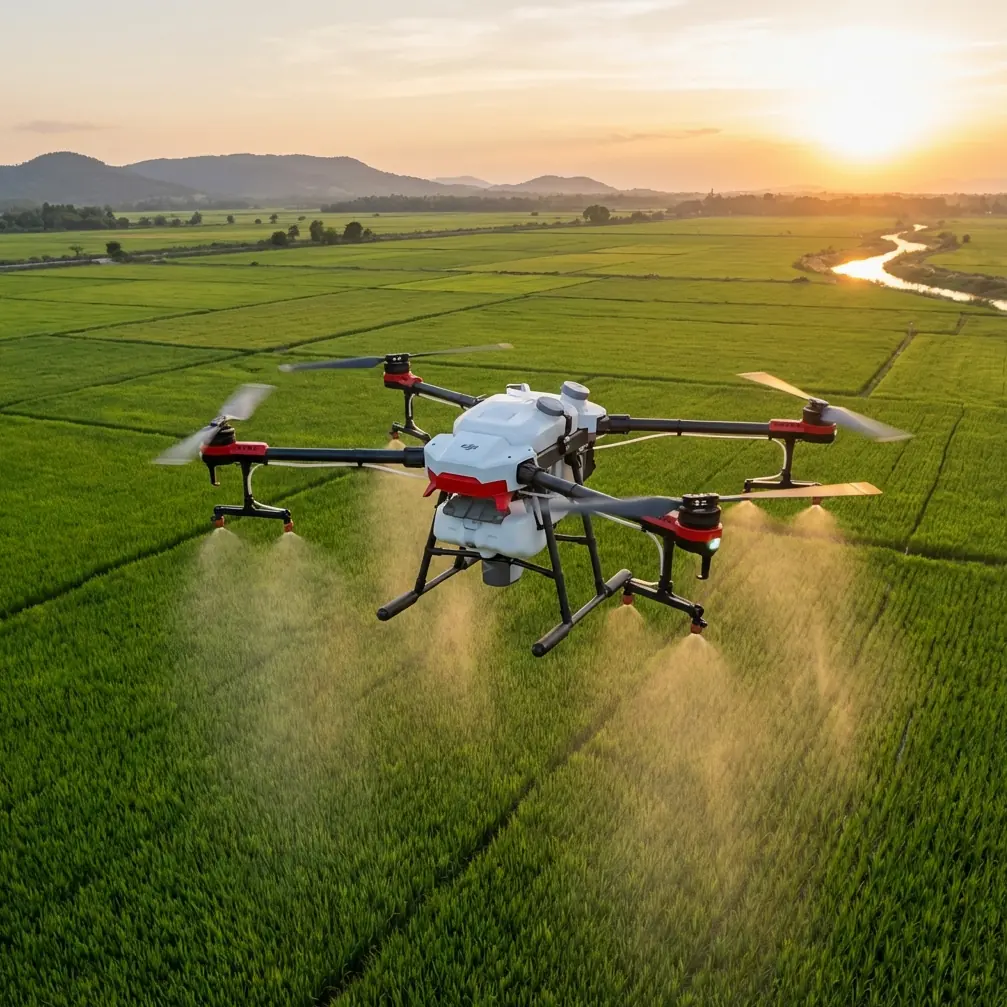
Agras T50 for Vineyard Filming in Complex Terrain: Camera Discipline That Actually Improves Field Results
META: A practical expert article on using Agras T50 around vineyards in difficult terrain, connecting camera fundamentals, flight precision, spray visibility, and accessory choices for better agricultural filming and decision-making.
Vineyard filming looks deceptively simple from a distance. Long rows. Repeating geometry. Beautiful slopes. Then you get on site.
The terrain folds in on itself. Light changes row by row. Wind behaves differently at the bottom of a block than it does near the ridgeline. Leaves flash bright in one angle and turn into a dark mass in the next. If you are documenting spray coverage, crop vigor, application conditions, or operator technique with an Agras T50 in that environment, the hardest part is rarely getting airborne. The hard part is producing footage that is technically reliable enough to support real agricultural decisions.
That is where camera discipline matters.
A recent photography article published on April 10, 2026 framed skill development as a system built on three pillars, with technique as the foundation. That point applies directly to Agras T50 field work. Vineyard operators and consultants often focus on airframe capability, swath width, RTK fix rate, nozzle calibration, and spray drift management. All of that matters. But if the imagery used to review the operation is inconsistent or poorly exposed, the record becomes less useful. In practice, weak filming can hide drift patterns, flatten canopy detail, and make row-to-row comparisons unreliable.
For complex vineyard terrain, the Agras T50 does not just need a pilot. It needs someone who understands how imaging choices shape what the operation reveals.
The real problem: beautiful footage that says very little
A lot of agricultural drone footage is attractive but operationally thin. It captures the aircraft moving through the vineyard, maybe a low pass over a block, perhaps some atmospheric shots at sunrise. It feels polished. Yet when agronomists, farm managers, or training teams review the material later, basic questions remain unanswered.
Was spray movement influenced by slope-driven wind? Did the aircraft maintain stable spacing over uneven rows? Did canopy density affect visual interpretation from one parcel to another? Was the application pattern visibly clean, or did turbulence appear near the terrace edge?
These are not purely drone questions. They are image questions.
The photography reference makes a sharp distinction between “recording” and “creating,” arguing that moving beyond auto mode is the first real step. That advice is even more relevant in vineyard operations than in general photography. Auto exposure tends to chase brightness shifts as the drone transitions between reflective soil, shaded canopy, sky, and hillside. The result is footage that pumps brighter and darker at exactly the moment you need consistency.
If you are filming an Agras T50 working a vineyard, automatic settings can sabotage the usefulness of the record.
Why exposure control matters for spray drift and canopy interpretation
The same reference also highlights the interplay of aperture, shutter speed, and ISO as a linked system rather than three isolated controls. That matters on farms because vineyard filming is not just about aesthetics. It is about making visual evidence legible.
Take spray drift. Fine droplet movement can disappear visually if shutter speed is too slow. Motion blur smooths out the very detail you are trying to observe. The source text gives a concrete threshold: fast shutter speeds such as 1/200 second or faster are suited to moving subjects. For agricultural filming, that is a useful baseline, not a final rule. In a vineyard, where the Agras T50, rotor wash, and airborne droplets all create layered motion, faster settings often preserve much more actionable detail.
Now consider background separation. The reference notes that smaller f-numbers strengthen background blur, while larger values keep more of the scene in focus. In a consumer portrait context, shallow depth of field can be visually appealing. In a vineyard operations context, too much blur is often counterproductive. You generally need enough scene depth to read the aircraft’s relationship to the row, the canopy edge, and the slope line at the same time. A cinematic look is not the same thing as an informative look.
This is where many field teams misjudge the job. They aim for footage that looks expensive rather than footage that explains the operation.
The Agras T50 context changes what “good filming” means
Filming an Agras T50 in vineyards is not equivalent to filming a cinema drone over open ground. The operating environment changes the priorities.
First, vineyards in complex terrain create interrupted sight lines. Terraces, narrow headlands, elevation changes, and irregular row orientation can all make the aircraft appear stable on screen even when the terrain relationship is changing quickly. If your exposure shifts every few seconds, that terrain reading becomes even harder.
Second, agricultural evaluation often depends on side evidence rather than direct evidence. You may not “see” nozzle calibration in a literal sense from ordinary footage, but you can often identify uneven visual output, inconsistent atomization appearance, or changes in application texture when the camera work is stable and exposure is consistent. Similarly, you may not read RTK fix rate from an image, yet centimeter precision becomes much easier to appreciate when the aircraft’s line-holding over a sloped row is captured clearly without distracting autofocus or auto-exposure fluctuations.
Third, vineyard microclimates reward repeatability. If you are filming one block this week and another next week, consistency in image capture matters almost as much as consistency in flight planning. Without that, cross-comparison becomes guesswork.
A better workflow: treat filming as part of field validation
The most useful Agras T50 footage in vineyards is usually produced when the camera plan is built into the operation before takeoff, not improvised afterward.
That means asking a few practical questions:
- Are you filming for operator training, agronomic review, client documentation, or internal QA?
- Do you need to observe drift behavior at row ends?
- Do you need to compare canopy response between steep and flatter parcels?
- Are you documenting equipment performance in dusty or wet conditions where an IPX6K-rated work environment matters?
- Are you trying to correlate flight precision with terrain-following behavior?
Once those questions are clear, the camera choices become easier.
If drift visibility is the priority, lean toward shutter speeds that freeze motion rather than soften it. If terrain relationship is the priority, avoid excessively shallow depth of field. If repeated review by multiple stakeholders is expected, lock your settings whenever practical so one pass can be compared to another without brightness shifts.
This is not glamorous advice. It is operationally useful advice.
The overlooked value of aperture priority in agricultural filming
The photography source specifically recommends moving from full auto toward aperture priority or manual mode. For vineyard drone work, aperture priority can be a practical bridge setting for crews that are not full-time cinematographers.
Why? Because agricultural filming happens in unstable light. One minute the drone is crossing a sunlit upper block. Next it drops near a shadowed row line or turns against the sky. Full manual delivers the highest consistency when conditions are predictable, but in active field environments many teams do better with a controlled semi-manual approach than with fully automated capture.
Aperture priority lets you decide the scene character while watching the shutter response. In vineyards, that can help maintain enough depth for row readability while still adapting to light. It also trains crews to think deliberately about image structure rather than just pressing record.
That point from the 2026 article is more than beginner photography advice. It is a field documentation principle. The shift away from auto is really a shift away from passive observation.
Where third-party accessories can make the T50 footage more useful
The brief calls for mention of a third-party accessory that enhanced capability, and this is one of the few cases where that addition is not cosmetic.
In steep vineyards, one of the most useful add-ons is a high-brightness third-party field monitor paired with a sun hood and secure mounting solution for the ground station workflow. It sounds minor until you try reviewing spray behavior or line tracking under harsh midday light. A clearer external display can dramatically improve real-time judgment of whether the footage is actually showing what you need: droplet visibility, canopy edge definition, and aircraft spacing against irregular terrain.
I have seen crews assume they captured a usable pass, only to discover later that glare masked exposure problems and subtle instability. The monitor did not change the Agras T50 itself. It changed the operator’s ability to verify the visual record while the aircraft was still working. In practical terms, that can save an entire site visit.
For teams building a vineyard documentation workflow around the T50, accessory choices should be judged by field clarity, not novelty.
Why precision language matters: RTK, swath width, and image trust
Agricultural professionals often use terms like RTK fix rate, swath width, and centimeter precision as if they belong only to flight logs and application reports. They do not. They also shape how footage should be interpreted.
If your aircraft is operating with high positional reliability, the video should be captured in a way that allows viewers to see that stability. If the T50 is executing a planned path over a difficult slope, poor filming can make a precise operation look erratic. Conversely, disciplined capture can help distinguish between true aircraft behavior and visual distortion caused by angle, lens choice, or exposure inconsistency.
The same applies to swath width evaluation. You are rarely “measuring” swath width from ordinary field footage alone, but image quality strongly affects whether row spacing, overlap behavior, and application rhythm can be reviewed with confidence.
This is one reason I advise vineyard operators to think of filming as evidence collection, not marketing collateral. Evidence has to survive scrutiny.
Multispectral context and ordinary video are not competitors
Some operators assume that if multispectral tools are part of the farm’s broader program, ordinary filming becomes secondary. That is a mistake.
Multispectral data can reveal crop variability and stress patterns at a level conventional video cannot. But standard visual footage of an Agras T50 in operation tells a different story: field conditions, application behavior, row access challenges, visibility of drift near boundaries, and operator execution in live terrain. These are complementary layers.
In vineyards, especially those spread across broken topography, the strongest management decisions often come from combining instrumented data with well-captured visual context. A map may show variation. Video may explain why a certain block is harder to treat consistently.
A practical filming framework for complex vineyard terrain
If I were advising a vineyard team documenting Agras T50 operations tomorrow, I would keep the framework simple:
- Define the operational question before filming.
- Avoid full auto unless the footage is purely casual.
- Use shutter speed intentionally when motion detail matters.
- Keep enough depth of field to show aircraft, canopy, and terrain together.
- Review footage in the field on a monitor that can be trusted in sun.
- Capture repeatable angles for later comparison across blocks or dates.
That entire workflow grows naturally out of the photography source’s central idea: improvement is systematic, and technique underpins everything else. The article broke progress into three core areas and stressed that technical mastery is the base. For Agras T50 vineyard filming, that insight lands cleanly. Before advanced analysis, before edited presentation, before any polished final deliverable, you need control.
Control of exposure. Control of scene depth. Control of motion rendering. Control of repeatability.
Without that, even a strong flight operation can leave behind weak documentation.
One final point for vineyard operators
The Agras T50 is often discussed in terms of throughput, capability, and precision in agricultural work. All valid. But in vineyards with steep grades and uneven lighting, the quality of your visual record can become the difference between assumption and understanding.
A shutter choice can determine whether drift is visible. An aperture decision can determine whether row geometry remains readable. A bright field monitor can determine whether you notice the problem before leaving the site. A disciplined move away from auto mode can determine whether your footage is merely attractive or genuinely informative.
If you are refining a vineyard workflow and want to compare setups, field display options, or documentation methods with someone who understands agricultural operations, you can start the conversation here: message a field specialist.
The Agras T50 deserves more than generic filming habits. In complex terrain, camera technique is not an accessory to the mission. It is part of the mission.
Ready for your own Agras T50? Contact our team for expert consultation.