
Filming Coastlines in Urban Conditions With the Agras T50
Filming Coastlines in Urban Conditions With the Agras T50: A Field Report on Altitude, Stability, and Operational Discipline
META: A field report for urban coastline operations with the Agras T50, covering optimal flight altitude, drift control, RTK precision, nozzle setup, and why training discipline matters.
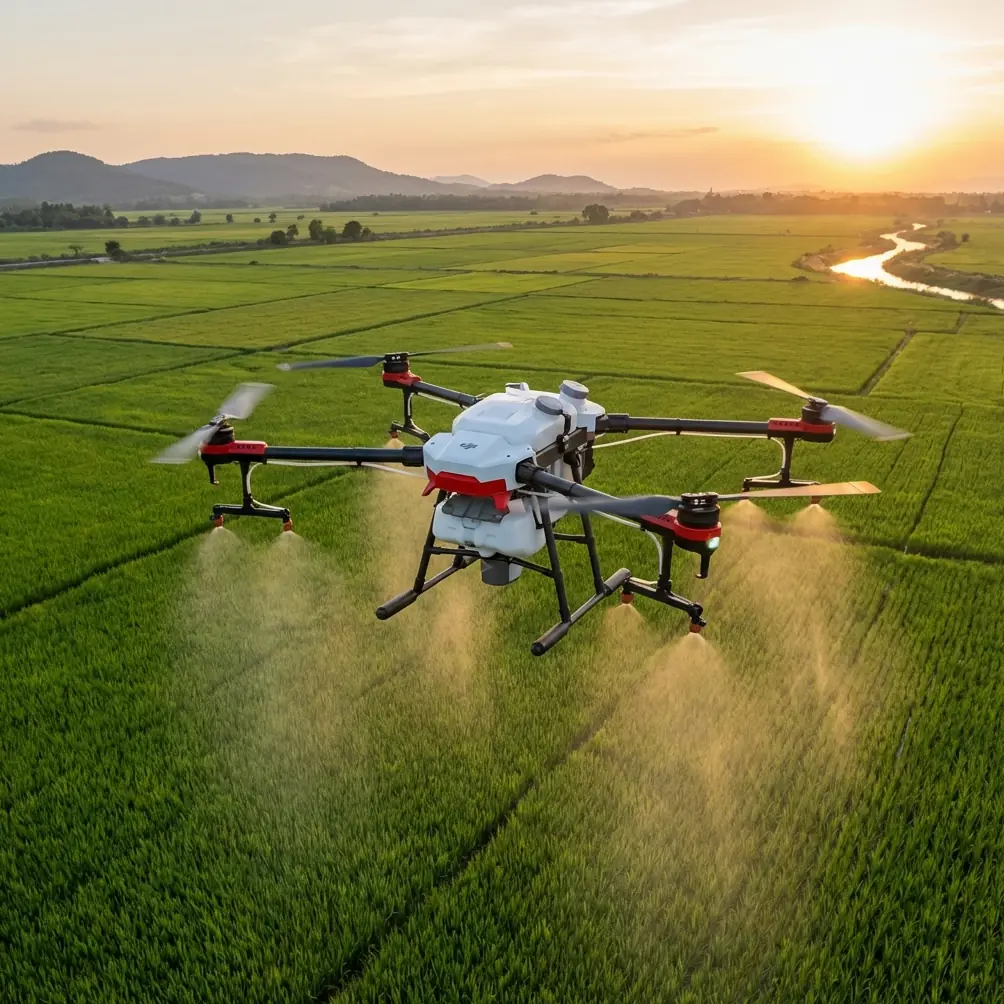
The Agras T50 is usually discussed as a workhorse for spraying and spreading. That reputation is deserved. But when the assignment shifts to documenting coastal edges in built-up areas—seawalls, shoreline vegetation, harbor perimeters, drainage channels, salt exposure zones—the real question is not whether the platform is powerful enough. It is whether the operator can adapt an agricultural aircraft to a dense, wind-affected, obstacle-rich environment without losing precision.
That is where urban coastline work becomes interesting.
On paper, this scenario sounds simple: fly the route, capture the condition of the coastal strip, maintain clean coverage. In practice, it is one of the harder civilian operating environments for a large UAV. Wind rebounds off facades. Airflow changes near breakwaters. Open water reduces visual depth cues. Salt haze affects perception. And if the mission includes liquid application, spray drift becomes the central operational risk.
So the most useful place to start is not with a broad overview of the T50. It is with one decision that determines almost everything else: flight altitude.
The best altitude is rarely the highest safe altitude
For coastline work in urban settings, operators are often tempted to climb. The logic is easy to understand. More height appears to create cleaner sight lines, wider swath coverage, and extra margin from poles, railings, and rooftop clutter. But coastal airflow punishes that instinct.
In this environment, the better operating band is usually the lowest altitude that still preserves obstacle clearance, route stability, and the image or application objective. For many urban shoreline passes, that means staying deliberately restrained rather than chasing a broad overhead view.
Why? Because altitude magnifies three problems at once.
First, wind shear becomes less predictable as you move above the sheltered zone created by walls, vegetation, or embankments. Second, if spraying is involved, drift increases quickly as droplets spend more time exposed before deposition. Third, positional consistency suffers when the aircraft must constantly correct over reflective water edges and mixed surfaces.
The T50 has the capability to hold structured routes with very high precision, especially when RTK fix rate is stable and the mission geometry is clean. But centimeter precision is only valuable if the aircraft is operating in an altitude layer where that precision translates into useful real-world placement. A perfect line flown too high over a gusting seawall is still the wrong line.
My field preference for urban coastline segments is to begin with a conservative low-altitude test run, then increase only if obstacle mapping or visual requirements demand it. This sounds obvious, but it is often skipped. Operators inherit inland field habits, then apply them to the coast and wonder why drift, wobble, and edge inconsistency suddenly appear.
The T50’s precision matters more near the shoreline than inland
Agras platforms are built for repeatable work. Along a coastline, repeatability is not just about efficiency. It is about maintaining predictable spacing between the aircraft, the treatment zone, and the surrounding urban fabric.
That is where RTK performance becomes operationally significant. A strong RTK fix rate helps the T50 maintain route integrity along narrow coastal corridors where there is very little room for lateral error. On open farmland, a small deviation might be invisible. Along a promenade, retaining wall, or urban drainage edge, the same deviation can push the aircraft into turbulence pockets or shift application beyond the intended strip.
Centimeter precision is therefore not a marketing phrase in this scenario. It is the difference between a neat shoreline pass and a mission that slowly unravels with every crosswind correction.
The challenge, of course, is that shoreline conditions can make operators over-trust the technology. Precision navigation does not remove the need for tactical judgment. It only gives that judgment a better execution tool. The aircraft can hold a route; the pilot still has to choose a route that respects urban wind behavior, reflective surfaces, and escape options.
That distinction matters. Technology can reduce workload, but it does not replace the operator’s responsibility. Even outside agriculture, that lesson keeps resurfacing across the UAV industry: machines take on more of the task load, but human oversight remains essential when the environment is dynamic. Urban coastlines are exactly that kind of environment.
If spraying is part of the mission, nozzle calibration is not a side task
A lot of T50 discussions treat nozzle calibration as routine setup. For coastal work, it deserves more respect.
The shoreline is an unforgiving place for poor calibration. Small inconsistencies in droplet size or flow distribution become amplified by crosswinds and surface transitions. A pass over vegetation adjacent to a seawall behaves differently from a pass over open embankment rock. Add urban obstructions and the airflow becomes segmented, not uniform.
That means spray drift has to be managed from both ends: fluid behavior and flight behavior.
Nozzle calibration directly affects droplet formation, application uniformity, and how much the wind can steal from the target zone. Flight altitude then determines how long those droplets remain vulnerable in the air. If either side of that equation is off, the mission quality drops fast.
This is why I do not separate calibration from route planning. They belong in the same conversation. If the swath width looks attractive on paper but only works at an altitude that increases drift exposure, then the swath width is not operationally useful. It is theoretical. On a live coastline mission, the better result often comes from a narrower but more controlled pass.
That tradeoff is where experienced operators distinguish themselves.
Why a training mindset matters even on “simple” passes
One of the more useful lessons from drone education and model flight training is that complex flight performance is built from simple, repeatable components. That idea sounds basic until you watch how many pilots approach difficult environments with vague confidence instead of structured method.
The training material behind educational UAV systems makes this point clearly. A drone is not just a flying body with propellers. It is a system made up of the airborne platform and the ground control end, with the airframe itself integrating propulsion, flight control, navigation, onboard devices, and image transmission. That systems view matters because coastline work stresses every one of those layers at the same time.
The same educational references also note specific protective design details, such as removable propeller guards on each rotor position to help prevent contact-related loss of control in close environments. The operational meaning is straightforward: safe UAV work begins with respect for the aircraft’s physical interaction envelope, not just its software intelligence.
That is relevant to the T50 even though it is a different class of aircraft. A large agricultural UAV should never be flown with the casual mindset people sometimes bring to smaller training drones. Urban coastlines punish sloppy margins. The operator needs to think in components: entry line, altitude hold, lateral correction, turn geometry, exit path, reassessment. One sequence at a time.
There is also a useful training principle from aerobatic instruction: what looks fluid from the outside is actually a chain of ordered steps. In one training outline, the first stage includes fundamentals such as level lines, loop components, 45-degree climbs or descents, and rolls, all broken down into their basic parts. The point is not to borrow aerobatic technique for T50 operations. It is to borrow the discipline of decomposition.
For urban coastline work, that means a successful run should be designed as a sequence:
- stable approach
- verified RTK lock
- controlled working altitude
- monitored crosswind correction
- measured turn exit
- immediate review of coverage or footage consistency
When pilots skip that structure, they tend to overreact mid-mission. The aircraft remains capable, but the mission becomes messy.
Urban coastline airflow is local, not general
This is one of the most misunderstood parts of the job.
Operators often check the forecast, note the coastal wind direction, and assume they understand the mission environment. They do not. Not yet. The true condition is local. A sheltered marina edge may be calm while the next 80 meters along a concrete wall becomes turbulent. A low roofline can create a descending wash. A gap between buildings can accelerate lateral gusts. The shoreline itself bends flow in ways that broad weather summaries cannot capture.
For the T50, this means altitude should be chosen segment by segment, not only mission by mission.
A uniform plan can still work if the route is simple and exposure is low. But on built-up coastlines, segmented planning is usually smarter. That may mean one lower pass near moored vessels and pedestrian infrastructure, then a slightly higher pass where vegetation screening or embankment height limits visibility.
The practical insight is this: the optimal flight altitude is not a fixed number for all coastline work. It is the lowest stable and useful altitude for each route segment, measured against drift risk, visibility, obstacle clearance, and application or imaging goals.
That is a more demanding way to think, but it produces cleaner results.
Durability matters around salt, spray, and washdown routines
Coastal operations are hard on equipment, even when the mission is short. Salt-laden air, moisture, and residue from repeated exposure all accelerate wear if maintenance discipline slips. This is one reason ingress protection matters on a platform like the T50.
An IPX6K-rated design is meaningful in real field use because coastline work rarely ends at touchdown. The aircraft still has to survive cleaning cycles, fluid exposure, and repeated deployment in damp conditions. That rating does not eliminate maintenance requirements, but it does support a more realistic operating life in environments where contamination is part of the workflow.
For crews running repeated shoreline vegetation treatment or coastal infrastructure support missions, this becomes a scheduling issue as much as a technical one. Less downtime from environmental stress means more consistency across the season.
A note on imaging expectations
The T50 is not typically the first aircraft people imagine for coastline filming, especially if they are thinking in cinematic terms. But many commercial users are not trying to produce cinema. They are documenting conditions, progress, treatment coverage, or environmental change. In that context, stable route execution matters more than dramatic camera language.
If your coastline “filming” requirement is really operational visual documentation, then route discipline, altitude control, and repeatability matter far more than artistic freedom. That is another reason why low, controlled passes often outperform higher, wider ones. You get stronger consistency at the edge where land, structure, and water interact.
And if your workflow extends into data-rich environmental assessment, it is worth considering how visual output may eventually pair with other layers such as multispectral interpretation. Even if the mission begins as simple documentation, repeated high-consistency flights create a stronger baseline for future comparison.
The operator’s checklist is shorter than people think
For this type of mission, I would reduce the whole discussion to a few non-negotiables:
Choose the lowest practical altitude, not the most comfortable-looking one.
Treat RTK fix quality as mission-critical near narrow shoreline corridors.
Calibrate nozzles with drift behavior in mind, not just flow targets.
Accept a smaller swath width if it produces cleaner real-world accuracy.
Plan coastline passes as stepwise actions, not as a single broad maneuver.
Respect the local airflow, because the forecast is only the opening clue.
If you are planning a coastline workflow and need a second set of eyes on route logic or setup decisions, this direct WhatsApp line is useful: https://wa.me/85255379740
That may sound strict. It is. But the T50 responds well to disciplined operation. In urban coastal work, discipline is what turns a capable agricultural aircraft into a precise professional tool.
Ready for your own Agras T50? Contact our team for expert consultation.