
Agras T50 in Low-Light Coastal Work: Practical Setup
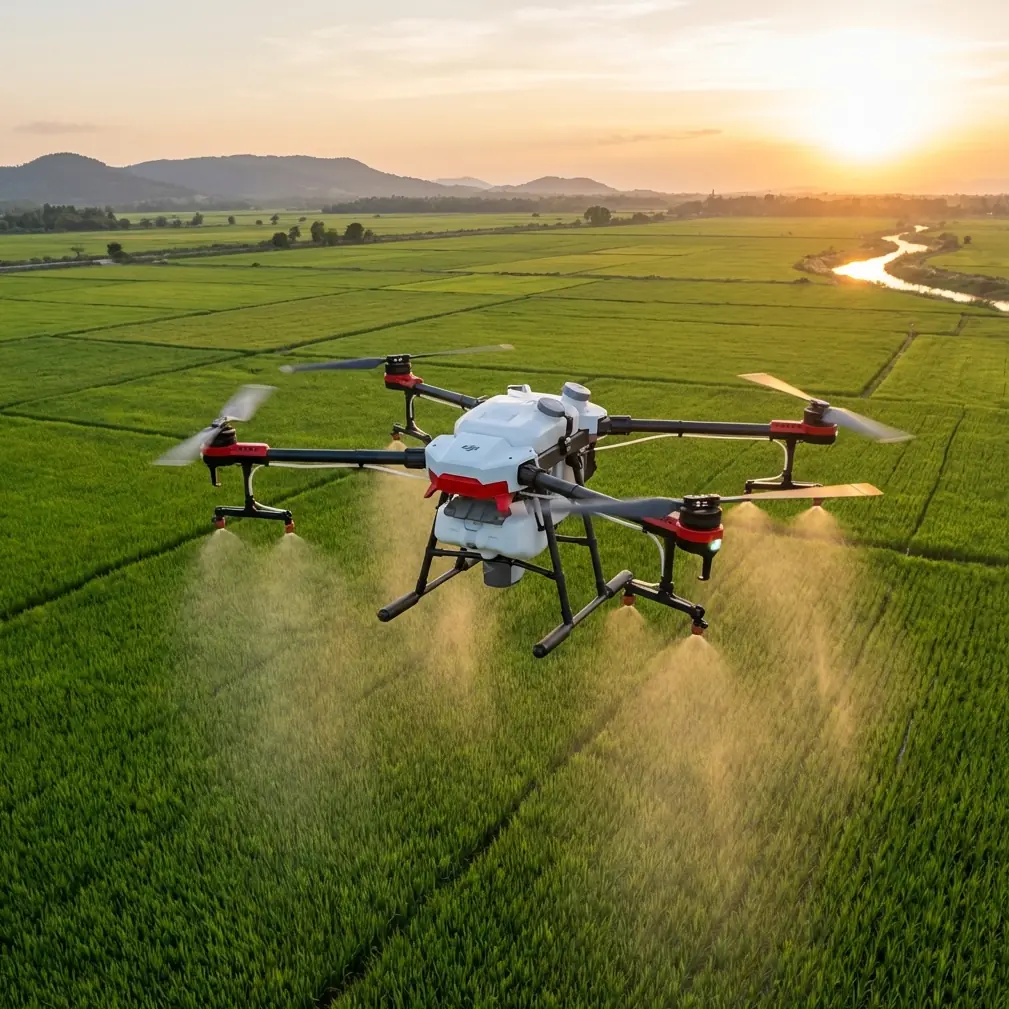
Agras T50 in Low-Light Coastal Work: Practical Setup, Signal Discipline, and What Drone Policy History Still Teaches Operators
META: Expert tutorial for using the Agras T50 in low-light coastal operations, with practical antenna positioning advice, RTK and connectivity insights, and lessons from real-world UAV training and agricultural policy.
Low-light work along a coastline exposes every weak habit a drone operator has.
Signal management gets sloppy. Visual reference collapses faster than expected. Moisture, glare, wind shear, and feature-poor terrain all start stacking on top of one another. And if you are trying to use an Agras T50 around dawn, dusk, or under flat overcast conditions near water, you need a disciplined workflow that treats connectivity, precision, and aircraft orientation as operational priorities rather than afterthoughts.
The interesting part is that some of the best lessons for T50 operators do not come only from big-aircraft brochures or generic field advice. They also show up in two very different corners of the UAV world: training systems that make connectivity status unmistakably visible, and agricultural policy history that reveals how quickly practical drone adoption scales when operators can justify the workflow.
That matters here, because the Agras T50 is not just another drone to “take out for a flight.” It is a task platform. Whether your mission is agricultural application, coastal vegetation treatment, infrastructure-adjacent spraying, terrain-following work near embankments, or daylight-limited inspection support in humid marine conditions, your performance depends on repeatability.
Why low-light coastal operations are unusually demanding
Coastlines strip away visual certainty. Over land, buildings, roads, crop lines, and tree edges help orientation. Over water or alongside tidal flats, many of those cues disappear. In low light, the horizon can flatten into a gray band. Reflections from wet surfaces and marine haze further reduce contrast.
For a platform like the Agras T50, this changes the operator’s priorities in three immediate ways:
- Link quality becomes central
- Positioning confidence must be verified, not assumed
- Flight path discipline matters more than visual improvisation
The T50’s appeal is its productivity, swath efficiency, and precision-oriented agriculture design. But in marginal light near the coast, raw capacity is only useful if your aircraft holds a stable RTK Fix rate, your controller link stays clean, and your spray pattern remains predictable despite wind shifts and edge turbulence.
That is why the most valuable advice is often not glamorous. It is about setup.
Start with the signal chain, not the mission map
One useful insight comes from educational drone systems, specifically the RoboMaster TT / Tello EDU workflow documented in DJI TT training material. It sounds far removed from an Agras T50, but the lesson is directly relevant: the system makes the connection state obvious and forces the operator to pay attention to it.
In that material, the Wi-Fi identifier changes based on hardware state. Without the expansion module, the aircraft signal appears with a Tello prefix. With the module attached, it appears as RMTT. The guide also notes a visible connection confirmation: once linked successfully, the warning icon becomes a green check mark, and the aircraft indicator flashes purple for RMTT or green for Tello EDU.
That kind of explicit confirmation is exactly the mindset T50 operators should adopt before low-light coastal work. The point is not that the T50 uses the same interface. It does not. The point is procedural: treat link verification as a formal preflight step with a visible pass/fail outcome.
For the Agras T50, that means:
- Confirm controller-to-aircraft link quality before arming
- Check RTK status and do not proceed on assumption
- Verify map load, mission boundaries, and home point logic
- Confirm obstacle sensing and terrain-awareness settings appropriate to the site
- Review wind direction on the actual shoreline, not just from a weather app
If you are rushing, you will be tempted to rely on “it connected last time.” That mindset causes more trouble at the coast than almost anywhere else.
Antenna positioning advice for maximum range
This is the detail many operators neglect until they see link degradation on a real job.
For maximum range and the most stable control link, do not point the tips of the controller antennas directly at the aircraft. The strongest transmission pattern typically projects broadside from the antenna faces, not straight off the ends. In practical terms:
- Keep the flat sides of the antennas oriented toward the T50
- Avoid crossing or collapsing them into awkward angles
- Reposition your body as the aircraft moves downrange rather than twisting the controller into a poor orientation
- Maintain as much direct line-of-sight as possible, especially when operating near levees, seawalls, treelines, or coastal structures
Near a coastline, the environment can trick operators into thinking range should be excellent because the space feels open. But water, wet ground, vehicles, metal fencing, and embankment infrastructure can all contribute to multipath reflections. In low light, operators also tend to lower their visual scan and stare at the screen longer, which subtly ruins antenna discipline.
A simple rule helps: if the aircraft changes direction significantly, your antenna geometry probably needs to change too.
If you want a second opinion on site-specific link planning, this direct WhatsApp line for flight setup questions is useful when you are dealing with tricky terrain or mixed shoreline obstacles.
RTK confidence is not a box to tick
The Agras T50 is at its best when its precision systems are treated as live operational inputs. A strong RTK Fix rate is not just a nice spec-sheet phrase. In coastal work, it influences whether your line spacing, edge treatment, and return passes stay consistent under reduced visual reference.
This becomes especially important when you are working around:
- Narrow berms
- Drainage channels
- Salt-tolerant crop margins
- Aquaculture-adjacent land
- Coastal windbreak rows
- Irregular field boundaries near water
Centimeter precision matters because low-light conditions increase the temptation to trust automation without verifying its current quality. If your RTK performance is degraded, the knock-on effects are practical, not theoretical. Your swath width overlap can become inefficient. Your edge passes may drift. Spot treatment can become broader than intended. In spray work, that affects both chemical placement and drift exposure.
So before starting, confirm:
- RTK correction source is functioning normally
- Satellite geometry is acceptable for the site and time
- There is no unnoticed interruption in correction data
- Your mission geometry matches the true field or treatment edge
When the coastline itself curves, many pilots become overconfident because the map view looks clean. But coastal boundaries often include inaccessible edges, wet patches, soft shoulders, and abrupt grade transitions. Precision only helps if the digital plan reflects those realities.
Spray drift gets worse when operators chase visibility
Spray drift is always a concern, but low-light coastal conditions produce a particular trap: operators tend to fly at heights or speeds that feel visually safer rather than aerodynamically cleaner.
That can push them into one of two mistakes:
- Flying higher than needed to preserve visual comfort
- Flying too fast to finish before light fades
Both can degrade deposition and increase drift potential, especially when onshore or cross-shore winds begin shifting around sunrise or evening cooling. The T50’s productivity can tempt users to think throughput will compensate for poor timing. It will not.
The better approach is to tune the job around actual conditions:
- Reassess swath width if the wind profile changes
- Tighten nozzle calibration discipline before the mission, not during it
- Watch shoreline turbulence near tree lines, buildings, and raised banks
- Use conservative edge strategy along water-facing boundaries
Nozzle calibration is especially important in this context. A high-capacity aircraft with poor calibration can amplify inconsistency across large areas quickly. In low-light work, you want one less variable to worry about. That means confirming output behavior while you still have enough visibility to make corrections with confidence.
Why an old Henan subsidy story still matters to a T50 buyer or operator
At first glance, a policy note from Henan in 2014 seems disconnected from today’s Agras T50. It is not.
That record shows that the province applied stacked support for agricultural UAV adoption: 1/3 from a provincial special fund and 1/3 from agricultural machinery purchase support, meaning eligible buyers paid only 1/3 of the market price. The same source notes that 130 plant-protection drones received subsidies in 2014, with continued support planned in 2015.
Why does that matter now?
Because it tells you something fundamental about how agricultural drone operations mature. Adoption does not scale just because aircraft exist. It scales when the field workflow proves its value in real production environments. Once that happens, governments, cooperatives, and growers start organizing around productivity, standardization, and mechanization.
For an Agras T50 operator, this history is useful because it frames the aircraft correctly. The T50 sits in a lineage of professional agricultural UAVs that moved from experimental curiosity to operational infrastructure. That shift raises the bar. Buyers and operators should not think only in terms of aircraft capability. They should think in terms of repeatable deployment:
- crew training
- mission planning
- maintenance intervals
- field logistics
- calibration discipline
- data-backed route design
A mature platform deserves a mature operating culture.
What a public air show can teach a working T50 operator
Another reference point seems unrelated at first: the recent aviation carnival in Qingyuan, where aerobatic displays and formation maneuvers were performed over the Beijiang river, using the river and cityscape as the backdrop.
This was not an agricultural event, and the T50 is not an aerobatic aircraft. Still, there is a subtle operational lesson in it. Flights over water, against urban or scenic backgrounds, create strong visual theater for spectators but difficult depth perception for pilots. Even skilled operators can misread altitude, speed, or relative spacing when the background is visually busy yet spatially unhelpful.
That same visual problem appears in low-light coastal T50 missions. Water and skyline combinations can flatten distance cues. Shore infrastructure can create misleading contrast lines. If you have ever felt perfectly oriented on the map screen while feeling slightly uncertain with your naked-eye perspective, you already know this problem.
The fix is procedural:
- build the mission before launch
- trust validated positioning, not intuition alone
- use stable reference points on land whenever possible
- avoid improvised route changes just because the visual scene looks “open”
Open space over water is often less forgiving than a cluttered field.
A practical preflight framework for Agras T50 low-light coastline jobs
Here is the workflow I recommend.
1. Validate the site before the aircraft comes out
Walk the launch area. Look for wet grass, mud, salt residue, reflective puddles, and vehicle placement that may interfere with takeoff and landing judgment. Check whether embankments or buildings will interrupt line-of-sight during downrange passes.
2. Establish antenna discipline from the start
Stand where you can maintain broadside antenna orientation toward the aircraft for the largest percentage of the route. If needed, choose a launch point that is slightly less convenient on foot but better for uninterrupted signal geometry.
3. Confirm RTK and mission alignment
Do not just verify that RTK is “on.” Check that it is stable enough for centimeter precision to be meaningful. Make sure your route reflects true shoreline edges and excludes soft or non-target ground.
4. Re-check nozzle calibration and liquid system readiness
Low-light jobs reward preparation. Calibrate when visibility is still sufficient. If there is any doubt about output consistency, solve it before launch.
5. Adjust expectations for swath width
The theoretical swath may not be the practical swath under coastal wind conditions. Build in overlap logic that respects drift control rather than chasing acreage efficiency.
6. Watch the first passes like a test, not a production run
The opening lines should confirm aircraft behavior, environmental response, and link stability. If anything feels marginal, stop early. Problems rarely improve just because the mission continues.
The real edge with the Agras T50
The Agras T50 earns its place when the operator is methodical enough to let the platform do precision work under pressure. In low-light coastal conditions, that means resisting the urge to rely on muscle memory alone.
Use visible connection logic as a mindset, the way training systems do. Respect the history of agricultural drone adoption, which was built on practical results, not hype. And treat signal orientation, RTK Fix rate, spray drift control, and nozzle calibration as the foundations of the mission.
That is how you turn a difficult shoreline window into a controlled operation rather than an anxious one.
Ready for your own Agras T50? Contact our team for expert consultation.